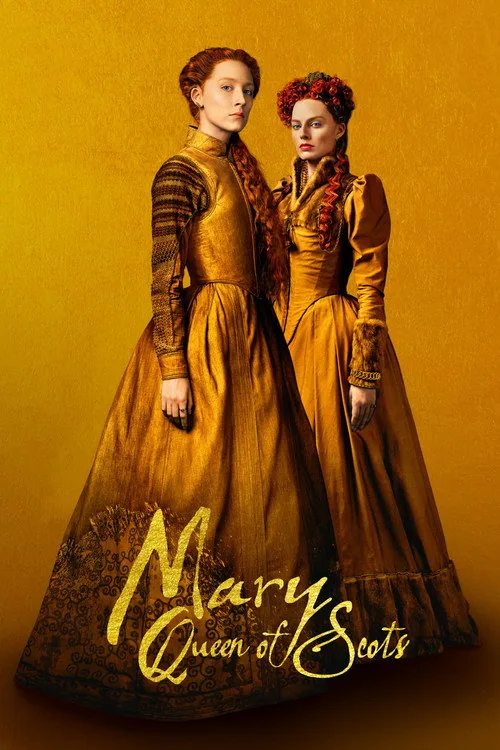
Mary's return to Scotland intensifies a succession dispute that places her in an uneasy relationship with Elizabeth I.
Why this matches +
Selected for the central appeal: Historical epics about rulers balancing political threats, personal relationships and public authority.
Genres: Drama / Historical
Shared film traits
Based on recorded story, mood and style. Your preferences can change the order.
War and civilian life
What changes Mary Queen of Scots dramatizes rival queens negotiating succession, sovereignty and personal constraints in the same broad era, shifting perspective toward Elizabeth's Scottish rival.
After returning from France to rule Scotland, Mary Stuart faces a court divided by religious conflict and a claim to the English throne held by her cousin Elizabeth. The two queens try to balance political necessity with a personal wish for trust, but advisors, marriages, and succession crises keep turning their relationship into a contest. The historical drama compresses years of conflict into a portrait of female sovereignty under scrutiny, emphasizing the choices and constraints surrounding two powerful rulers.
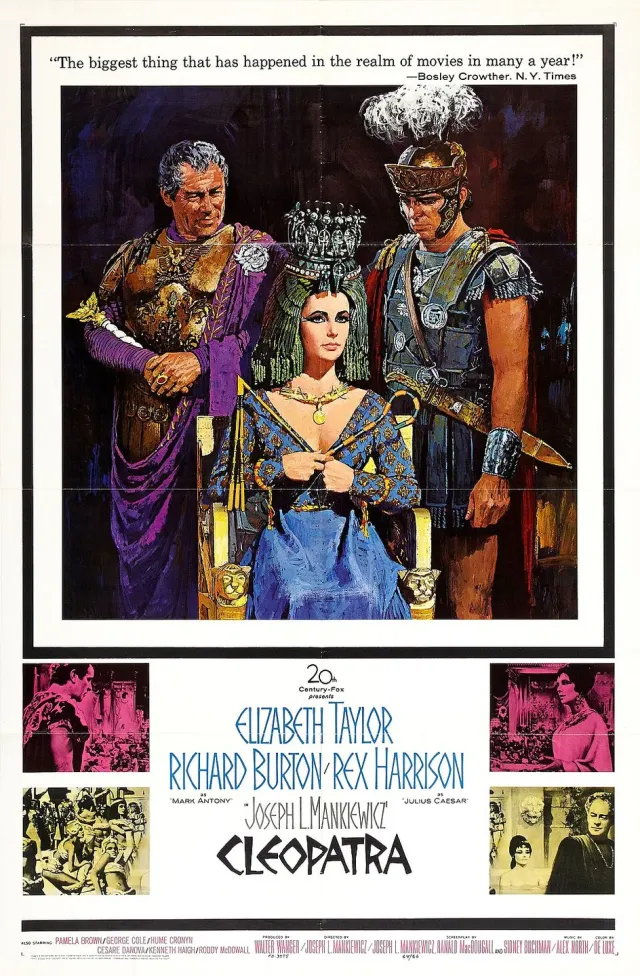
Cleopatra's changing alliances with Roman leaders test how much political independence Egypt can retain as succession and imperial power tighten around her.
Why this matches +
Related viewing experiences with the specific differences recorded for each pair.
An adjacent discovery: a related idea with a different viewing experience.
Genres: Historical / Drama
Shared film traits
Based on recorded story, mood and style. Your preferences can change the order.
What changes Cleopatra follows a female ruler balancing sovereignty and consequential romantic alliances, moving from Tudor England to ancient Egypt.
Egypt's ruler Cleopatra negotiates Roman power through shifting alliances with Julius Caesar and Mark Antony, balancing personal attachment with dynastic survival and the sovereignty of her kingdom. The story's scale moves from Egyptian court to Roman politics and military conflict, making her romantic relationships part of a larger struggle over legitimacy rather than its only subject. The film's elaborate spectacle comes through a mid-century Hollywood interpretation, not a transparent reconstruction of ancient history; its characterization and political simplifications need to be kept distinct from historical evidence. Her alliances shift from Caesar's Roman campaign to Antony's contest with Octavian.
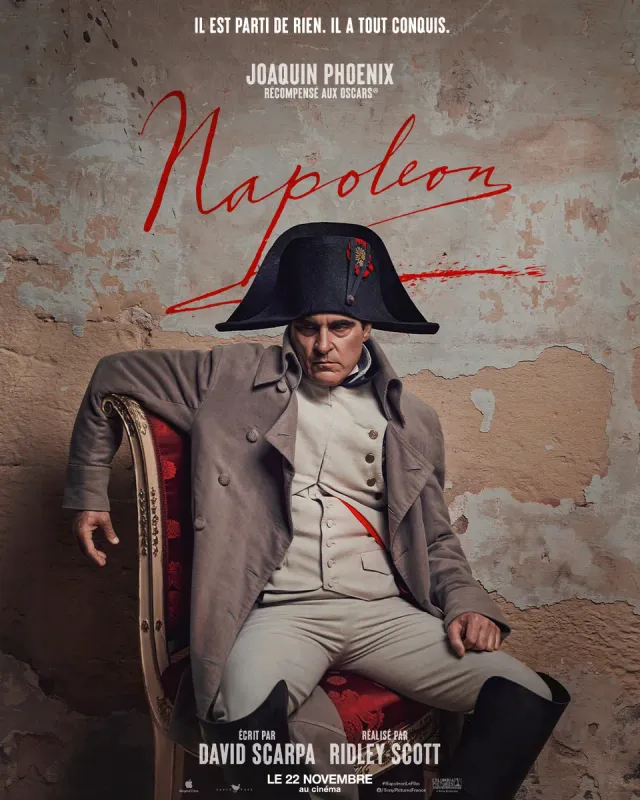
A cycle of battlefield success, political consolidation and renewed expansion makes conquest feel like both Napoleon's method of rule and the source of his undoing.
Why this matches +
Related viewing experiences with the specific differences recorded for each pair.
An adjacent discovery: a related idea with a different viewing experience.
Genres: Drama / Adventure
Shared film traits
Based on recorded story, mood and style. Your preferences can change the order.
War and civilian life
What changes Napoleon combines a ruler's military campaigns with a volatile private relationship, focusing on a French emperor rather than Elizabeth's defense of her throne.
The film follows Napoleon Bonaparte from the French Revolution through his rise as emperor, military victories, marriage to Joséphine and eventual exile. His relationship with Joséphine shapes the private strand, including their lack of a shared heir and his politically motivated remarriage. The campaign sequence moves from Toulon and Austerlitz to the disastrous invasion of Russia, Waterloo and defeat. The story treats statecraft and battle through Napoleon's personal ambition and volatility, compressing a long political and military history into selected episodes rather than a full chronology.
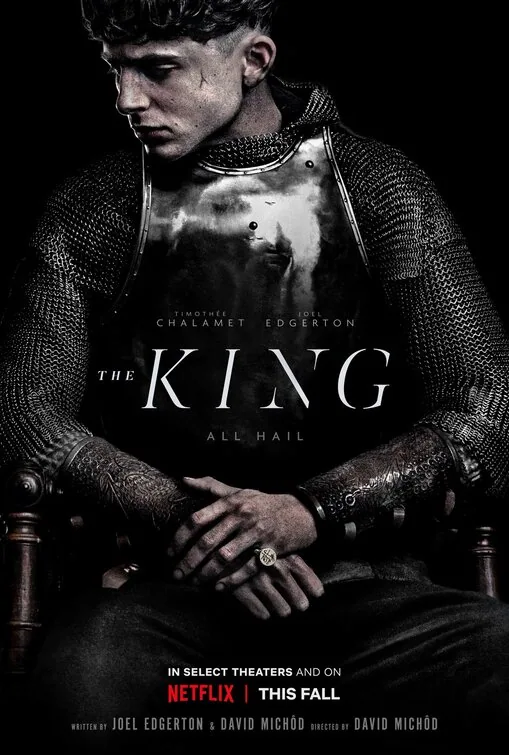
Hal’s transformation is driven by decisions about responsibility rather than a sudden appetite for power.
Why this matches +
Related viewing experiences with the specific differences recorded for each pair.
An adjacent discovery: a related idea with a different viewing experience.
Genres: Drama / History
Shared film traits
Based on recorded story, mood and style. Your preferences can change the order.
War and civilian life
What changes The King follows a young monarch facing political manipulation and war, with a Shakespeare-inspired male ruler rather than Elizabeth's marriage and succession pressures.
Prince Hal prefers taverns and the company of Falstaff to the court, but his father’s death forces him onto the English throne. As Henry V, he faces rebellion at home and a campaign in France while confronting the burdens of authority and the consequences of choosing whom to trust. David Michôd gives the Shakespeare-inspired history a somber, muddy visual texture and a restrained account of a young ruler becoming a wartime king.
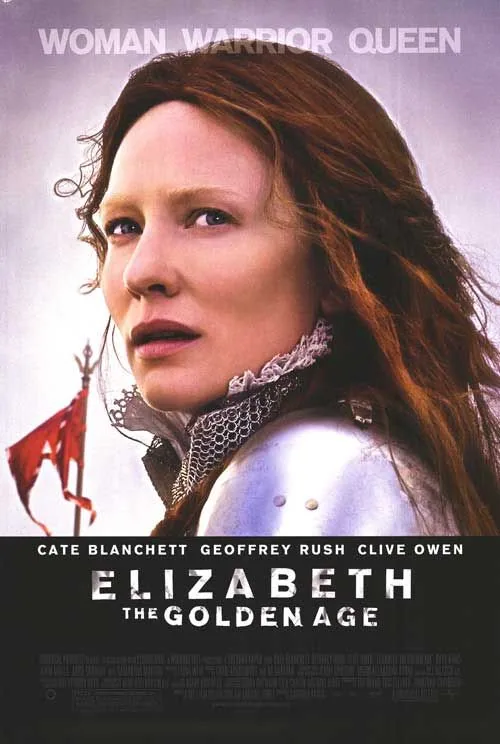
An established queen faces foreign invasion and domestic plots while remaining under pressure to secure a succession through marriage. Attraction to a celebrated explorer offers an imagined freedom that his relationship with her attendant makes painful and politically unequal. Public defiance and private jealousy develop beside an intelligence struggle, turning the defense of sovereign independence into a spectacle whose confidence cannot remove the costs borne by people close to the throne. The sequel uses national defense as spectacle while connecting sovereign self-command to a painful romantic triangle.
What drives the story
A military and succession crisis intersects with a romantic triangle, exposing the tension between a monarch's claim to personal feeling and the authority she exercises over others' lives. The Armada threat and court conspiracies run alongside Raleigh’s attraction to Elizabeth and his bond with Bess.
The people at its centre
Elizabeth's longing meets Bess's separate attachment and Raleigh's ambition, while Walsingham's protective work makes private knowledge another instrument of state survival. Elizabeth’s authority gives her power over Bess even as jealousy leaves her emotionally vulnerable to the younger woman.
What it feels like
Rich costume imagery, ceremonial tableaux and naval spectacle give the sequel a grander martial register alongside its concentrated court melodrama. Ceremony, costume and naval spectacle give this historical romance a more martial register than its predecessor.
Worth knowing
Match on sovereign vulnerability, unequal intimacy and public image under threat, while distinguishing the film's nationalist dramatic construction from an authoritative account of the Armada or religious conflict. Its heroic Armada framing and romantic invention should not stand in for military history or neutral biography.
PowerDesireIdentity
Mood
Epic · Romantic · Tense
Pacing
Epic
Visual style
Lush · Historical tableaux · Naval spectacle
Storytelling
Sovereign crisis · Court triangle · Foreign invasion