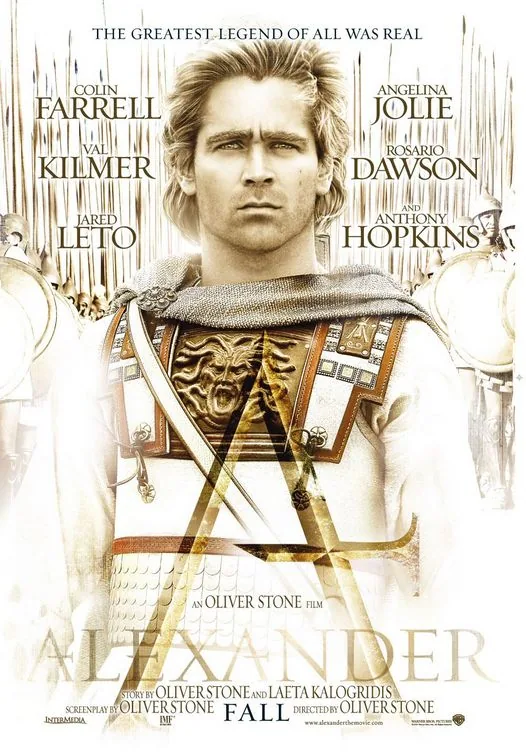
Conquest gives Alexander power and a public identity, but each expansion creates new strains on loyalty and succession. The retrospective frame makes the film's account a shaped recollection rather than a transparent record of motive.
Why this matches +
Selected for the central appeal: Historical epics following military leaders, personal ambition and the cost of political power.
Genres: Drama / History
Shared film traits
Based on recorded story, mood and style. Your preferences can change the order.
War and civilian life
What changes Alexander follows a conqueror's military campaigns and volatile private relationships on an epic scale, changing the setting from Napoleonic Europe to the ancient world.
Oliver Stone's 2004 theatrical cut follows the Macedonian king from family conflict and accession through campaigns that carry his army across Persia toward India. The victories expand Alexander's authority and the distance between his vision and his soldiers' exhaustion. Retrospective narration frames the action as shaped recollection, while his ties to Olympias, Philip, Hephaistion and his commanders complicate a portrait built around conquest. Stone later recut the film in materially different versions; this catalogue profile refers to the original theatrical release and does not blend their scene order or emphasis.
The narrative treats survival and coalition-building as linked tests: each escape wins temporary support but changes the balance of power with Jamukha.
Why this matches +
These offer a related experience with a meaningful difference in story, tone, or presentation.
An adjacent discovery: a related idea with a different viewing experience.
Genres: Drama / Biography
Shared film traits
Based on recorded story, mood and style. Your preferences can change the order.
War and civilian life
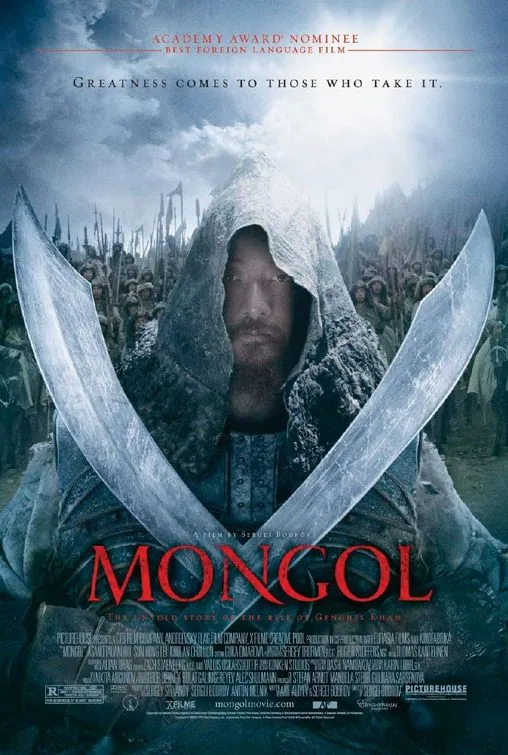
What changes Mongol follows Temüjin's rise from hardship toward political and military power, focusing on an earlier phase of leadership rather than Napoleon's ascent and fall.
The film frames Temüjin's rise through the danger that follows him from childhood. After his father is poisoned and a rival claims leadership, Temüjin survives capture, escape and exile, then reunites with Börte, who is kidnapped by the Merkit. He seeks help from blood brother Jamukha; their shared victory attracts followers to Temüjin, but rival claims to loyalty lead to war and another capture. Börte and Temüjin endure captivity and separation as his alliances and military reputation grow, setting him on a path toward becoming Genghis Khan.
The invasion of Russia intersects with years of changing fortunes among several families, linking intimate decisions to national catastrophe.
Why this matches +
These offer a related experience with a meaningful difference in story, tone, or presentation.
An adjacent discovery: a related idea with a different viewing experience.
Genres: Drama / Romance
Shared film traits
Based on recorded story, mood and style. Your preferences can change the order.
War and civilian life
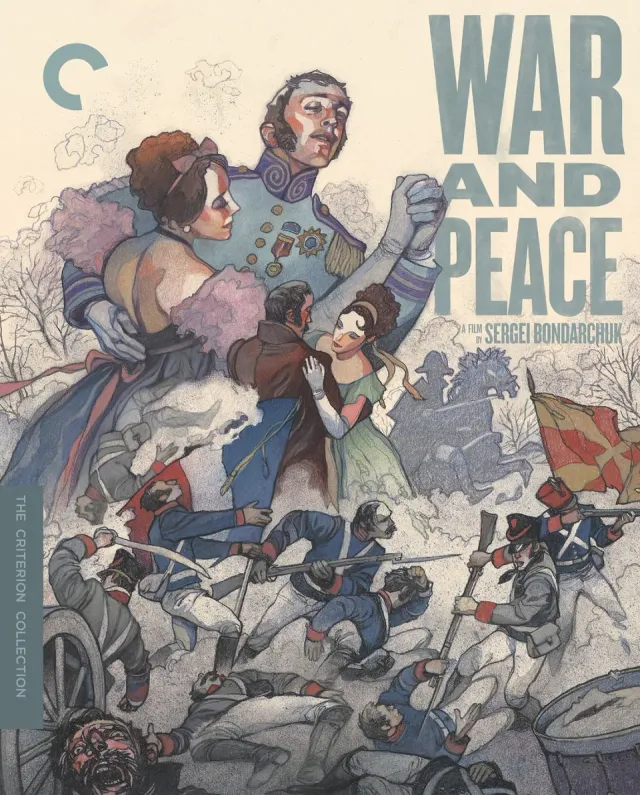
What changes War and Peace places personal relationships alongside Napoleon's invasion of Russia, approaching the same era through Russian families rather than the emperor's biography.
Across the Napoleonic era, Pierre Bezukhov, Prince Andrei Bolkonsky and Natasha Rostova search for purpose while Russia’s aristocratic society is repeatedly interrupted by war. Private life unfolds through balls, marriages, family conflict and shifting loyalties, but Napoleon’s invasion steadily alters what safety and honor mean. Bondarchuk’s adaptation follows several families across a long historical span, allowing characters who once imagined history from a distance to encounter its consequences directly. The film is often distributed in four parts and is unusually long, so its large battle scenes sit alongside intimate questions of love, ambition, grief and social expectation. It adapts Tolstoy’s novel rather than reducing it to a single hero’s campaign.
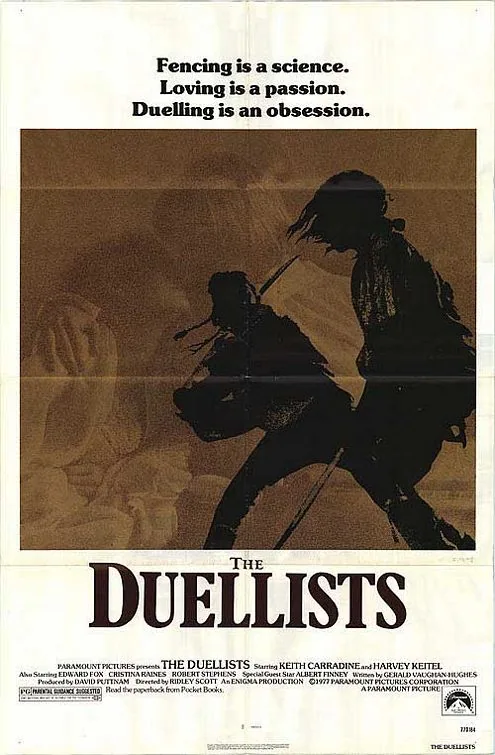
A slight perceived insult becomes a lifelong feud as two officers repeatedly return to the ritual of combat.
Why this matches +
These offer a related experience with a meaningful difference in story, tone, or presentation.
An adjacent discovery: a related idea with a different viewing experience.
Genres: Drama / Historical
Shared film traits
Based on recorded story, mood and style. Your preferences can change the order.
Both directed by Ridley Scott.
War and civilian life
What changes The Duellists follows French officers whose rivalry unfolds across the Napoleonic wars, viewing the era from below rather than through the emperor's life.
In Napoleonic-era France, an order to arrest fellow officer Gabriel Feraud sparks a personal grievance against Armand d'Hubert. Feraud insists on settling the matter through repeated duels, and their encounters recur across years of military service and political upheaval. D'Hubert tries to avoid a feud that threatens to dominate both men's lives, while Feraud treats each meeting as a question of honor. Campaigns and changing seasons frame their stubborn rivalry and eventual reckoning.
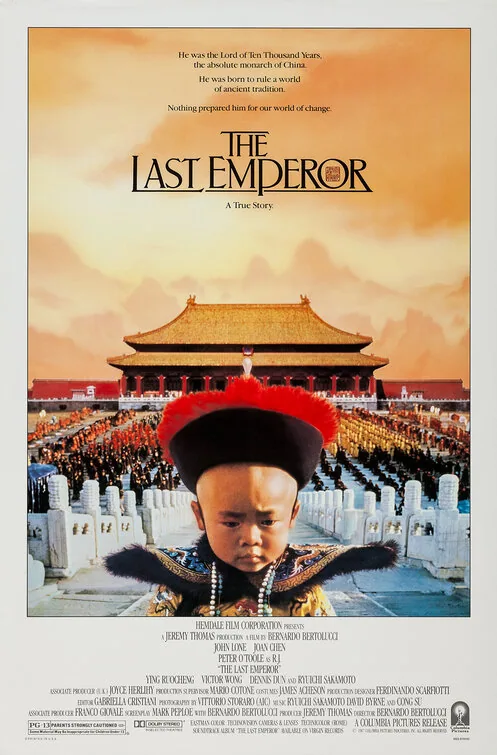
A prison-frame interrogation reorders a former ruler's ceremonial childhood, constrained adulthood and collaboration into a contested account of responsibility.
Why this matches +
These offer a related experience with a meaningful difference in story, tone, or presentation.
An adjacent discovery: a related idea with a different viewing experience.
Genres: Drama / Biography
Shared film traits
Based on recorded story, mood and style. Your preferences can change the order.
War and civilian life
What changes The Last Emperor traces a ruler's rise, loss of power and confinement across changing political orders, favoring court and biography over battlefield spectacle.
As a political prisoner after the Second World War, Puyi recalls being made emperor as a child and growing up inside the enclosed ceremony of Beijing's Forbidden City. Nominal authority repeatedly contrasts with dependence on servants, advisers and foreign power, eventually drawing him into a Japanese-backed regime in Manchuria. Imprisonment and political re-education force a reckoning with how a life organised around exceptional status can obscure responsibility for actual decisions.
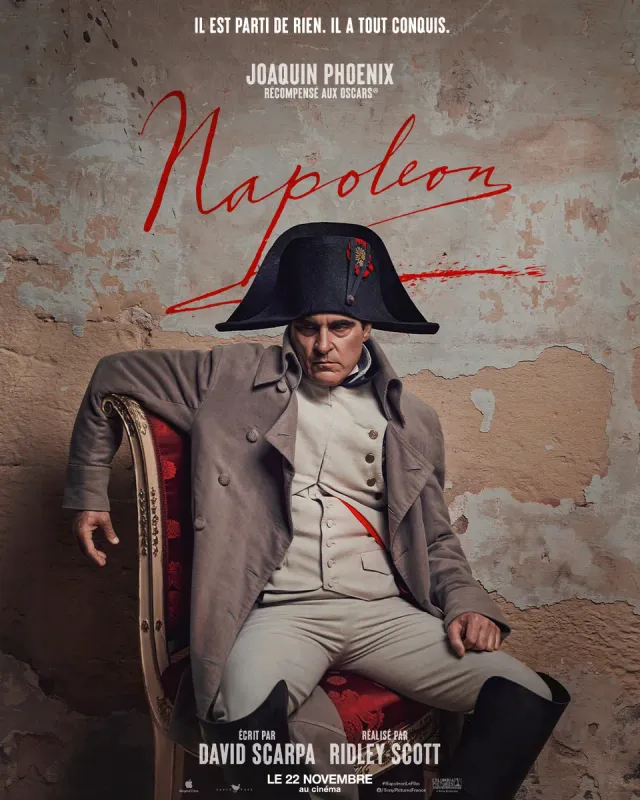
The film follows Napoleon Bonaparte from the French Revolution through his rise as emperor, military victories, marriage to Joséphine and eventual exile. His relationship with Joséphine shapes the private strand, including their lack of a shared heir and his politically motivated remarriage. The campaign sequence moves from Toulon and Austerlitz to the disastrous invasion of Russia, Waterloo and defeat. The story treats statecraft and battle through Napoleon's personal ambition and volatility, compressing a long political and military history into selected episodes rather than a full chronology.
What drives the story
A cycle of battlefield success, political consolidation and renewed expansion makes conquest feel like both Napoleon's method of rule and the source of his undoing.
The people at its centre
His intimacy with Joséphine is affectionate and possessive at once; public authority repeatedly collides with private humiliation and dynastic pressure.
What it feels like
Large battle set pieces and abrupt time jumps make the film an episodic historical spectacle, not a measured survey of the Napoleonic era.
Worth knowing
It is a stylized biographical drama with compressed chronology and disputed details; viewers seeking a comprehensive military history should treat it as an interpretation.