Based on recorded story, mood and style. Your preferences can change the order.
What changes Pi: gradual fixation with sharp ruptures. The Matrix: fast.
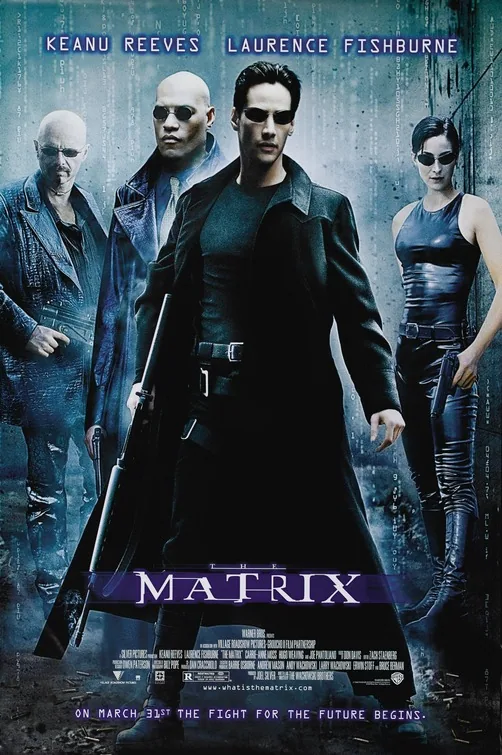
A computer programmer troubled by the sense that ordinary reality is concealing something follows an underground group offering an explanation. Discovering a system that keeps human beings under machine control requires him to learn unfamiliar physical rules and reconsider his own identity. A mentor's faith and a prediction about his role place private uncertainty inside an organised resistance facing betrayal and overwhelming force.
Both share themes of obsession, plus a paranoid atmosphere.
Why this matches +
Genres: Mystery / Thriller
Shared film traits
Based on recorded story, mood and style. Your preferences can change the order.
Memory and identity
What changes Pi: gradual fixation with sharp ruptures. The Number 23: escalating and unreliable.
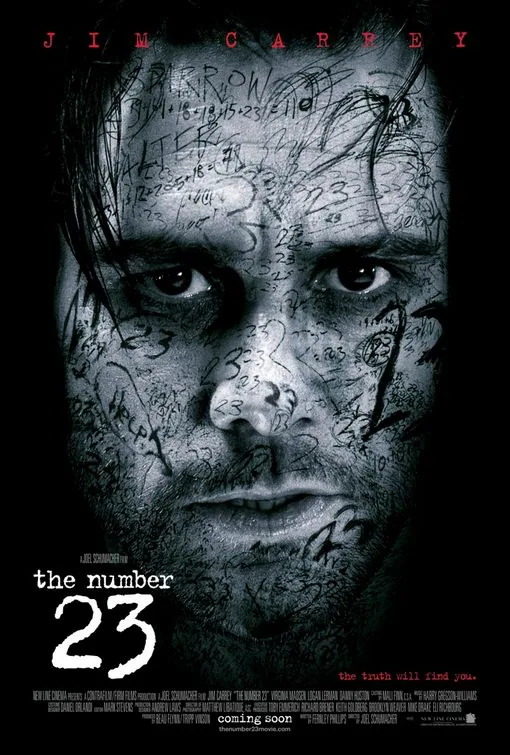
A man receives a novel whose disturbing murder story seems to echo details of his life. As he becomes absorbed by its central number, ordinary coincidences feel like clues and his family watches his behavior change. This psychological thriller follows the narrowing gap between interpretation and obsession, making the search for meaning itself a source of dread.
Based on recorded story, mood and style. Your preferences can change the order.
What changes Pi: gradual fixation with sharp ruptures. Metropolis: measured.
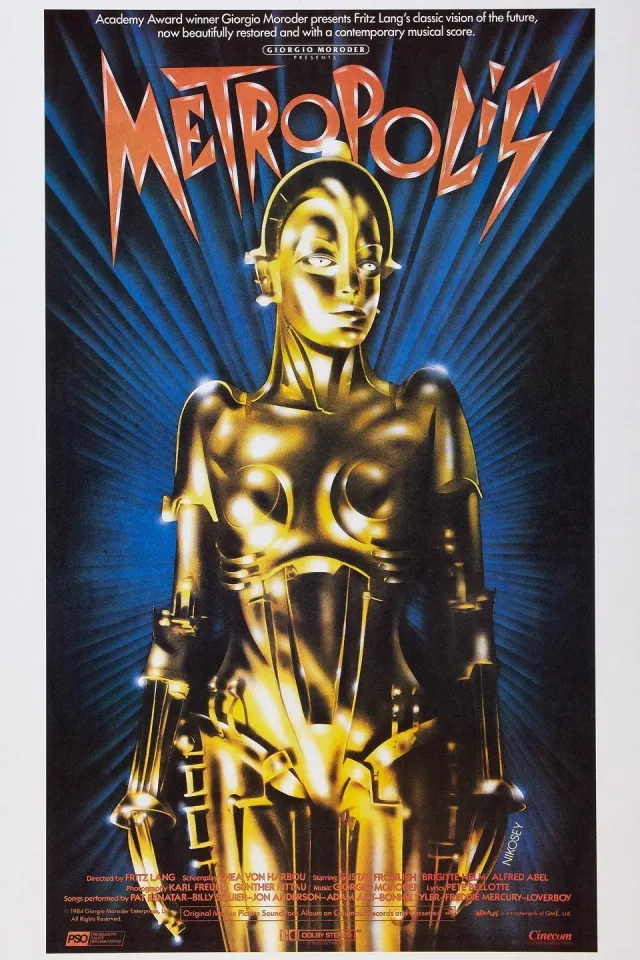
The privileged son of an industrial ruler discovers the exhaustion and danger sustaining life beneath his futuristic city. His attraction to a workers' advocate draws him into a conflict his father tries to control through surveillance and a manufactured double. As mechanised labour, religious imagery and mass unrest converge, attempts to manipulate collective fear threaten the very people the opposing leaders claim to represent.
Based on recorded story, mood and style. Your preferences can change the order.
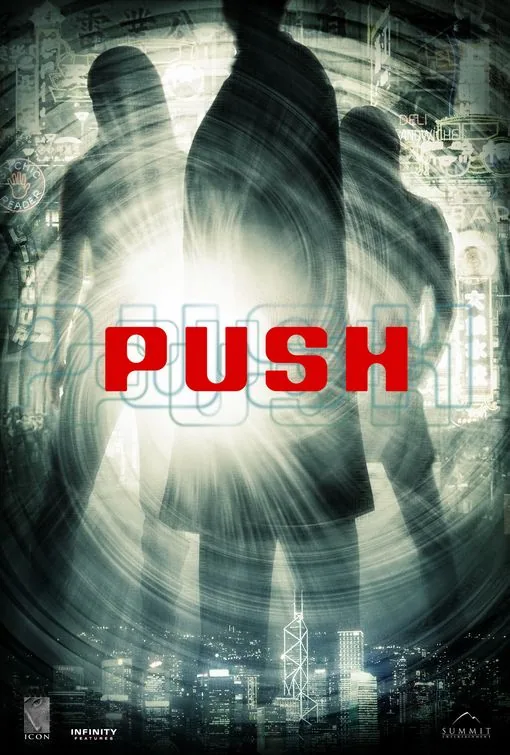
What changes Pi: gradual fixation with sharp ruptures. Push: escalating and action-driven.
In a city shaped by secret experiments, people with different psychic abilities try to survive while a government agency searches for a girl whose power could alter the balance between them. A young man with the ability to move objects joins a clairvoyant and a young watcher in a plan to find her and evade the agency. The science-fiction thriller builds its plot from contrasting abilities, uneasy alliances and a future that remains deliberately uncertain.
Based on recorded story, mood and style. Your preferences can change the order.
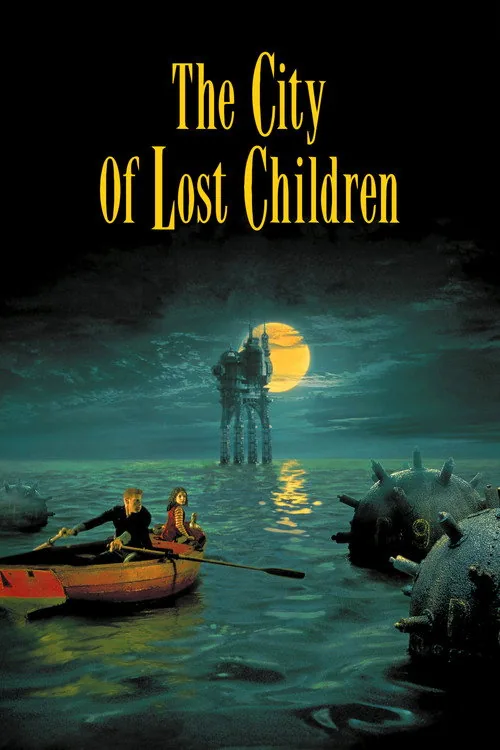
What changes Pi: gradual fixation with sharp ruptures. The City of Lost Children: quest structure, episodic encounters and fairy-tale adventure.
In a fantastical harbor city, the scientist Krank kidnaps children so he can steal their dreams, hoping to escape his inability to sleep. One captive is the little brother of strongman One, who joins forces with a streetwise girl named Miette to find him. Marc Caro and Jean-Pierre Jeunet’s French-language fantasy builds an eccentric world of mechanical devices, clones, sailors, and elaborate sets, mixing adventure and dark whimsy around the value of imagination and memory.
Based on recorded story, mood and style. Your preferences can change the order.
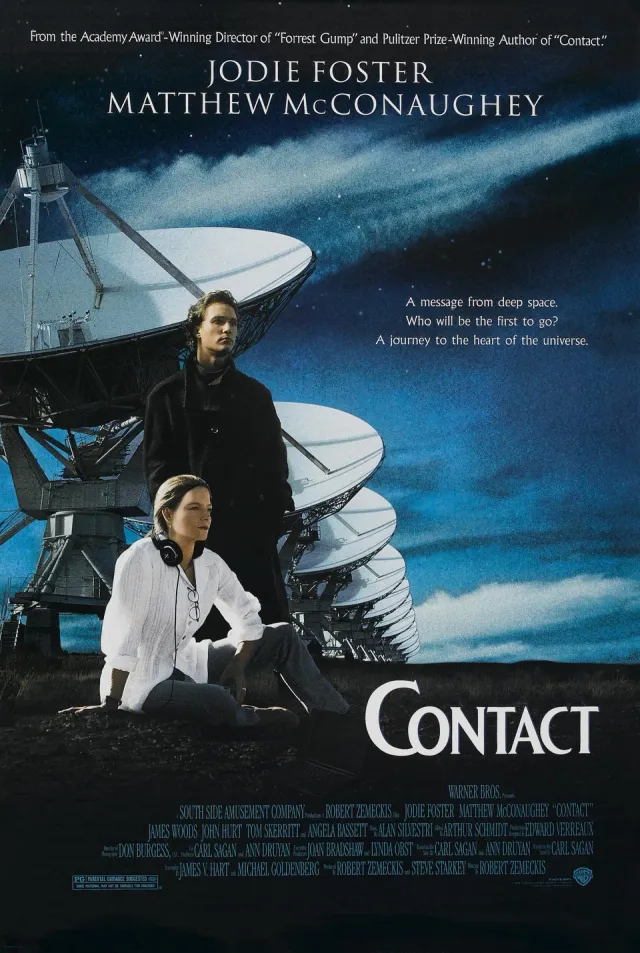
What changes Pi: gradual fixation with sharp ruptures. Contact: measured.
A radio astronomer who has spent years searching for signs of other intelligence detects a signal containing instructions for an extraordinary project. Scientific work becomes a public struggle over funding, political authority and religious belief, including who should represent humanity. Her relationship with a religious thinker and her memories of a supportive father complicate the tension between personal conviction and evidence that can be shared with others.
Based on recorded story, mood and style. Your preferences can change the order.
What changes Pi: gradual fixation with sharp ruptures. Disclosure Day: mystery-driven and gradual revelation.
A world-changing revelation draws people across the globe into questions about humanity's place in the universe. Their separate experiences connect discovery with the question of what governments and individuals should reveal. The science-fiction thriller treats first contact as a social and investigative crisis, moving between intimate observation and public uncertainty rather than presenting the event only as spectacle in the sky.
Based on recorded story, mood and style. Your preferences can change the order.
What changes Pi: gradual fixation with sharp ruptures. Eagle Eye: fast.
After his twin brother's death, an ordinary young man discovers evidence planted to make him appear a terrorist and receives instructions from a voice that can manipulate the systems around him. A mother coerced through threats to her son is forced into the same route. Their apparent escape increasingly serves another operation, revealing a conflict in which an intelligence system's claim to protect the country depends on commandeering the people it treats as variables.
Based on recorded story, mood and style. Your preferences can change the order.
Memory and identity
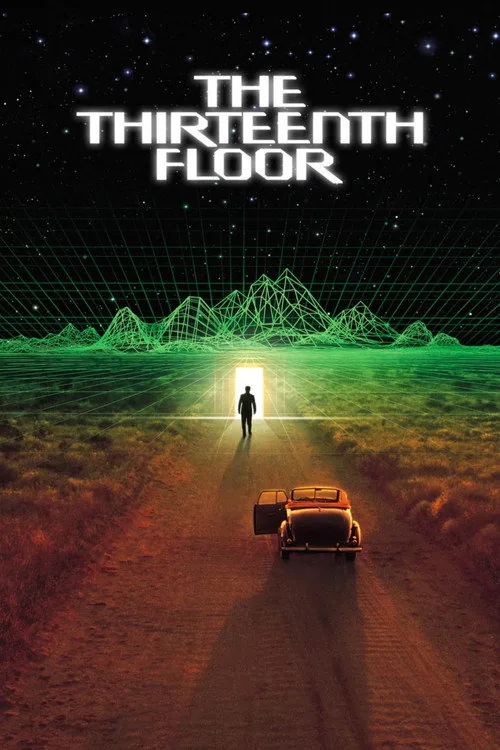
What changes Pi: gradual fixation with sharp ruptures. The Thirteenth Floor: mystery-driven, gradual revelation and steady suspense.
In 1999 Los Angeles, computer scientist Douglas Hall is suspected of murdering his mentor, Hannon Fuller, who has recently completed a simulated version of 1937 Los Angeles. Hall investigates the crime by entering the virtual world, where its inhabitants appear unaware they are computer-generated. As evidence destabilizes his confidence in his own reality, the mystery expands into questions about who is observing whom and whether the simulation can contain a world of its own. The science-fiction thriller uses noir investigation to examine simulated consciousness, identity, and nested realities.
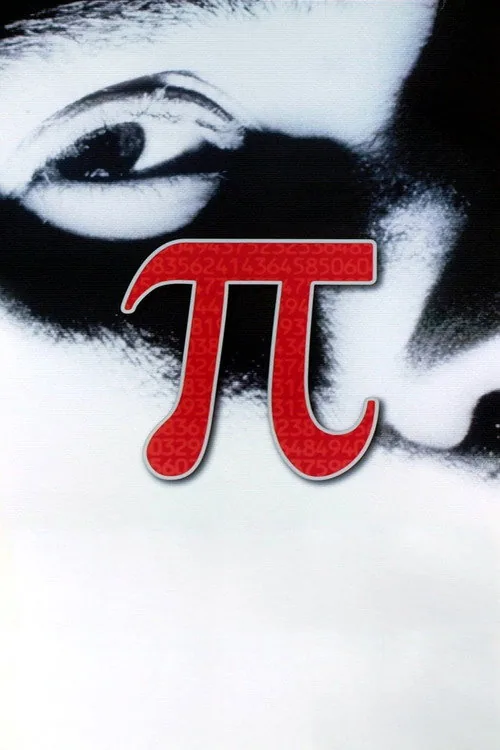
Number theorist Max Cohen believes that patterns in mathematics can explain the order of the world, and he trains a computer to predict the stock market. When the machine produces a number that draws the attention of both financiers and a religious group, Max becomes increasingly isolated and suspicious. Darren Aronofsky’s stark psychological drama turns an abstract search for certainty into a pressure-filled story about obsession, interpretation, and the cost of wanting one answer.
What drives the story
A computer-generated sequence links Max’s market experiment to competing groups that believe the number has a different meaning.
The people at its centre
Max’s mentor urges caution, while financiers and religious seekers encourage his conviction for their own reasons.
What it feels like
The high-contrast images, abrasive sound, and recurring headaches make the search feel physically unstable.
Worth knowing
It is an independent psychological puzzle about the need for order, not a conventional financial thriller about a market conspiracy.
PatternObsessionCertainty
Mood
Paranoid · Intense · Surreal
Pacing
Gradual fixation with sharp ruptures
Visual style
High-contrast black and white · Grainy urban imagery