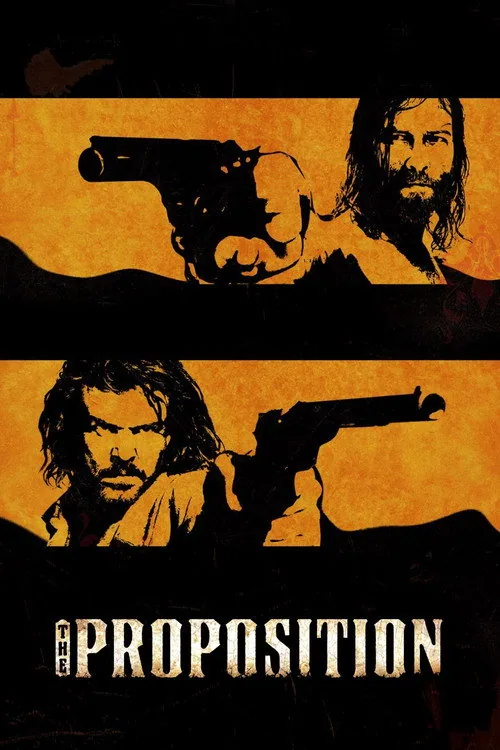
Charlie travels toward Arthur under a deadline that makes family loyalty inseparable from the law's violence.
Why this matches +
These offer a related experience with a meaningful difference in story, tone, or presentation.
An adjacent discovery: a related idea with a different viewing experience.
Genres: Western / Crime
Shared film traits
Based on recorded story, mood and style. Your preferences can change the order.
Political resistance
What changes Violence in the Australian outback forces outsiders to confront the cruelty of colonial power and their own moral choices.
In 1880s Australia, bushranger Charlie Burns is captured with his younger brother Mikey after a violent encounter with police. Captain Stanley offers Charlie a brutal bargain: find and kill his older brother Arthur, who is wanted for the murder of a family, or Mikey will be executed. Charlie rides through a harsh landscape toward Arthur's hideout, where the decision becomes entangled with violence, loyalty, and colonial authority. The western gives its outlaw story a stark, morally unstable Australian setting.
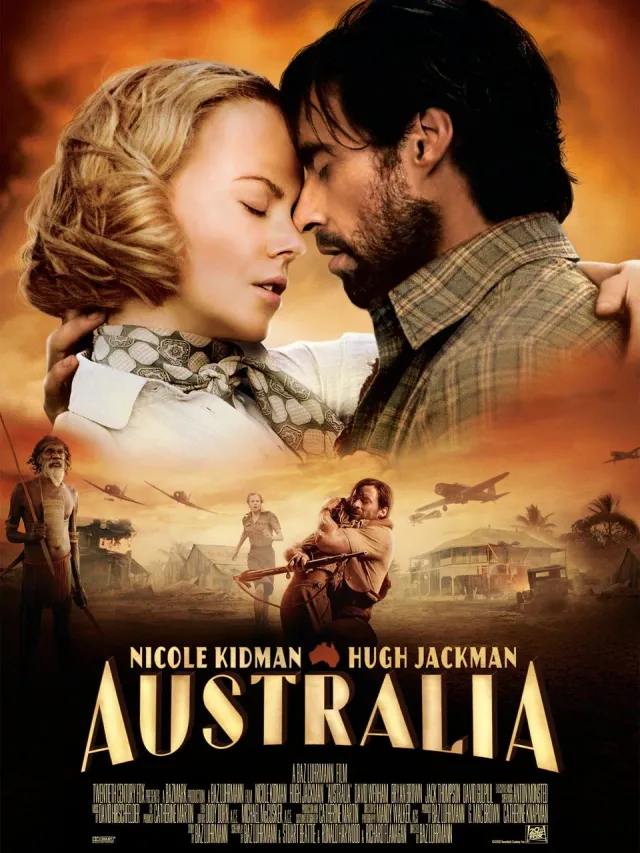
A threatened cattle property sends Sarah and the drover across the outback, then broadens into a fight to protect Nullah from wartime and racial institutions. The epic's romantic arc shares space with state coercion.
Why this matches +
These offer a related experience with a meaningful difference in story, tone, or presentation.
An adjacent discovery: a related idea with a different viewing experience.
Genres: Adventure / Drama
Shared film traits
Based on recorded story, mood and style. Your preferences can change the order.
Escape and pursuit
What changes Outsiders in the Australian outback confront a powerful landowner and build a relationship across cultural and social divisions.
In 1939, English aristocrat Sarah Ashley reaches a remote cattle station to find her husband dead and the property threatened by a rival. She joins a drover and a mixed-descent Aboriginal child, Nullah, on an arduous cattle drive that brings romance and chosen family into a society organized by colonial power. As war reaches northern Australia, the child's safety is shaped by policies that remove Indigenous children from their families. Baz Luhrmann's sweeping melodrama acknowledges that violence but filters it through a white outsider's adventure, so its reconciliation is not a complete Indigenous history.
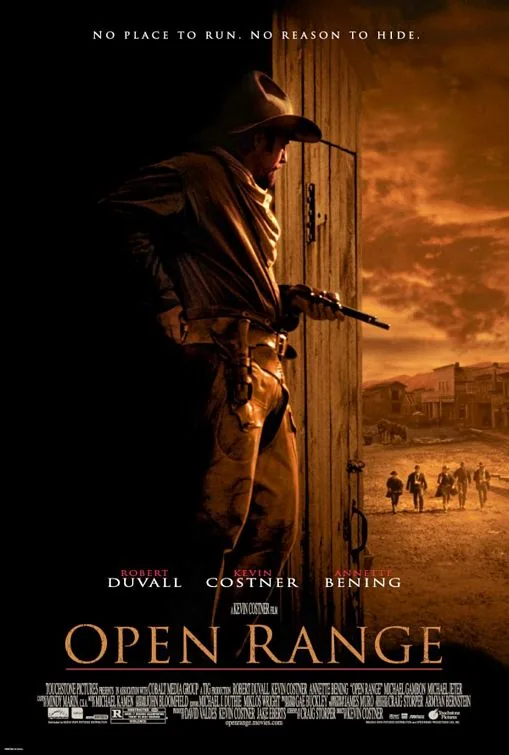
A conflict over the right to graze cattle becomes a test of whether a small community can resist a rancher's private authority.
Why this matches +
These offer a related experience with a meaningful difference in story, tone, or presentation.
An adjacent discovery: a related idea with a different viewing experience.
Genres: Western / Drama
Shared film traits
Based on recorded story, mood and style. Your preferences can change the order.
Political resistance
What changes Frontier travelers challenge a powerful landowner whose violence threatens people trying to live independently.
Two free-grazing cattlemen enter a Montana town controlled by a wealthy rancher who expects them to follow his rules. When violence against their crew reveals that negotiation alone will not protect the community, the men consider how to respond without abandoning the code that has guided their lives. The Western builds from quiet work and local observation toward a confrontation about land, power and the meaning of self-determination.
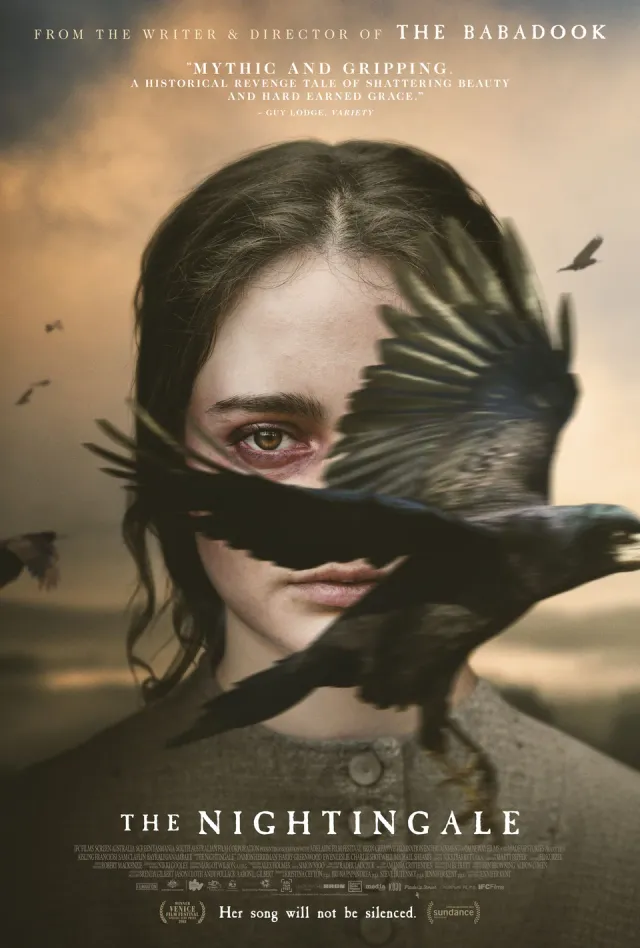
Clare pursues the soldiers who harmed her, relying on Billy to navigate a dangerous colonial frontier.
Why this matches +
These offer a related experience with a meaningful difference in story, tone, or presentation.
An adjacent discovery: a related idea with a different viewing experience.
Genres: Drama / Thriller
Shared film traits
Based on recorded story, mood and style. Your preferences can change the order.
Political resistance · Survival
What changes An unlikely pair travels through the Australian wilderness while confronting colonial violence and the abuse of Indigenous people.
In 1825 colonial Tasmania, Clare is an Irish convict seeking release from service under a British officer whose unit controls her future. When violence destroys what she hoped to build, she sets out after the men responsible and hires Billy, an Aboriginal tracker, to guide her through the wilderness. Their journey becomes an uneasy partnership shaped by grief, colonial power, racial violence, and the different histories each carries.
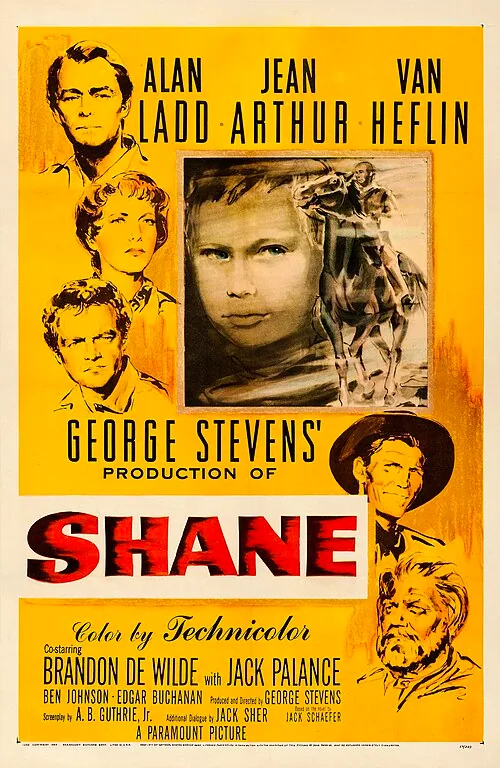
Ryker’s land pressure starts as intimidation and escalates into a showdown when the homesteaders’ legal claims cannot protect them from armed force.
Why this matches +
These offer a related experience with a meaningful difference in story, tone, or presentation.
An adjacent discovery: a related idea with a different viewing experience.
Genres: Drama / Romance
Shared film traits
Based on recorded story, mood and style. Your preferences can change the order.
What changes A skilled gunfighter opposes a powerful landowner's campaign of intimidation, defending vulnerable people at personal cost.
A quiet gunfighter rides into a Wyoming valley and takes work on Joe Starrett’s homestead, where settlers are being pressured to leave by cattle baron Rufus Ryker. Joe and Shane first confront Ryker’s men without guns, but the arrival of hired gunfighter Jack Wilson turns the dispute toward lethal violence. The Starretts’ young son Joey admires Shane’s skill, while Marian sees the cost of making a gunman the family’s protector. When Ryker tries to draw Joe into a trap, Shane intervenes, wins the final fight and rides away despite Joey’s call to return.
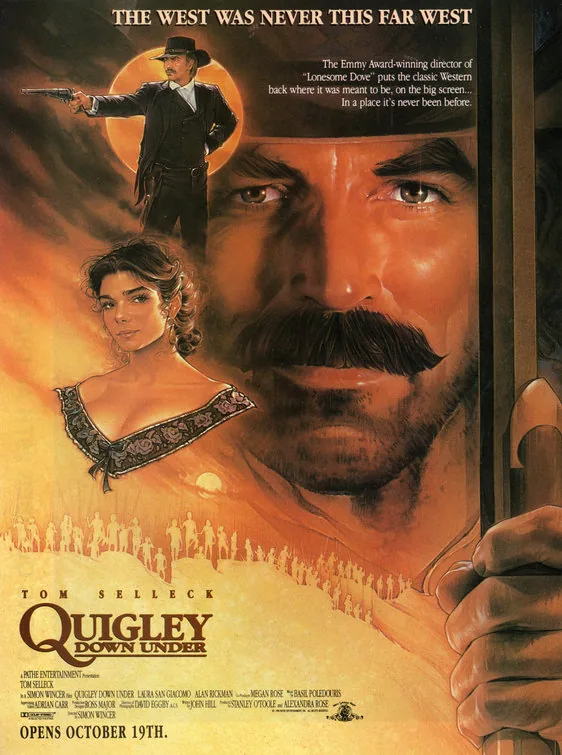
American sharpshooter Matthew Quigley accepts work in Australia only to learn that his employer expects him to kill Aboriginal people. He refuses and becomes the target of the landowner's violence, while forming an uneasy partnership with Cora, a displaced American woman. The Western relocates its frontier conflict to the Australian outback and makes resistance to a settler's authority the moral center of Quigley's journey.
What drives the story
A hired marksman refuses an unjust assignment and is hunted by his employer.
The people at its centre
Quigley and Cora begin in mutual suspicion and develop trust while resisting a shared oppressor.
What it feels like
The journey alternates open-country travel with decisive confrontations and a final moral reckoning.
Worth knowing
Its Western is organized around refusal of colonial violence, rather than a town-taming lawman plot.
ConscienceColonialismJustice
Mood
Rugged · Reflective · Threatened
Pacing
Journey with recurring confrontations
Visual style
Wide Australian landscapes · Traditional Western framing