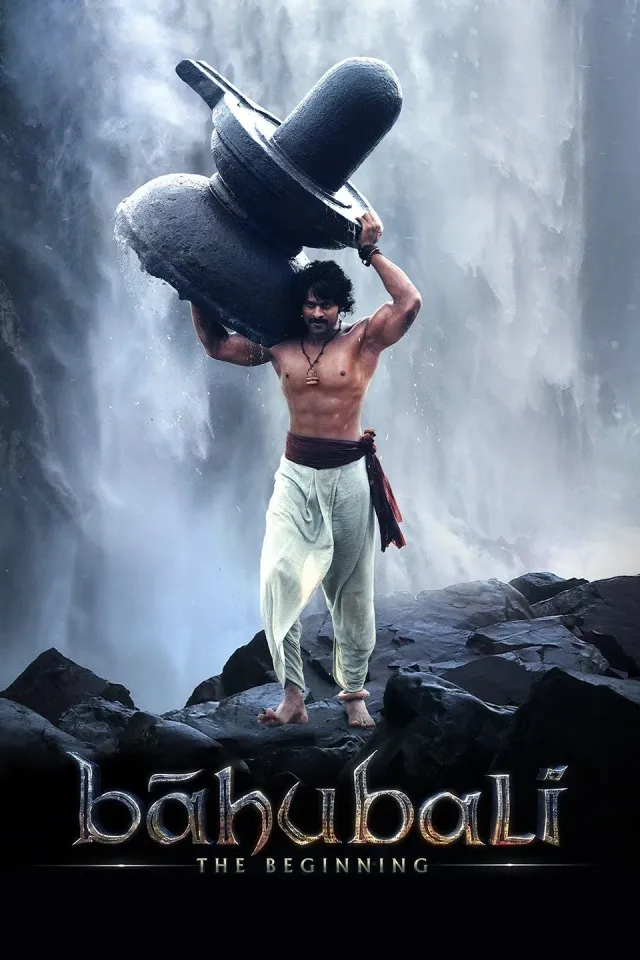
Shivudu's ascent and rescue lead him from private curiosity into a dynastic struggle he inherits without understanding. The first film converts a coming-of-age quest into a succession mystery and ends before resolving that history.
Why this matches +
A princely or sacred epic gives spectacular conflict a structure of duty, divine power and personal sacrifice.
Genres: Action / Adventure
Shared film traits
Based on recorded story, mood and style. Your preferences can change the order.
What changes An invented succession mystery replaces the Ramayana’s sacred narrative and the specific roles of Rama and Ravana.
Raised in a community below an immense waterfall, Shivudu repeatedly attempts the ascent to discover the world above. He meets Avantika, a resistance fighter whose mission draws him into the occupied kingdom of Mahishmati, where he helps free a captive woman and learns that his own identity is tied to the royal conflict. His physical quest becomes a story about inheritance, public duty and an older betrayal. S. S. Rajamouli's first installment closes on a deliberate question about the past, so the sequel's answers belong to a different film.
A threatened mass destruction imposes a deadline on a quest for the one means of defeating a god's monster without accepting the demanded human sacrifice.
Why this matches +
A princely or sacred epic gives spectacular conflict a structure of duty, divine power and personal sacrifice.
Genres: Fantasy / Action
Shared film traits
Based on recorded story, mood and style. Your preferences can change the order.
What changes Greek mythology and a monster-defeating deadline replace Rama and Ravana’s intertwined destinies.
Raised among humans, Perseus loses his adoptive family in a confrontation between mortals and gods, then learns that he is the son of Zeus. A divine demand for a princess's sacrifice sends him and a band of soldiers searching for a way to defeat the creature threatening her city. Rejecting the authority that claims him becomes complicated when the means of resistance also involve help, knowledge and weapons from the supernatural world.
A divided identity becomes a confrontation with a state whose ruler experiences a demand for freedom as betrayal of family and inherited duty.
Why this matches +
A princely or sacred epic gives spectacular conflict a structure of duty, divine power and personal sacrifice.
Genres: Animation / Drama
Shared film traits
Based on recorded story, mood and style. Your preferences can change the order.
What changes An animated biblical musical about liberation replaces the live-action Ramayana; the religious traditions are distinct.
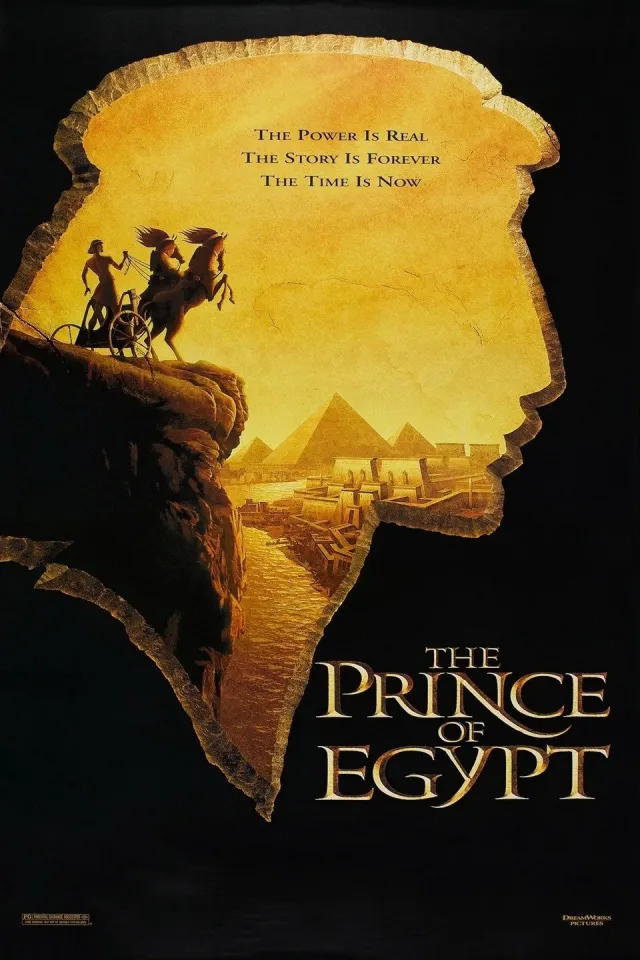
A young man raised in an Egyptian royal household discovers that his birth family belongs to a population enslaved by the state he has treated as home. Leaving that identity behind leads him towards a demand to confront the ruler he once knew as a brother. Liberation becomes both a public struggle against an entrenched order and an intimate conflict over loyalty, authority and the human cost of refusing change.
An apparently small inheritance creates a burden whose safe resolution requires a journey into the centre of the power pursuing it.
Why this matches +
A different cultural epic or moral quest explores loyalty, authority and costly obligation; its spiritual tradition, politics and scale remain distinct.
An adjacent discovery: a related idea with a different viewing experience.
Genres: Fantasy / Adventure
Shared film traits
Based on recorded story, mood and style. Your preferences can change the order.
What changes An ensemble quest in an invented fantasy world replaces an adaptation of a living religious tradition and a prince’s fate.
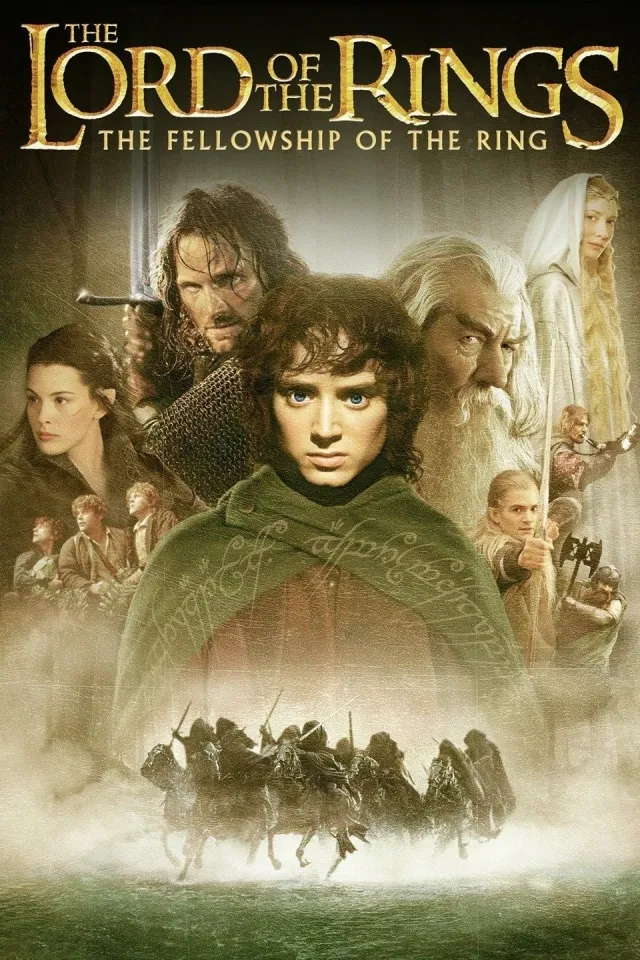
A provincial young hobbit inherits an object that offers corrupting power and attracts a force seeking domination far beyond his home. Leaving familiar safety with companions brings him into an alliance whose members disagree about whether the object should be destroyed or used. The journey tests loyalty through pursuit, loss and the growing recognition that responsibility cannot be transferred simply to whoever appears strongest.
The rescue of Malli and Ram’s covert search for weapons eventually collide, making friendship the bridge between two different routes into resistance.
Why this matches +
A different cultural epic or moral quest explores loyalty, authority and costly obligation; its spiritual tradition, politics and scale remain distinct.
An adjacent discovery: a related idea with a different viewing experience.
Genres: Action / Drama
Shared film traits
Based on recorded story, mood and style. Your preferences can change the order.
What changes A fictionalized anti-colonial friendship in the twentieth century replaces a sacred mythological narrative.
In 1920s British-ruled India, Gond guardian Bheem travels to Delhi to rescue Malli, a young girl abducted by the governor’s wife. Police officer Ram is tasked with finding Bheem, though each man is unaware of the other’s true mission when they meet and become friends. Their loyalty is tested when Bheem’s rescue attempt brings him into conflict with Ram, whose own service to the colonial police hides a plan to obtain weapons for a rebellion. The two men eventually reunite to attack the British stronghold, free Malli and arm the resistance before returning to their separate communities.
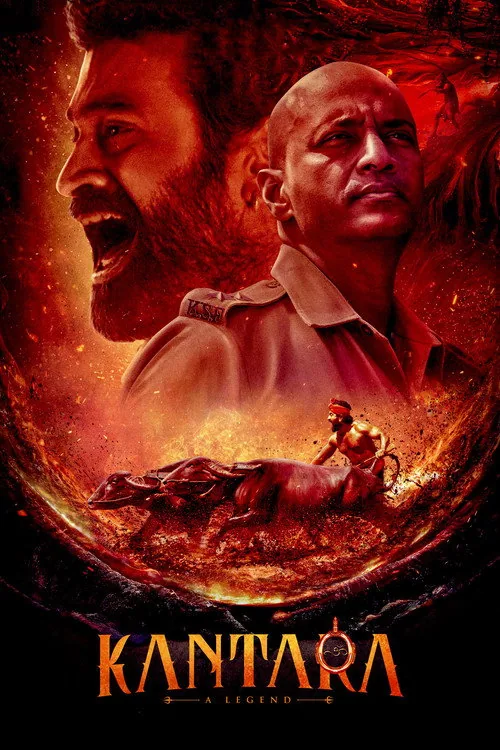
A village land dispute draws an evasive Kambala performer into a spiritual obligation tied to the forest.
Why this matches +
A different cultural epic or moral quest explores loyalty, authority and costly obligation; its spiritual tradition, politics and scale remain distinct.
An adjacent discovery: a related idea with a different viewing experience.
Genres: action / drama
Shared film traits
Based on recorded story, mood and style. Your preferences can change the order.
What changes A local land conflict and regional ritual tradition replace a pan-Indian princely epic; these traditions are not interchangeable.
In coastal Karnataka, the villagers' relationship with the forest is shaped by a longstanding promise involving a local spirit deity and the land. Years later, Kambala performer Shiva avoids his family's history until a landlord's claim and a forest officer's enforcement bring that inheritance into direct conflict. The Kannada drama combines village life, ritual, land rights, and action as Shiva is pulled toward a spiritual role that his community understands differently from him.
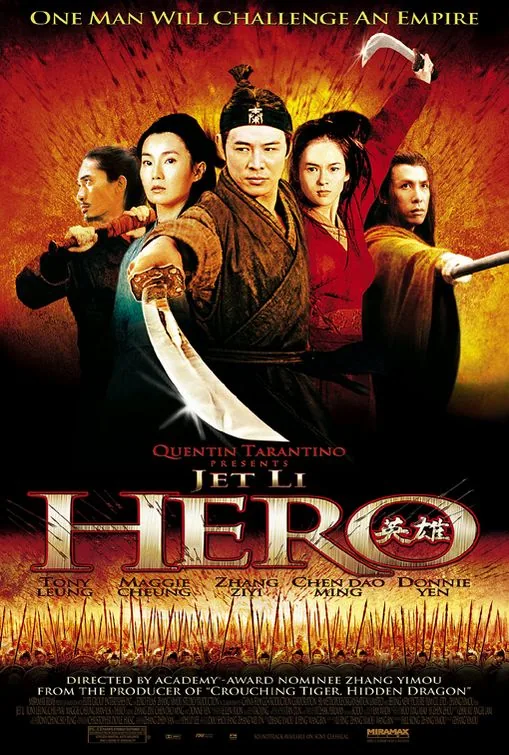
Nameless’s successive versions of the assassination plot revise what the King believes, until narrative uncertainty gives way to a decision about political unity. Each retelling changes what the King can infer about the assassins’ motives and loyalty.
Why this matches +
A different cultural epic or moral quest explores loyalty, authority and costly obligation; its spiritual tradition, politics and scale remain distinct.
An adjacent discovery: a related idea with a different viewing experience.
Genres: Action / Drama
Shared film traits
Based on recorded story, mood and style. Your preferences can change the order.
What changes A Chinese assassination narrative and competing retellings replace the Ramayana’s mythological destiny; its political argument is different.
An assassin called Nameless recounts to the King of Qin how he defeated three opponents who threatened the ruler, but each account changes the apparent motives and events. Color-coded flashbacks make narrative revision visible, so the audience must watch the same relationships shift as the story changes. The final meeting moves beyond tactical deception to a choice between revenge and the possibility of a unified realm. That choice gives the film’s spectacular martial arts an explicit political argument, but it does not require viewers to accept imperial order as morally uncomplicated. Its beauty and its endorsement of sacrifice need to be considered together.
The year-long beheading bargain gives Gawain a fixed destination; the encounters along the road test whether he can meet its consequence without evasion.
Why this matches +
A different cultural epic or moral quest explores loyalty, authority and costly obligation; its spiritual tradition, politics and scale remain distinct.
An adjacent discovery: a related idea with a different viewing experience.
Genres: Medieval / Speculative fiction
Shared film traits
Based on recorded story, mood and style. Your preferences can change the order.
What changes A slow, ambiguous Arthurian moral journey replaces large-scale action and the Rama-Ravana epic.
On Christmas at Camelot, King Arthur’s nephew Gawain accepts a supernatural challenger’s beheading game, agreeing to receive the same blow in a year. He travels to the Green Chapel to honour the bargain, passing through tests of courage, temptation and self-preservation that unsettle his idea of what a knight should be. The journey becomes stranger and more inward than a conventional quest, and Gawain must decide whether keeping his life at any cost counts as keeping his word. David Lowery’s adaptation uses the medieval romance as a dreamlike character study rather than a clean heroic adventure.
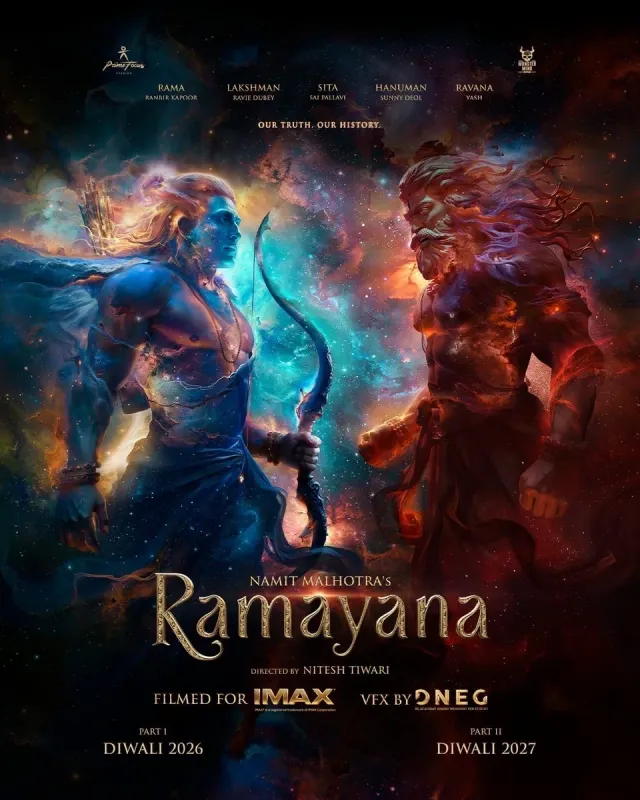
Rama, a prince whose path demands sacrifice, and Ravana, a powerful king shaped by vengeance, are drawn into a shared destiny. This first installment adapts the Ramayana as a large scale mythological adventure, with exile, romance and conflict among its central elements. Its published premise establishes the opposing figures and their bond through prophecy without resolving the larger story.
What drives the story
Prophecy links a prince defined by sacrifice with a king driven by vengeance in an opening epic installment.
The people at its centre
Rama and Ravana form the opposing centers of a mythological conflict whose larger consequences extend beyond this installment.
What it feels like
Published materials establish a large scale mythological adventure; detailed claims about its finished rhythm or resolution remain premature.
Worth knowing
The first installment begins a larger adaptation; historical war realism and a complete standalone conclusion should not be assumed.