The pact shapes a relationship that provides mutual presence without a promise of recovery. Ben’s worsening health keeps the agreement under pressure, while Sera must decide what care can mean when he rejects intervention.
Why this matches +
Selected for the central appeal: Compulsive behavior preserves a lonely adult’s distance until an intimate relationship makes that defense untenable.
Genres: Drama / Romance
Shared film traits
Based on recorded story, mood and style. Your preferences can change the order.
What changes Self-destructive addiction makes intimacy both necessary and nearly impossible; an alcoholic’s openly terminal project and a sex worker’s companionship replace Brandon’s concealed compulsion and salaried respectability.
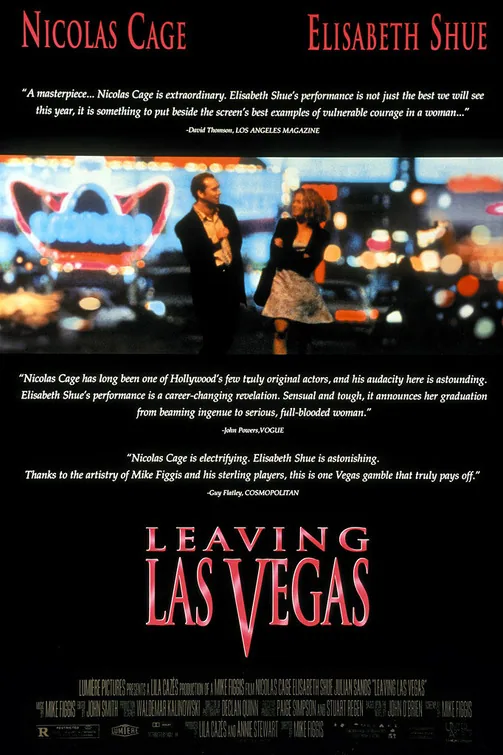
After losing his job and family, screenwriter Ben Sanderson arrives in Las Vegas intending to drink himself to death. He meets sex worker Sera, and they form a relationship around an explicit pact: she will not ask him to stop drinking, and he will not interfere with her work. Their agreement offers companionship while refusing the usual rescue plot, but it also leaves each person exposed to the limits of what the other can provide. Sera has desires, work and boundaries beyond Ben’s decline; her care does not mean she endorses his death. The film’s ending refuses a recovery arc, yet that artistic choice is not evidence that treatment or support cannot help people with addiction. Its bleak romance should remain a portrait of two characters, not advice about care.
Don repeatedly tries to drink secretly and resume writing, but each failed attempt increases the pressure on the people trying to help him.
Why this matches +
Selected for the central appeal: Compulsive behavior preserves a lonely adult’s distance until an intimate relationship makes that defense untenable.
Genres: Drama / Flashback
Shared film traits
Based on recorded story, mood and style. Your preferences can change the order.
What changes An urban man’s apparently managed life collapses around a compulsion that defeats work and connection; alcoholism and a more explicit recovery framework replace sexual routines and unresolved distance from a sister.
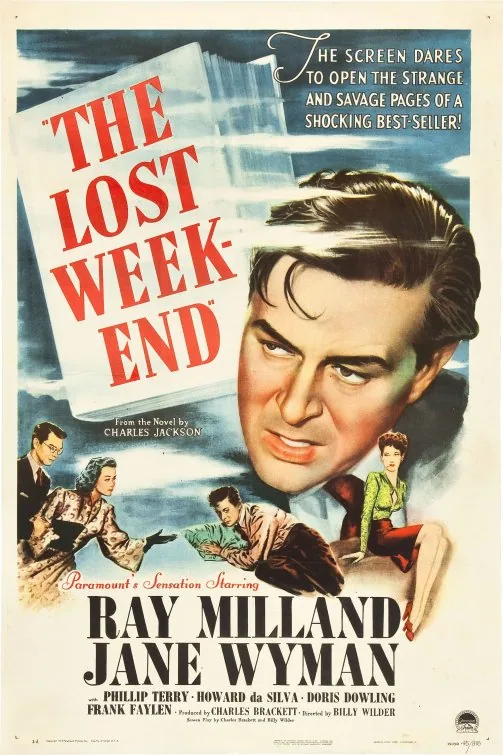
Writer Don Birnam tries to leave New York for a drinking trip, but his brother Wick and girlfriend Helen keep attempting to support him. A delayed departure and a lost bottle pull Don back into a cycle of drinking, lies and missed chances to write. As he moves through bars, his apartment and a hospital ward, the film shows how addiction damages his relationships and distorts his sense of time and possibility. Billy Wilder’s adaptation of Charles R. Jackson’s novel treats alcoholism as the central drama rather than a side plot to Don’s artistic ambitions.
Erika tries to control intimacy by scripting it, but Walter's response exposes how little either understands the other's desire or boundaries.
Why this matches +
Selected for the central appeal: Compulsive behavior preserves a lonely adult’s distance until an intimate relationship makes that defense untenable.
Genres: Drama / Thriller
Shared film traits
Based on recorded story, mood and style. Your preferences can change the order.
What changes A rigid public identity coexists with private sexual compulsions and a painful inability to sustain closeness; a woman’s controlling mother and student relationship replace the brother-sister disruption.
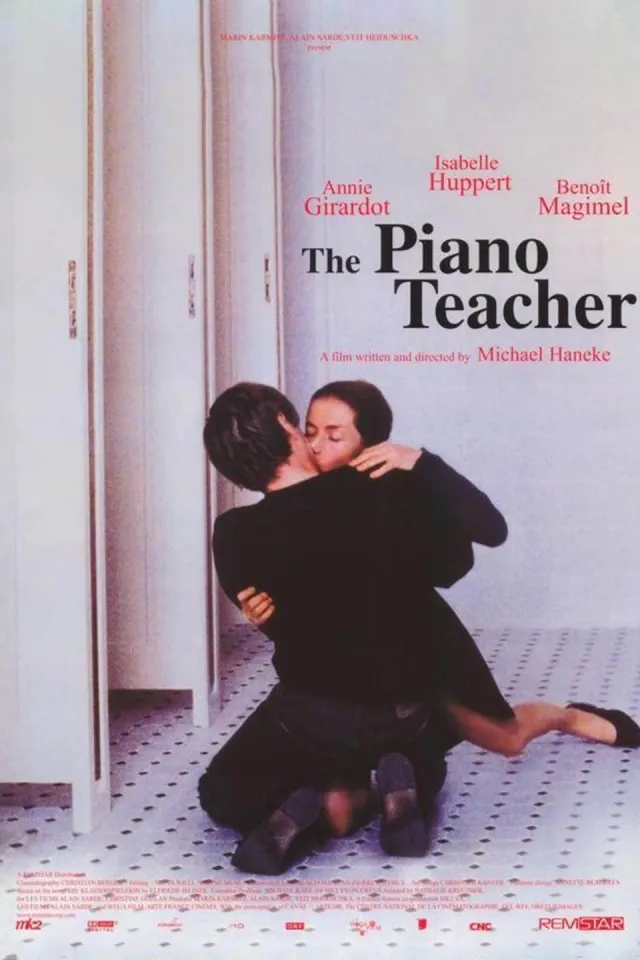
Erika Kohut is a demanding piano professor in Vienna whose controlled public manner coexists with private compulsions, self-harm and a suffocating life with her mother. Student Walter Klemmer admires her playing and pursues her, but Erika tries to define the relationship through a written list of rules for sexual submission. Walter cannot accept the terms as Erika imagines them, and desire becomes a struggle over who controls the encounter. The film's conservatory world is also marked by performance pressure, jealousy and humiliation, as Erika harms another student's hand to prevent a rival from playing. Michael Haneke adapts Elfriede Jelinek's novel as a severe study of repression and power; its sexual violence is explicit and the ending refuses therapeutic closure.
Joe’s autobiographical account is continually interrupted by Seligman’s interpretations, so the frame story tests who has authority over her experience.
Why this matches +
Related viewing experiences with the specific differences recorded for each pair.
An adjacent discovery: a related idea with a different viewing experience.
Genres: Drama / Erotic
Shared film traits
Based on recorded story, mood and style. Your preferences can change the order.
What changes Sexual compulsion is explored without allowing a listener’s explanations to settle its meaning; an explicit, narrated lifetime and argumentative chapters replace restrained observation of a man’s current routine.
After stranger Seligman finds Joe injured in an alley, he takes her to his apartment, where she recounts her sexual history across eight chapters and two volumes. Joe describes her adolescence, relationships, compulsions and later efforts to live with the consequences of her behavior, while Seligman repeatedly reframes her memories through his interests in music, fishing, mathematics and literature. Their conversation becomes an argument about whether her story can be separated from shame, diagnosis or the listener’s own needs. After Joe falls asleep, Seligman enters her room and attempts to assault her; she shoots him as he approaches, abruptly breaking the trust his listening seemed to build. The film’s structure moves between explicit memory and abstract analogy rather than presenting a neutral case history.
Brandon is a well-paid New Yorker whose pornography use, sex and pursuit of anonymous encounters have become a rigid daily routine. His sister Sissy arrives unexpectedly and asks to stay, bringing emotional need into an apartment and life Brandon has arranged to avoid intimacy. He tries a date with a co-worker, but cannot maintain the closeness and retreats into anonymous sex; meanwhile, his anger toward Sissy escalates as her vulnerability makes their shared past difficult to ignore. When she harms herself, Brandon’s carefully controlled distance gives way to panic, though the ending leaves his next choice unresolved.
What drives the story
Brandon’s repeated sexual routines offer brief control but increasingly interfere with work, relationships and the possibility of sustained intimacy.
The people at its centre
Sissy asks for connection in a way Brandon experiences as invasion; the film refuses to reduce either sibling to a simple diagnosis or a single cause.
What it feels like
Long takes, spare dialogue and unadorned city interiors make repetition and silence part of the experience, while Carey Mulligan’s bar performance briefly exposes Brandon’s guarded emotion.
Worth knowing
A severe adult drama with explicit sexual material, compulsive behavior and self-harm; it approaches distress through observation rather than a reassuring recovery arc.
IntimacyCompulsionFamily
Mood
Austere · Disturbing · Isolated
Pacing
Repetitive · Slow-burn · Open-ended
Visual style
Long takes · Urban interiors · Unadorned framing
Storytelling
Adult character study · Compulsive behavior · Family estrangement