A therapeutic relationship crossing personal boundaries destabilizes a professional alliance and competing theories of the unconscious.
Why this matches +
These offer a related experience with a meaningful difference in story, tone, or presentation.
An adjacent discovery: a related idea with a different viewing experience.
Genres: Drama / History
Shared film traits
Based on recorded story, mood and style. Your preferences can change the order.
What changes A Dangerous Method examines sexuality through the unequal relationship between patient and analyst, in a historical professional setting rather than a stranger's extended conversation.
A young woman enters psychiatric treatment under Carl Jung and becomes both an intellectual contributor and an intimate disruption in his life. Jung's relationship with Sigmund Freud initially offers a framework for exploring the mind, but professional disagreements and private desire strain their alliance. The film follows the overlap of therapeutic authority, sexual transgression, and competing ambitions during an early period of psychoanalysis.
Brandon’s repeated sexual routines offer brief control but increasingly interfere with work, relationships and the possibility of sustained intimacy.
Why this matches +
These offer a related experience with a meaningful difference in story, tone, or presentation.
An adjacent discovery: a related idea with a different viewing experience.
Genres: Drama / Erotic
Shared film traits
Based on recorded story, mood and style. Your preferences can change the order.
What changes Shame follows a person's troubled relationship with sexual behavior and isolation, using a contemporary New York character study rather than Joe's narrated life story.
Brandon is a well-paid New Yorker whose pornography use, sex and pursuit of anonymous encounters have become a rigid daily routine. His sister Sissy arrives unexpectedly and asks to stay, bringing emotional need into an apartment and life Brandon has arranged to avoid intimacy. He tries a date with a co-worker, but cannot maintain the closeness and retreats into anonymous sex; meanwhile, his anger toward Sissy escalates as her vulnerability makes their shared past difficult to ignore. When she harms herself, Brandon’s carefully controlled distance gives way to panic, though the ending leaves his next choice unresolved.
The apartment agreement suppresses names and biography, but its apparent symmetry breaks as Paul uses grief and intensity to set the conditions. The public lives outside the room continue to shape the encounters he wants to treat as separate.
Why this matches +
These offer a related experience with a meaningful difference in story, tone, or presentation.
An adjacent discovery: a related idea with a different viewing experience.
Genres: Drama
Shared film traits
Based on recorded story, mood and style. Your preferences can change the order.
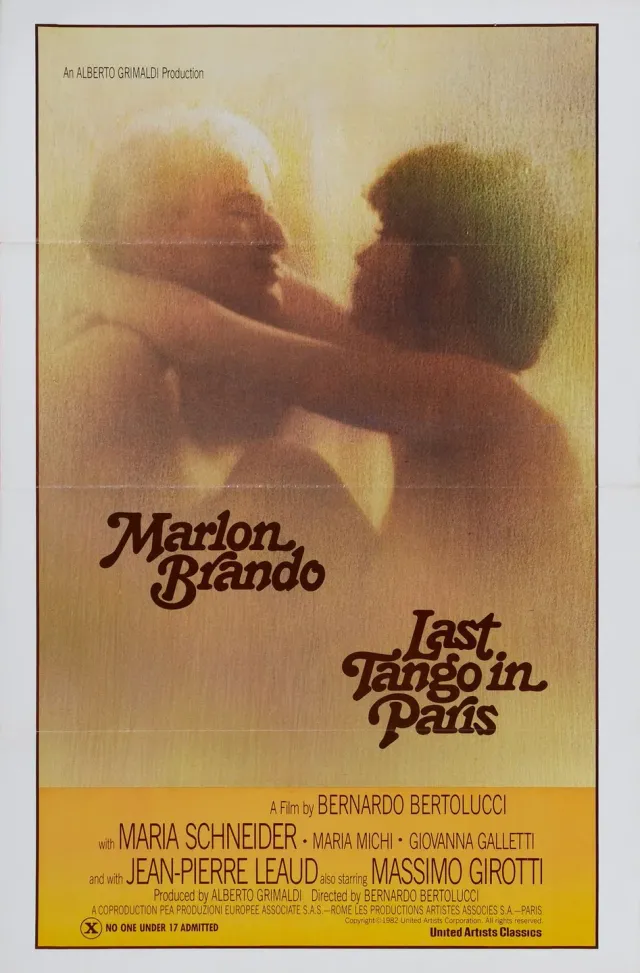
What changes Last Tango in Paris uses explicit intimacy to explore grief and power between strangers, concentrating on a single relationship rather than a life recounted in chapters.
In 1970s Paris, Paul and Jeanne begin an anonymous sexual arrangement inside an apartment while each keeps a life outside it. Their pact promises intimacy without names or personal histories, but Paul’s grief and Jeanne’s engagement make its terms increasingly unequal. The film depicts rape and emotional coercion as part of their encounters; its transgressive style does not make those acts consensual. Production history adds a separate, carefully bounded issue: Bertolucci later said Schneider had not been told about the butter element before filming, while the scene’s simulated assault was scripted. The distinction between what occurs on screen and how the scene was made matters. Neither the film’s aesthetic reputation nor the director’s later account should romanticize the violence or overstate the production facts.
Molina's stories and Valentin's political imprisonment create an unusual companionship inside a coercive cell.
Why this matches +
These offer a related experience with a meaningful difference in story, tone, or presentation.
An adjacent discovery: a related idea with a different viewing experience.
Genres: Drama
Shared film traits
Based on recorded story, mood and style. Your preferences can change the order.
What changes Kiss of the Spider Woman uses an extended conversation in confinement to examine stories, desire and a listener's influence, with political imprisonment rather than Joe's sexual autobiography.
In a Brazilian prison cell, political prisoner Valentin shares space with Molina, a gay man jailed for a sexual offense. Molina recounts vivid film fantasies to pass the time and soften the prison's harsh routines, while Valentin distrusts the stories and resists the authorities' effort to extract information. Their conversations gradually create an unexpected bond, as fantasy, desire, loyalty, and political danger make the cell a place of both coercion and connection.
After stranger Seligman finds Joe injured in an alley, he takes her to his apartment, where she recounts her sexual history across eight chapters and two volumes. Joe describes her adolescence, relationships, compulsions and later efforts to live with the consequences of her behavior, while Seligman repeatedly reframes her memories through his interests in music, fishing, mathematics and literature. Their conversation becomes an argument about whether her story can be separated from shame, diagnosis or the listener’s own needs. After Joe falls asleep, Seligman enters her room and attempts to assault her; she shoots him as he approaches, abruptly breaking the trust his listening seemed to build. The film’s structure moves between explicit memory and abstract analogy rather than presenting a neutral case history.
What drives the story
Joe’s autobiographical account is continually interrupted by Seligman’s interpretations, so the frame story tests who has authority over her experience.
The people at its centre
Joe condemns herself while Seligman offers detached explanations; his final assault exposes how his apparent kindness remains conditional on access to her, and her refusal ends their conversation violently.
What it feels like
Von Trier divides the film into chapters, uses blunt erotic imagery and inserts diagrams and cultural references that make the viewing experience analytical and confrontational.
Worth knowing
It is an explicit art film about narration and self-judgment, not a clinical depiction that should be treated as a universal account of addiction or sexuality; the ending includes attempted sexual assault.