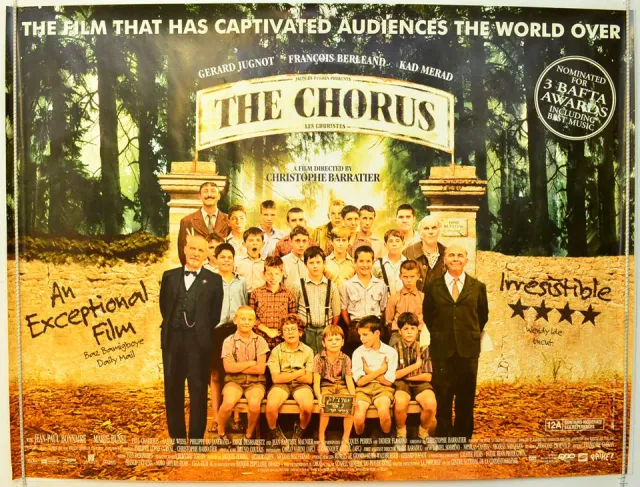
Mathieu’s decision to teach the boys through singing reshapes their routines and the way adults respond to them.
Why this matches +
Selected for the central appeal: Compassionate stories about children whose abilities and needs are recognized by supportive adults.
Genres: Drama / Music
Shared film traits
Based on recorded story, mood and style. Your preferences can change the order.
Coming of age
What changes The Chorus follows a teacher whose patient attention and music help children overlooked by a strict institution.
In 1949, failed musician Clément Mathieu takes a job supervising boys at a strict French boarding school. The headmaster relies on punishment to control the students, but Mathieu gradually earns their trust by forming a choir and giving the boys a way to express themselves. Christophe Barratier’s French-language drama follows changes in the school community through music, mentorship, and friendship, with a frame narrative looking back on the children’s lives after the events of that year.
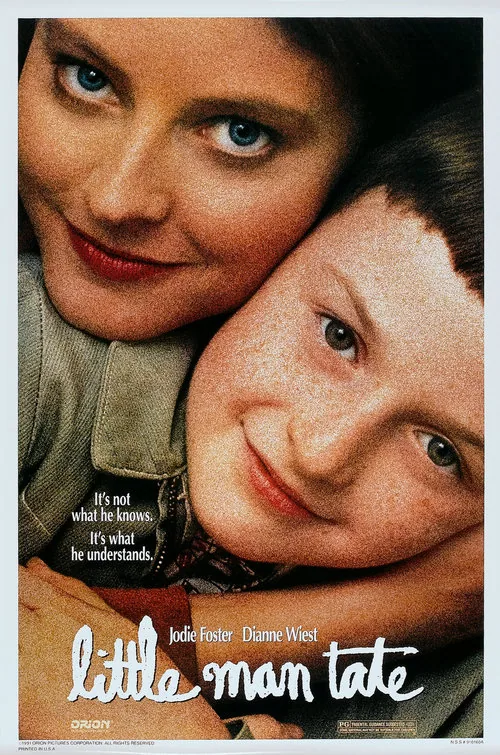
A gifted boy moves between home, ordinary school, and an advanced learning program.
Why this matches +
Selected for the central appeal: Compassionate stories about children whose abilities and needs are recognized by supportive adults.
Genres: Drama
Shared film traits
Based on recorded story, mood and style. Your preferences can change the order.
Coming of age
What changes Little Man Tate explores a child's unusual learning needs and the adults trying to understand and support him.
Seven-year-old Fred Tate has exceptional abilities in art, music and mathematics, but struggles to find a place among children and adults who do not know how to meet his needs. His mother Dede wants him to have an ordinary childhood, while a specialist teacher sees a chance to develop his gifts. The drama considers whether achievement can substitute for belonging and who gets to define a gifted child's future.
A new school year makes social belonging a daily test, while multiple viewpoints show that kindness and exclusion affect an entire community.
Why this matches +
Selected for the central appeal: Compassionate stories about children whose abilities and needs are recognized by supportive adults.
Genres: Drama
Shared film traits
Based on recorded story, mood and style. Your preferences can change the order.
Coming of age
What changes Wonder follows a child navigating school, misunderstanding and the importance of empathy.
After years of homeschooling and medical treatment, fifth-grader August Pullman begins attending a mainstream school. His facial difference affects how classmates respond to him, but the film also follows his sister Via, friends and school community, showing how his arrival changes their relationships. Auggie faces bullying and loneliness while finding allies and moments of humor; the story does not treat kindness as an instant solution to social pressure. Stephen Chbosky adapts R. J. Palacio’s novel through several characters’ points of view. Via's and the friends' viewpoints broaden the question from who welcomes Auggie to how the community behaves. School incidents affect siblings and classmates, not only the new student.
An unconventional teacher's encouragement creates choices whose consequences unfold within families and a school unwilling to surrender control.
Why this matches +
These offer a related experience with a meaningful difference in story, tone, or presentation.
An adjacent discovery: a related idea with a different viewing experience.
Genres: Drama / Coming-of-age
Shared film traits
Based on recorded story, mood and style. Your preferences can change the order.
Coming of age
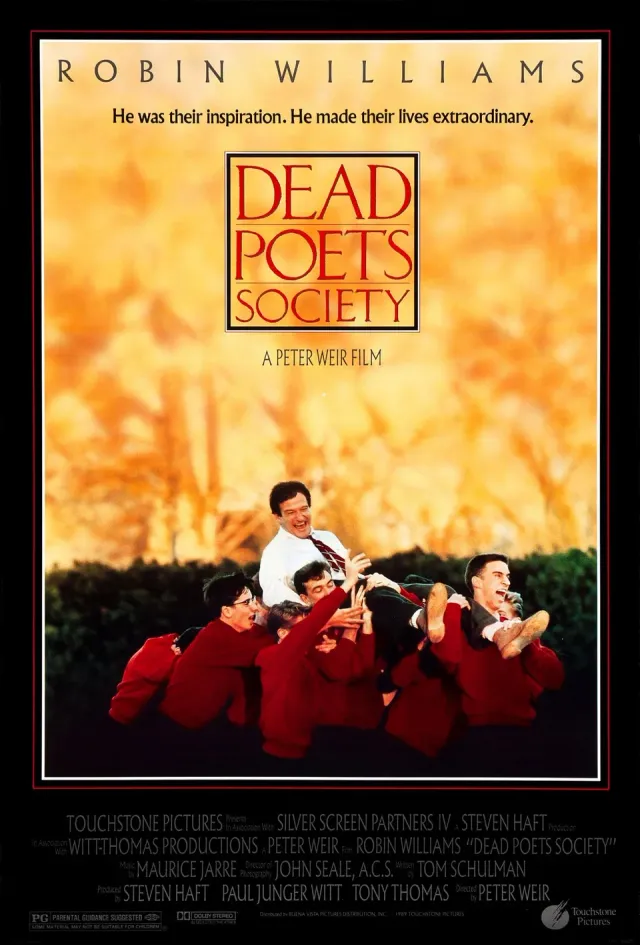
What changes Dead Poets Society centers an inspiring teacher helping students find expression within a rigid school.
Students at a prestigious boys' school encounter an English teacher whose approach encourages them to treat literature as an invitation to individual experience rather than another credential. Their private experiments in poetry and self-expression expose tensions between personal desire, peer approval and parental control. The institution's response to an escalating crisis reveals how quickly inspiration can become a dispute about responsibility when young people have limited authority over their own futures.
The school’s response to Mary’s ability brings Evelyn back into her life and turns educational choices into a custody case.
Why this matches +
These offer a related experience with a meaningful difference in story, tone, or presentation.
An adjacent discovery: a related idea with a different viewing experience.
Genres: Drama / Comedy
Shared film traits
Based on recorded story, mood and style. Your preferences can change the order.
Coming of age
What changes Gifted explores how a child's educational needs and emotional wellbeing become the focus of family conflict.
Seven-year-old Mary Adler is a mathematical prodigy raised by her uncle Frank, who wants her to experience an ordinary childhood in Florida. When her school discovers her ability, her grandmother Evelyn seeks custody so Mary can receive intensive training, reopening an old family conflict over what talent demands. The drama centers its custody battle on grief, family history, and the difficult balance between a child’s unusual gifts and her need for a life beyond achievement.
Eight-year-old Ishaan Awasthi struggles with reading and schoolwork because of dyslexia, but teachers and family interpret his difficulties as laziness and defiance. After repeated academic failure, his demanding father sends him to boarding school, where strict rules deepen Ishaan’s isolation. Art teacher Ram Shankar Nikumbh recognizes that Ishaan’s imaginative drawings coexist with persistent reading difficulties and works patiently to help the child, his family and school understand what he needs. The film centers recognition and adapted teaching rather than treating a learning difference as a failure of effort.
What drives the story
The boarding-school transfer removes Ishaan from familiar support, allowing a perceptive teacher to identify why discipline alone is making matters worse.
The people at its centre
Nikumbh's patience offers Ishaan the recognition his family struggles to provide, while his father must face how pressure has mistaken disability for refusal.
What it feels like
Songs, drawings and subjective classroom scenes make reading difficulty visible through the child's experience, then shift toward a supportive teaching relationship.
Worth knowing
A fit for compassionate school and family dramas about learning differences; it is emotionally intense and should not be used as a substitute for individualized educational guidance.
Learning differenceCareRecognition
Mood
Tender · Emotional · Hopeful
Pacing
Gradual recovery · Classroom transformation
Visual style
Expressive drawings · Musical family drama
Storytelling
Boarding-school isolation · Art teacher intervention · Family pressure