Based on recorded story, mood and style. Your preferences can change the order.
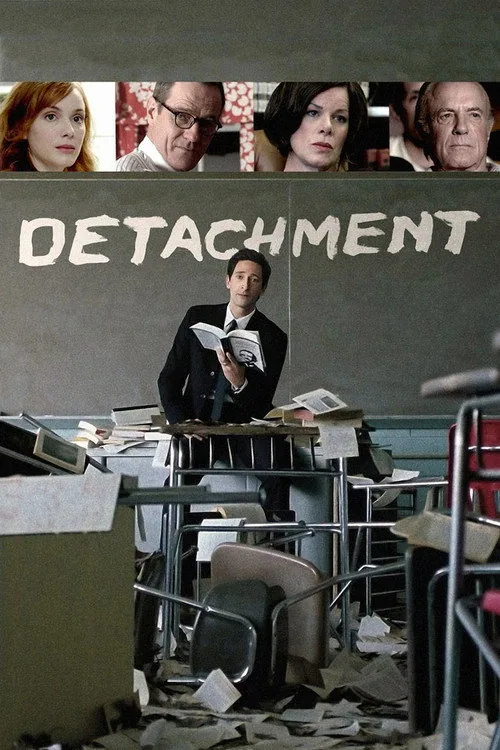
What changes Wonder: school-year arc and ensemble. Detachment: a temporary teacher’s practiced distance is challenged by students whose needs persist beyond one class..
Henry Barthes works as a substitute teacher and moves from school to school without becoming attached to colleagues or students. At an underfunded public high school, he encounters students, teachers, and administrators under strain, while his own memories of family trauma surface through narration and flashback. Tony Kaye’s drama links classroom disorder to a wider portrait of people who feel unseen, following Henry as he attempts to support a troubled student and a young woman living on the street. Its episodic form emphasizes emotional distance and brief acts of care.
Based on recorded story, mood and style. Your preferences can change the order.
Coming of age
What changes Wonder: school-year arc and ensemble. Radio: measured and character-led.
A high-school football coach notices a young man who spends time near the team and begins building a friendship with him. The relationship gradually brings the man into school life and the wider community, while local attitudes and the demands of the football season test the coach's commitment. Inspired by a real story, the film focuses on the dignity of everyday support and the changes that occur when a community makes room for someone it once overlooked.
Based on recorded story, mood and style. Your preferences can change the order.
What changes Wonder: school-year arc and ensemble. Nickel Boys: measured, episodic and reflective.
In 1960s Florida, Elwood Curtis is sent to a brutal reform school after a wrongful arrest, where he befriends the more pragmatic Turner. The boys negotiate the institution's violence and uncertain rules for staying safe, while their different understandings of resistance shape their bond. RaMell Ross's adaptation of Colson Whitehead's novel uses subjective visual perspectives, making memory and the boys' relationship central to a history of abuse and survival.
Based on recorded story, mood and style. Your preferences can change the order.
What changes Wonder: school-year arc and ensemble. Klara and the Sun: measured, intimate and quietly cumulative.
Klara is an Artificial Friend designed to accompany people, and she hopes to find a home where she can be useful. When she meets Josie, a teenager living with illness and family strain, the two form an immediate bond. Taika Waititi adapts Kazuo Ishiguro’s novel as a science-fiction drama about loyalty, care, and how an artificial companion interprets human grief and connection.
Based on recorded story, mood and style. Your preferences can change the order.
Coming of age
What changes Wonder: school-year arc and ensemble. Steve: school's fragile routine is introduced, student and staff crises accumulate and future of the institution becomes urgent.
Steve is the headteacher of a last-chance reform school for boys with serious social and behavioral difficulties. Over one pivotal day, he tries to protect the school's integrity and stave off its impending closure while supporting students whose lives have been shaped by exclusion and instability. Shy, a troubled teenager, struggles with anger and his own uncertain future as staff respond to mounting crises. Set in mid-1990s England and adapted from Max Porter's novella Shy, the drama examines the fragile work of care inside an institution running short on time and resources.
Based on recorded story, mood and style. Your preferences can change the order.
Coming of age
What changes Wonder: school-year arc and ensemble. Bridge to Terabithia: measured.
A solitary boy frustrated by family pressures and school humiliation befriends a new girl whose imagination changes how he sees their surroundings. Together they create a private fantasy kingdom that gives ordinary difficulties an alternate form and makes trust feel possible. Their friendship's consequences eventually require him to bring imaginative courage back into a world where care, grief and responsibility cannot remain protected by invented rules.
Based on recorded story, mood and style. Your preferences can change the order.
Coming of age
What changes Wonder: school-year arc and ensemble. The Wanderers: episodic, rowdy, group-focused and reflective in retrospect.
In the Bronx in 1963, Joey and his friends belong to the Wanderers, an Italian-American street gang whose routines mix school, dating, rivalries, and neighborhood pride. When one member considers joining the Baldies, a confrontation pulls the group into a chain of threats and uneasy alliances with other gangs. Richie’s relationship with Despie and the older world around her adds pressure to the boys’ ideas about masculinity and adulthood. Over time, fights, parties, and changing loyalties make the gang’s identity feel less permanent than the friendships holding its members together.
Both share themes of belonging and family, plus a warm atmosphere.
Why this matches +
Genres: Drama
Shared film traits
Based on recorded story, mood and style. Your preferences can change the order.
Coming of age
What changes Wonder: school-year arc and ensemble. The Tender Bar: jr moves between home, school and the bar and receiving different ideas about responsibility and success as he grows older..
Growing up on Long Island, JR lives with his mother and her family after his father, a radio DJ, fails to remain present in his life. At his uncle Charlie’s neighborhood bar, he finds a circle of adults who share advice, stories and a sense of belonging. His mother’s hopes for education and his own ambitions gradually shape his route into adulthood.
Based on recorded story, mood and style. Your preferences can change the order.
Coming of age
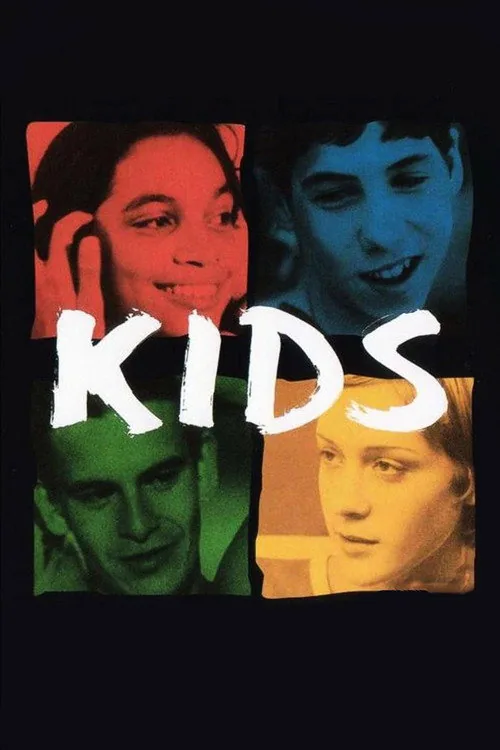
What changes Wonder: school-year arc and ensemble. Kids: real-time feeling, loose and unresolved.
Set over one day in New York City, Kids follows a group of teenagers navigating sex, drugs, alcohol, theft, and friendship without reliable adult guidance. Telly pursues sexual encounters with virgins while his friend Casper joins him on the streets; Jennie searches for Telly after learning she may have been exposed to HIV. The film tracks their movements through apartments, parks, and parties in a deliberately unpolished style. Larry Clark’s drama presents adolescent behavior with observational detachment and confrontational realism.
After years of homeschooling and medical treatment, fifth-grader August Pullman begins attending a mainstream school. His facial difference affects how classmates respond to him, but the film also follows his sister Via, friends and school community, showing how his arrival changes their relationships. Auggie faces bullying and loneliness while finding allies and moments of humor; the story does not treat kindness as an instant solution to social pressure. Stephen Chbosky adapts R. J. Palacio’s novel through several characters’ points of view. Via's and the friends' viewpoints broaden the question from who welcomes Auggie to how the community behaves. School incidents affect siblings and classmates, not only the new student.
What drives the story
A new school year makes social belonging a daily test, while multiple viewpoints show that kindness and exclusion affect an entire community.
The people at its centre
Auggie’s confidence and vulnerability coexist with Via’s need to be seen in her own right; friends’ choices reveal how peer pressure can shift.
What it feels like
Warm performances and perspective changes keep the drama accessible, with humor and family scenes balancing bullying and emotional setbacks.
Worth knowing
A fit for uplifting coming-of-age dramas about empathy, school belonging and family attention. Its hopeful, broadly accessible approach differs from a harsher or more clinically focused account of disability.
belongingkindnessfamily
Mood
hopeful · warm · emotionally open
Pacing
school-year arc · ensemble
Visual style
contemporary school · family home
Storytelling
school adjustment · facial difference · multiple viewpoints