Explore films connected to Steve through care and social exclusion, education and second chances, burnout and responsibility. Choose the qualities you want to carry into your next watch.
What should feel similar?
Find your next favourite
9 films · Closest overall matches
Hide films you’ve seen or don’t want. Saved on this device.
No matches for this combination yet.
Try another option or reset your choices to see more films.
Both share an urgent and compassionate atmosphere.
Why this matches +
Genres: Drama
Shared film traits
Based on recorded story, mood and style. Your preferences can change the order.
Survival
What changes Steve: school's fragile routine is introduced, student and staff crises accumulate and future of the institution becomes urgent. System Crasher: intense episodes, escalating crises and open-ended pressure.
Nine-year-old Bernadette, known as Benni, has intense outbursts that make school and foster placements difficult to sustain. She wants to live with her mother, but the family and child-welfare system cannot find a stable arrangement that keeps everyone safe. Social worker Michael tries a range of placements and support plans, while Benni’s need for closeness and the adults’ limited options pull them toward another crisis.
Based on recorded story, mood and style. Your preferences can change the order.
Coming of age
What changes Steve: school's fragile routine is introduced, student and staff crises accumulate and future of the institution becomes urgent. Finding Forrester: measured and building.
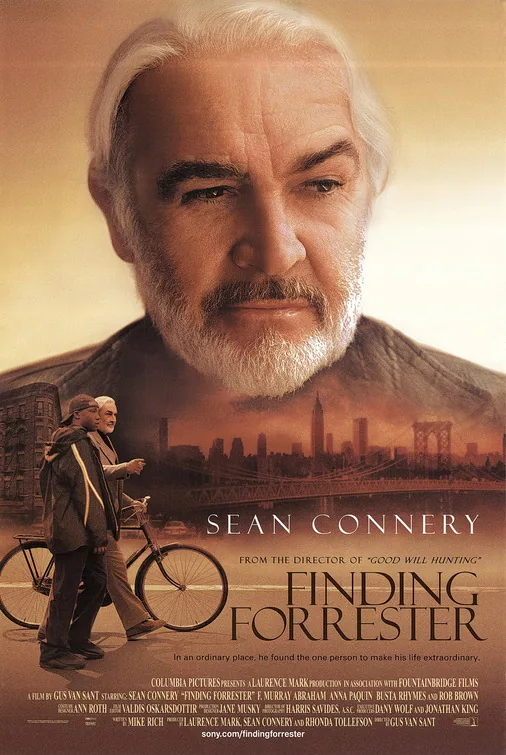
A gifted teenager from the Bronx earns a place at an elite private school, where his writing attracts a reclusive author’s attention. Their unlikely friendship develops through private lessons and intellectual challenge as the boy defines himself in a new environment. The drama examines mentorship, class and authorship through two guarded people who have reasons to hide from public judgment.
Based on recorded story, mood and style. Your preferences can change the order.
Coming of age
What changes Steve: school's fragile routine is introduced, student and staff crises accumulate and future of the institution becomes urgent. Pay It Forward: episodic, steady and escalating.
Seventh-grader Trevor McKinney takes his social-studies teacher’s challenge to devise a way to improve the world seriously: instead of repaying a favor, each recipient should help three other people. Trevor begins by sheltering Jerry, a homeless man trying to recover from addiction, and the idea connects his mother Arlene with Eugene, the teacher whose burn scars and guardedness mark a painful past. As the chain of favors grows, Trevor’s optimistic project meets relapse, disappointment and resistance. When he intervenes to protect a bullied classmate, violence interrupts the movement, but news of his plan has already spread far beyond his school.
Based on recorded story, mood and style. Your preferences can change the order.
Survival
What changes Steve: school's fragile routine is introduced, student and staff crises accumulate and future of the institution becomes urgent. Nickel Boys: measured, episodic and reflective.
In 1960s Florida, Elwood Curtis is sent to a brutal reform school after a wrongful arrest, where he befriends the more pragmatic Turner. The boys negotiate the institution's violence and uncertain rules for staying safe, while their different understandings of resistance shape their bond. RaMell Ross's adaptation of Colson Whitehead's novel uses subjective visual perspectives, making memory and the boys' relationship central to a history of abuse and survival.
Based on recorded story, mood and style. Your preferences can change the order.
What changes Steve: school's fragile routine is introduced, student and staff crises accumulate and future of the institution becomes urgent. Detachment: a temporary teacher’s practiced distance is challenged by students whose needs persist beyond one class..
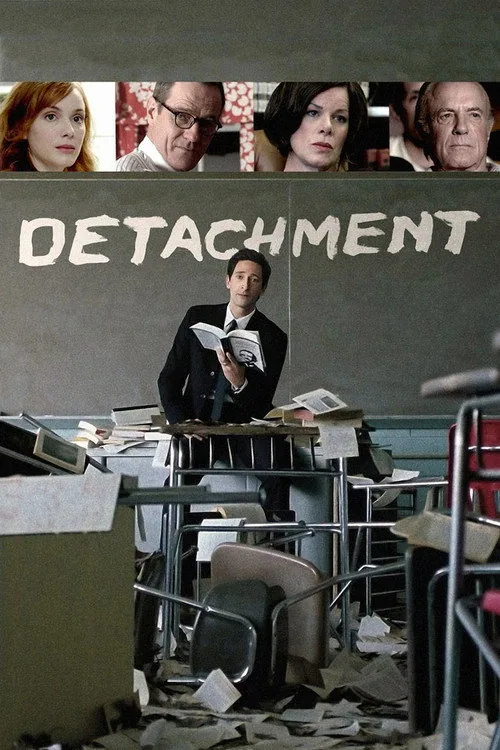
Henry Barthes works as a substitute teacher and moves from school to school without becoming attached to colleagues or students. At an underfunded public high school, he encounters students, teachers, and administrators under strain, while his own memories of family trauma surface through narration and flashback. Tony Kaye’s drama links classroom disorder to a wider portrait of people who feel unseen, following Henry as he attempts to support a troubled student and a young woman living on the street. Its episodic form emphasizes emotional distance and brief acts of care.
Based on recorded story, mood and style. Your preferences can change the order.
Coming of age
What changes Steve: school's fragile routine is introduced, student and staff crises accumulate and future of the institution becomes urgent. Thirteen: accelerating and spiraling.
Tracy, a bright adolescent, is drawn into a fast-changing friendship with Evie, whose confidence and social standing promise entry into a more exciting world. Their closeness brings experimentation and risk, while tension at home makes it harder for Tracy’s mother to understand what is changing. The drama follows the friction between self-invention, peer influence and parental concern in an unsettled transition to adolescence.
Based on recorded story, mood and style. Your preferences can change the order.
Coming of age
What changes Steve: school's fragile routine is introduced, student and staff crises accumulate and future of the institution becomes urgent. Bridge to Terabithia: measured.
A solitary boy frustrated by family pressures and school humiliation befriends a new girl whose imagination changes how he sees their surroundings. Together they create a private fantasy kingdom that gives ordinary difficulties an alternate form and makes trust feel possible. Their friendship's consequences eventually require him to bring imaginative courage back into a world where care, grief and responsibility cannot remain protected by invented rules.
Based on recorded story, mood and style. Your preferences can change the order.
Coming of age
What changes Steve: school's fragile routine is introduced, student and staff crises accumulate and future of the institution becomes urgent. This Is England: a summer of social discovery gradually shifts into moral conflict.
In 1983, twelve-year-old Shaun Fields is lonely after his father’s death in the Falklands War and begins spending time with a local group of skinheads. Their welcoming friendship changes when Combo, an older member newly released from prison, returns and introduces racist nationalist politics into the group. Shane Meadows’s drama follows Shaun’s search for belonging as affection, identity, and ideology become entangled, keeping the consequences close to a child still learning how adults shape his world.
Based on recorded story, mood and style. Your preferences can change the order.
Coming of age
What changes Steve: school's fragile routine is introduced, student and staff crises accumulate and future of the institution becomes urgent. Radio: measured and character-led.
A high-school football coach notices a young man who spends time near the team and begins building a friendship with him. The relationship gradually brings the man into school life and the wider community, while local attitudes and the demands of the football season test the coach's commitment. Inspired by a real story, the film focuses on the dignity of everyday support and the changes that occur when a community makes room for someone it once overlooked.
Steve is the headteacher of a last-chance reform school for boys with serious social and behavioral difficulties. Over one pivotal day, he tries to protect the school's integrity and stave off its impending closure while supporting students whose lives have been shaped by exclusion and instability. Shy, a troubled teenager, struggles with anger and his own uncertain future as staff respond to mounting crises. Set in mid-1990s England and adapted from Max Porter's novella Shy, the drama examines the fragile work of care inside an institution running short on time and resources.
What drives the story
Steve tries to hold a reform school together through a pivotal day as closure looms and students need urgent support.
The people at its centre
The headteacher's strained dedication meets the anger and vulnerability of Shy and the other boys, with staff sharing an increasingly heavy burden.
What it feels like
A grounded British drama uses a compressed day and close performance work to make institutional strain feel immediate and personal.
Worth knowing
The story centers on a reform school's headteacher and one difficult day, rather than a conventional classroom or student-success narrative.
care and social exclusioneducation and second chancesburnout and responsibility
Mood
urgent · compassionate · raw
Pacing
school's fragile routine is introduced · student and staff crises accumulate · future of the institution becomes urgent
Visual style
rural English reform school · handheld observational camera · close · lived-in institutional spaces
Storytelling
headteacher fights impending school closure · students face behavioral and emotional challenges · one day concentrates a larger crisis