Explore films connected to The Chorus through Teaching and care, Art as connection, Discipline and compassion. Choose the qualities you want to carry into your next watch.
What should feel similar?
Find your next favourite
9 films · Closest overall matches
Hide films you’ve seen or don’t want. Saved on this device.
No matches for this combination yet.
Try another option or reset your choices to see more films.
Based on recorded story, mood and style. Your preferences can change the order.
Music and performance
What changes The Chorus: character-led school drama, rehearsal and performance progression and reflective frame narrative. School of Rock: steady.
A guitarist expelled from his band impersonates his flatmate to take a substitute teaching job at a strict private school. Discovering musical ability among his pupils, he secretly turns lessons into rehearsals for a band competition. What begins as a way to recover his own status becomes an effort to help children challenge restrictive expectations, while the deception threatens the trust allowing their confidence to grow.
Based on recorded story, mood and style. Your preferences can change the order.
Coming of age
What changes The Chorus: character-led school drama, rehearsal and performance progression and reflective frame narrative. The Class: measured, episodic and dialogue-driven.
Over one school year, French teacher François Marin works with a lively class of adolescents in a working-class Paris secondary school. Lessons in grammar and literature become arguments about relevance, respect, identity and who gets to speak with authority. A writing assignment gives the students room to describe themselves, but a confrontation involving Souleymane tests François’s judgment and the school’s disciplinary process. The film observes teaching as daily negotiation, following both the class’s shifting alliances and the limits of a teacher’s influence.
Based on recorded story, mood and style. Your preferences can change the order.
Coming of age
What changes The Chorus: character-led school drama, rehearsal and performance progression and reflective frame narrative. Taare Zameen Par: gradual recovery and classroom transformation.
Eight-year-old Ishaan Awasthi struggles with reading and schoolwork because of dyslexia, but teachers and family interpret his difficulties as laziness and defiance. After repeated academic failure, his demanding father sends him to boarding school, where strict rules deepen Ishaan’s isolation. Art teacher Ram Shankar Nikumbh recognizes that Ishaan’s imaginative drawings coexist with persistent reading difficulties and works patiently to help the child, his family and school understand what he needs. The film centers recognition and adapted teaching rather than treating a learning difference as a failure of effort.
Based on recorded story, mood and style. Your preferences can change the order.
Coming of age
What changes The Chorus: character-led school drama, rehearsal and performance progression and reflective frame narrative. The Beautiful Game: brisk, game-centered and character-focused.
A teacher in a working-class coastal town begins coaching a youth soccer team after an encounter with a professional player. The team brings together local teenagers with different skills, temperaments and pressures at home, and training creates a new shared routine for them. As the coach helps the players see a future beyond their immediate circumstances, the film blends a sports story with a portrait of community life and the role of patient adult support.
Based on recorded story, mood and style. Your preferences can change the order.
Coming of age
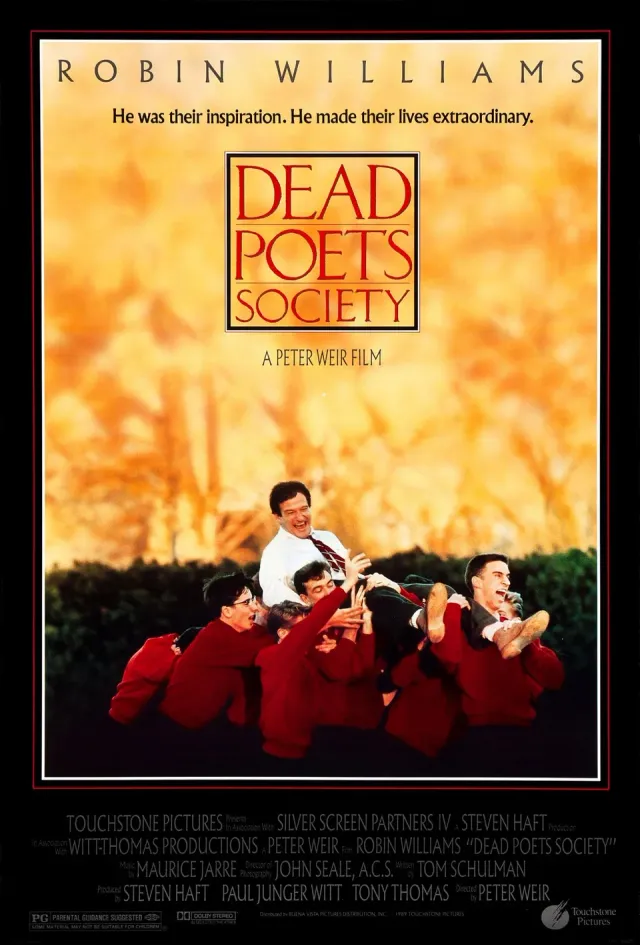
What changes The Chorus: character-led school drama, rehearsal and performance progression and reflective frame narrative. Dead Poets Society: measured.
Students at a prestigious boys' school encounter an English teacher whose approach encourages them to treat literature as an invitation to individual experience rather than another credential. Their private experiments in poetry and self-expression expose tensions between personal desire, peer approval and parental control. The institution's response to an escalating crisis reveals how quickly inspiration can become a dispute about responsibility when young people have limited authority over their own futures.
Based on recorded story, mood and style. Your preferences can change the order.
Music and performance
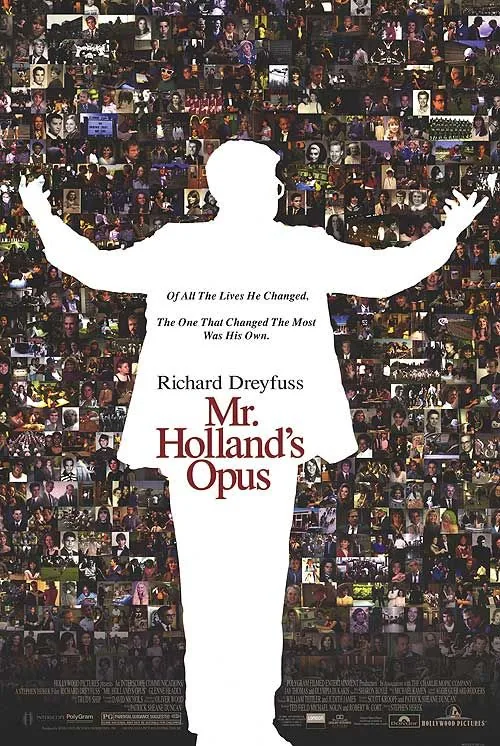
What changes The Chorus: character-led school drama, rehearsal and performance progression and reflective frame narrative. Mr. Holland's Opus: decades-spanning and reflective.
Glenn Holland takes a teaching job to support his family while hoping to compose music in his spare time. What he expects to be temporary gradually becomes a life's work, as students, colleagues and family shape his understanding of success. The film follows changes across decades and gives particular weight to his relationship with his deaf son, where music's importance must be reconciled with the ways his child experiences the world.
Based on recorded story, mood and style. Your preferences can change the order.
Coming of age · Music and performance
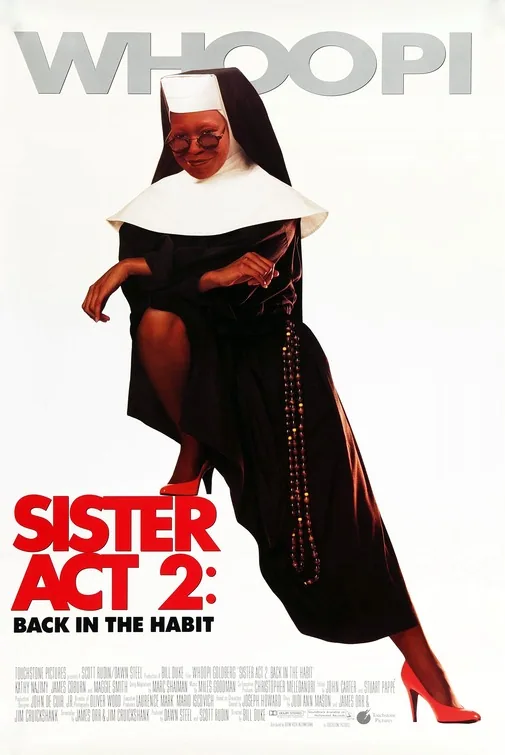
What changes The Chorus: character-led school drama, rehearsal and performance progression and reflective frame narrative. Sister Act 2: Back in the Habit: ensemble and performance-led.
Deloris Van Cartier returns to San Francisco after her friends at the convent ask her to help a struggling high-school music program. Disguised again as a nun, she tries to reach students who distrust authority and to protect the program from closure. The musical comedy pairs the choir's growth with Deloris's return to a community where encouragement can change what young people expect from themselves.
Based on recorded story, mood and style. Your preferences can change the order.
Coming of age
What changes The Chorus: character-led school drama, rehearsal and performance progression and reflective frame narrative. Love Me If You Dare: time-spanning romantic episodes, game-based turning points and emotional escalation.
Julien and Sophie begin a childhood game in which they dare one another to perform increasingly risky or humiliating acts. The game follows them into adulthood, shaping their friendship and romantic feelings while making it difficult to distinguish playful challenge from deliberate cruelty. Yann Samuell’s French romantic drama uses a playful framing device and shifts through time to explore desire, rivalry, and the consequences of refusing to admit vulnerability, with Marion Cotillard and Guillaume Canet at its center.
Based on recorded story, mood and style. Your preferences can change the order.
Coming of age
What changes The Chorus: character-led school drama, rehearsal and performance progression and reflective frame narrative. The Best Christmas Pageant Ever: light and builds to a performance.
The unruly Herdman siblings take over the leading roles in a church Christmas pageant after they hear there may be snacks at Sunday school. Their arrival unsettles the children and adults who expect the familiar show to run smoothly. As the rehearsal forces the Herdmans to encounter the Nativity story, Grace Bradley’s willingness to include them challenges the town’s judgments and gives the pageant a new emotional meaning.
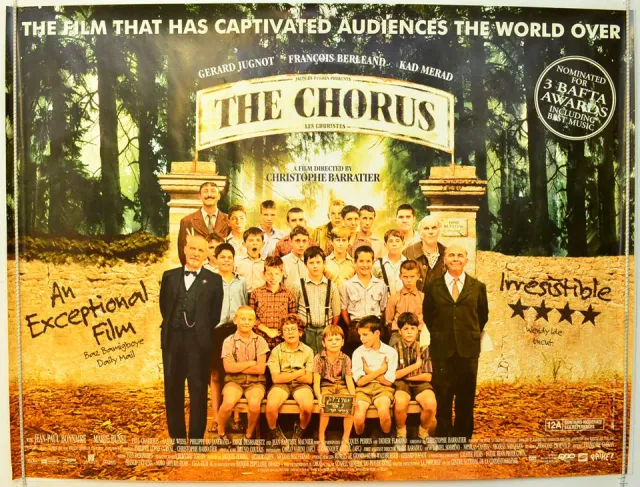
In 1949, failed musician Clément Mathieu takes a job supervising boys at a strict French boarding school. The headmaster relies on punishment to control the students, but Mathieu gradually earns their trust by forming a choir and giving the boys a way to express themselves. Christophe Barratier’s French-language drama follows changes in the school community through music, mentorship, and friendship, with a frame narrative looking back on the children’s lives after the events of that year.
What drives the story
Mathieu’s decision to teach the boys through singing reshapes their routines and the way adults respond to them.
The people at its centre
A patient teacher builds trust with pupils and clashes with a headmaster whose strict methods leave little room for individual needs.
What it feels like
The film offers a warm, musical period drama in which choral performances mark emotional changes within the school.
Worth knowing
It centers on a choir and one teacher’s influence in a boarding school, rather than a conventional classroom comedy.
Teaching and careArt as connectionDiscipline and compassion
Mood
Gentle · Nostalgic · Hopeful
Pacing
Character-led school drama · Rehearsal and performance progression · Reflective frame narrative