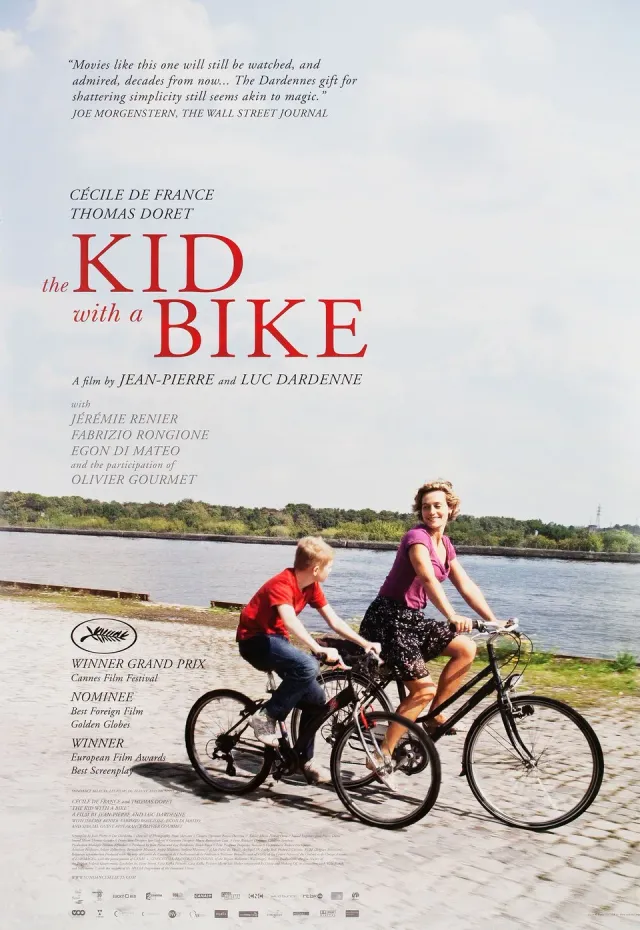
Cyril’s attempts to return to his father lead him into new relationships whose limits test whether he can accept care.
Why this matches +
Selected for the central appeal: A misunderstood Parisian boy's small acts of defiance bring him into conflict with family, school and authorities.
Genres: Drama
Shared film traits
Based on recorded story, mood and style. Your preferences can change the order.
Coming of age
What changes A boy seeking recognition and family connection resists institutions and forms a fragile bond with an adult who offers care.
Twelve-year-old Cyril lives in a children’s home in Liège and keeps trying to reach his father, who has left him behind. After a chance encounter, hairdresser Samantha agrees to take him on weekends and returns his bicycle. Cyril remains determined to win his father’s attention, and the disappointment leads him toward a local gang leader despite Samantha’s care. The Dardenne brothers follow the boy’s impulsive search for belonging through fragile trust, rejection and the possibility of choosing another path.
Small incidents in children's lives accumulate around Julien's hidden abuse and the adults who finally recognize it.
Why this matches +
These offer a related experience with a meaningful difference in story, tone, or presentation.
An adjacent discovery: a related idea with a different viewing experience.
Genres: Comedy / Drama
Shared film traits
Based on recorded story, mood and style. Your preferences can change the order.
Coming of age
What changes Children in a French town navigate school, family neglect and small acts of rebellion through an observant childhood perspective.
Set in the French town of Thiers during one summer, the film follows several children through school, home and neighborhood life. Patrick navigates his first crush and awkward attempts at growing up, while Julien's unexplained injuries and exhaustion reveal violence and neglect at home. Their stories sit beside pranks, accidents, friendships and first discoveries, until a teacher speaks up about the responsibility adults have toward vulnerable children.
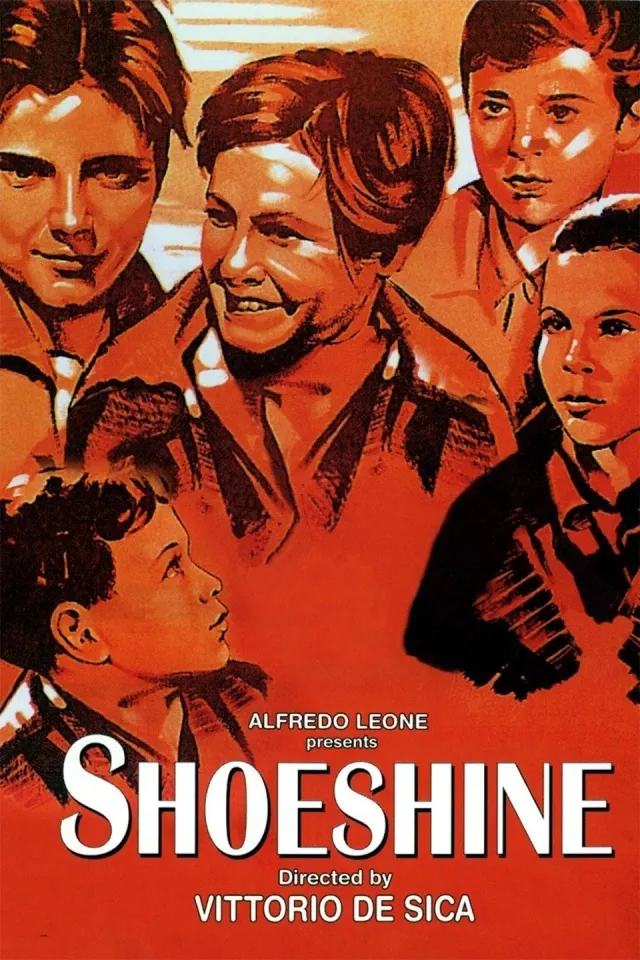
The boys’ criminal trouble begins with an attempt to secure a modest dream, then grows through adult manipulation and a justice system that treats children as expendable.
Why this matches +
These offer a related experience with a meaningful difference in story, tone, or presentation.
An adjacent discovery: a related idea with a different viewing experience.
Genres: Drama / crime
Shared film traits
Based on recorded story, mood and style. Your preferences can change the order.
Coming of age
What changes Children on society's margins confront poverty and a punitive institution after small misdeeds escalate.
In postwar Rome, friends Giuseppe and Pasquale shine shoes and save for a horse. An older brother draws them into a small theft, then a fake-police scam leaves the boys holding money while the adults escape with a much larger haul. The real police arrest them and send them to juvenile detention, where separation, pressure from their captors and conflicting loyalties erode their friendship. Their wish for a horse gives the story a small, tangible hope that is crushed by the institutions and adult schemes surrounding them.
Akira is pushed into an adult role without support, while the younger children depend on his decisions.
Why this matches +
These offer a related experience with a meaningful difference in story, tone, or presentation.
An adjacent discovery: a related idea with a different viewing experience.
Genres: Drama
Shared film traits
Based on recorded story, mood and style. Your preferences can change the order.
Coming of age
What changes Children left without reliable adult care improvise daily survival while seeking the freedom to remain together.
A mother moves into a Tokyo apartment with her four children but hides the younger siblings from the landlord, leaving only eldest son Akira visible. When she leaves for months with little money, Akira takes responsibility for rent, food and his brothers’ and sister’s daily needs. The children have been kept out of school and away from public attention, so their shrinking resources make ordinary childhood harder to sustain. The film quietly follows the siblings’ improvised household as its fragile independence gives way to loss.
A mother’s attempt to secure stability through a new marriage places her son inside a household where control masquerades as discipline.
Why this matches +
These offer a related experience with a meaningful difference in story, tone, or presentation.
An adjacent discovery: a related idea with a different viewing experience.
Genres: Drama / Biography
Shared film traits
Based on recorded story, mood and style. Your preferences can change the order.
Coming of age
What changes A boy whose home life offers little safety searches for independence while confronting adult authority and abuse.
In the 1950s, teenager Tobias and his mother Rosemary move to a small Washington town after she leaves her previous life behind. Rosemary hopes to build a stable home with Dwight, but his charm in public gives way to controlling behavior and abuse in private. Tobias responds with rebellion, evasions and dreams of a different future, while the boys around him model other ways to survive the household. The story is based on Tobias Wolff’s memoir, though the film is a dramatization rather than a documentary record. Its central conflict is the struggle to retain a sense of self in a coercive home. Tobias tests the adults’ promises, seeking a school and future that Dwight’s control seems designed to deny him.
Antoine Doinel grows up in Paris feeling unwanted at home and misunderstood at school. Small acts of defiance, including truancy and a failed attempt to sell a stolen typewriter, draw him deeper into conflict with the adults who supervise him. His parents send him to a youth observation center, where a rare interview lets him speak about his life without interruption. Antoine escapes and runs toward the sea he has never seen, ending the film alone at the shoreline. The story follows a child's search for space and recognition rather than a neat reform narrative.
What drives the story
Each attempt Antoine makes to escape school or home brings a stronger institutional response, until running toward the sea becomes the only freedom he can claim.
The people at its centre
His mother, stepfather and teachers interpret misbehavior without understanding the insecurity beneath it, while Antoine hides vulnerability behind jokes and lies.
What it feels like
Handheld Paris streets, naturalistic performances and the final freeze-frame give the film an open, observational shape rather than a conventional redemption arc.
Worth knowing
A fit for intimate French coming-of-age drama about alienation and youth institutions; its ending remains unresolved rather than promising that the adults have changed.
Childhood neglectRebellionNeed for care
Mood
Restless · Compassionate · Unresolved
Pacing
Observational episodes · Open-ended finish
Visual style
Location-shot Paris · Mobile black-and-white camera
Storytelling
School conflict · Family instability · Juvenile institution