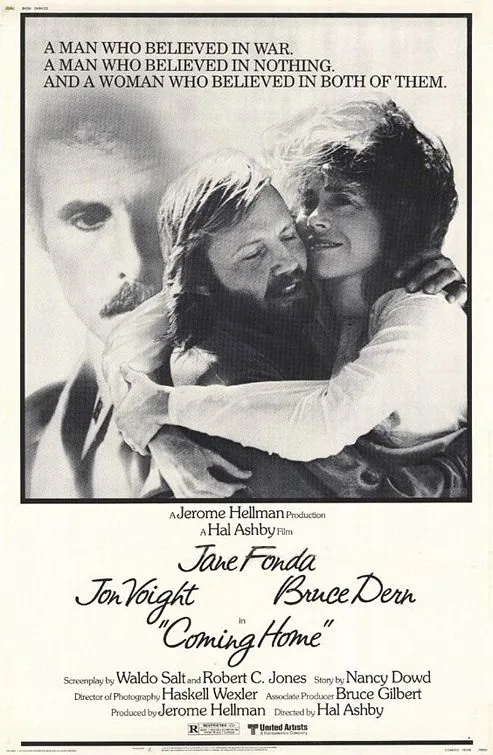
A military wife volunteering at a veterans' hospital forms a bond that challenges her marriage and understanding of war.
Why this matches +
Selected for the central appeal: Character dramas about veterans adjusting to family, work and disability after war.
Genres: Drama / Romance
Shared film traits
Based on recorded story, mood and style. Your preferences can change the order.
War and civilian life
What changes Coming Home follows veterans and their loved ones grappling with disability, intimacy and life after combat.
In 1968 California, Sally Hyde watches her Marine husband Bob leave for Vietnam and gradually finds a life of her own. While volunteering at a veterans' hospital, she meets Luke Martin, a former Marine whose war injuries have left him paralyzed and whose views differ sharply from Bob's. Sally and Luke grow close as she learns about wounded veterans and the war's lasting effects. When Bob returns, all three must confront changing loyalties, trauma, and the divide between military duty and private life.
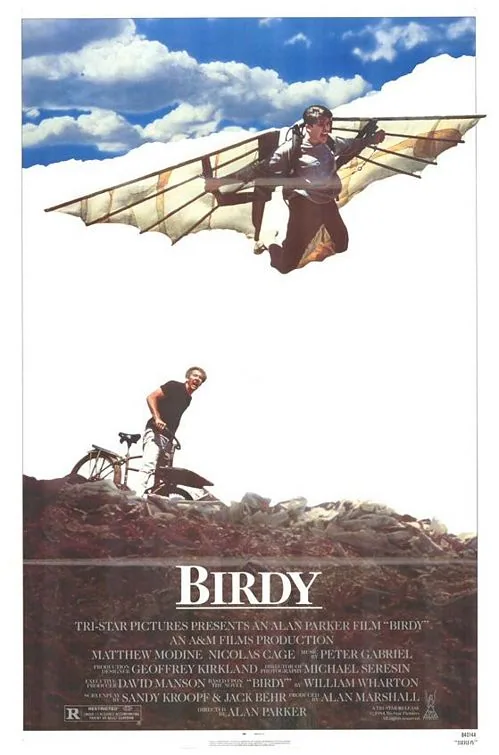
Al’s attempts to reach Birdy connect an adolescent friendship to a traumatic present neither of them can easily explain.
Why this matches +
Selected for the central appeal: Character dramas about veterans adjusting to family, work and disability after war.
Genres: Drama / War
Shared film traits
Based on recorded story, mood and style. Your preferences can change the order.
War and civilian life
What changes Birdy follows injured veterans whose friendship and recovery are shaped by their experiences of war.
In a working-class Philadelphia neighborhood, Birdy and his friend Al share a fascination with pigeons and the possibility of flight. Birdy builds an aviary and spends more time with birds than with schoolmates, while Al is more socially assured and tries to draw him into ordinary teenage life. After Birdy is drafted and survives a helicopter crash in Vietnam, he is hospitalized and stops speaking. Al, also injured, is brought to the same facility and tries to reach the friend he remembers through jokes, memories and frustration. Their bond becomes the main route into Birdy’s inner world, as the military doctor interprets his silence as illness and Al wonders whether retreating from the world is also a form of refusal.
Sam’s return after captivity destabilizes the family bonds formed during his presumed death.
Why this matches +
Selected for the central appeal: Character dramas about veterans adjusting to family, work and disability after war.
Genres: Drama / Thriller
Shared film traits
Based on recorded story, mood and style. Your preferences can change the order.
War and civilian life
What changes Brothers explores the strain a soldier's return places on his family and relationships.
Marine Sam Cahill is presumed dead after a mission in Afghanistan, and his brother Tommy steps in to support Sam’s wife Grace and their children. When Sam returns home, his experiences of captivity and violence alter the family’s fragile arrangements. The drama follows loyalty, grief and trauma through a domestic setting, focusing on how an event far from home continues to shape relationships after a soldier’s return.
A communal departure, wartime captivity and fractured return reveal how violence changes the possibility of resuming an earlier life.
Why this matches +
These offer a related experience with a meaningful difference in story, tone, or presentation.
An adjacent discovery: a related idea with a different viewing experience.
Genres: Drama / War
Shared film traits
Based on recorded story, mood and style. Your preferences can change the order.
War and civilian life
What changes The Deer Hunter follows friends whose wartime experiences profoundly affect their lives at home.
Three friends from a Pennsylvania steelworking community leave for service in Vietnam after a wedding that draws together their social world. Captivity and extreme coercion rupture their shared assumptions, and returning home does not restore the relationships or confidence the departure seemed to guarantee. A renewed effort to recover a missing friend makes survival inseparable from confronting damage that cannot be solved by reproducing familiar rituals.
Repeated deployment reinforces a protective military identity while making withdrawal from threat and responsibility increasingly difficult at home.
Why this matches +
These offer a related experience with a meaningful difference in story, tone, or presentation.
An adjacent discovery: a related idea with a different viewing experience.
Genres: War / Drama
Shared film traits
Based on recorded story, mood and style. Your preferences can change the order.
War and civilian life
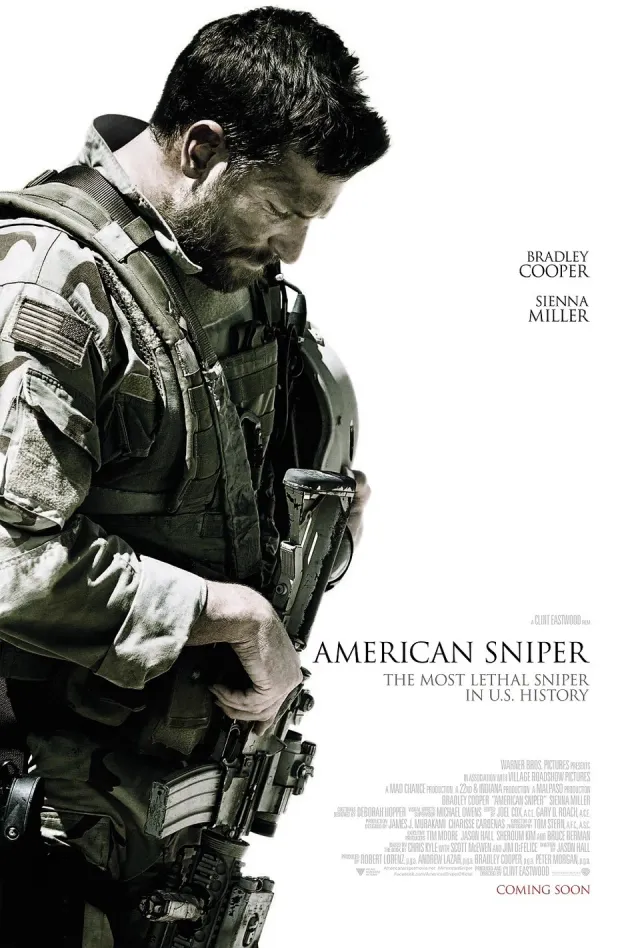
What changes American Sniper examines a veteran's difficulty reconnecting with family after repeated combat deployments.
A Navy SEAL becomes known for his skill as a sniper during repeated deployments to Iraq, where protecting fellow soldiers supplies a clear sense of duty. Returning home does not restore the ease or attention his family needs. The film follows the widening distance between battlefield usefulness and domestic presence, as exposure to threat and a continuing identification with military responsibility make civilian life another difficult environment to inhabit.
Three World War II veterans return to Boone City and try to resume lives that continued without them. Fred Derry struggles with work and a marriage that has changed; Al Stephenson returns to banking and family life while drinking too much; Homer Parrish, who lost both hands, worries that his loved ones see his disability before they see him. Their stories intersect through the Stephenson family and the women they love. The film follows rehabilitation, employment and intimacy as practical parts of returning home, ending with weddings but not pretending that adjustment has been simple.
What drives the story
The veterans' homecoming is only the start: jobs, marriages and public attitudes force each man to renegotiate a civilian identity after the war.
The people at its centre
Homer's relationship with Wilma tests whether care can include his independence, while Fred and Al face different forms of distance from their families.
What it feels like
Interwoven domestic stories and period realism give the drama a patient, ensemble shape, with returning to ordinary routines treated as real work.
Worth knowing
Choose it for human-scale postwar drama about veteran reintegration and disability; it is a civilian-life story rather than a combat or battle film.
ReadjustmentDisability and dignityFamily change
Mood
Compassionate · Reflective · Earnest
Pacing
Interwoven character arcs · Patient domestic drama
Visual style
Postwar realism · Character-centered compositions
Storytelling
Veterans return home · Relationships under strain · Shared reintegration