Based on recorded story, mood and style. Your preferences can change the order.
What changes The Brand New Testament: episodic, playful and gently cumulative. Dogma: fast.
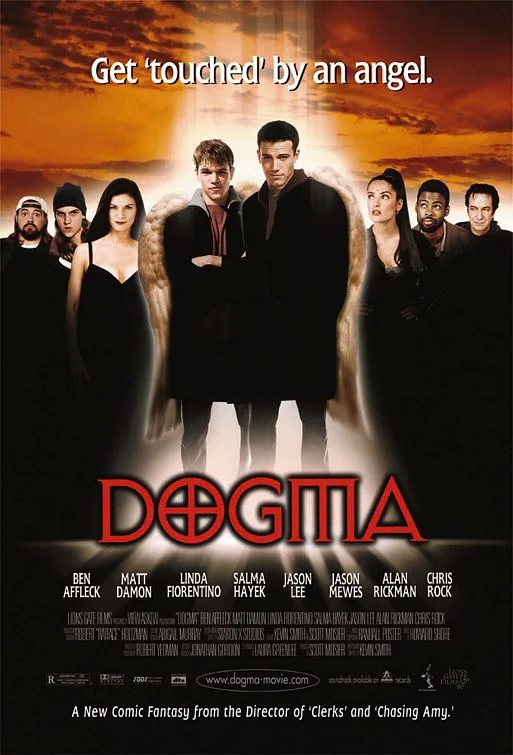
Two banished angels discover a church ceremony that appears to offer a route back to Heaven, but exploiting its promise would contradict the divine order on which existence depends. A woman struggling with her own faith is sent to prevent them, accompanied by unlikely helpers whose appearances challenge institutional expectations of holiness. Their journey makes doctrinal loopholes, personal resentment and the need for human connection parts of the same comic dispute over belief. Its premise makes religious loopholes literal, but the comedy retains emotional seriousness about belief and exclusion.
Based on recorded story, mood and style. Your preferences can change the order.
Dream worlds · Memory and identity
What changes The Brand New Testament: episodic, playful and gently cumulative. Wristcutters: A Love Story: episodic road journey, dry comic exchanges and romantic-philosophical resolution.
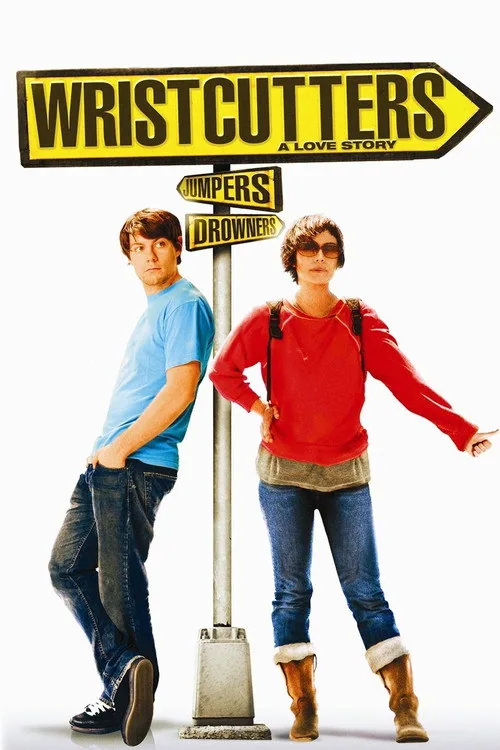
After taking his own life, Zia wakes in a drab afterlife populated by people who died by suicide. He learns that his former girlfriend Desiree has also died and sets out on the road with Russian musician Eugene to find her. Along the way they meet Mikal, who insists she was sent to this realm by mistake, and discover small mysteries in a world where smiles and stars are absent. The dark comedy turns a metaphysical premise into an offbeat search for connection and meaning.
Based on recorded story, mood and style. Your preferences can change the order.
Dream worlds · Memory and identity
What changes The Brand New Testament: episodic, playful and gently cumulative. What Dreams May Come: emotional journey and metaphysical stakes.
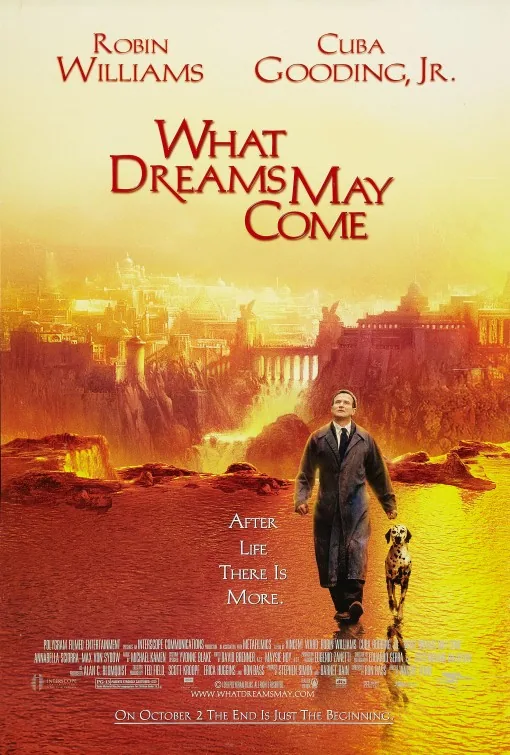
After pediatrician Chris Nielsen dies in a car accident, he finds himself in an afterlife shaped by the imagery and colors of his artist wife Annie’s paintings. His children and mentor Albert help him understand this unfamiliar place, but Annie’s grief takes her beyond his reach. When Chris learns where she is, he faces a journey that tests whether love can remain meaningful without becoming possession. Adapted from Richard Matheson’s novel, the film makes its visual conception of heaven and hell part of the story’s emotional argument. Chris must decide whether his pursuit can honor Annie's agency as well as their shared bond. His children and Albert give him earthly ties that shape the journey.
Both share themes of family, plus a whimsical atmosphere.
Why this matches +
Genres: Family / Fantasy
Shared film traits
Based on recorded story, mood and style. Your preferences can change the order.
Dream worlds · Family and care
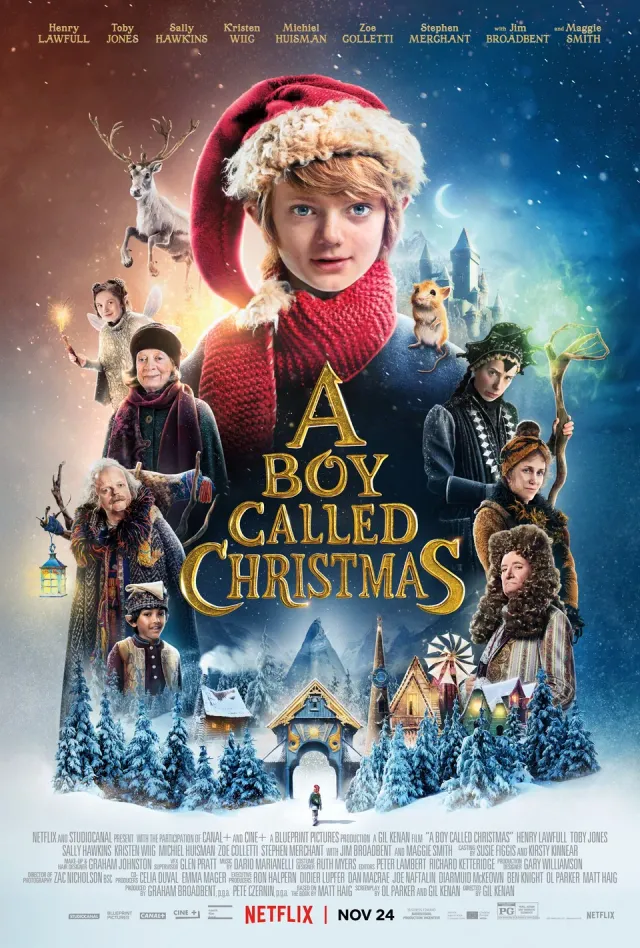
What changes The Brand New Testament: episodic, playful and gently cumulative. A Boy Called Christmas: aunt ruth begins a story of nikolas’s quest and and each stage of his journey brings him closer to elfhelm and its people..
On Christmas Eve, Aunt Ruth tells three grieving children a story about Nikolas, a boy who leaves home to search for the fabled land of Elfhelm. With his speaking mouse Miika, Nikolas encounters a world of elves and dangers while trying to discover what happened to his father and help the people he meets. The frame story and fantasy journey connect loss with generosity and hope.
Based on recorded story, mood and style. Your preferences can change the order.
Memory and identity
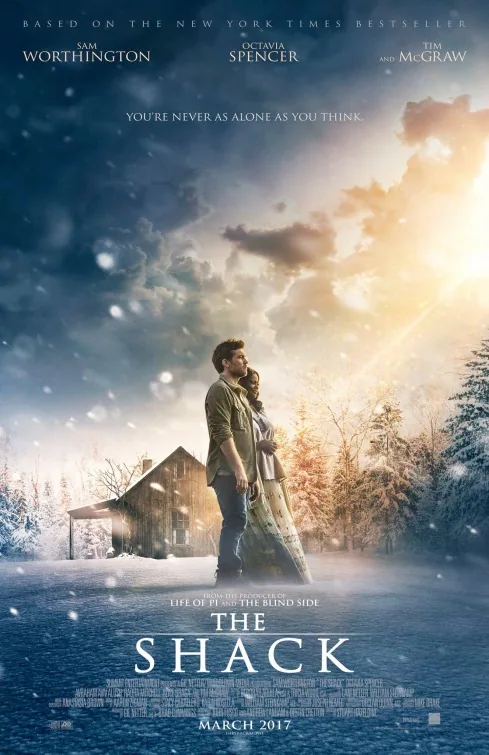
What changes The Brand New Testament: episodic, playful and gently cumulative. The Shack: reflective dialogue framed by painful memories.
A grieving father receives a mysterious invitation to return to the remote place where his young daughter was last seen. The visit becomes an encounter with figures who challenge his anger, guilt and understanding of faith. The religious drama turns a crime-related loss into a devotional conversation about forgiveness and the possibility of finding meaning after trauma.
Based on recorded story, mood and style. Your preferences can change the order.
Dream worlds
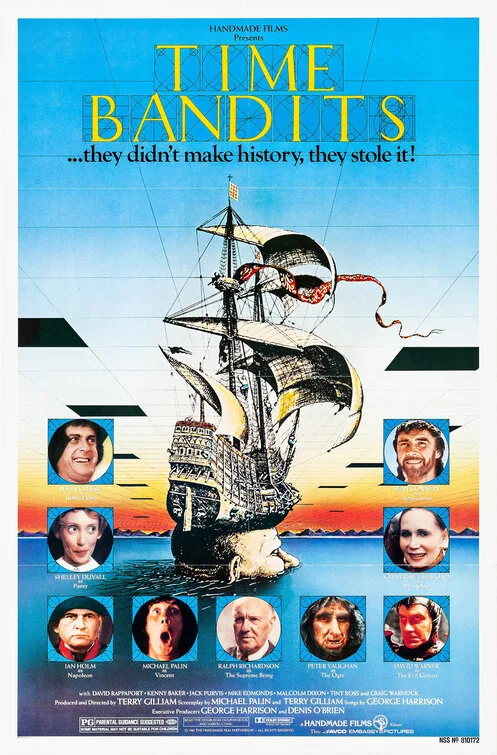
What changes The Brand New Testament: episodic, playful and gently cumulative. Time Bandits: episodic and forward-moving.
A boy named Kevin discovers that a band of time-traveling dwarfs has escaped from the Supreme Being's map of the universe. Pulled into their travels, he encounters historical figures and fantastical dangers while the group pursues treasure and evades a powerful Evil genius. Their comic adventure turns a child's imagination into a way of questioning order and authority.
Based on recorded story, mood and style. Your preferences can change the order.
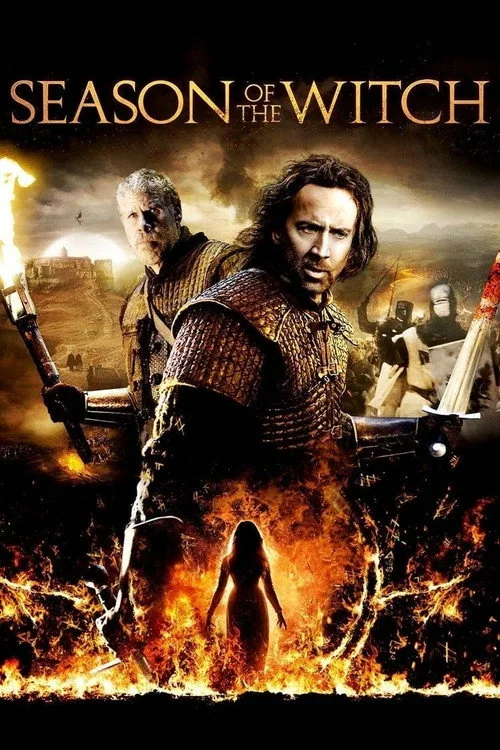
What changes The Brand New Testament: episodic, playful and gently cumulative. Season of the Witch: two knights escort a young prisoner across plague-stricken territory to face a church trial..
After leaving the Crusades, knights Behmen and Felson return to a Europe devastated by plague. Church authorities accuse a young woman named Anna of causing the disease and order the knights to escort her to a remote monastery for a ritual trial. The journey tests the group as Anna’s abilities and the priest’s accusations make the original story increasingly uncertain. Dominic Sena’s supernatural adventure combines medieval travel, religious authority, and a demonic threat, while Behmen’s loss of faith shapes how he judges the mission.
Both share themes of faith, plus an irreverent atmosphere.
Why this matches +
Genres: Comedy / Drama
Shared film traits
Based on recorded story, mood and style. Your preferences can change the order.
Memory and identity · Power and authority
Expect irreverent and colorful, with episodic and comic pacing.
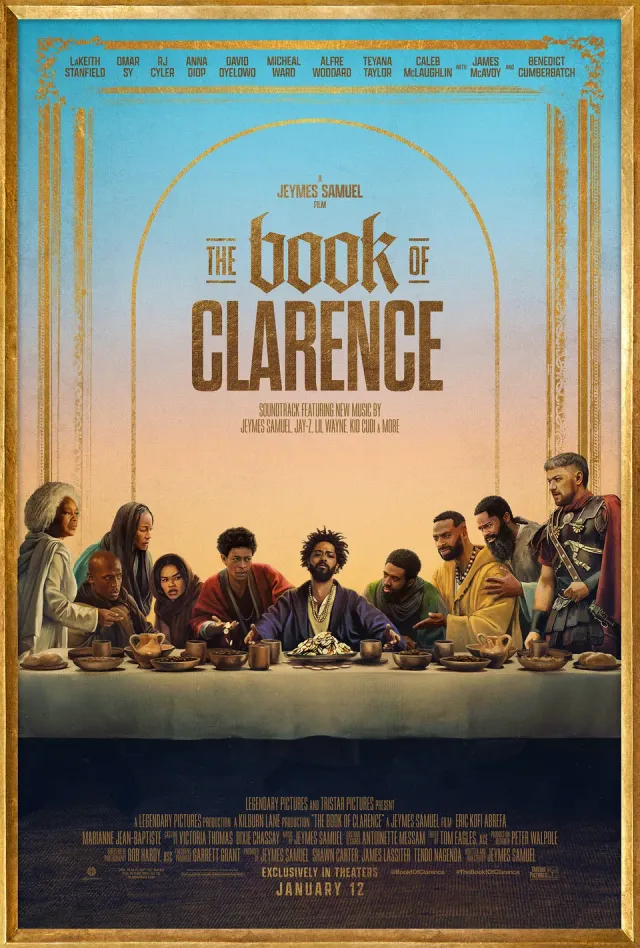
In ancient Jerusalem, Clarence sees the attention surrounding Jesus and his followers as a chance to improve his own prospects. He attempts to imitate the new movement, drawing a friend into a scheme that mixes opportunism, skepticism and a search for belonging. The story uses biblical-era spectacle and comic anachronism to examine belief, status and the difference between performing conviction and risking something for other people.
Both share themes of mortality and human connection.
Why this matches +
Genres: Fantasy / Drama
Shared film traits
Based on recorded story, mood and style. Your preferences can change the order.
Memory and identity
What changes The Brand New Testament: episodic, playful and gently cumulative. Wings of Desire: patient and essay-like.
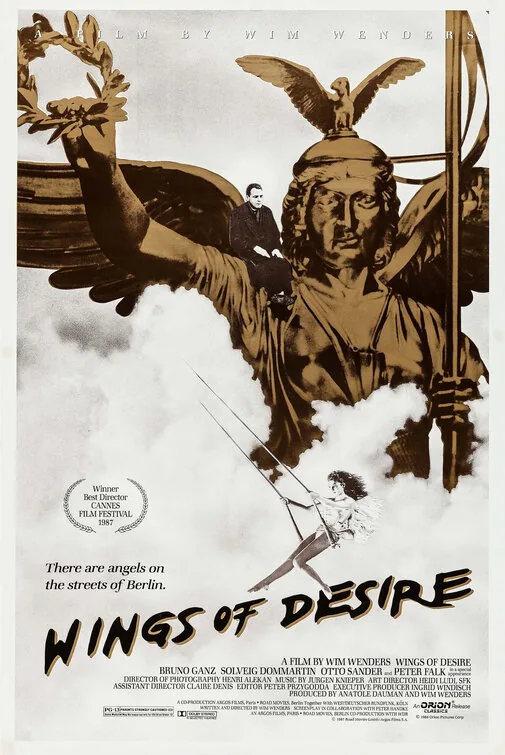
In divided Berlin, angels Damiel and Cassiel observe people’s private thoughts and sorrows while remaining unable to participate in ordinary sensation. Damiel becomes increasingly drawn to human experience and to Marion, a trapeze artist whose own life is changing. Peter Falk’s arrival as a visiting actor, who seems aware of the angels, helps connect Damiel’s abstract longing to the physical routines of city life. Wim Wenders places the love story among Berlin’s streets, memories and postwar histories, making the city itself part of the film’s meditation. By listening to individual voices, the film makes inward life its dramatic landscape. Actor Peter Falk links angelic distance to a human who has chosen embodiment.
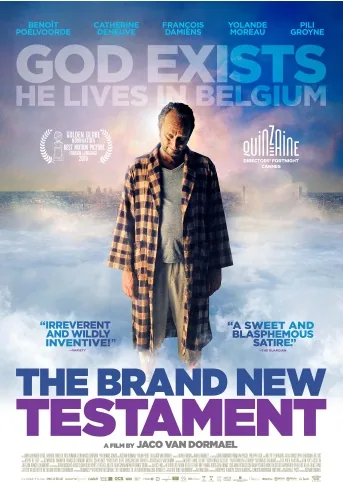
In Brussels, God lives with his wife and daughter Ea, controlling the world from a computer in his apartment. Ea discovers how he has shaped human lives and escapes into the city, sending each person a text message revealing how much time they have left. She then looks for six new apostles whose stories can form a companion to the New Testament. Along the way, Ea encounters people confronting the news, while her father sets out to retrieve her.
What drives the story
Ea recruits six apostles and gives people notice of their remaining time, while her father pursues her through the world he built.
The people at its centre
Ea’s curiosity and compassion contrast with her father’s control, and the people she meets respond to mortality in markedly different ways.
What it feels like
Absurd humor and storybook imagery turn a theological premise into a playful series of reflections on ordinary life and agency.
Worth knowing
Its contemporary, comedic reworking of biblical characters distinguishes it from solemn religious drama or conventional fantasy quests.