Explore films connected to The Cobbler through identity and empathy, escape from routine, responsibility for others. Choose the qualities you want to carry into your next watch.
What should feel similar?
Find your next favourite
9 films · Closest overall matches
Hide films you’ve seen or don’t want. Saved on this device.
No matches for this combination yet.
Try another option or reset your choices to see more films.
Based on recorded story, mood and style. Your preferences can change the order.
What changes The Cobbler: episodic magical encounters, light comic progression and character-led turns. What Women Want: high-concept setup and ethical turn.
Nick Marshall is a successful Chicago advertising executive whose confidence is shaken when a woman, Darcy McGuire, is hired for a role he expected to receive. After an accident, Nick finds he can hear women’s thoughts, and he uses the ability to anticipate colleagues’ reactions and gain an advantage at work. His access to private thoughts initially deepens his manipulation, especially as he grows closer to Darcy. The film’s romantic-comedy plot therefore turns on whether Nick can stop treating the power as a shortcut and begin listening to women as people. His access repeatedly feels like surveillance, not simply a comic superpower. Work assignments and romantic interest create opportunities to use private information for personal gain.
Based on recorded story, mood and style. Your preferences can change the order.
What changes The Cobbler: episodic magical encounters, light comic progression and character-led turns. Being John Malkovich: escalating.
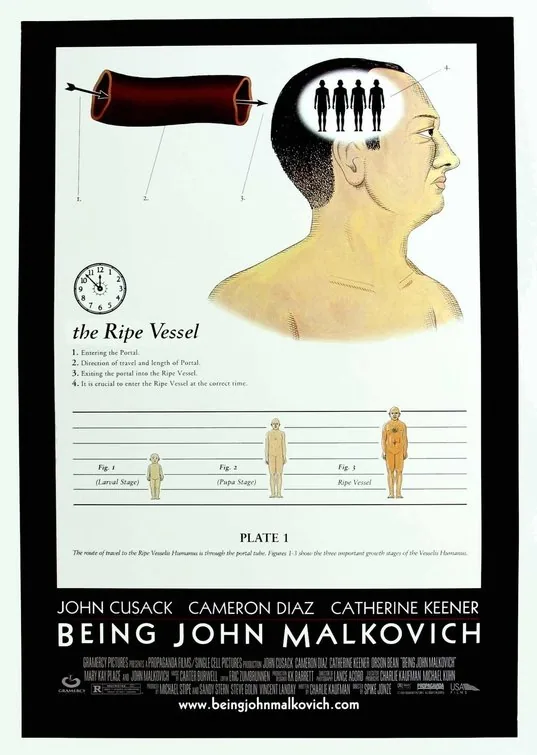
Craig Schwartz, a frustrated puppeteer, takes an office job on the unusually low seventh-and-a-half floor and discovers a portal into actor John Malkovich's consciousness. He and colleague Maxine turn the access into a paid attraction, but Craig's wife Lotte experiences it as an opening onto desires her husband has not taken seriously. What starts as an absurd business opportunity becomes a struggle over who may occupy another person's body and direct its future. Spike Jonze's comedy treats imaginative access as both intimacy and appropriation, not as harmless empathy.
Based on recorded story, mood and style. Your preferences can change the order.
What changes The Cobbler: episodic magical encounters, light comic progression and character-led turns. Hot Frosty: light, romantic and steadily sentimental.
Kathy, a widow running a small diner, is struggling with grief and the burden of keeping her life moving. A magical scarf brings a snowman to life as a charming man who experiences the world with childlike openness. Their unlikely connection encourages Kathy to reengage with friendship, community and romance while the snowman's temporary nature gives their holiday story a gentle edge of impermanence.
Based on recorded story, mood and style. Your preferences can change the order.
What changes The Cobbler: episodic magical encounters, light comic progression and character-led turns. Robot & Frank: measured, character-led and light heist progression.
In a near future, retired cat burglar Frank Weld is living alone as memory problems make his routines less reliable. His son brings him a care robot, which Frank first resists and then discovers can be enlisted in a small burglary. Their partnership gives Frank a new puzzle and an unlikely companion, while his family must weigh independence against safety. Robot & Frank uses a modest science-fiction premise for a warm, bittersweet comedy about aging, memory, and the uneasy line between support and control.
Based on recorded story, mood and style. Your preferences can change the order.
What changes The Cobbler: episodic magical encounters, light comic progression and character-led turns. The World's End: fast and escalating.
Gary King reunites his childhood friends to finish a pub crawl they failed to complete as teenagers in their hometown. The group discovers that the familiar pubs and some of the people inside them have been replaced by an alien system intent on enforcing conformity. Edgar Wright's science-fiction comedy combines a reunion road map with a fast escalation, while Gary's nostalgia and denial threaten the friendships he hopes to restore.
Based on recorded story, mood and style. Your preferences can change the order.
What changes The Cobbler: episodic magical encounters, light comic progression and character-led turns. Cool World: a wish to cross worlds destabilizes rules separating cartoons and people.
Cartoonist Jack Deebs enters Cool World, an animated realm he believes he created, where cartoon character Holli Would wants to cross into the human world. Detective Frank Harris, a human who has lived there for decades, enforces a rule against relationships between cartoons and humans. Their competing desires unsettle the boundary between animation and reality in a visually hybrid fantasy.
Based on recorded story, mood and style. Your preferences can change the order.
What changes The Cobbler: episodic magical encounters, light comic progression and character-led turns. The Adventures of Sharkboy and Lavagirl: measured and character-led.
A lonely boy’s imaginary heroes invite him into a dream world where they need help stopping a threat to their planet. As the adventure unfolds, Max discovers that his inventions and choices influence the dream more than he expected. The fantasy presents imagination as a way to process family worry and to see a child’s ideas as consequential. Bright digital sets and exaggerated design make the world feel like a child’s homemade storybook brought to screen.
Based on recorded story, mood and style. Your preferences can change the order.
What changes The Cobbler: episodic magical encounters, light comic progression and character-led turns. Delicatessen: episodic, stylized and darkly comic.
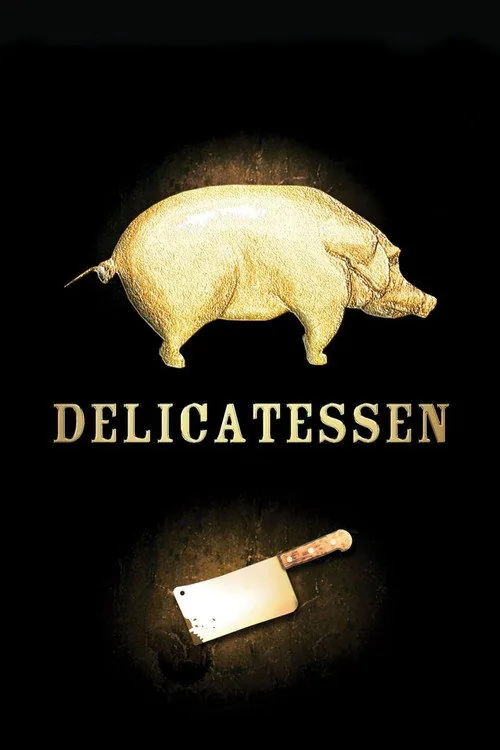
In a post-apocalyptic French apartment building where food is scarce, landlord and butcher Clapet lures workers there and kills them for meat. When former circus clown Louison takes the latest job, he wins over tenants and falls for Clapet’s daughter Julie. She knows her father’s secret and looks for allies among vegetarian rebels. Jean-Pierre Jeunet and Marc Caro’s black comedy turns hunger, romance, and household routines into a stylized fable about survival and collective resistance.
Based on recorded story, mood and style. Your preferences can change the order.
What changes The Cobbler: episodic magical encounters, light comic progression and character-led turns. Encino Man: episodic and school-comedy.
Two California teenagers discover a frozen caveman in their backyard and thaw him out, bringing him into their high school as a new student. Their plan to gain social status through their unusual friend grows complicated as he adapts to modern life and attracts attention of his own. The comedy uses culture shock to explore teenage popularity and the fragile ethics of treating another person as a novelty.
Max Simkin is a New York cobbler stuck in a routine shop and a family business he never expected to inherit. When an old stitching machine lets him transform into the person whose shoes he repairs, he begins using the ability to step into other lives and address problems around him. The power brings unexpected consequences as Max discovers that observation and impersonation do not make him understand the people he copies. Tom McCarthy's fantasy comedy mixes neighborhood warmth with questions of identity, responsibility, and the limits of walking in someone else's shoes.
What drives the story
A mysterious machine gives Max a way to inhabit other appearances, and each use draws him deeper into their concerns.
The people at its centre
His family history and the lives he borrows push him beyond passive observation toward choices with consequences.
What it feels like
A low-key fantasy premise creates a succession of comic and moral detours through everyday city life.
Worth knowing
The transformation is a magical identity device, not a science-fiction body swap or a detective's disguise trick.
identity and empathyescape from routineresponsibility for others