An isolated household's attempt at spiritual and economic independence collapses into accusation under pressure from loss and a hostile environment.
Why this matches +
These offer a related experience with a meaningful difference in story, tone, or presentation.
An adjacent discovery: a related idea with a different viewing experience.
Genres: Horror / Drama
Shared film traits
Based on recorded story, mood and style. Your preferences can change the order.
What changes Religious fear and sexual repression drive escalating hysteria in a historical community; intimate folk horror.
A religious family expelled from a colonial settlement tries to establish a farm beside a forbidding forest. The disappearance of an infant intensifies material hardship and turns private guilt into suspicion among the remaining household members. As religious certainty fails to explain their losses, a teenage daughter's place in the family becomes increasingly precarious within a world where supernatural danger and ordinary patriarchal fear cannot be cleanly separated.
The teenagers’ captivity triggers a larger standoff in which every authority claims to be responding to a threat.
Why this matches +
These offer a related experience with a meaningful difference in story, tone, or presentation.
An adjacent discovery: a related idea with a different viewing experience.
Genres: Horror / Thriller
Shared film traits
Based on recorded story, mood and style. Your preferences can change the order.
Political resistance
What changes Religious extremism becomes a vehicle for violence and institutional confrontation; contemporary American thriller.
Three teenagers seeking sex with an older woman are lured to a remote church compound, where they discover a heavily armed congregation led by a charismatic preacher. The encounter escalates from captivity into a confrontation involving law enforcement, religious extremism, and competing claims about who is acting in the name of justice. Kevin Smith’s film moves from horror to siege thriller and dark satire, using abrupt shifts in scale and tone to examine fanaticism, violence, and the instability of moral certainty.
The prosecution and defense reconstruct the ritual through witnesses, allowing the trial to function as an investigation into responsibility and belief.
Why this matches +
These offer a related experience with a meaningful difference in story, tone, or presentation.
An adjacent discovery: a related idea with a different viewing experience.
Genres: Crime / Drama
Shared film traits
Based on recorded story, mood and style. Your preferences can change the order.
What changes A disputed case of possession becomes a public contest over religion and authority; courtroom horror and a modern setting.
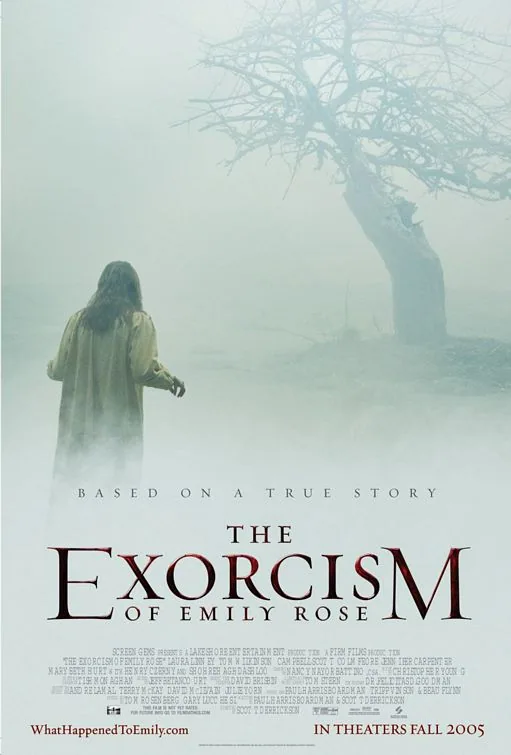
The Exorcism of Emily Rose (2005), directed by Scott Derrickson, follows A priest faces a criminal trial after performing an exorcism on a young woman who died during the ritual. A defense attorney initially approaches the case as a legal problem, then encounters testimony that challenges her certainty about the limits of rational explanation. The courtroom structure places questions of evidence and faith side by side, treating belief as a conflict of interpretation rather than an easy supernatural answer.
Margaret’s doubt begins with specific evidence rather than a rejection of faith.
Why this matches +
These offer a related experience with a meaningful difference in story, tone, or presentation.
An adjacent discovery: a related idea with a different viewing experience.
Genres: Horror / Thriller
Shared film traits
Based on recorded story, mood and style. Your preferences can change the order.
What changes Church authority and reproductive control form the basis of disturbing religious horror; supernatural conspiracy rather than historical persecution.
In 1970s Rome, American novice nun Margaret arrives at an orphanage as political protests and church tensions unfold around her. Strange events lead her to suspect that the institution is hiding a plan involving one of the children. The prequel connects supernatural horror to coercive authority, using Margaret’s investigation to challenge the church’s public image and her own place within its hierarchy.
Osmund joins a bishop's envoy in search of a village beyond the plague and discovers a community shaped by different beliefs.
Why this matches +
These offer a related experience with a meaningful difference in story, tone, or presentation.
An adjacent discovery: a related idea with a different viewing experience.
Genres: Horror / Drama
Shared film traits
Based on recorded story, mood and style. Your preferences can change the order.
Political resistance
What changes Religious zeal and accusations of supernatural evil shape a violent historical struggle; plague-era adventure rather than political persecution.
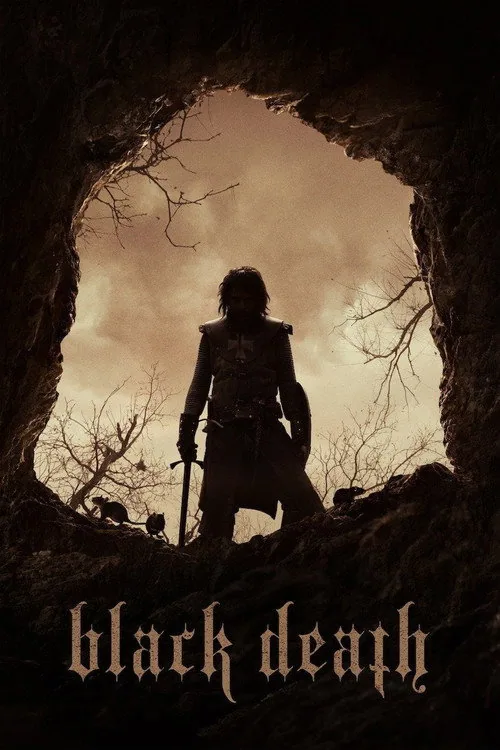
During the 1348 plague, novice monk Osmund leaves his monastery to guide a knight named Ulric and his soldiers toward a village rumored to be untouched by disease. Osmund hopes the journey will also reunite him with Averill, the woman he loves. The group finds a community led by a woman accused of witchcraft, and religious certainty gives way to suspicion and cruelty. The medieval horror drama uses the plague journey to test faith, fanaticism, and the violence people commit when they believe they are enforcing divine justice.
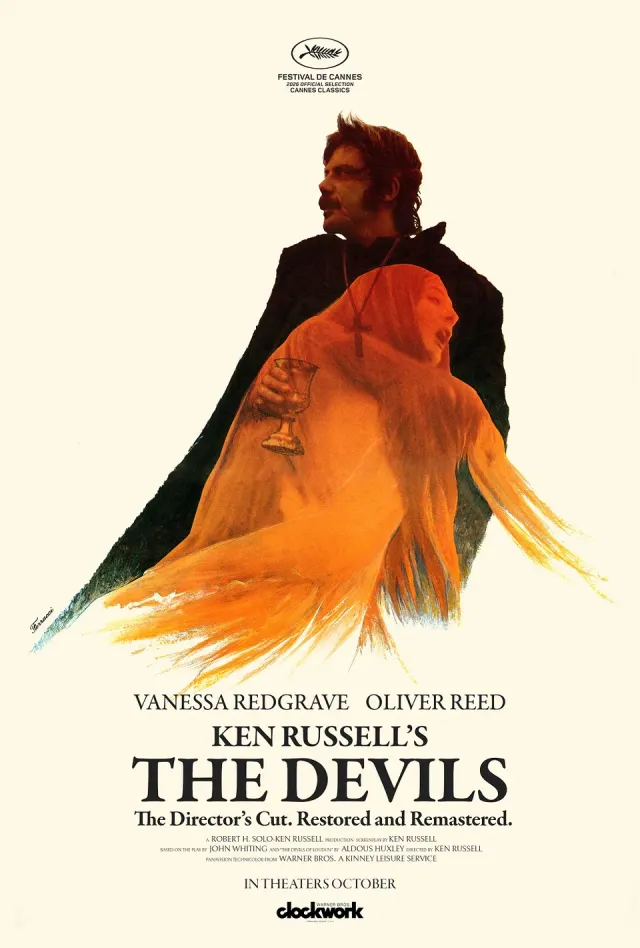
In seventeenth-century Loudun, the powerful priest Urbain Grandier becomes entangled in a struggle among church authority, state power, and a convent's accusations of demonic possession. Ken Russell stages the resulting campaign as a collision of political calculation, religious fervor, sexual repression, and public spectacle. The film's intense theatrical images make institutional persecution feel both intimate and civic: personal desire becomes evidence, and a town's institutions turn belief into a means of control.
What drives the story
A priest's local influence and private life become targets when political and religious authorities turn accusations of possession into a public prosecution.
The people at its centre
Grandier's confidence and appetite for independence meet Sister Jeanne's authority within the convent and the interests of officials who want control of the town.
What it feels like
Russell's stylized direction is confrontational and visually dense; the film sustains a disturbing atmosphere rather than offering a restrained historical reconstruction.
Worth knowing
Its subject is the use of religious accusation and state power to persecute, not a supernatural possession mystery asking viewers to solve whether a demon is real.
PowerReligious persecutionDesire
Mood
Provocative · Feverish · Unsettling
Pacing
Operatic · Intense
Visual style
Baroque · Theatrical · Expressionistic
Storytelling
Historical conflict · Mass hysteria · Institutional persecution