Based on recorded story, mood and style. Your preferences can change the order.
Family and care · Memory and identity
What changes The Glass Castle is tagged reflective and complicated; The Supremes At Earl's All-You-Can-Eat is tagged warm and nostalgic.
Odette, Barbara Jean and Clarice have been close friends since their youth, calling themselves the Supremes after the Motown group. Across decades, they share marriage, children, work and loss, meeting regularly at Earl's All-You-Can-Eat. When illness and personal crises bring painful memories back to the surface, the friends must decide how to support one another while acknowledging old wounds. Tina Mabry's ensemble drama centers Black female friendship as a durable source of joy and care.
Based on recorded story, mood and style. Your preferences can change the order.
Family and care · Coming of age
What changes The Glass Castle: episodic, memory-framed and character-led. Nobody Knows: akira’s effort to preserve the hidden household grows more difficult as money and food run out.
A mother moves into a Tokyo apartment with her four children but hides the younger siblings from the landlord, leaving only eldest son Akira visible. When she leaves for months with little money, Akira takes responsibility for rent, food and his brothers’ and sister’s daily needs. The children have been kept out of school and away from public attention, so their shrinking resources make ordinary childhood harder to sustain. The film quietly follows the siblings’ improvised household as its fragile independence gives way to loss.
Both share themes of memory, plus a reflective atmosphere.
Why this matches +
Genres: Biography / Drama
Shared film traits
Based on recorded story, mood and style. Your preferences can change the order.
Family and care · Memory and identity
What changes The Glass Castle: episodic, memory-framed and character-led. Honey Boy: memory-driven, alternating timelines and character-centered.
Actor Otis Lort enters rehabilitation after a destructive incident, where therapy encourages him to revisit his childhood. In flashbacks, young Otis works on film sets while living with his father James, a former rodeo clown whose support and volatility are difficult to separate. The story moves between adult treatment and the boy’s memories, exploring how performance, work, and a complicated parent-child bond shape Otis’s understanding of himself.
Based on recorded story, mood and style. Your preferences can change the order.
Family and care · Coming of age
Expect frank and funny, with episodic and intimate pacing.
In 1970s San Francisco, fifteen-year-old Minnie Goetze records her thoughts as she tries to understand desire, adulthood and her ambitions as an artist. Her bohemian mother is focused on her own life, and Minnie becomes involved with Monroe, her mother’s boyfriend, after he takes her out one night. The relationship complicates Minnie’s family ties and self-image as she moves through school, friendship and drawing. The film adapts Phoebe Gloeckner’s graphic novel through an adolescent point of view.
Both share memoir adaptation, plus a wry atmosphere.
Why this matches +
Genres: Drama
Shared film traits
Based on recorded story, mood and style. Your preferences can change the order.
Family and care · Coming of age
What changes The Glass Castle: episodic, memory-framed and character-led. The Tender Bar: jr moves between home, school and the bar and receiving different ideas about responsibility and success as he grows older..
Growing up on Long Island, JR lives with his mother and her family after his father, a radio DJ, fails to remain present in his life. At his uncle Charlie’s neighborhood bar, he finds a circle of adults who share advice, stories and a sense of belonging. His mother’s hopes for education and his own ambitions gradually shape his route into adulthood.
Based on recorded story, mood and style. Your preferences can change the order.
Family and care · Memory and identity
What changes The Glass Castle: episodic, memory-framed and character-led. Swan Song: cameron considers a secret replacement procedure, meets the version of himself meant to continue his life and and weighs love against honesty..
In a near future, husband and father Cameron Turner is diagnosed with a terminal illness and offered a way to spare his family grief: a clone can take his place without their knowledge. Cameron weighs the promise of continuity against the ethics of replacement and the loss of a final chance to say goodbye. The intimate science-fiction drama makes identity a family decision.
Based on recorded story, mood and style. Your preferences can change the order.
Family and care · Survival
What changes The Glass Castle: episodic, memory-framed and character-led. System Crasher: intense episodes, escalating crises and open-ended pressure.
Nine-year-old Bernadette, known as Benni, has intense outbursts that make school and foster placements difficult to sustain. She wants to live with her mother, but the family and child-welfare system cannot find a stable arrangement that keeps everyone safe. Social worker Michael tries a range of placements and support plans, while Benni’s need for closeness and the adults’ limited options pull them toward another crisis.
Based on recorded story, mood and style. Your preferences can change the order.
Memory and identity · Coming of age
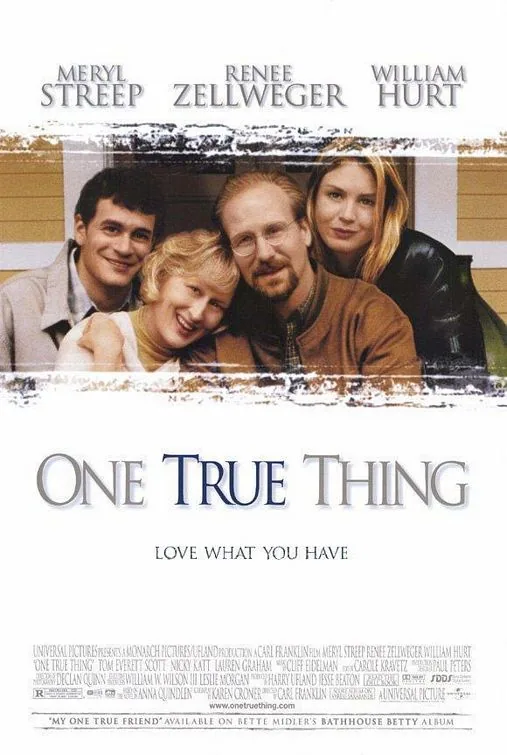
What changes The Glass Castle: episodic, memory-framed and character-led. One True Thing: patient domestic drama with emotional turns.
Magazine writer Ellen Gulden returns to her New Jersey family home when her mother Kate becomes seriously ill and her father asks Ellen to provide care. The forced change interrupts Ellen's ambitions and exposes the unequal expectations within the household. As she spends ordinary days with Kate, she reevaluates the parent she once dismissed and the father she had idealized.
Based on recorded story, mood and style. Your preferences can change the order.
Family and care · Memory and identity
What changes The Glass Castle: episodic, memory-framed and character-led. His Three Daughters: contained, dialogue-heavy and gradually softening.
Katie, Christina and Rachel gather in their father's New York apartment as he approaches the end of his life. They have lived with different degrees of distance from him and from one another, and the practical work of caring for him brings old resentments into the open. As the sisters wait and negotiate decisions, their compressed time together reveals competing versions of family history, responsibility and love without reducing their differences to a simple reconciliation.
Jeanette Walls grows up with her siblings in a family that moves frequently, living on limited means under the shifting plans of her charismatic father Rex and artist mother Rose Mary. Rex encourages his children’s imagination and independence but his alcoholism and unreliable promises leave them exposed. As an adult in New York, Jeanette looks back on the family’s itinerant childhood and the choices that shaped her relationship with her parents and siblings.
What drives the story
Jeanette revisits the childhood she shared with her siblings as she decides how to understand and relate to her parents as an adult.
The people at its centre
Rex inspires and wounds his children, Rose Mary resists conventional responsibility, and the siblings form a support system shaped by both parents’ choices.
What it feels like
The film moves between childhood and adulthood to hold affection and anger toward the same family history.
Worth knowing
It is an adult daughter’s retrospective account of a mobile family and its unstable parents, not a linear account of escaping one single abusive household.
family loyaltypovertyparenting
Mood
reflective · complicated · wry · melancholic
Pacing
episodic · memory-framed · character-led
Visual style
shifting period locations · rural and urban contrast · naturalistic family scenes · warm but weathered palette
Storytelling
memoir adaptation · nomadic childhood · adult recollection · parents with conflicting strengths and harms