The fugitives must keep moving toward safety while each landscape imposes a different survival problem.
Why this matches +
Selected for the central appeal: World War II ensemble adventures about prisoners planning an elaborate escape.
Genres: Drama / Adventure
Shared film traits
Based on recorded story, mood and style. Your preferences can change the order.
War and civilian life · Escape and pursuit
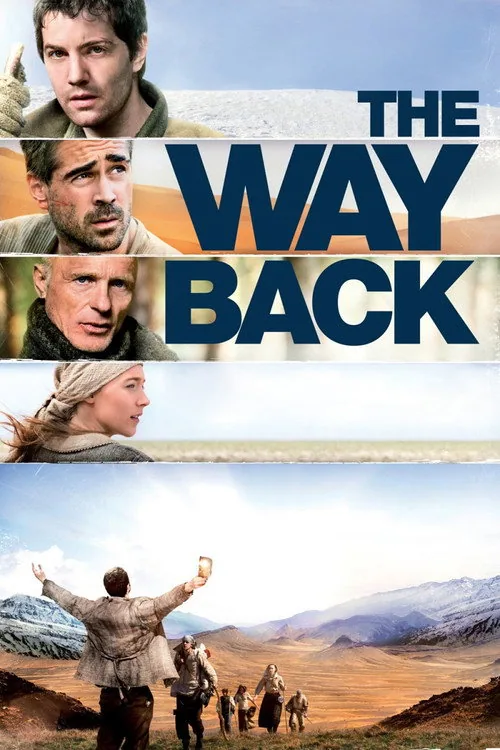
What changes The Way Back follows prisoners escaping a remote camp and enduring a long journey to freedom.
During the Second World War, a Polish prisoner escapes a Soviet labor camp with a small group of men. They travel south across Siberia, the Gobi Desert, and the Himalayas, relying on one another through hunger, weather, and exhaustion. Their route leads toward British India, but the long journey repeatedly tests the group’s capacity to keep moving and to care for its weakest members. Peter Weir’s survival drama follows the trek in stark landscapes and is based on a disputed memoir.
A football match gives Allied prisoners a choice between a risky escape plan and a public act of resistance.
Why this matches +
Selected for the central appeal: World War II ensemble adventures about prisoners planning an elaborate escape.
Genres: War / Sport
Shared film traits
Based on recorded story, mood and style. Your preferences can change the order.
War and civilian life · Escape and pursuit
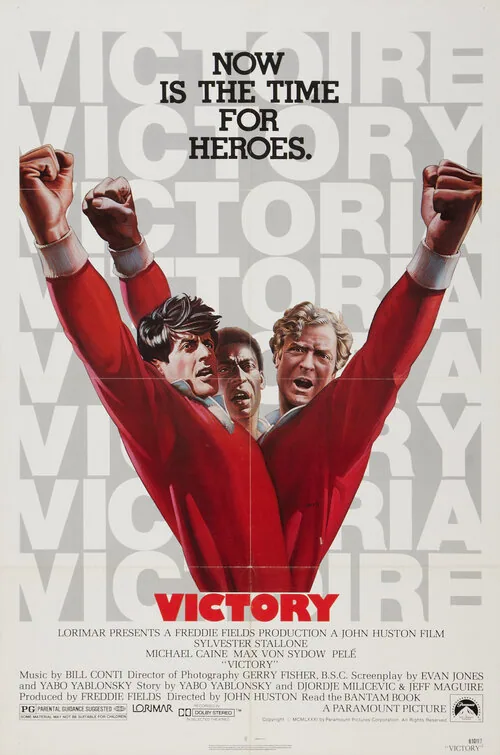
What changes Escape to Victory follows Allied prisoners organizing a collective escape from German captivity.
During the Second World War, Allied prisoners in a German camp are invited to play an exhibition football match against a German team. Captain Robert Hatch initially sees the event as a chance to organize an escape, while his fellow prisoners and their British officer must decide whether to risk the plan or play before a huge crowd. The match turns sport into a public test of courage, solidarity, and survival.
The amnesty bargain is both recruitment and coercion: Reisman needs the prisoners to become a unit before using them in a mission designed around high expected losses.
Why this matches +
These offer a related experience with a meaningful difference in story, tone, or presentation.
An adjacent discovery: a related idea with a different viewing experience.
Genres: Drama / Action
Shared film traits
Based on recorded story, mood and style. Your preferences can change the order.
War and civilian life · Escape and pursuit
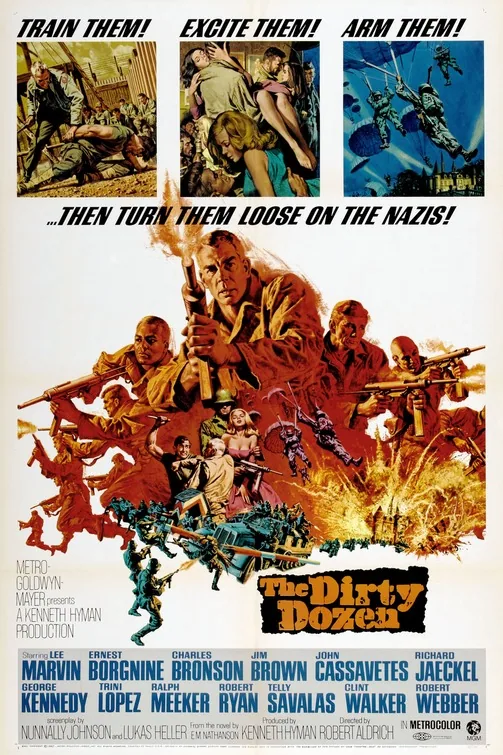
What changes The Dirty Dozen assembles a team of specialists for a risky World War II operation behind enemy lines.
Army major John Reisman is ordered to train twelve military prisoners for a dangerous mission behind German lines before D-Day. The men have been convicted of serious crimes, and the deal is that survivors may receive amnesty. Reisman first has to make a hostile group follow orders, then prepare them to attack a château where German officers are gathered. Their training exposes rivalries and the limits of discipline; during the operation, a change in the target’s circumstances makes the plan more morally fraught than its briefing suggested. The mission depends on teamwork among men who distrust one another, while Reisman weighs the strategic objective against the cost of treating them as expendable weapons.
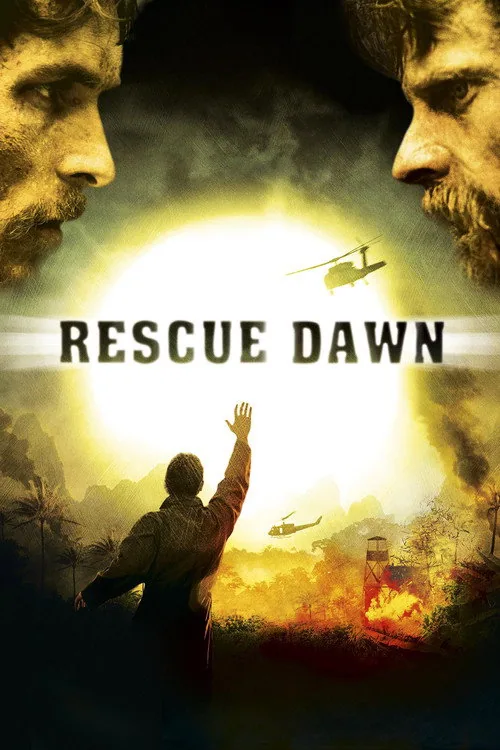
Dengler leads an escape from captivity and tries to reach safety after his aircraft is downed.
Why this matches +
These offer a related experience with a meaningful difference in story, tone, or presentation.
An adjacent discovery: a related idea with a different viewing experience.
Genres: Adventure / Drama
Shared film traits
Based on recorded story, mood and style. Your preferences can change the order.
War and civilian life · Escape and pursuit
What changes Rescue Dawn follows a prisoner of war's resourceful escape from captivity.
Navy pilot Dieter Dengler is shot down over Laos during the Vietnam War, captured, and held in a remote prisoner camp. He refuses an offer to condemn the United States and begins planning an escape with other prisoners, whose strength and willingness to take risks differ. Werner Herzog’s survival drama follows the escape into dense jungle, where the group must improvise food, shelter, and a route toward rescue. The film is based on Dengler’s account and emphasizes the physical costs of captivity and flight.
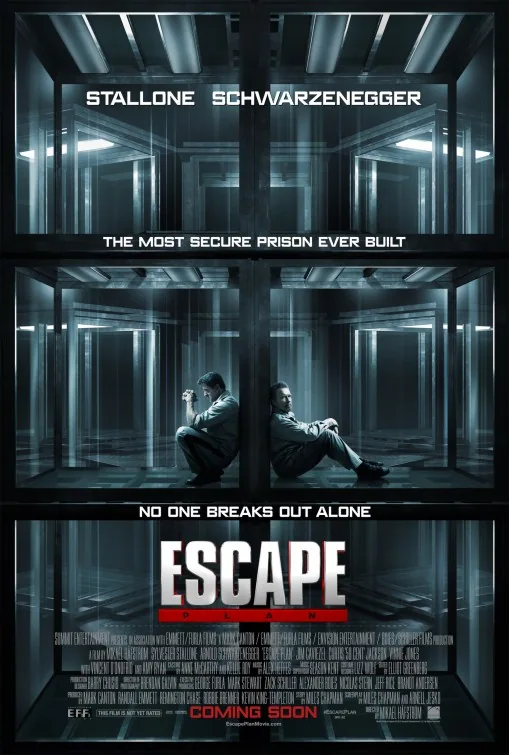
An expert's own knowledge becomes the blueprint for containing him, forcing him to supplement technical observation with trust after a supposedly reversible job is made permanent.
Why this matches +
These offer a related experience with a meaningful difference in story, tone, or presentation.
An adjacent discovery: a related idea with a different viewing experience.
Genres: Action / Thriller
Shared film traits
Based on recorded story, mood and style. Your preferences can change the order.
Escape and pursuit
What changes Escape Plan centers a carefully engineered escape from a supposedly secure prison.
A professional prison-security tester agrees to enter a secret facility whose location and procedures are withheld from his team. Discovering that his emergency safeguards have been removed turns a controlled assignment into actual captivity. His published methods have helped design the prison around him, so understanding the architecture is no longer enough: escape requires cooperation with a prisoner whose identity and motives may be as carefully managed as the institution itself.
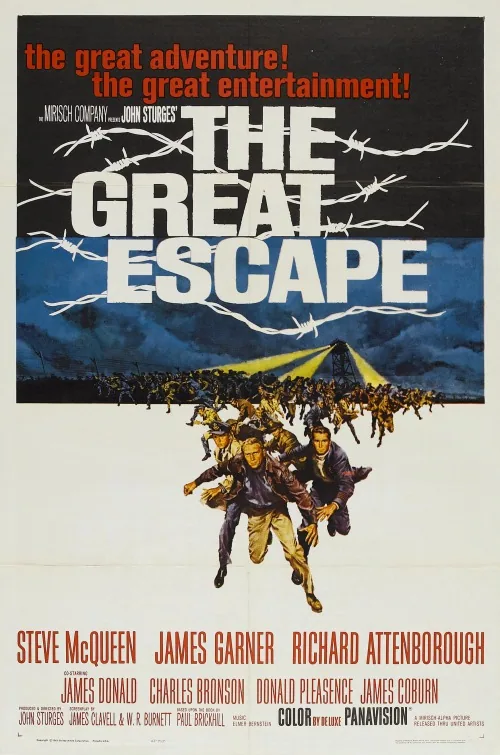
At Stalag Luft III, Allied airmen organize a mass escape through three tunnels, relying on specialist teams to make forged papers, civilian clothes and a hidden route. Hilts repeatedly tries to escape alone while Bartlett coordinates the larger plan. In the real 1944 breakout, 76 prisoners got out, 73 were recaptured and 50 were murdered by the Gestapo. The film preserves the scale and tragic outcome but invents characters such as Steve McQueen’s American Hilts and gives Americans a prominent role; no Americans were in the North Compound when the breakout happened. Its ensemble adventure is highly fictionalized and should not be read as a precise account of who planned or escaped.
What drives the story
The three-tunnel plan divides the escape into interdependent jobs requiring secrecy, specialized skill and timing. Hilts’s individual escape attempts contrast with Bartlett’s collective operation, but the film’s American characters are inventions rather than participants in the actual breakout.
The people at its centre
Bartlett’s command coordinates a team with varied skills, while Hilts represents a more individual, improvisational style of resistance. The film’s ensemble is a dramatic construction, not a roster of real escape organizers.
What it feels like
The first half is an ensemble planning procedural; the second turns into pursuit and separation. Its memorable whistling theme sits alongside an ending much darker than the camaraderie of the preparation suggests.
Worth knowing
A classic ensemble escape drama based on the Stalag Luft III breakout. The actual escape put 76 men outside the wire, but the film invents principal characters and substantially alters national representation; its historical background merits separate reading.
FreedomIngenuitySacrifice
Mood
Suspenseful · Camaraderie · Tragic
Pacing
Planning ensemble · Escape and aftermath
Visual style
Classic war-film staging · Ensemble set pieces
Storytelling
POW camp escape plan · Tunnel engineering · Pursuit after breakout