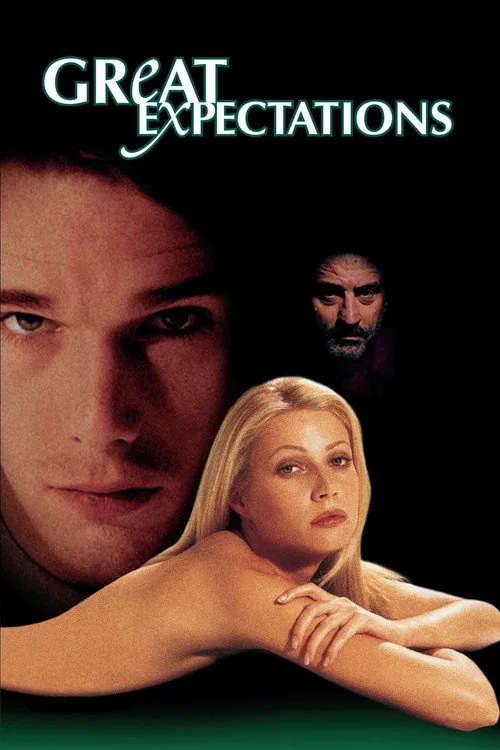
Finn's unexpected chance at an art career renews his pursuit of Estella and forces him to question who enabled his rise.
Why this matches +
Selected for the central appeal: A wealthy host stages extravagant parties while pursuing a lost romance shaped by memory, class and self-invention.
Genres: Romance / Drama
Shared film traits
Based on recorded story, mood and style. Your preferences can change the order.
What changes A young man's love for a woman of higher social standing becomes entangled with wealth, reinvention and an idealized past.
Young Florida artist Finn Bell helps an escaped convict and later meets Estella, the guarded niece of a wealthy, reclusive woman who invites him to paint. Years later, Finn unexpectedly receives support from an unknown benefactor and moves to New York, where he hopes to reconnect with Estella. Alfonso Cuarón relocates Dickens's story to contemporary settings and frames it through vivid color, youthful longing, and art, asking how ambition and fantasy can distort a person's memory of love.
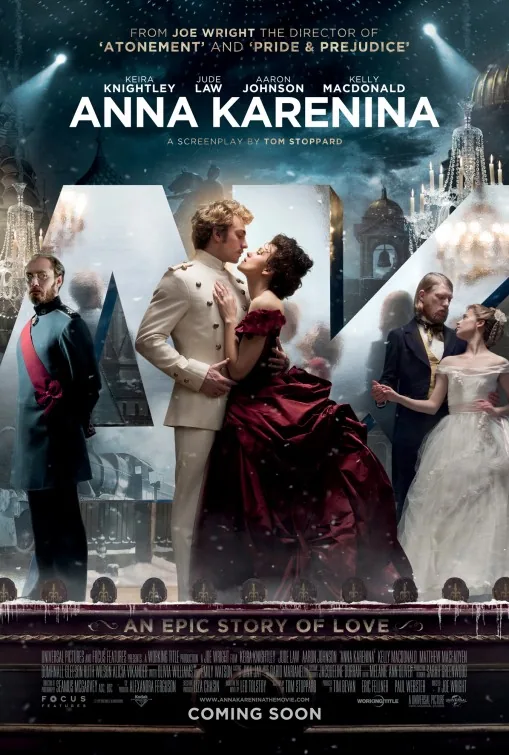
Anna's relationship with Vronsky challenges a marriage embedded in public status, but the social order gives her fewer ways to leave than it gives him. The parallel Levin plot resists treating passion as the only model of intimacy.
Why this matches +
These offer a related experience with a meaningful difference in story, tone, or presentation.
An adjacent discovery: a related idea with a different viewing experience.
Genres: Drama / Romance
Shared film traits
Based on recorded story, mood and style. Your preferences can change the order.
What changes A passionate relationship unfolds within a wealthy social world whose expectations and power constrain its participants.
In nineteenth-century Russia, Anna's affair with the cavalry officer Vronsky ruptures the marriage and social standing that have defined her public life. Their attraction offers an apparent alternative, but the social costs fall most heavily on Anna and make private desire a public spectacle. A parallel story follows Levin's slower courtship and marriage to Kitty, providing a contrasting account of work, faith and commitment. Joe Wright stages much of the film as if it unfolds inside a theater, turning class performance into both setting and visual argument.
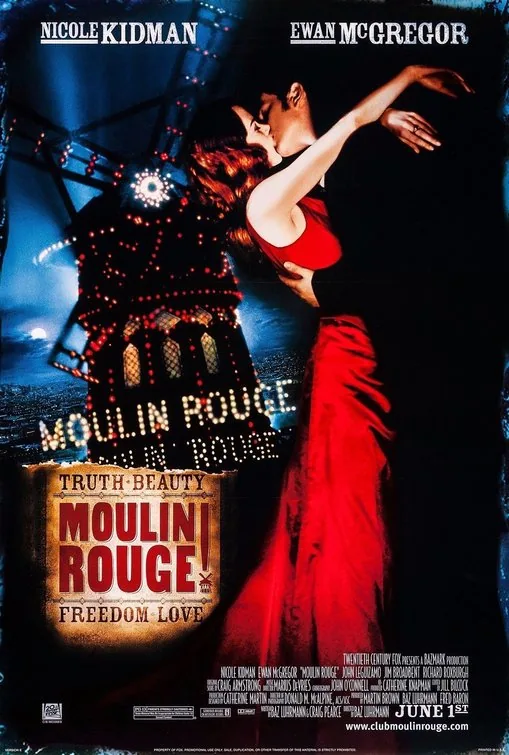
A secret romance develops inside a production financed by a possessive patron, forcing the lovers to turn performance into a means of concealment and expression.
Why this matches +
These offer a related experience with a meaningful difference in story, tone, or presentation.
An adjacent discovery: a related idea with a different viewing experience.
Genres: Drama / Romance
Shared film traits
Based on recorded story, mood and style. Your preferences can change the order.
What changes A visually extravagant romance pits longing and performance against wealth, social power and an ultimately fragile dream.
A young writer enters a Parisian cabaret hoping to join an artistic revolution and falls in love with its star performer. Their relationship must be concealed from a wealthy patron whose funding is expected to secure the venue's future and access to the woman he desires. A theatrical production becomes both cover and mirror for their romance, while illness and economic dependence make declarations of freedom increasingly fragile.
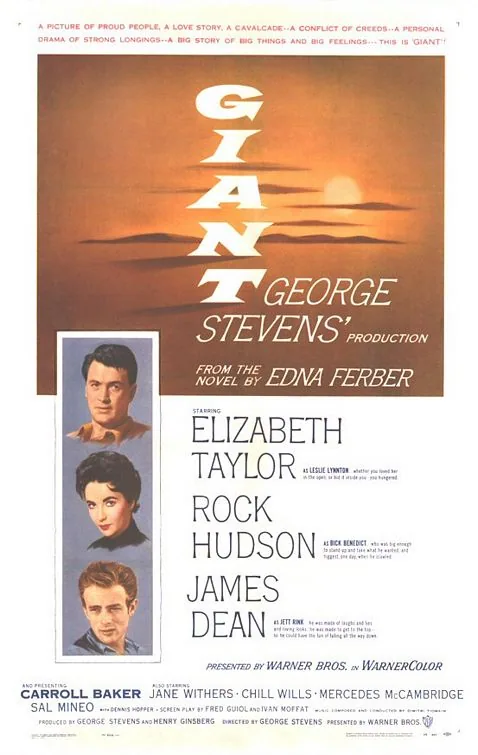
Oil wealth reshapes a ranch family’s power over generations, exposing tensions between inherited status, new money and the discrimination sustaining the regional order. Jett’s wealth changes the family hierarchy but does not by itself undo racial exclusion.
Why this matches +
These offer a related experience with a meaningful difference in story, tone, or presentation.
An adjacent discovery: a related idea with a different viewing experience.
Genres: Drama / Romance
Shared film traits
Based on recorded story, mood and style. Your preferences can change the order.
What changes A sweeping drama follows wealth, class divisions and romantic relationships as public success exposes unequal power.
A marriage between Texas rancher Bick Benedict and Maryland socialite Leslie connects family life to a ranch economy built on land, oil and racial hierarchy. Jett Rink’s discovery of oil changes the balance of wealth and authority, while later generations confront discrimination against Mexican Americans that the older ranch culture normalizes. The narrative’s long span gives social change a personal scale, but its central white family still controls much of the film’s viewpoint. The famous diner confrontation complicates Bick’s inheritance of power without making one late gesture resolve the structures the story has spent decades establishing.
Stahr navigates studio demands and a fragile romance while trying to shape the films and workplace he controls.
Why this matches +
These offer a related experience with a meaningful difference in story, tone, or presentation.
An adjacent discovery: a related idea with a different viewing experience.
Genres: Drama / Romance
Shared film traits
Based on recorded story, mood and style. Your preferences can change the order.
What changes A powerful figure in a glamorous entertainment world pursues ambition and romance amid wealth, status and personal loss.
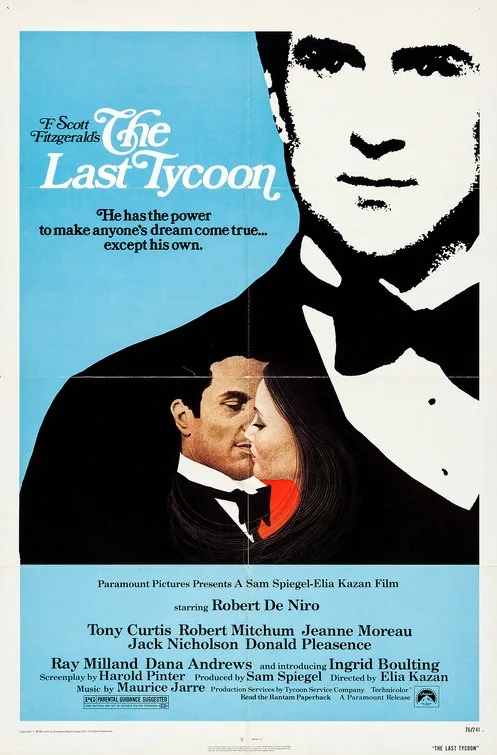
In 1930s Hollywood, studio production chief Monroe Stahr balances scripts, stars, labor trouble and the expectations of studio head Pat Brady. After a flood damages a soundstage, he glimpses Kathleen Moore, a young woman who unsettles his disciplined professional life. Their attraction grows as Stahr tries to preserve his influence and make films on his own terms, while studio politics, a threatened writers' strike and his own frailty complicate the relationship.
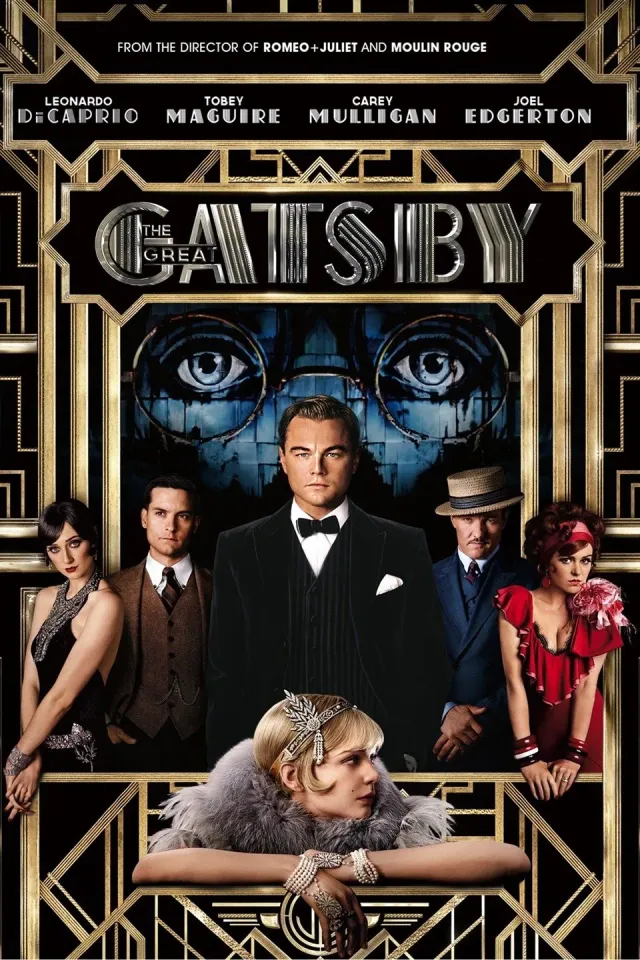
Nick Carraway arrives in 1920s Long Island and becomes the neighbour of Jay Gatsby, a wealthy host whose lavish parties conceal his hope of reconnecting with Daisy Buchanan, now married to Tom. Nick’s access to the couple turns him into a witness to a romance built on memory, money and unequal power. The film frames Fitzgerald’s story through heightened parties, music and visual excess, making Gatsby’s self-invention feel dazzling before the past catches up with him. It is an adaptation with a distinctive modern sensibility rather than a neutral visualization of the novel.
What drives the story
Gatsby’s attempt to recover Daisy creates the central pressure, while Nick’s narration gives the viewer a controlled but partial view of the people around him.
The people at its centre
Gatsby treats wealth as proof that he can remake the past; Daisy and Tom have inherited protections he cannot buy. Nick’s friendship makes him both participant and observer.
What it feels like
Baz Luhrmann uses rapid editing, saturated spectacle and a contemporary soundtrack to turn the Jazz Age into a deliberately theatrical world.
Worth knowing
A match for viewers who enjoy romantic tragedy presented as visual spectacle. Readers wanting the novel’s quieter ambiguity or a historically restrained period drama may find this interpretation too heightened.
MemoryClassRomantic longing
Mood
Lavish · Restless · Tragic
Pacing
Spectacle build · Romantic collapse
Visual style
Saturated color · Rapid editing
Storytelling
Self-invention · Reunion with married lover · Narrated adaptation