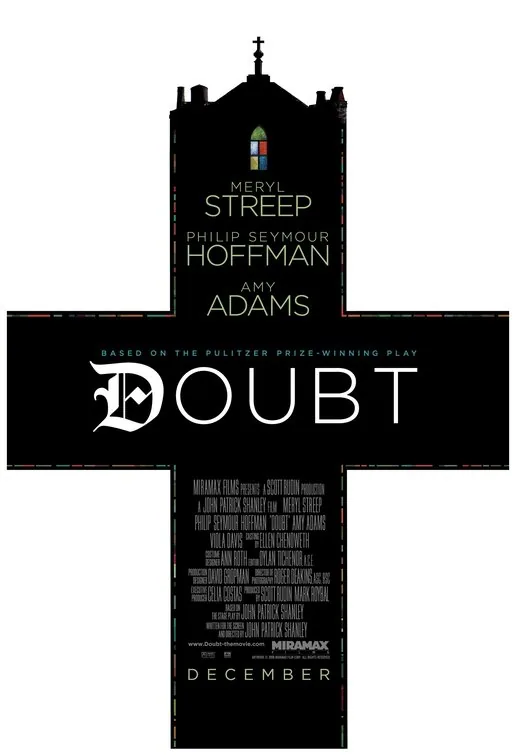
Suspicion leads a school leader to confront a more institutionally protected colleague, making the demand to act before proof collides with the risk of mistaking conviction for knowledge. A limited set of observations is interpreted by people with unequal authority and incompatible ideas of protection.
Why this matches +
Selected for the central appeal: Intense dramas about accusations, uncertainty and communities deciding whom to believe.
Genres: Drama
Shared film traits
Based on recorded story, mood and style. Your preferences can change the order.
What changes Doubt follows an allegation involving a priest and a child within a close institution, but deliberately leaves the underlying truth uncertain where The Hunt shows Lucas as innocent.
At a Bronx Catholic school in 1964, a principal becomes convinced that a priest's relationship with a vulnerable student conceals misconduct. A younger teacher's observations provide troubling signs without a settled explanation, while the boy's mother faces dangers that do not fit the principal's preferred moral choices. Institutional rank and the fear of failing a child turn a dispute over evidence into an encounter with the cost of certainty, without supplying a definitive account of what occurred.
Linked encounters and delayed revelations force characters to confront racial assumptions, while coincidence makes a city feel unusually compressed and morally interconnected.
Why this matches +
These offer a related experience with a meaningful difference in story, tone, or presentation.
An adjacent discovery: a related idea with a different viewing experience.
Genres: Drama
Shared film traits
Based on recorded story, mood and style. Your preferences can change the order.
What changes Crash explores how fear and prejudgment damage relationships across a community, using an ensemble of intersecting stories rather than a single accusation.
A series of interwoven encounters in Los Angeles brings police, carjackers, a district attorney's household, a Persian shop owner and other residents into contact across one volatile period. Characters move between vulnerability and the exercise of power, but those positions are not interchangeable: a moment of kindness cannot cancel sexual abuse, racial harassment or the authority behind it. The film's coincidences and abrupt moral reversals organize a deliberately emphatic melodrama, not a sociological survey or a reliable account of how racism resolves itself. A snowfall and a car accident provide the film's first links among otherwise separate lives.
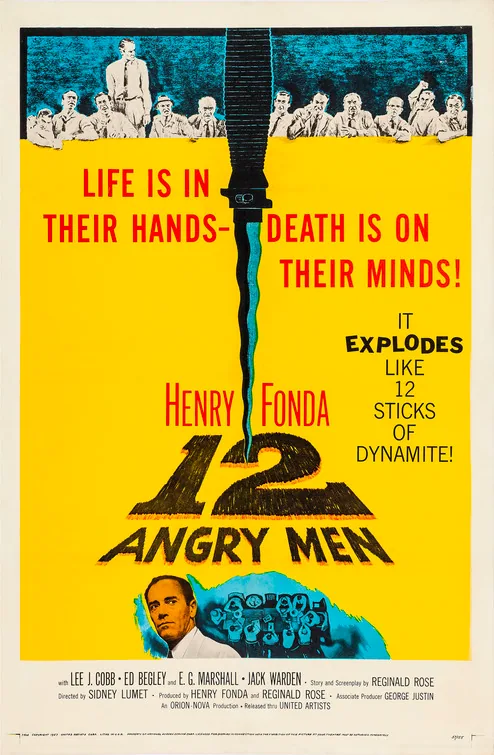
A required unanimous decision becomes a contest over whether uncertainty will be examined or dismissed for the convenience of the group.
Why this matches +
These offer a related experience with a meaningful difference in story, tone, or presentation.
An adjacent discovery: a related idea with a different viewing experience.
Genres: Drama / Huis-clos
Shared film traits
Based on recorded story, mood and style. Your preferences can change the order.
What changes 12 Angry Men examines how assumptions shape judgments about an accused person, confining its conflict to a jury rather than a small community.
A jury assembled after a murder trial initially expects to return a quick guilty verdict against a young defendant. One member's insistence on discussing the evidence interrupts that consensus and forces the others to revisit testimony they have accepted as settled. Confined deliberation exposes impatience, personal resentment and prejudice as influences on an apparently factual decision whose consequences cannot be reversed.
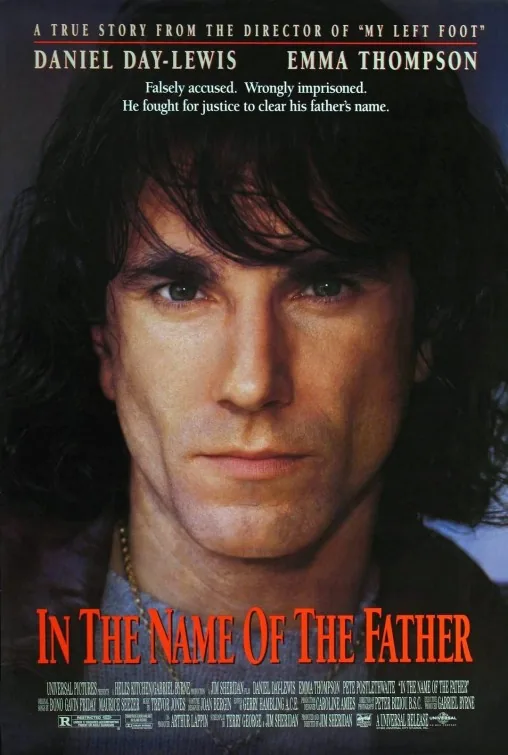
Coerced confessions and withheld evidence sustain wrongful convictions until legal work forces the state to confront an alternative account of the bombing. Giuseppe’s persistence and Gerry’s anger become complementary strategies only after their relationship changes.
Why this matches +
These offer a related experience with a meaningful difference in story, tone, or presentation.
An adjacent discovery: a related idea with a different viewing experience.
Genres: Drama / History
Shared film traits
Based on recorded story, mood and style. Your preferences can change the order.
What changes In the Name of the Father follows a wrongful accusation and its devastating social consequences, emphasizing police and courtroom injustice rather than suspicion among neighbors.
Gerry Conlon is arrested after a Guildford bombing and coerced into confessing, while police pressure also traps his father Giuseppe and members of the Maguire family. The long fight to overturn the convictions links a public miscarriage of justice with a father-son relationship initially marked by conflict and different ways of surviving prison. Their shared-cell intimacy is a dramatic invention, and the film also compresses legal events into a forceful courtroom climax. The convictions were real and were quashed in 1989; the adaptation’s private exchanges are not a transcript. Its emotional focus on Gerry and Giuseppe should not obscure the other wrongly convicted people whose lives were also damaged.
Lucas, a divorced kindergarten teacher trying to rebuild his relationship with his teenage son, becomes the focus of suspicion after a young pupil’s confused statement is interpreted as abuse. As the allegation spreads through a close-knit Danish community, Lucas loses his job, friends and ordinary access to public life despite his denials. The film stays close to his experience of social rejection and the community’s fear, showing how uncertainty hardens when people repeat it. It strongly positions viewers to see the accusation as mistaken, but its single fictional case is not a general account of abuse investigations or children’s testimony. The unresolved final beat keeps social suspicion alive after the community appears ready to move on.
What drives the story
A child’s confused statement triggers suspicion, but the community’s reaction quickly becomes a second punishment Lucas cannot escape through ordinary explanation. The film aligns viewers with his innocence while preserving an unsettling residue of uncertainty at the end.
The people at its centre
Lucas’s friendship with the girl’s father makes the suspicion especially painful; his son is among the few people who continues to stand by him.
What it feels like
A restrained, tense drama uses Christmas rituals, shop encounters and a final hunting sequence to show how suspicion persists after the immediate crisis.
Worth knowing
For viewers prepared for a distressing drama about accusation, social contagion and ostracism. The film is a deliberately one-sided fictional provocation, not a guide to real child-protection cases or an argument that abuse allegations are generally false.
TrustReputationCollective fear
Mood
Restrained · Unsettling · Tense
Pacing
Slow social escalation · Unresolved aftermath
Visual style
Naturalistic small-town realism · Close social spaces
Storytelling
Misunderstood incident · Disputed accusation · Community ostracism