An improvised refuge survives through repeated negotiations whose apparent protections remain vulnerable to both armed intimidation and international abandonment.
Why this matches +
Selected for the central appeal: Journalistic friendship across unequal access to safety is tested by Cambodia’s catastrophe, survival and the guilt of leaving a colleague behind.
Genres: Drama / Biography
Shared film traits
Based on recorded story, mood and style. Your preferences can change the order.
War and civilian life · Survival
What changes Personal ties and limited institutional refuge become crucial as mass atrocity exposes the fragility of international protection; a hotel manager’s efforts to shelter many people replace a journalist friendship divided across countries.
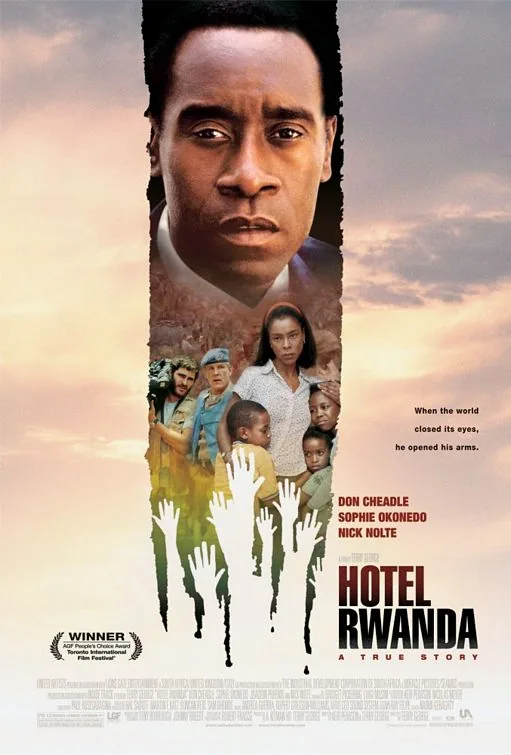
A hotel manager in Kigali tries to keep guests, neighbours and his own family alive as organised anti-Tutsi violence makes ordinary professional routines inadequate. Contacts, supplies and the hotel's international status create temporary leverage, but outside promises repeatedly prove less protective than expected. Each negotiation exposes the limits of treating rescue as a question of commercial influence when the wider institutions with the power to intervene choose restricted obligations or withdrawal.
The fugitives must keep moving toward safety while each landscape imposes a different survival problem.
Why this matches +
Related viewing experiences with the specific differences recorded for each pair.
An adjacent discovery: a related idea with a different viewing experience.
Genres: Drama / Adventure
Shared film traits
Based on recorded story, mood and style. Your preferences can change the order.
War and civilian life · Survival
What changes Escaping forced labor requires physical endurance and trust while a coercive regime reduces people to disposable labor; a multi-country walking ensemble lacks the particular journalist partnership and survivor’s guilt of the source.
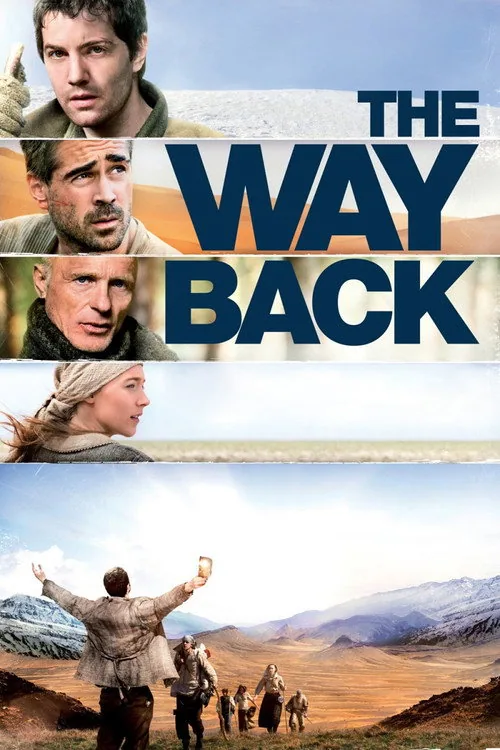
During the Second World War, a Polish prisoner escapes a Soviet labor camp with a small group of men. They travel south across Siberia, the Gobi Desert, and the Himalayas, relying on one another through hunger, weather, and exhaustion. Their route leads toward British India, but the long journey repeatedly tests the group’s capacity to keep moving and to care for its weakest members. Peter Weir’s survival drama follows the trek in stark landscapes and is based on a disputed memoir.
Fowler’s stated neutrality becomes harder to maintain as his personal and political choices converge.
Why this matches +
Related viewing experiences with the specific differences recorded for each pair.
An adjacent discovery: a related idea with a different viewing experience.
Genres: Drama / Romance
Shared film traits
Based on recorded story, mood and style. Your preferences can change the order.
What changes Foreign reporting in Southeast Asia becomes inseparable from unequal knowledge, compromised loyalty and responsibility for local lives; romantic and ideological betrayal in Vietnam replaces Cambodian captivity and reunion.
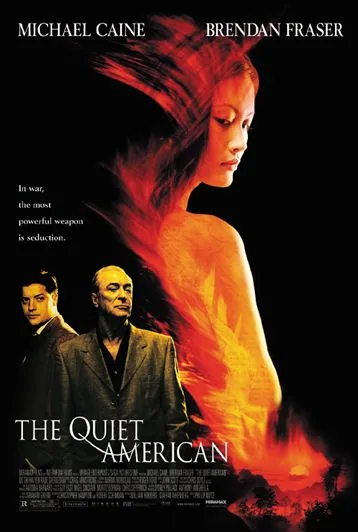
In 1952 Saigon, British journalist Thomas Fowler reports on the final years of French colonial rule and shares his life with Vietnamese woman Phuong. The arrival of American aid worker Alden Pyle disrupts that arrangement and introduces a rival interpretation of what Vietnam needs. Fowler grows suspicious of Pyle’s political role as the young American’s idealism is tested against the violence unfolding around them. A love triangle develops alongside a political mystery about intervention, responsibility and the cost of remaining a detached observer.
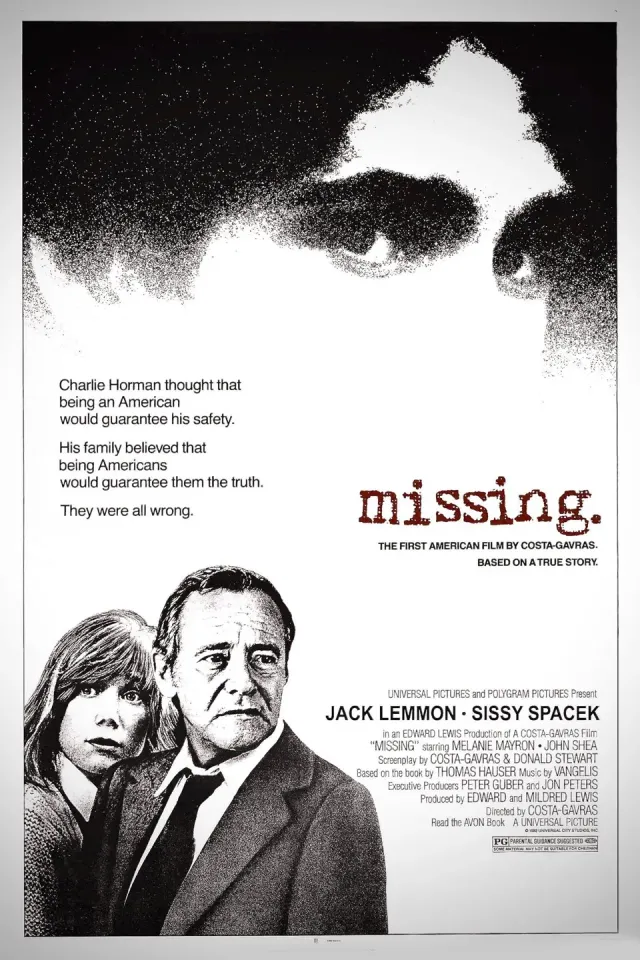
A father searches for his missing son after a coup and uncovers evidence of political complicity.
Why this matches +
Related viewing experiences with the specific differences recorded for each pair.
An adjacent discovery: a related idea with a different viewing experience.
Genres: Drama / History
Shared film traits
Based on recorded story, mood and style. Your preferences can change the order.
What changes A foreign observer’s disappearance under a violent regime forces loved ones to confront official indifference and their own assumptions about protection; a family-led investigation in Chile replaces colleagues separated between Western safety and forced labor.
After his son Charles disappears during the 1973 military coup in Chile, American businessman Ed Horman travels to Santiago and joins his daughter-in-law Beth in searching for him. Ed initially trusts official assurances and his country's representatives, but documents and encounters with witnesses deepen the suspicion that the authorities know far more than they admit. As the search continues, a private family emergency becomes a confrontation with state power and political accountability.
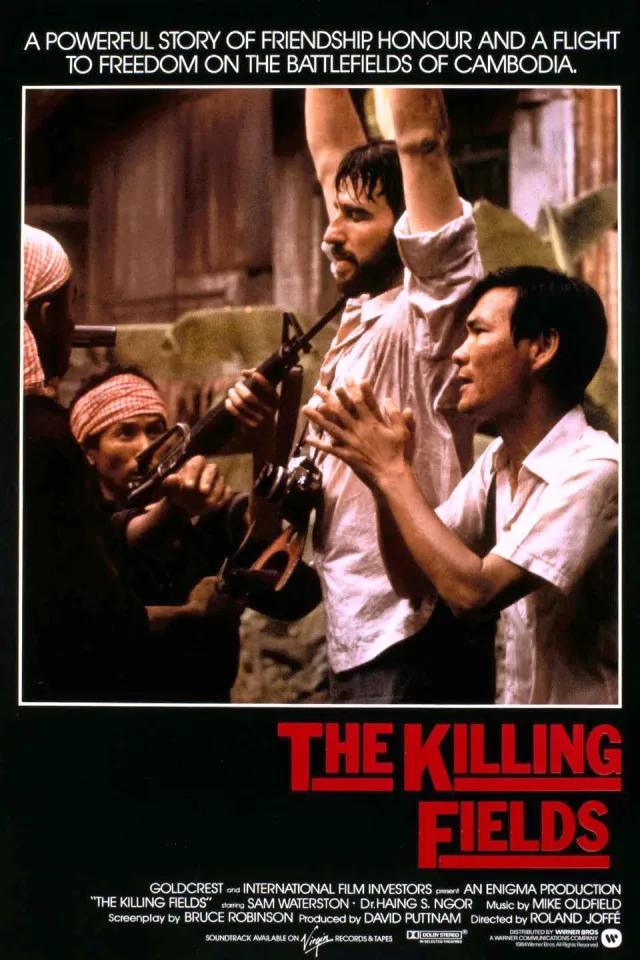
New York Times reporter Sydney Schanberg and Cambodian journalist and interpreter Dith Pran work together as Cambodia’s civil war intensifies. When the Khmer Rouge take Phnom Penh, Schanberg helps Pran’s family leave, but Pran stays and is captured. Schanberg and photographer Al Rockoff struggle to survive the immediate upheaval and later try to secure Pran’s release. The film follows the friends on separate paths: Schanberg returns to the United States carrying guilt over his colleague’s disappearance, while Pran endures forced labor and attempts to escape. Their eventual reunion joins a personal story of loyalty to a depiction of the Khmer Rouge period, which the feature dramatizes rather than comprehensively documents.
What drives the story
The decision to stay with his family in Cambodia separates Pran from Schanberg; the parallel storylines keep their friendship present across years and radically different circumstances.
The people at its centre
Schanberg’s professional ambition becomes entangled with guilt about Pran. Pran’s resourcefulness and determination to survive carry the emotional weight of the film’s Cambodian perspective.
What it feels like
A historical drama shifts from urgent newsroom reporting to a long, harrowing survival story. The tonal distance between its American and Cambodian sections is significant.
Worth knowing
A fit for serious war journalism and survival dramas, but it is a feature adaptation of events and testimony, not a complete account of Cambodia or a substitute for Cambodian historical perspectives.
FriendshipSurvivalWitness
Mood
Harrowing · Serious · Compassionate
Pacing
Journalism to survival ordeal · Long aftermath
Visual style
War-zone realism · Contrasting locations
Storytelling
War reporting · Dith Pran’s separation · Forced labor and escape