Hall’s search for his murdered mentor exposes a computer simulation whose inhabitants and creators may each question their reality.
Why this matches +
Selected for the central appeal: Reality-bending science fiction about simulated worlds, suppressed memory and reclaiming identity.
Genres: Science fiction / Thriller
Shared film traits
Based on recorded story, mood and style. Your preferences can change the order.
Constructed reality
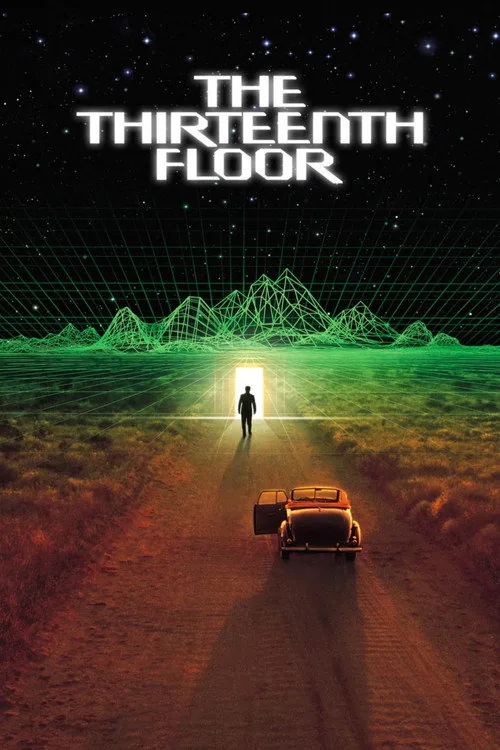
What changes The Thirteenth Floor follows a man questioning whether his reality is a simulation after unsettling discoveries.
In 1999 Los Angeles, computer scientist Douglas Hall is suspected of murdering his mentor, Hannon Fuller, who has recently completed a simulated version of 1937 Los Angeles. Hall investigates the crime by entering the virtual world, where its inhabitants appear unaware they are computer-generated. As evidence destabilizes his confidence in his own reality, the mystery expands into questions about who is observing whom and whether the simulation can contain a world of its own. The science-fiction thriller uses noir investigation to examine simulated consciousness, identity, and nested realities.
Allegra and Ted enter eXistenZ to test it while trying to identify the people pursuing them.
Why this matches +
Selected for the central appeal: Reality-bending science fiction about simulated worlds, suppressed memory and reclaiming identity.
Genres: Science fiction / Thriller
Shared film traits
Based on recorded story, mood and style. Your preferences can change the order.
Constructed reality
What changes Existenz blurs virtual experience and lived reality while characters struggle to know who controls the game.
Game designer Allegra Geller presents her new virtual-reality game, eXistenZ, when an assassin attacks her at a demonstration. She escapes with marketing trainee Ted Pikul, and the pair enter the game through organic bio-ports and living consoles in order to determine whether its system has been damaged. As their nested game experiences become increasingly elaborate, Allegra and Ted struggle to tell scripted roles from their own motives. David Cronenberg’s science-fiction thriller makes play, technology, and bodily vulnerability difficult to separate.
A layered mental heist must coordinate several timeframes while its organiser's private grief threatens the shared plan.
Why this matches +
Selected for the central appeal: Reality-bending science fiction about simulated worlds, suppressed memory and reclaiming identity.
Genres: Science fiction / Thriller
Shared film traits
Based on recorded story, mood and style. Your preferences can change the order.
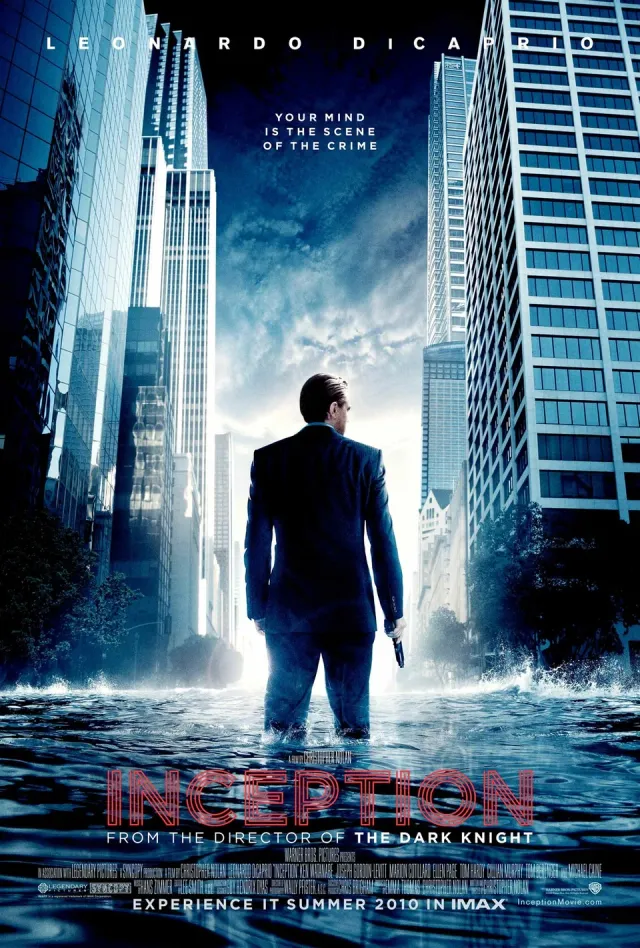
What changes Inception explores constructed realities, manipulated memory and a protagonist's attachment to a lost relationship.
A specialist who enters dreams to steal information accepts an unusual assignment to implant an idea instead. He recruits a team to construct layered dream environments around a powerful heir, while a recurring projection of his dead wife disrupts his judgement. Rules about time, awakening and unstable perception turn a corporate operation into a struggle to separate professional control from unresolved guilt.
The murders make the technology’s supposed separation between real bodies and public life impossible to maintain.
Why this matches +
These offer a related experience with a meaningful difference in story, tone, or presentation.
An adjacent discovery: a related idea with a different viewing experience.
Genres: Action / Science fiction
Shared film traits
Based on recorded story, mood and style. Your preferences can change the order.
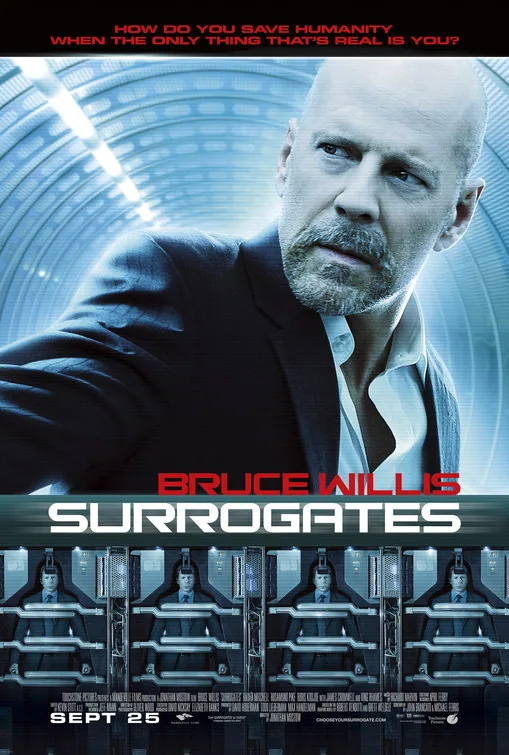
What changes Surrogates examines mediated identity and a society whose experience is filtered through artificial bodies.
In a future where many people interact through lifelike robotic doubles, an FBI agent investigates murders that reach into the protected world of the surrogates. The case draws attention to the technology’s social costs and to the limits of a system designed to remove physical risk. The science-fiction thriller explores artificial agency, isolation and what people surrender when they outsource embodied life.
Viktor's virtual actress solves an immediate production problem but becomes harder to manage as her fame exceeds his control.
Why this matches +
These offer a related experience with a meaningful difference in story, tone, or presentation.
An adjacent discovery: a related idea with a different viewing experience.
Genres: Science fiction / Drama
Shared film traits
Based on recorded story, mood and style. Your preferences can change the order.
Constructed reality
What changes S1m0ne uses a manufactured digital identity to explore authorship and the blurred boundaries of reality.
When an actress abandons his film, frustrated director Viktor Taransky receives software that lets him create a convincing virtual performer named Simone. He presents her as a real star, and audiences embrace her, turning a private production shortcut into a global media event. As Simone's fame grows, Viktor must maintain the illusion while facing the consequences of giving a fictional person a public life. Andrew Niccol's satire mixes show-business comedy with science fiction, asking who controls an image once the audience begins to believe in it.
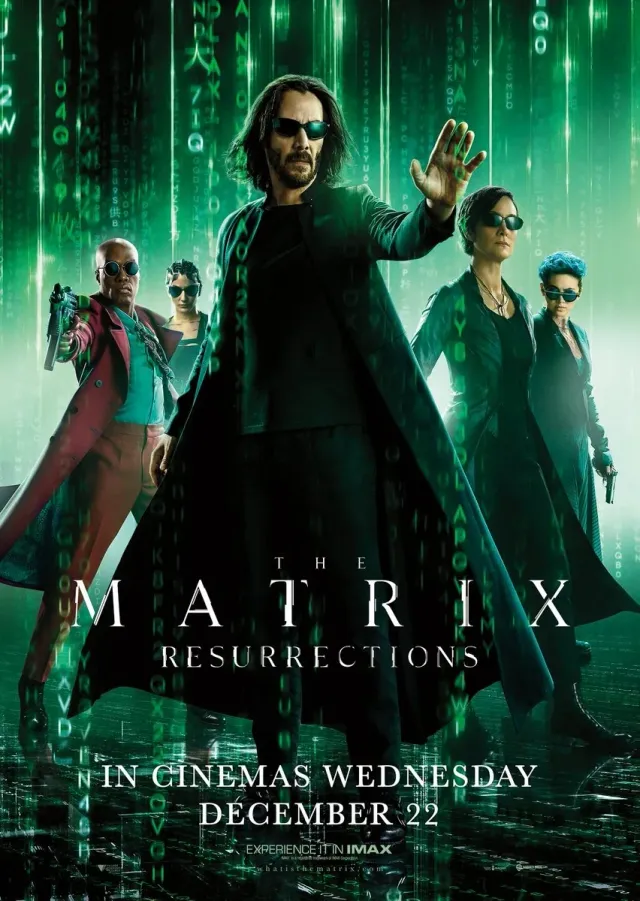
Thomas Anderson is now a successful game designer whose acclaimed Matrix trilogy seems to be a product of his own mind. When familiar figures begin breaking through the life he knows, he learns that the apparent reality is once again a simulation and that a new system is using his history with Trinity to keep them separated. Bugs, Morpheus and a changed Neo work to recover Trinity and understand what the Analyst has built. Lana Wachowski’s sequel revisits the franchise through a story about memory, love, authorship and the need to choose a reality for oneself.
What drives the story
The Analyst uses the emotional bond between Neo and Trinity to sustain the simulation; freeing one without the other would leave the system’s leverage intact.
The people at its centre
Neo’s uncertainty is shaped by a life he has been told to interpret as fiction. Trinity’s identity and agency become central rather than secondary to his awakening.
What it feels like
Meta humor, familiar action imagery and sudden shifts between office satire and combat make the film both a continuation and a commentary on its own franchise.
Worth knowing
A fit for viewers interested in identity-driven science fiction and meta sequels. It depends on the earlier Matrix films and is more emotionally focused than a straightforward action reboot.
MemoryChoiceLove
Mood
Meta · Reflective · Action-driven
Pacing
Reawakening · Infiltration · Emotional climax
Visual style
Digital reality imagery · Office satire and action