A soldier's principled refusal activates punitive military discipline while parallel romances expose the institution's rules about status, obedience and belonging.
Why this matches +
Pacific service or the transformation of an athlete into a serviceman makes personal bonds consequential under military pressure.
Genres: Drama / War
Shared film traits
Based on recorded story, mood and style. Your preferences can change the order.
War and civilian life
What changes Boxing, punitive discipline and romance in pre-Pearl Harbor Hawaii replace a football game before Okinawa.
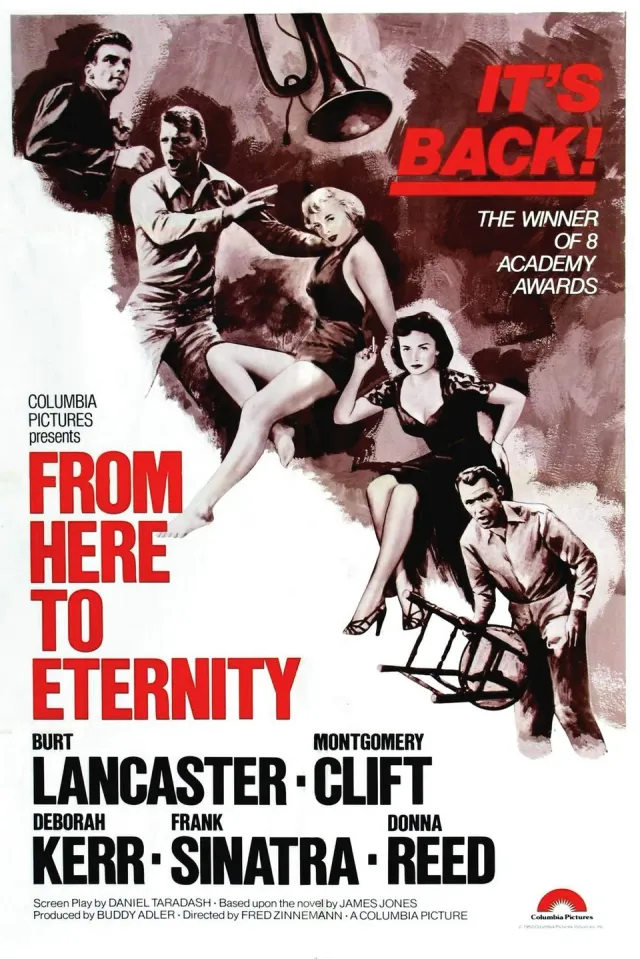
At an Army post in Hawaii before Pearl Harbor, a soldier refuses to box for his commanding officer and becomes a target of organized punishment. Around him, friendships and clandestine romances offer forms of belonging the institution cannot safely recognize. His refusal carries a private moral history, while others negotiate ambition, marriage and escape from constrained lives. The approaching historical catastrophe does not erase the smaller abuses: military duty and institutional loyalty repeatedly come into conflict with individual dignity.
A wartime photograph becomes a fundraising instrument, pulling surviving servicemen between battlefield memory and a public role they did not choose. The bond tour asks survivors to repeat a polished symbol while privately carrying fragmented memories.
Why this matches +
Pacific service or the transformation of an athlete into a serviceman makes personal bonds consequential under military pressure.
Genres: War / Drama
Shared film traits
Based on recorded story, mood and style. Your preferences can change the order.
War and civilian life
What changes Iwo Jima, survivors’ memory and a propaganda tour replace a pre-battle sporting event.
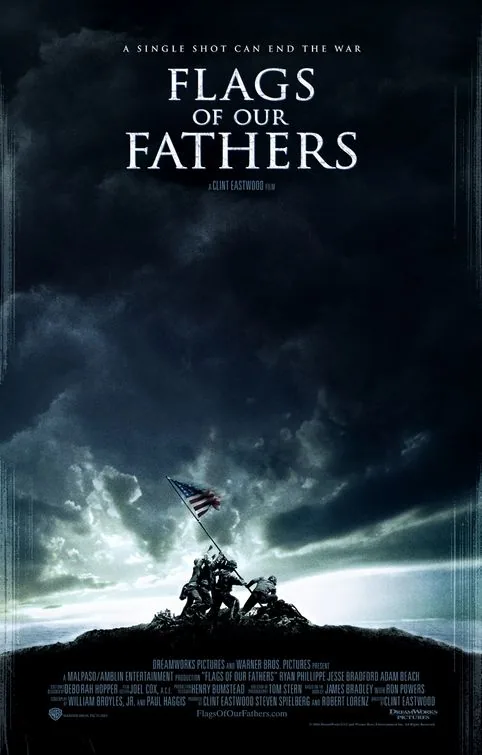
After the flag raising at Iwo Jima is photographed, surviving men are brought home to help sell war bonds, and public celebration turns them into symbols before they can agree on what the image means. Flashbacks revisit the battle and the men around the flag, while the campaign asks survivors to perform a heroic story that cannot contain their losses or the experience of those left behind. The 2006 film predates the Marine Corps’ later identity correction: corpsman John Bradley was not in Rosenthal’s famous second-flag photograph; Harold Schultz was. Its reenacted memories and public symbolism should be read separately from that archival record.
A contested advance places command pressure against the cost of sending particular men into danger, while shifting perspectives continually exceed the official mission.
Why this matches +
Pacific service or the transformation of an athlete into a serviceman makes personal bonds consequential under military pressure.
Genres: Drama / War
Shared film traits
Based on recorded story, mood and style. Your preferences can change the order.
War and civilian life
What changes Guadalcanal and a fragmented, meditative ensemble replace football players preparing for Okinawa.
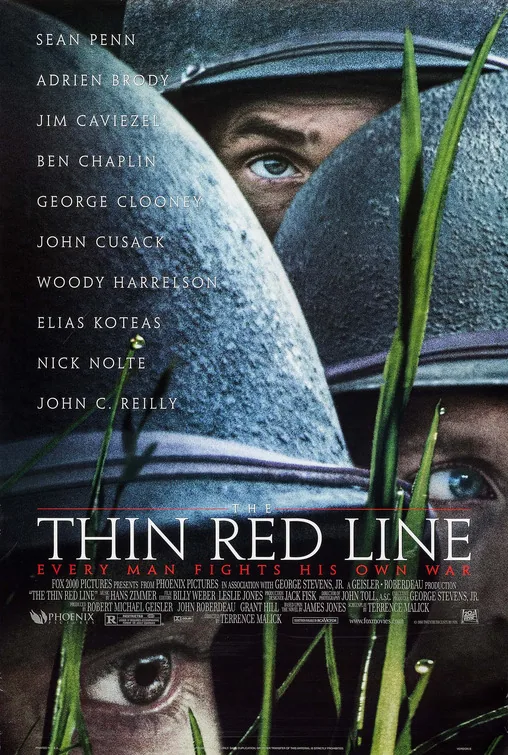
An American infantry company arrives on Guadalcanal and confronts a landscape whose beauty offers no protection from military objectives or unpredictable killing. Attempts to capture a defended position expose differences between career ambition, tactical responsibility and the soldiers' private attachments. Multiple voices reflect on nature, violence and loss as the campaign continues, making neither strategic progress nor individual courage sufficient to explain what the men experience.
The repeated changes in Louis’s circumstances create an endurance story rather than a single decisive victory.
Why this matches +
Pacific service or the transformation of an athlete into a serviceman makes personal bonds consequential under military pressure.
Genres: Drama / War
Shared film traits
Based on recorded story, mood and style. Your preferences can change the order.
War and civilian life
What changes One Olympic runner’s air war, shipwreck and imprisonment replace an ensemble of Marine football players.
Louis Zamperini begins as a mischievous boy and becomes an Olympic runner before serving as a bombardier in the Second World War. After surviving the crash of his aircraft over the Pacific, he and two crewmen drift at sea and are eventually captured by Japanese forces. The film follows repeated tests of endurance, connecting athletic discipline with the struggle to preserve dignity during imprisonment and wartime abuse.
An improvised musical exchange becomes a local truce whose practical cooperation challenges command structures committed to renewing the enemy relationship.
Why this matches +
The practical demands of combat reveal how skills, loyalty and the costs of service connect particular people, without reproducing the football framework.
An adjacent discovery: a related idea with a different viewing experience.
Genres: War / Drama
Shared film traits
Based on recorded story, mood and style. Your preferences can change the order.
War and civilian life
What changes A World War I Christmas truce and fraternization across enemy lines replace an existing Marine unit’s American-football game before a Pacific assault.
Soldiers facing one another across a First World War front hear Christmas music cross the space their orders define as a killing ground. A temporary ceasefire allows meetings, burial and recognition of lives that patriotic rhetoric has made abstract. Keeping the encounter possible soon conflicts with the authorities' need to restore disciplined hostility. The multilingual ensemble drama makes fellowship a brief act of disobedience rather than proof that the war has ended, preserving the costs of discovering a common humanity that the institution cannot readily accommodate.
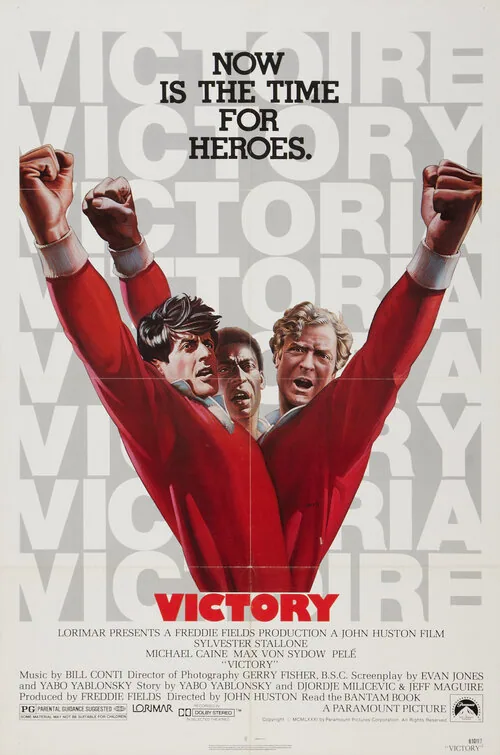
A football match gives Allied prisoners a choice between a risky escape plan and a public act of resistance.
Why this matches +
The practical demands of combat reveal how skills, loyalty and the costs of service connect particular people, without reproducing the football framework.
An adjacent discovery: a related idea with a different viewing experience.
Genres: War / Sport
Shared film traits
Based on recorded story, mood and style. Your preferences can change the order.
War and civilian life · Sport and competition
What changes Allied prisoners use a soccer match as cover for escape; it is a more adventure-driven story than Marines playing American football before Okinawa.
During the Second World War, Allied prisoners in a German camp are invited to play an exhibition football match against a German team. Captain Robert Hatch initially sees the event as a chance to organize an escape, while his fellow prisoners and their British officer must decide whether to risk the plan or play before a huge crowd. The match turns sport into a public test of courage, solidarity, and survival.
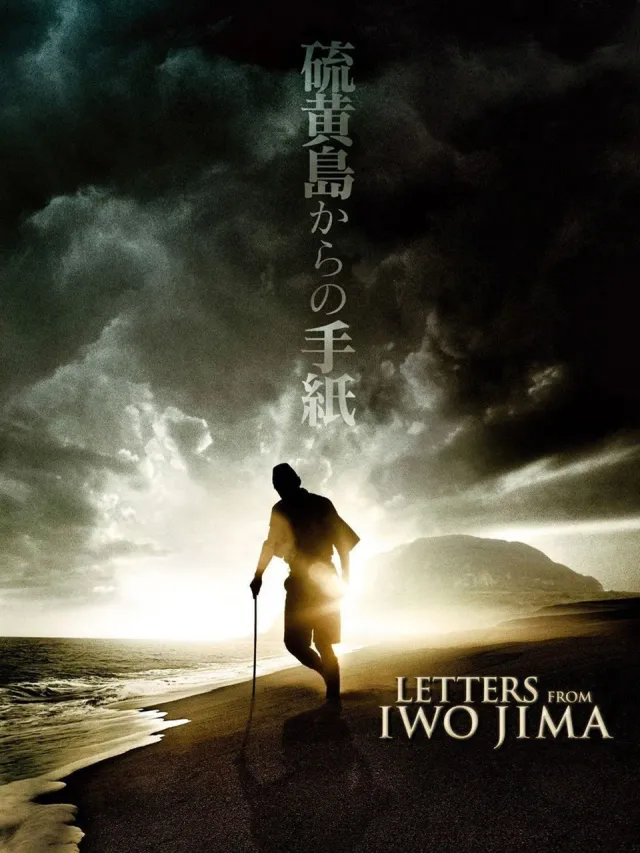
The tactical shift to a defense from caves and tunnels changes the battle from an open-front engagement into a prolonged survival problem. Letters provide a second structure, carrying home lives into a position where return is unlikely.
Why this matches +
The practical demands of combat reveal how skills, loyalty and the costs of service connect particular people, without reproducing the football framework.
An adjacent discovery: a related idea with a different viewing experience.
Genres: War / Drama
Shared film traits
Based on recorded story, mood and style. Your preferences can change the order.
War and civilian life
What changes It follows the Japanese defenders of Iwo Jima, offering a different national and military perspective with no sporting framework.
As U.S. forces approach Iwo Jima in 1945, Japanese soldiers prepare to defend an island they know they may not survive. Letters and flashbacks follow General Kuribayashi, Saigo the baker and other men whose motives range from duty and fear to attachment to families at home. Their human individuality complicates the language of national honor without making the film a full account of the Pacific War or Japanese imperial responsibility. Clint Eastwood’s Japanese-language companion to Flags of Our Fathers focuses on one selected military perspective; it does not stand for every Japanese soldier or civilian. The battle’s underground tunnels and fragmented correspondence turn defense into an intimate, enclosed ordeal, while the historical context remains larger than the film’s sympathetic frame.
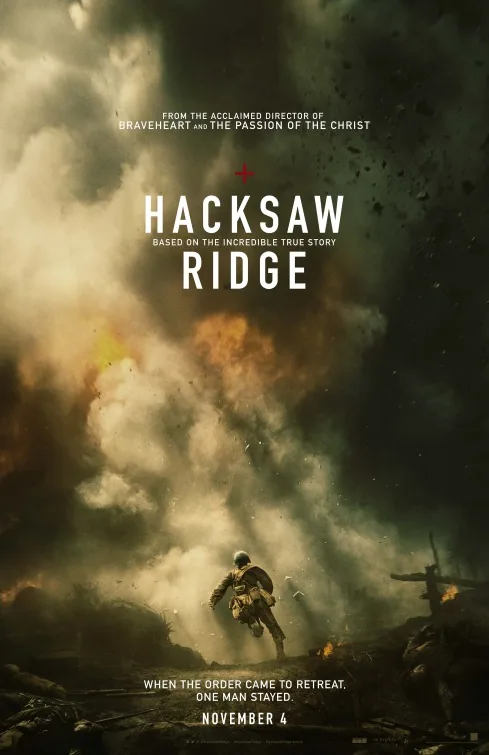
A disputed commitment to nonviolence must become practical service under circumstances that repeatedly make the easiest account of duty inadequate.
Why this matches +
The practical demands of combat reveal how skills, loyalty and the costs of service connect particular people, without reproducing the football framework.
An adjacent discovery: a related idea with a different viewing experience.
Genres: Drama / Biography
Shared film traits
Based on recorded story, mood and style. Your preferences can change the order.
War and civilian life
What changes A conscientious objector and medic’s battlefield rescues replace the football ensemble and its final game; graphic injury is prominent.
A young American volunteers for wartime service but refuses to carry a weapon, interpreting medical work as a way to meet both civic and religious obligations. Training places that commitment under pressure from officers and fellow recruits who regard it as a danger to collective survival. Deployment into brutal fighting makes the disagreement immediate and physical, requiring him to practise care in conditions where refusing to kill does not provide protection from the violence surrounding everyone.
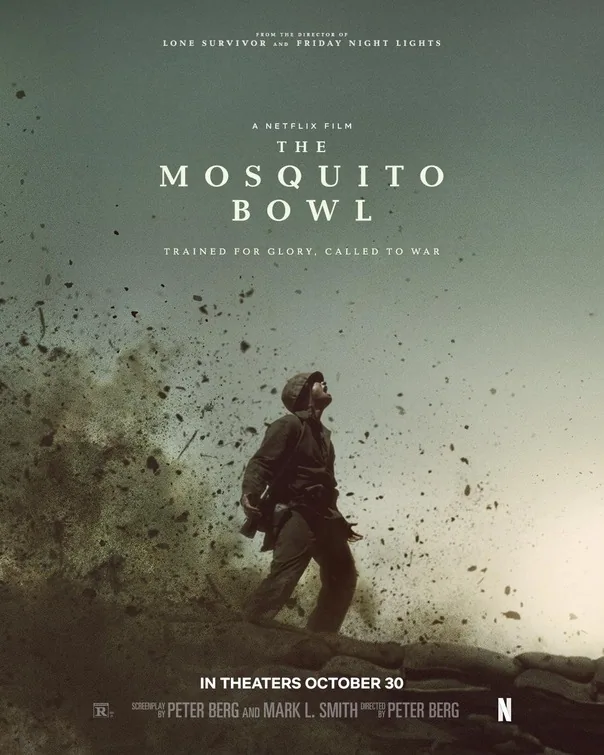
Four celebrated college football players exchange sporting careers for military service after Pearl Harbor. As Marines preparing for the assault on Okinawa, they take part in a football game that briefly reconnects them with the lives they left behind. Adapted from factual history, the drama places competitive teamwork beside the uncertainty of combat and the possibility that these friendships will soon be lost.
What drives the story
Athletes enlist as Marines and play a final football game while preparing for the invasion of Okinawa.
The people at its centre
Former college stars become servicemen whose sporting bonds connect them to a life increasingly threatened by combat.
What it feels like
The factual premise places the communal pleasure of sport beside wartime loss and uncertainty about the future.
Worth knowing
The football game belongs to a war narrative; a cheerful championship film offers a different emotional destination.