Explore films connected to The Outlaw Josey Wales through Revenge, Found family, War trauma. Choose the qualities you want to carry into your next watch.
What should feel similar?
Find your next favourite
9 films · Closest overall matches
Hide films you’ve seen or don’t want. Saved on this device.
No matches for this combination yet.
Try another option or reset your choices to see more films.
Based on recorded story, mood and style. Your preferences can change the order.
War and civilian life
What changes The Outlaw Josey Wales: episodic and measured. Hostiles: slow journey punctuated by sudden violence.
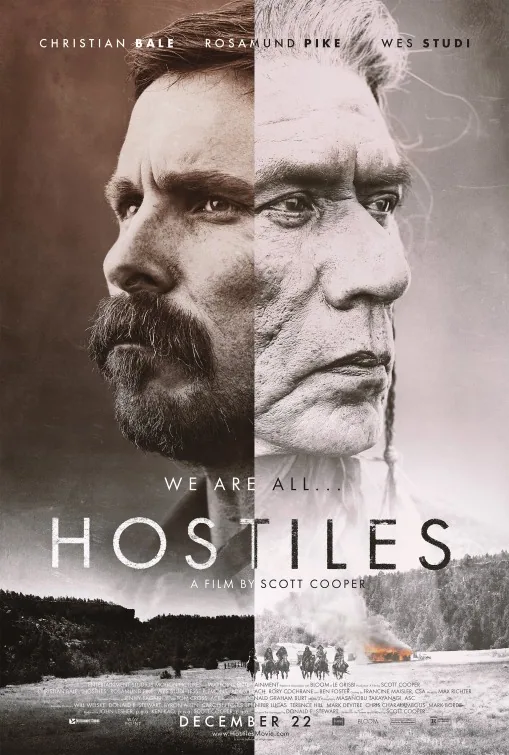
A U.S. Army captain is ordered to escort a Cheyenne chief and his family across dangerous territory to their homeland. The mission forces a group shaped by years of violence to travel together while facing threats from the surrounding frontier. The Western drama examines grief, racism and the possibility of limited cooperation without treating reconciliation as easy or complete.
Based on recorded story, mood and style. Your preferences can change the order.
What changes The Outlaw Josey Wales: episodic and measured. Young Guns: escalating and action-driven.
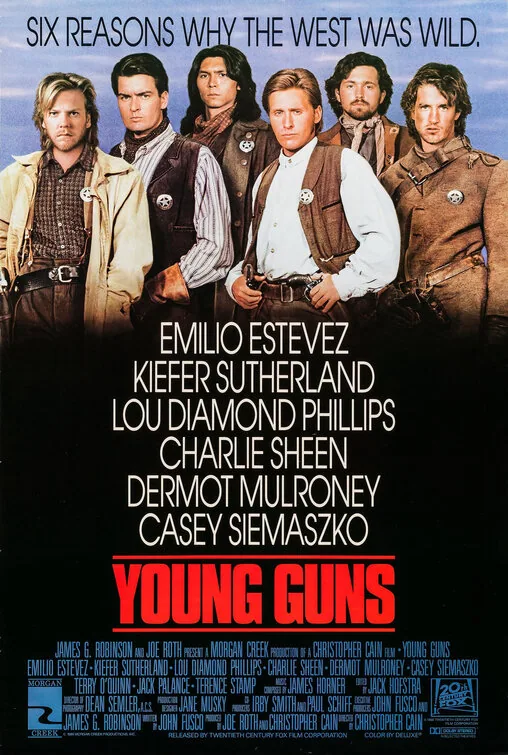
In New Mexico Territory, a group of young gunmen join rancher John Tunstall's effort to teach and employ local boys. When Tunstall is murdered, Billy the Kid and his companions take up arms against the men responsible, becoming outlaws during the Lincoln County War. Their pursuit of revenge forces the group to reckon with the difference between justice and the violence that follows it.
Based on recorded story, mood and style. Your preferences can change the order.
What changes The Outlaw Josey Wales: episodic and measured. Once Upon a Time in the West: slow burn.
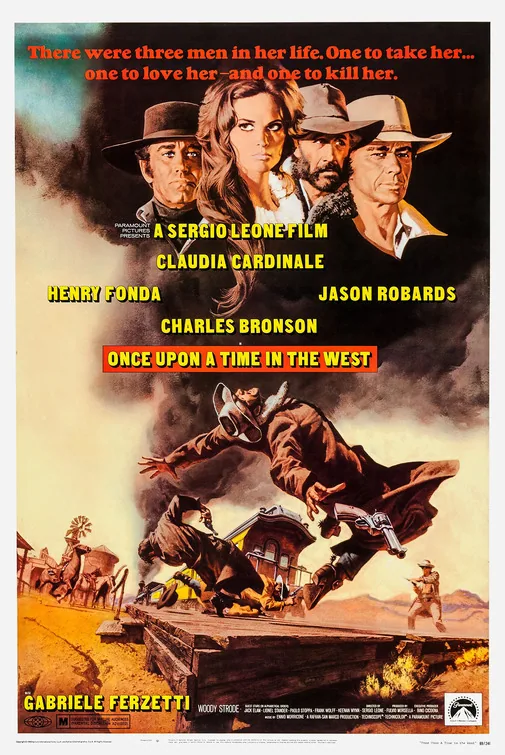
A woman arrives to join her new husband only to discover that his family has been murdered and his land sits on the route of an expanding railway. A hired gun, an outlaw wrongly blamed for the killing and a stranger with a harmonica circle the property for reasons that are not equally visible. Their intersecting agendas connect private revenge to the conversion of a frontier into an infrastructure of commerce and control.
Both share themes of revenge, plus an adventurous and reflective atmosphere.
Why this matches +
Genres: Western / Adventure
Shared film traits
Based on recorded story, mood and style. Your preferences can change the order.
War and civilian life
Expect gloomy and adventurous, with measured and quest-driven pacing.
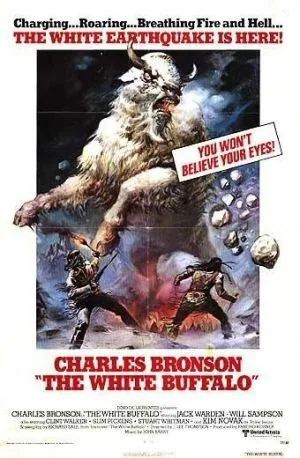
Wild Bill Hickok is troubled by dreams of an enormous white buffalo and rides west to find it. He meets Lakota warrior Crazy Horse, whose daughter was killed by the beast, and learns that they share reasons to pursue it. Their paths converge as they reluctantly join forces to track the elusive animal across the plains.
Based on recorded story, mood and style. Your preferences can change the order.
War and civilian life
What changes The Outlaw Josey Wales: episodic and measured. The Magnificent Seven: recruitment, preparation and final assault.
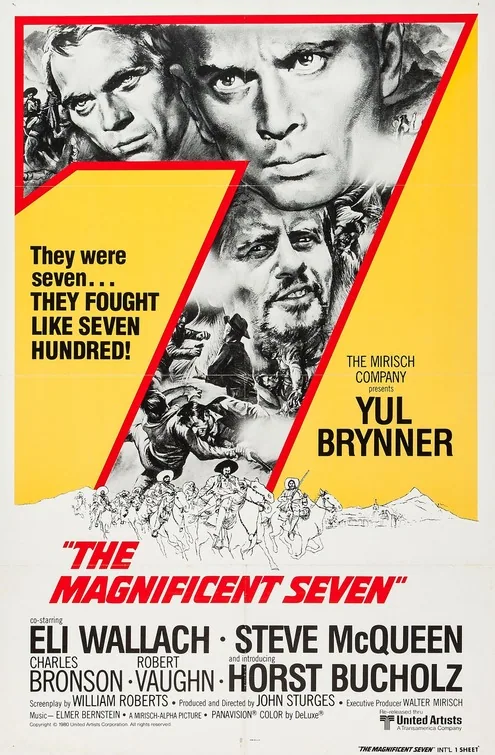
When bandits repeatedly take food from a Mexican village, its residents hire gunfighter Chris Adams to defend them. Chris recruits six other men, each bringing different skills and reasons to accept the dangerous assignment. The group trains the villagers and prepares for Calvera’s return, but the hired fighters’ commitment is tested once they understand the cost of staying. John Sturges’s Western transposes the structure of Akira Kurosawa’s Seven Samurai into a borderlands story about collective defense and the limits of hired courage.
Both centre on revenge pursuit and civilian protection.
Why this matches +
Genres: Drama / Action
Shared film traits
Based on recorded story, mood and style. Your preferences can change the order.
War and civilian life
What changes The Outlaw Josey Wales: episodic and measured. The Patriot: escalating and battle-driven.
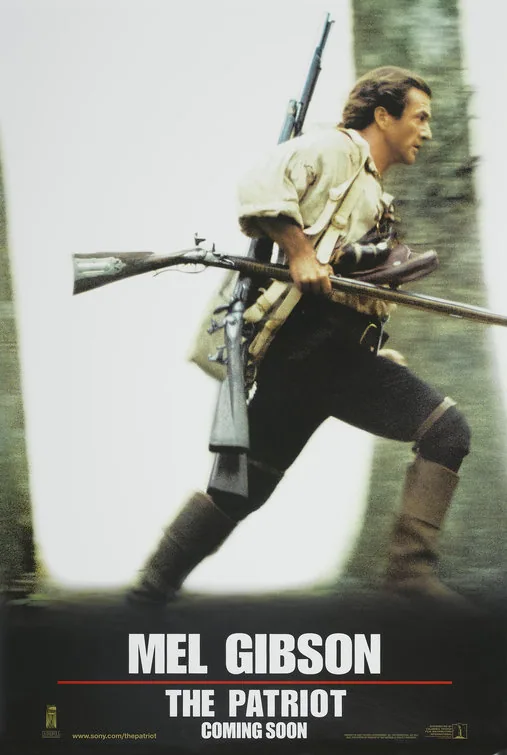
Widower and veteran Benjamin Martin opposes South Carolina’s entry into the Revolutionary War, but his son Gabriel joins the Continental Army. When British officer William Tavington kills another of Benjamin’s sons and burns the family home, Benjamin takes up arms and leads a militia in guerrilla attacks. The film presents him as having freed the enslaved Occam, yet largely removes plantation slavery from its view of South Carolina. It also uses a fictional church-burning massacre, modeled on a twentieth-century atrocity, to turn British troops into a singular villain. Gabriel returns to fight alongside his father, and family revenge becomes the engine of a campaign whose composite characters and altered events make it action melodrama rather than a measured history.
Based on recorded story, mood and style. Your preferences can change the order.
War and civilian life
What changes The Outlaw Josey Wales is tagged grim and reflective; Dances with Wolves is tagged contemplative and emotional.
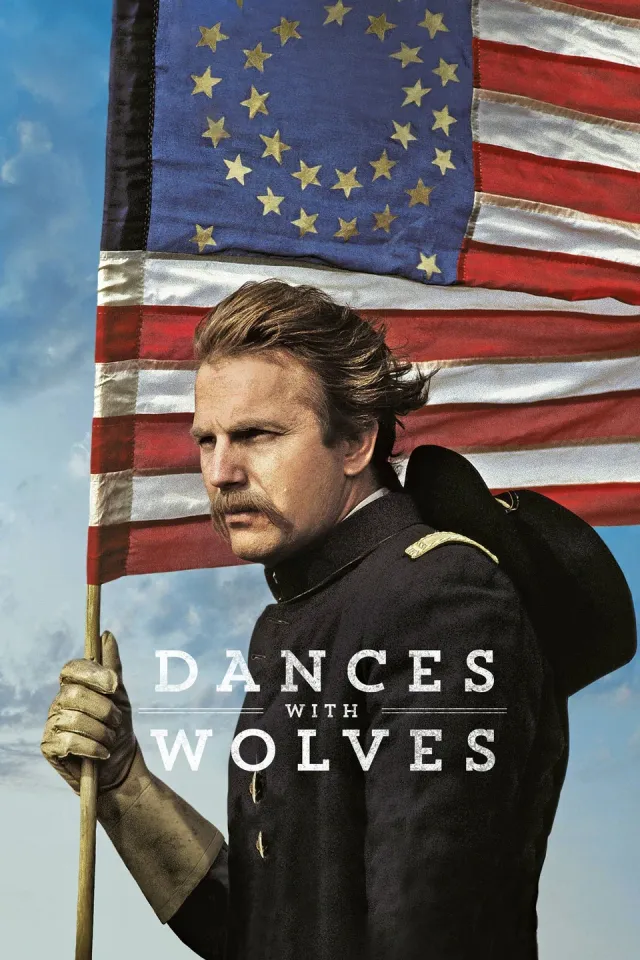
A Union officer posted to a remote frontier position begins contact with a nearby Lakota community and gradually learns to communicate beyond the assumptions of his original assignment. Hospitality, work and a developing attachment give him a place whose significance cannot be reduced to observation. The return of organised military authority makes his loyalties visible, forcing him to confront the violence carried by an institution he once served without imagining an alternative.
Based on recorded story, mood and style. Your preferences can change the order.
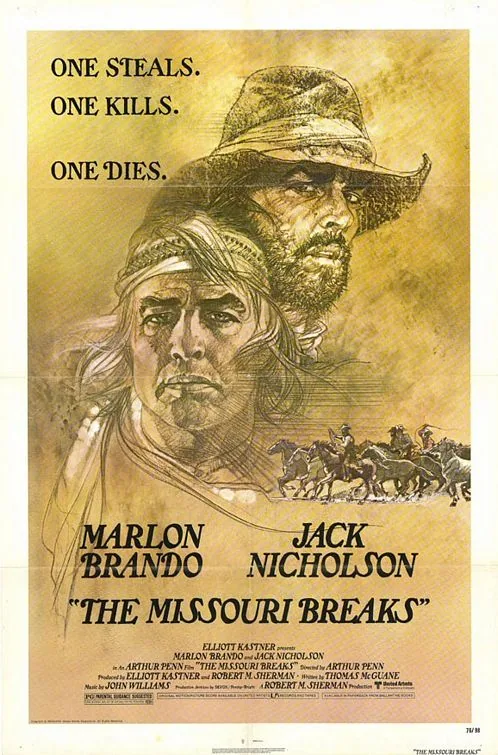
What changes The Outlaw Josey Wales is tagged grim and reflective; The Missouri Breaks is tagged unsettling and offbeat.
In Montana cattle country, rustler Tom Logan and his gang retaliate against land baron David Braxton after Braxton's men hang one of their friends. The gang buys a nearby farm and continues rustling, but Logan grows attached to Braxton's spirited daughter Jane. Braxton hires the eccentric and lethal regulator Robert E. Lee Clayton to stop the thefts, turning a contest over land and justice into an unpredictable cat-and-mouse game.
Based on recorded story, mood and style. Your preferences can change the order.
War and civilian life
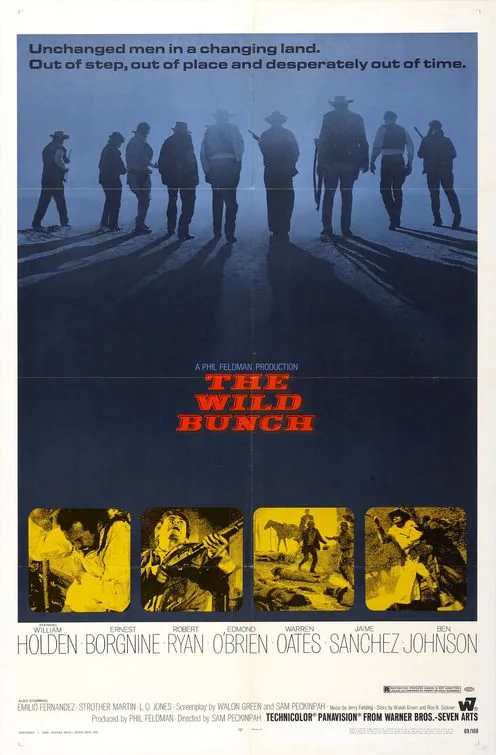
What changes The Outlaw Josey Wales: episodic and measured. The Wild Bunch: slow build and explosive violence.
Aging outlaw Pike Bishop leads his gang into a botched railroad-office robbery in Texas, where they are unexpectedly met by former associate Deke Thornton and bounty hunters. With their old methods increasingly ineffective, Pike and the survivors flee into Mexico and accept work from General Mapache during the revolution. Their attempts to profit from arms dealings collide with the growing costs of serving a military strongman and with the gang’s own understanding of loyalty. The men’s final decision is less a return to heroic freedom than a recognition of what their trade has made of them. The gang’s final choices expose the difference between loyalty to one another and service to a violent ruler.
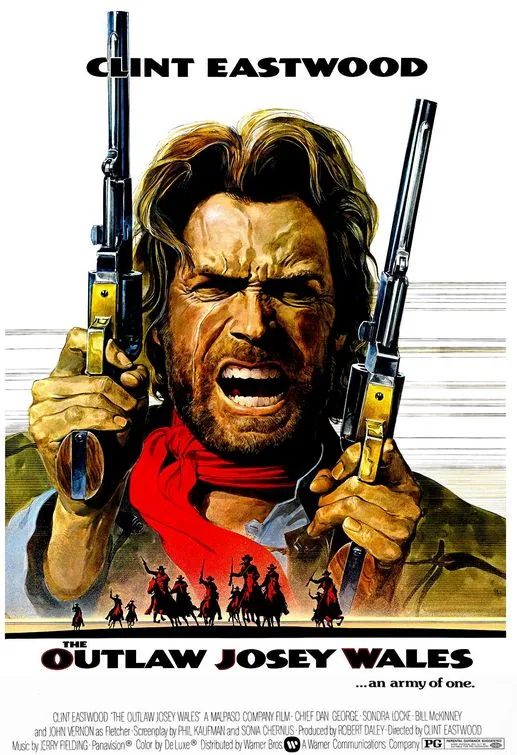
After pro-Union raiders murder his family and burn his Missouri farm, Josey Wales joins Confederate guerrillas during the Civil War. When the surviving fighters accept a promised amnesty and are massacred, Wales refuses surrender and becomes a hunted outlaw. He heads toward Texas, pursued by Captain Terrill and bounty hunters, and gradually travels with people who need protection or have been pushed to society's margins. His reputation as a gunfighter makes him dangerous, but the new group gives his journey a purpose beyond revenge. The story shifts from a solitary vendetta toward the difficult possibility of building a community after political violence. Its frontier and war history are filtered through a revisionist Western and a disputed source author.
What drives the story
A survivor of family murder and a broken surrender promise is pursued across the frontier, where revenge slowly becomes protection of a makeshift community.
The people at its centre
Wales's reflexive distrust is challenged by Lone Watie and other travelers who choose to stay with him. His skill at violence can shelter people but keeps the past active.
What it feels like
A long, episodic Western combines ambushes and chases with quieter encounters that broaden the group around its taciturn central figure.
Worth knowing
For viewers seeking a revenge Western that turns toward found-family solidarity. Its Confederate and frontier framing is revisionist, and its source novel was published under Forrest Carter, the pseudonym of former segregationist and Ku Klux Klan organizer Asa Earl Carter, who falsely presented himself as Cherokee. The film is not a neutral account of Reconstruction or Indigenous life.