Based on recorded story, mood and style. Your preferences can change the order.
What changes The Perfect Storm: escalating and disaster-driven. Battleship Potemkin: intense.
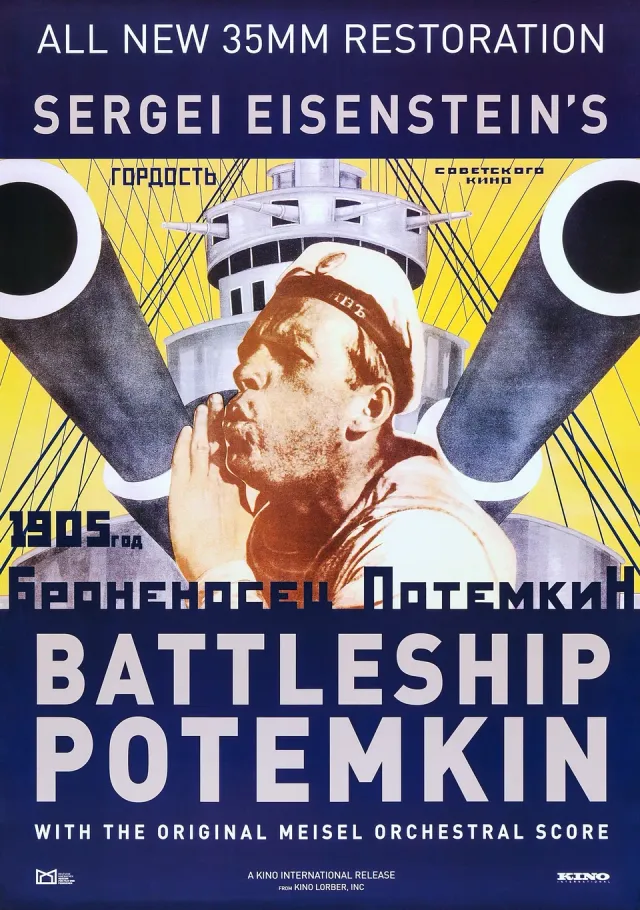
Sailors subjected to degrading conditions challenge the officers commanding their ship, and a confrontation over rotten food becomes a catalyst for mutiny. Public mourning and solidarity in a nearby port place the uprising inside a wider struggle over state violence. The film arranges bodies, crowds and abrupt collisions of images into a deliberately political account in which collective feeling becomes as important as the actions of any named individual.
Based on recorded story, mood and style. Your preferences can change the order.
Survival
What changes The Perfect Storm: escalating and disaster-driven. All Is Lost: procedural, measured and crisis escalation.
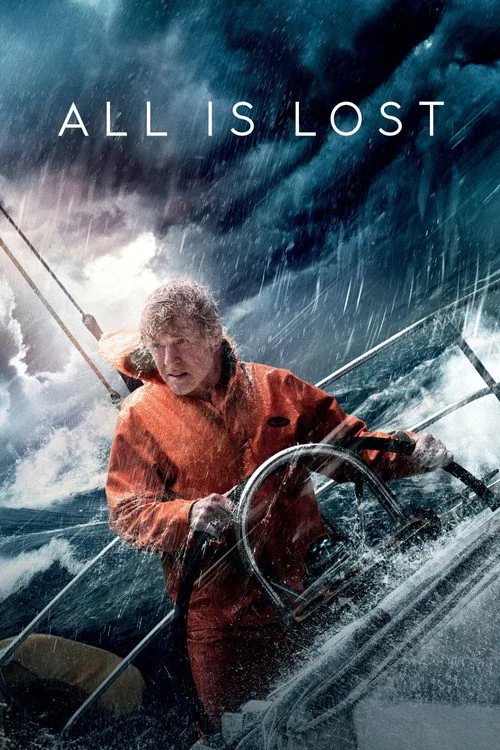
A lone sailor in the Indian Ocean discovers that his yacht has struck a shipping container and is taking on water. With communications damaged and a storm approaching, he repairs the hull, salvages supplies, and tries to navigate toward help. Each practical decision creates new problems as the vessel and the man’s strength decline. J. C. Chandor’s survival drama is nearly wordless, using Robert Redford’s performance and the precise stages of a maritime emergency to explore endurance and uncertainty.
Based on recorded story, mood and style. Your preferences can change the order.
Survival
What changes The Perfect Storm: escalating and disaster-driven. Thrash: rapid crisis escalation and multi-character peril.
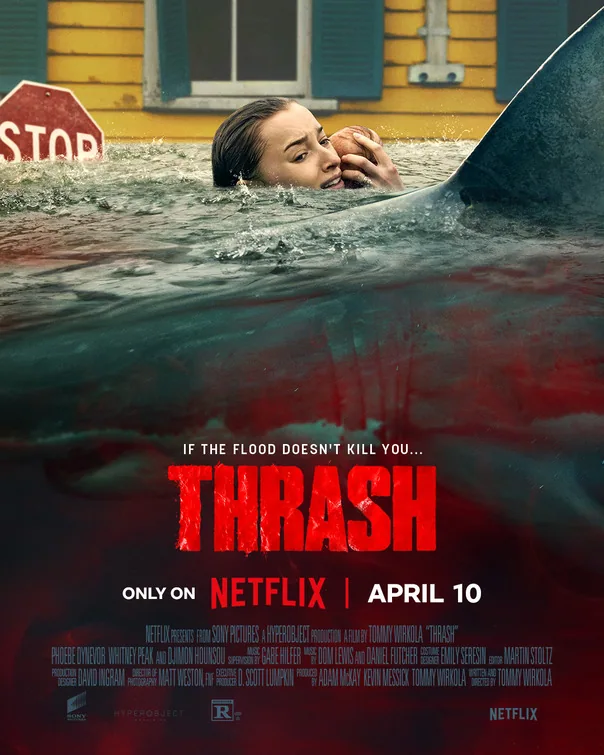
After a hurricane strikes a coastal town, survivors face rising floodwater and sharks swept into the streets. The film combines natural-disaster suspense with creature horror, making the storm both a force of destruction and the condition that enables the attacks. Rising water and unstable shelter narrow possible routes to safety, while survival depends on improvisation and choices made with little warning.
Based on recorded story, mood and style. Your preferences can change the order.
Survival
What changes The Perfect Storm: escalating and disaster-driven. In the Heart of the Sea: expedition-driven and attritional.
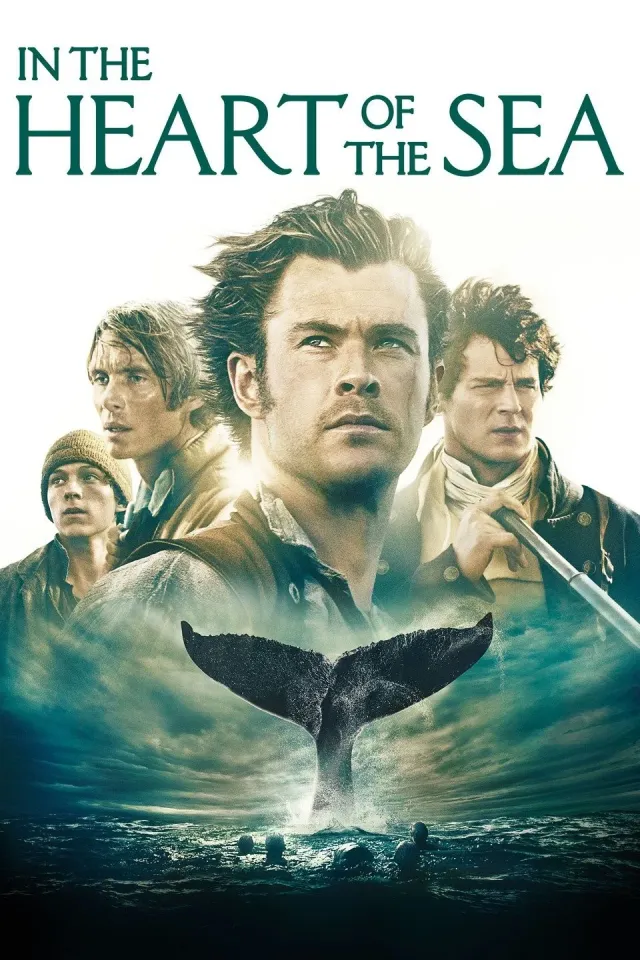
An older Thomas Nickerson recounts his time aboard the whaleship Essex, which was attacked by a sperm whale during an 1820 voyage. Captain George Pollard and first mate Owen Chase lead the stranded crew through hunger, exposure, and impossible decisions at sea. Ron Howard's survival drama uses Melville's later visit to frame the ordeal as both a harrowing maritime story and a reflection on the limits of human control.
Based on recorded story, mood and style. Your preferences can change the order.
Survival
What changes The Perfect Storm: escalating and disaster-driven. Twister: escalating storm chase.
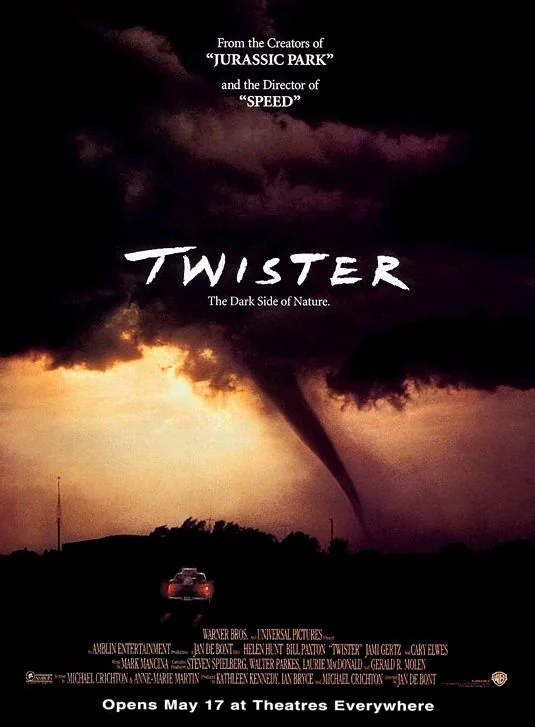
On the eve of signing divorce papers, storm chasers Jo and Bill Harding reunite as a series of powerful tornadoes crosses Oklahoma. Jo’s team wants to deploy a new instrument, Dorothy, into a tornado so it can gather data that could improve warnings. Bill is skeptical but knows the project and the team better than the new corporate rival they face. As weather conditions worsen, professional competition collides with the former couple’s unresolved history and the practical danger of the chase. The film makes meteorology a physical pursuit: forecasts, road choices and rapidly changing skies determine where the characters can safely go. Its romance remains a secondary current within a disaster adventure organized around observation and risk.
Based on recorded story, mood and style. Your preferences can change the order.
Survival
What changes The Perfect Storm: escalating and disaster-driven. The Road: measured and relentless.
After an unspecified catastrophe leaves the landscape barren, a father and his young son travel south in search of safety. They must ration supplies, avoid dangerous strangers and preserve their bond in a world where ordinary social rules have collapsed. The adaptation is a stark survival drama about parental care, moral compromise and the effort to pass on hope without certainty.
Based on recorded story, mood and style. Your preferences can change the order.
Survival
What changes The Perfect Storm is tagged harsh and dread-filled; Deepwater Horizon is tagged tense and distressing.
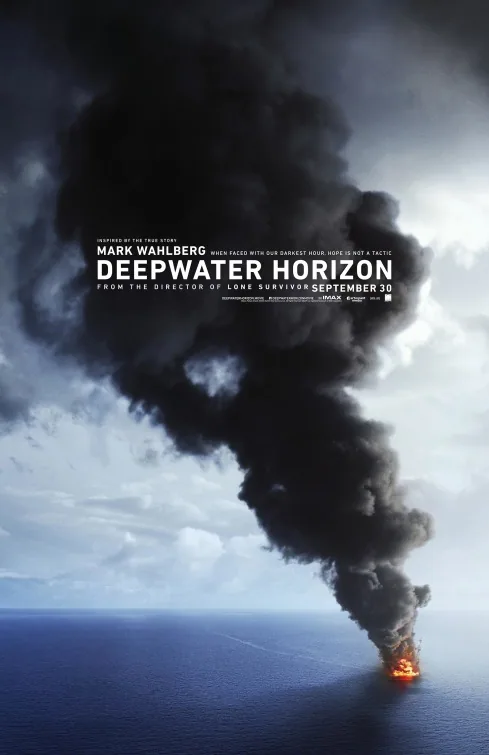
Workers preparing an offshore drilling rig for its next assignment encounter disagreements over tests, pressure readings and the time devoted to checking a well. Commercial urgency meets practical unease before a blowout turns technical interpretation into immediate physical survival. The disaster contracts attention to people trying to communicate, reach colleagues and escape failing systems, presenting catastrophe through a crew's limited ability to repair consequences that have already exceeded local control. The disaster is shown from workers’ limited vantage, while the real investigation involved a more complex chain of responsibility.
Based on recorded story, mood and style. Your preferences can change the order.
Survival
What changes The Perfect Storm: escalating and disaster-driven. Flight of the Phoenix: crash and triage, construction problem solving and takeoff climax.
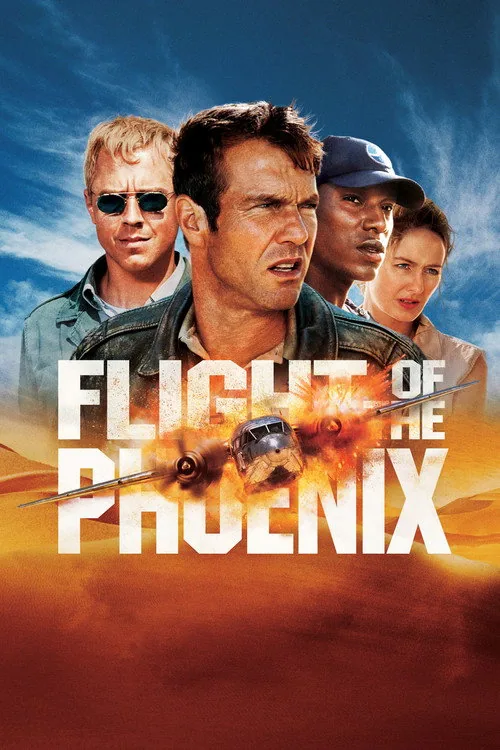
After an oil operation in the Gobi Desert shuts down, Captain Frank Towns pilots its crew toward Beijing until a dust storm forces their plane to crash far from any settlement. With limited water and no reliable communication, the survivors argue over whether to walk out or attempt an audacious solution proposed by passenger Elliott, who claims expertise in aircraft design. The group must strip the wreck and rebuild a flyable plane before resources run out. The remake turns a survival problem into a test of leadership and engineering.
Based on recorded story, mood and style. Your preferences can change the order.
Survival
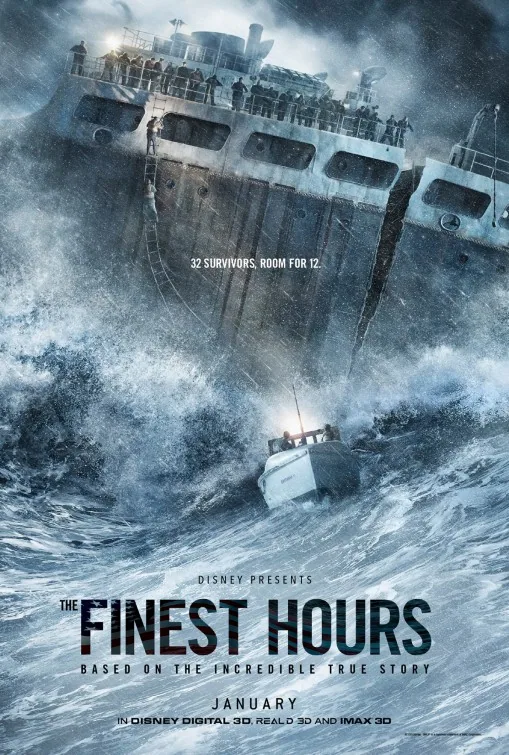
What changes The Perfect Storm: escalating and disaster-driven. The Finest Hours: measured mission build with a high-stakes climax.
A Coast Guard crew is sent into a severe winter storm to rescue sailors from a damaged oil tanker off the Massachusetts coast. The rescue requires difficult navigation, courage and cooperation as the small boat confronts conditions larger than its equipment. The historical adventure is built around a constrained mission, shifting between the rescuers and the people trapped aboard the ship.
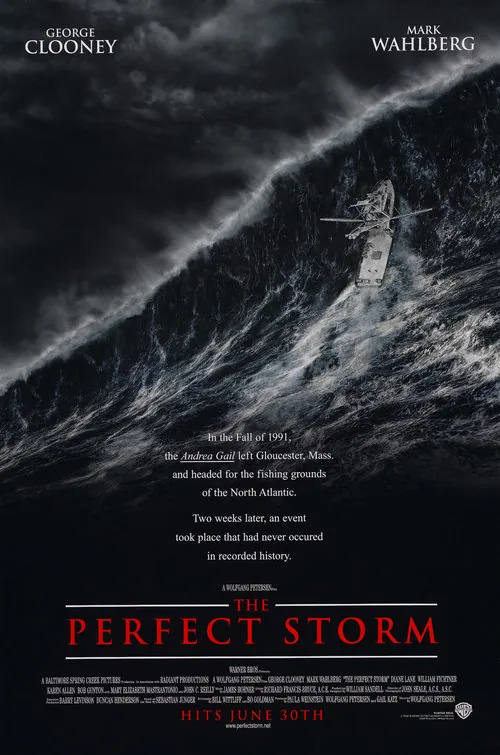
After a poor season, Captain Billy Tyne persuades the crew of the Andrea Gail to take one more late-season fishing trip from Gloucester. Their catch improves far offshore, but a broken ice machine leaves them racing to return before the fish spoil. Weather systems gather across the North Atlantic, and warnings from other vessels become harder to act on as the storm grows. The film follows the crew's struggle at sea alongside families and colleagues waiting on land, making risk and uncertainty part of the drama rather than a puzzle with a safe solution. Based on Sebastian Junger's account of the 1991 storm, it imaginatively fills in the lives of a crew whose vessel was lost with all hands; the film's dialogue and personal details are dramatized.
What drives the story
A profitable catch creates urgency to return, while mechanical failure and converging weather leave the fishing crew exposed far from shore.
The people at its centre
Tyne's decision affects every crew member, but their reactions differ: experience, ambition, family ties and appetite for risk shape what each can endure.
What it feels like
A maritime disaster film alternates shipboard tension with quieter Gloucester scenes, building scale through increasingly violent ocean effects.
Worth knowing
For viewers seeking large-scale survival drama and storm spectacle. It is a dramatized reconstruction of a real loss, not a record of the final conversations or a rescue mystery.