Based on recorded story, mood and style. Your preferences can change the order.
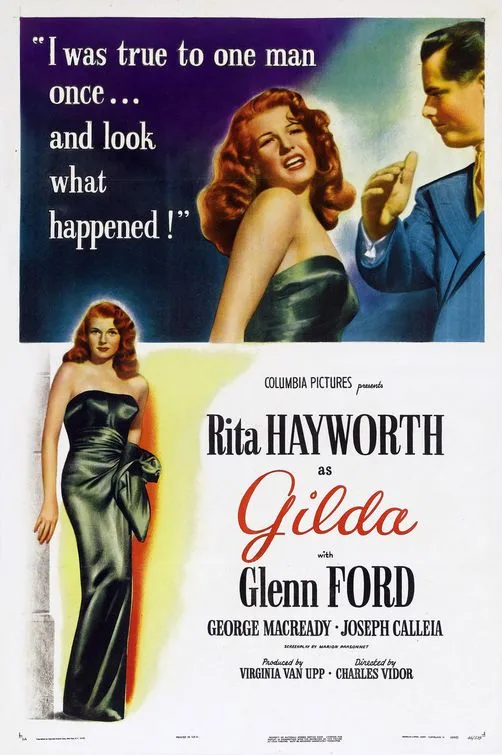
What changes The Room: repetitive and abruptly shifting. Gilda: measured and escalating.
Johnny Farrell’s narration begins in a world of gambling, suspicion and male control when he meets Gilda again as the wife of his employer, Ballin Mundson. Their history is conveyed through jealousy and accusation, but the film’s glamorous musical numbers make Gilda a performer who can command the room rather than merely the object of Johnny’s story. The triangle’s power shifts as loyalty, desire and ownership become difficult to separate, and the ending reframes the couple without resolving the coercive terms that shaped their conflict. Its noir voice and studio spectacle invite a reading of how men interpret a woman they cannot control.
Based on recorded story, mood and style. Your preferences can change the order.
What changes The Room: repetitive and abruptly shifting. Hall Pass: farce-driven and escalating.
Rick and Fred's wives grant them a week without marriage rules after the men keep showing interest in other women. The supposed freedom quickly proves more complicated than their fantasies, while the wives enjoy their own time apart and reconsider what they want. The comedy follows two long-married friends through awkward opportunities and self-inflicted trouble, using the premise to test whether desire and commitment can be separated so neatly.
Based on recorded story, mood and style. Your preferences can change the order.
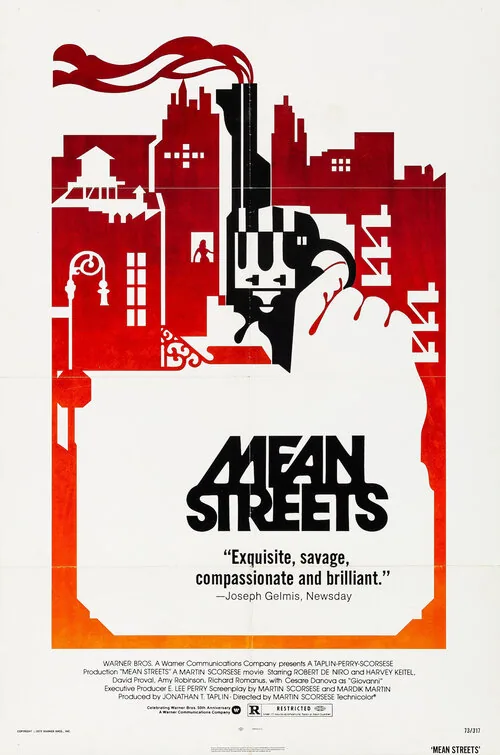
What changes The Room: repetitive and abruptly shifting. Mean Streets: variable.
In New York's Little Italy, Charlie Cappa works for his uncle's criminal circle while trying to honor a private Catholic code. He keeps helping Johnny Boy, a reckless gambler who owes money to loan sharks, and secretly dates Johnny's cousin Teresa, whom Charlie's uncle rejects because she has epilepsy. Charlie's efforts to manage the debt and preserve both relationships become harder as Johnny refuses to pay or leave town. His responsibility turns into exposure to neighborhood violence, showing how conscience cannot make the criminal obligations safe or fair.
Based on recorded story, mood and style. Your preferences can change the order.
What changes The Room: repetitive and abruptly shifting. Last Night: suspicion during departure, intercut city-night encounters and quiet return and unresolved choice.
New York couple Joanna and Michael face a test of trust after Joanna notices Michael's closeness with a colleague during a party. On a business trip, Michael spends time with that colleague, while Joanna unexpectedly meets her former lover Alex and revisits the history they never fully resolved. The film follows both nights in parallel, tracing the quiet temptations and boundaries each spouse encounters. Rather than treating fidelity as a simple verdict, it observes how desire, memory, and a shared marriage can coexist uneasily.
Based on recorded story, mood and style. Your preferences can change the order.
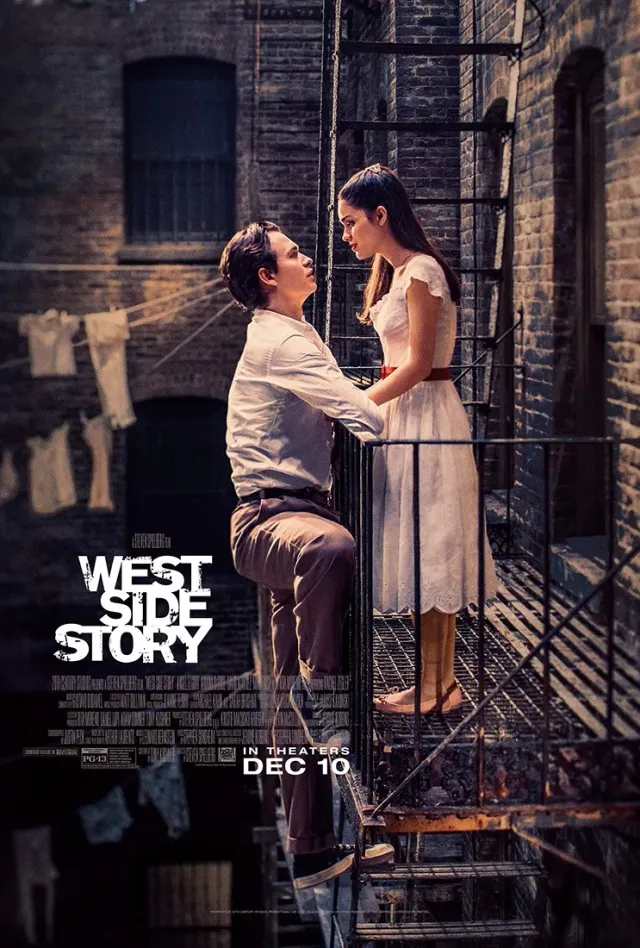
What changes The Room: repetitive and abruptly shifting. West Side Story: ensemble and tragic escalation.
On Manhattan’s San Juan Hill in the 1950s, Tony and Maria fall for one another amid the rivalry between the Jets and the Puerto Rican Sharks, while urban renewal threatens the neighborhood around them. Their private relationship cannot stay separate from racism, gang allegiance and the removal of residents from the area. Steven Spielberg’s screen adaptation gives the musical new location work and distinct staging, and casts Puerto Rican performers in key Shark roles; it is not a remake of the 1961 film’s choices. After a planned rumble, the conflict turns romance into a public and dangerous decision. Maria’s family and the Jets’ circle shape consequences beyond the couple.
Based on recorded story, mood and style. Your preferences can change the order.
What changes The Room: repetitive and abruptly shifting. God's Own Country: a seasonal farm routine gradually opens into a relationship story.
Johnny manages his family’s Yorkshire farm while his father and grandmother are unable to do much of the physical work. His isolated routine shifts when Romanian migrant worker Gheorghe arrives for lambing season, and the two men begin a relationship. The British drama connects queer intimacy with rural labor and economic pressure, showing how tenderness can emerge through shared practical work rather than easy conversation.
Based on recorded story, mood and style. Your preferences can change the order.
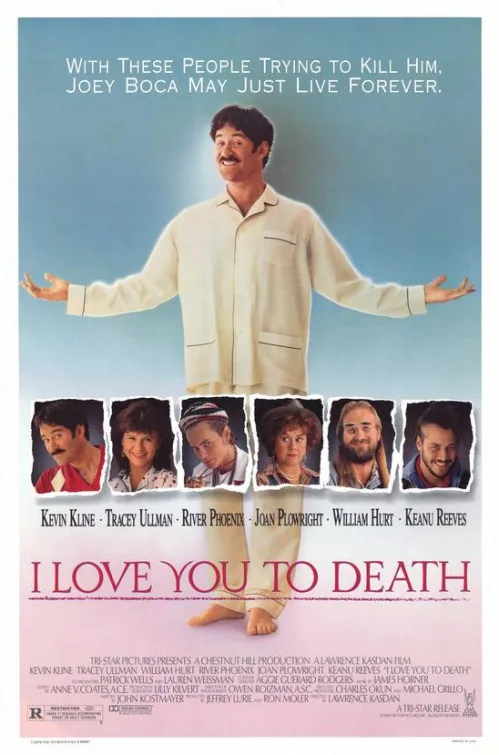
What changes The Room: repetitive and abruptly shifting. I Love You to Death: farce escalates through repeated schemes.
Pizza-parlor owner Joey Boca is habitually unfaithful, and his wife Rosalie eventually learns that his promises cannot be trusted. Her mother and a young admirer encourage a desperate plan to end the marriage permanently, but their attempts at murder become increasingly inept and entangled. The comedy draws on a real attempted murder case while keeping its attention on an eccentric household and the fallout of betrayal.
Based on recorded story, mood and style. Your preferences can change the order.
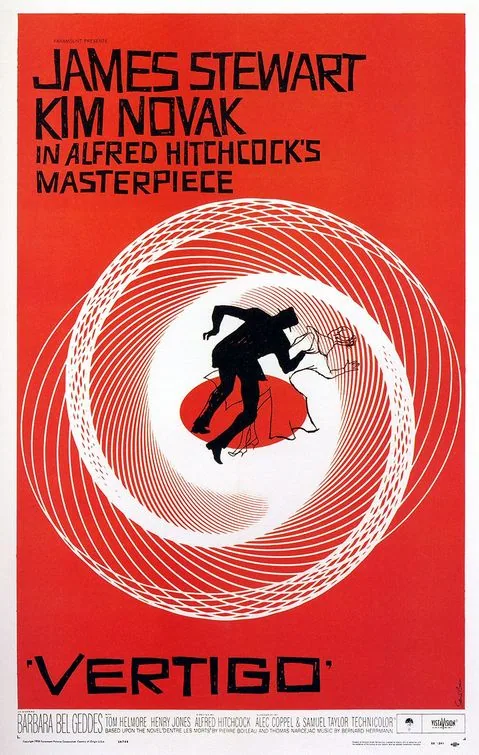
What changes The Room: repetitive and abruptly shifting. Vertigo: slow burn.
A former San Francisco detective affected by a colleague's death agrees to follow an acquaintance's wife, whose behaviour is presented as a mysterious attachment to an earlier woman. Surveillance becomes romantic involvement, and a loss leaves the detective unable to release the image he has formed. Encountering a woman who resembles that image turns attempted recovery into an insistence on remaking another person, while concealed interests expose the limits of his original investigation.
Based on recorded story, mood and style. Your preferences can change the order.
What changes The Room: repetitive and abruptly shifting. Far from Heaven: deliberate and emotional escalation.
In 1950s Connecticut, a suburban wife discovers that her polished marriage conceals a truth her community is unwilling to accept, while she forms a connection that crosses the era’s racial boundaries. Her husband and their children also face the consequences of a rigid social order. The film uses period melodrama and carefully controlled style to examine desire, respectability and the limits imposed on private life.
San Francisco banker Johnny believes his engagement to Lisa is secure and treats his circle of friends as an extension of the home he shares with her. Lisa has begun an affair with Johnny's best friend Mark and grows dissatisfied with the life she is expected to perform. She tests her mother's and friends' loyalties by telling different versions of the relationship, while Johnny's attempts to be generous and reliable make him increasingly isolated from the people around him. A birthday gathering exposes how widely the affair is known and how little anyone has been willing to tell him. The domestic melodrama intensifies into betrayal and violence, with the film's abrupt tonal shifts and repeated declarations giving its emotional conflicts an intentionally disjointed quality.
What drives the story
A love triangle plays out through lies shared among friends, with each attempt to preserve appearances making Johnny's social isolation more complete.
The people at its centre
Lisa seeks validation and an exit from her engagement, while Mark's loyalty to Johnny collapses under desire. The group avoids direct honesty until the accumulated deception becomes impossible to contain.
What it feels like
Awkward pauses, repeated lines, abrupt scene changes and melodramatic confrontations create an unusual viewing experience that audiences often approach as cult comedy.
Worth knowing
For viewers curious about earnest, highly unconventional melodrama or cult-film spectacle. Its awkward execution is central to its reputation; it should not be recommended as a polished relationship drama by premise alone.
Betrayalsocial loyaltyromantic deception
Mood
Awkward · melodramatic · unsettled
Pacing
Repetitive · abruptly shifting
Visual style
Static staging · repeated dialogue · tonal breaks
Storytelling
Love triangle · shared deception · public exposure