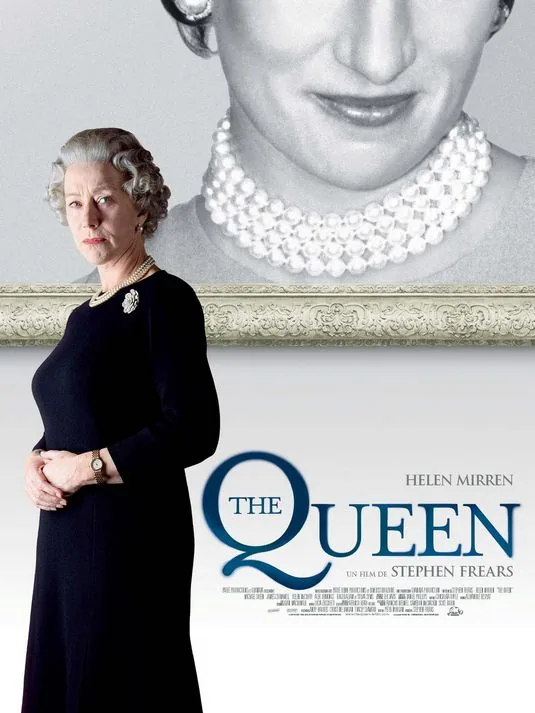
The royal family's private response to Diana's death clashes with a public demand for shared mourning, forcing Blair and Elizabeth into a political negotiation.
Why this matches +
Selected for the central appeal: Private conversation humanizes leaders negotiating conscience, institutional change and the costs of authority.
Genres: Drama / Biography
Shared film traits
Based on recorded story, mood and style. Your preferences can change the order.
What changes A dramatized private relationship reveals an institutional leader’s tension with changing public expectations; monarchy and a prime minister replace papal succession and theological temperament.
After Diana, Princess of Wales dies in a car crash in 1997, Queen Elizabeth II treats the event as a private family bereavement and remains at Balmoral with her grandsons. Prime Minister Tony Blair sees the public's grief and the absence of an official response as a crisis for both the monarchy and the new government. Their disagreement plays out through advisers, news coverage and an unprecedented display of flowers outside the palaces. Blair urges the Queen to acknowledge the country's mourning; she sees his proposals as yielding to public pressure. The film stages the week as a negotiation between protocol and changing public expectation, using the Queen's eventual response as a turning point in the monarchy's relationship with the public. Private conversations are dramatized, not documentary record.
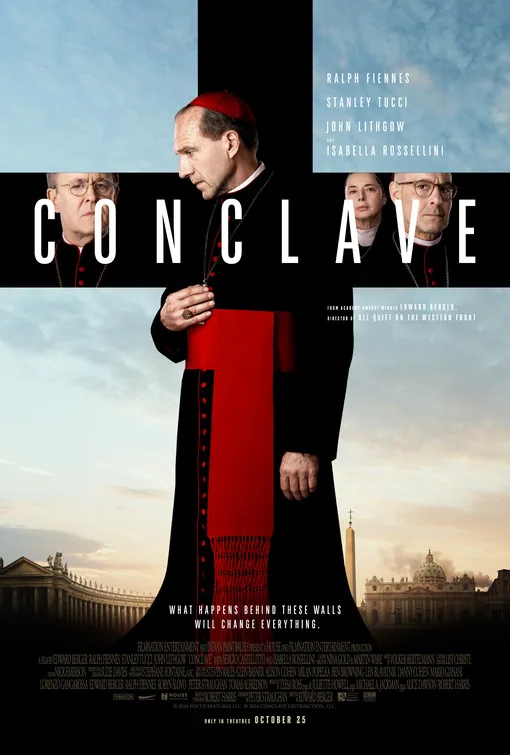
A papal election becomes an investigation as new evidence reorders the candidates and forces Lawrence to weigh institutional stability against conscience.
Why this matches +
Related viewing experiences with the specific differences recorded for each pair.
An adjacent discovery: a related idea with a different viewing experience.
Genres: Drama / Thriller
Shared film traits
Based on recorded story, mood and style. Your preferences can change the order.
What changes Senior church leaders confront faith, reform and the institution’s future behind Vatican walls; a fictional election thriller replaces the intimate, humorous historical two-hander.
After a pope dies, Cardinal Lawrence leads the secluded conclave that must choose a successor while rival clerics negotiate alliances and a series of disclosures alters the field. The closed setting turns procedure, rumor and moral compromise into a political thriller. A final revelation about Cardinal Benitez's intersex embodiment changes how characters and viewers interpret the election, but it must not be framed as proof of deception or as a claim about intersex people generally. The film is speculative fiction, not an authoritative guide to church law or actual conclaves. Lawrence's search for the source of each revelation unfolds inside the election's strict seclusion.
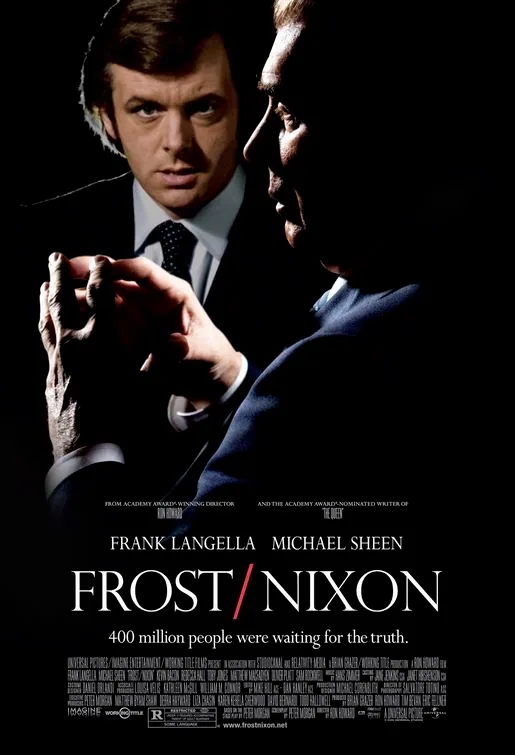
A privately financed interview becomes a struggle for control when the subject's rehabilitation strategy clashes with the interviewer's need to establish political accountability.
Why this matches +
Related viewing experiences with the specific differences recorded for each pair.
An adjacent discovery: a related idea with a different viewing experience.
Genres: Drama / History
Shared film traits
Based on recorded story, mood and style. Your preferences can change the order.
What changes Two historically recognizable men test public authority through sustained, personally revealing conversation; an adversarial televised accountability contest replaces imagined friendship and confessional debate.
A television interviewer risks money and professional credibility on conversations with a former president seeking to restore his reputation. The participants enter the sessions with different objectives, and Nixon's command of public performance initially defeats Frost's preparation. Researchers and producers press for accountability while commercial pressures threaten the project itself. The drama makes an interview into a contest over who can define the meaning of a political past, with reputational survival giving both men an urgent personal stake.
More uses resignation and legally guarded silence to avoid endorsing royal supremacy, but a state demanding explicit assent turns his refusal into a prosecution sustained by purchased testimony.
Why this matches +
Related viewing experiences with the specific differences recorded for each pair.
An adjacent discovery: a related idea with a different viewing experience.
Genres: Drama / History
Shared film traits
Based on recorded story, mood and style. Your preferences can change the order.
What changes A statesman’s conscience becomes inseparable from religious authority and institutional loyalty; a fatal public refusal replaces the warmer, more conciliatory papal transition.
Thomas More tries to retain both his conscience and legal safety as Henry VIII demands support for a new marriage and royal supremacy over the Church. Resigning and refusing to explain himself seem to preserve a narrow space in which he need not openly defy the king. As allies seek compromise and ambitious officials manufacture a case, silence becomes a test of whether law can protect private conviction when political authority requires a public declaration of loyalty.
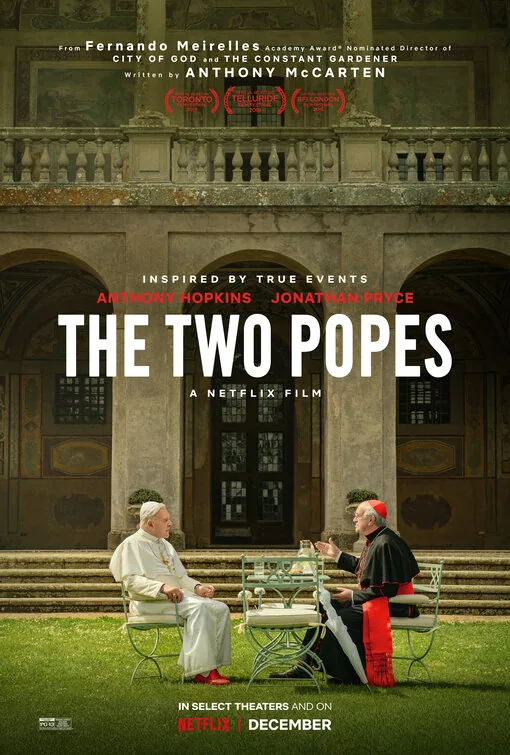
The film frames Cardinal Jorge Bergoglio’s 2012 trip to Rome as a request to retire from his role in Buenos Aires. Pope Benedict XVI instead summons him into an imagined private conversation about faith, institutional change and the failures each man sees in himself. Their differing temperaments produce candid disagreement as well as humor, food and personal confession. The real transition is that Benedict resigned in 2013 and Bergoglio was elected pope; the film’s extended meetings and dialogue are fictionalized, not a transcript or reconstruction. Its intimate two-hander uses the historical moment to examine how leaders respond when an institution faces crisis.
What drives the story
A resignation request becomes an extended two-person negotiation over whether an institution can change and what its leaders owe it.
The people at its centre
Bergoglio’s directness and pastoral emphasis unsettle Benedict’s guarded formality; their connection grows through candid disagreement rather than sudden ideological agreement.
What it feels like
The film alternates intimate conversational scenes with brief flashbacks and lighter shared rituals, letting performance and dialogue carry most of its movement.
Worth knowing
For viewers drawn to thoughtful, witty dramas about belief, leadership and moral self-examination. Its imagined private conversations differ from documentary history or a broad church conspiracy thriller.
faithinstitutional changeforgiveness
Mood
witty · reflective · intimate
Pacing
conversational · episodic
Visual style
close dialogue scenes · brief flashbacks
Storytelling
leadership transition · moral confession · ideological debate