A low-ranking thief is recruited to impersonate a dead warlord and keep his enemies from sensing a transition of power.
Why this matches +
Selected for the central appeal: Tragedies of feudal power, ambition and uncertainty, often seen through Japanese historical settings.
Genres: Drama / War
Shared film traits
Based on recorded story, mood and style. Your preferences can change the order.
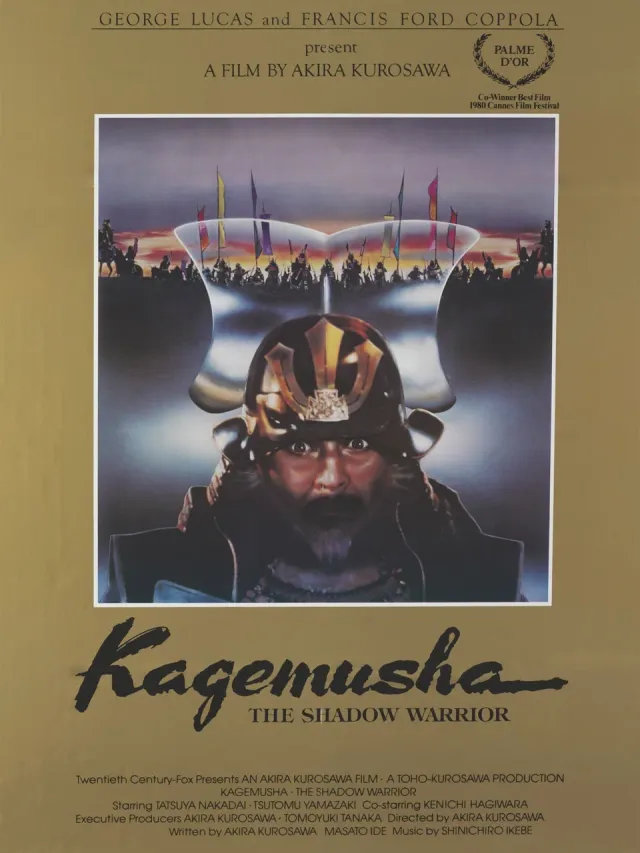
What changes Kagemusha follows a man drawn into a Japanese warlord's succession and the fragile performance of authority, replacing supernatural prophecy and murderous ambition with impersonation.
In sixteenth-century Japan, a petty thief is chosen to impersonate the powerful warlord Takeda Shingen after Shingen's death. The double must preserve the illusion for the clan, its soldiers, and rival leaders while the succession remains unsettled and enemies press their advantage. What begins as a deception gradually becomes a demanding performance of authority, as the substitute discovers the personal and political costs of occupying another man's place.
Shinzaemon gathers a small force and prepares a village ambush to prevent Naritsugu from gaining greater political power.
Why this matches +
These offer a related experience with a meaningful difference in story, tone, or presentation.
An adjacent discovery: a related idea with a different viewing experience.
Genres: Action / Drama
Shared film traits
Based on recorded story, mood and style. Your preferences can change the order.
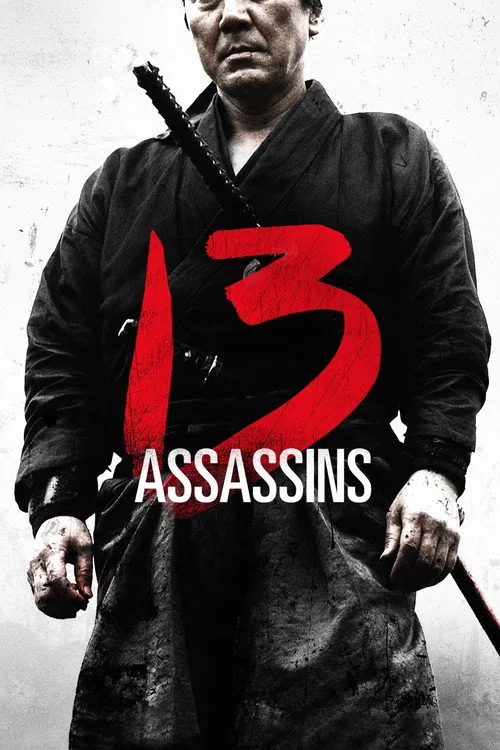
What changes 13 Assassins follows samurai confronting an abusive lord within a hierarchical political order, centering a planned resistance rather than a commander's rise to power.
In 1844, samurai Shinzaemon Shimada is asked to stop Lord Naritsugu, a cruel member of the ruling family whose appointment threatens the lives of many. Shinzaemon assembles twelve additional warriors and plans an ambush designed to trap Naritsugu’s much larger escort. Takashi Miike’s Japanese period action film follows the group’s preparation and final battle, using the mission to explore honor, political obligation, and the limits of a samurai code under a corrupt shogunate.
Hal’s transformation is driven by decisions about responsibility rather than a sudden appetite for power.
Why this matches +
These offer a related experience with a meaningful difference in story, tone, or presentation.
An adjacent discovery: a related idea with a different viewing experience.
Genres: Drama / History
Shared film traits
Based on recorded story, mood and style. Your preferences can change the order.
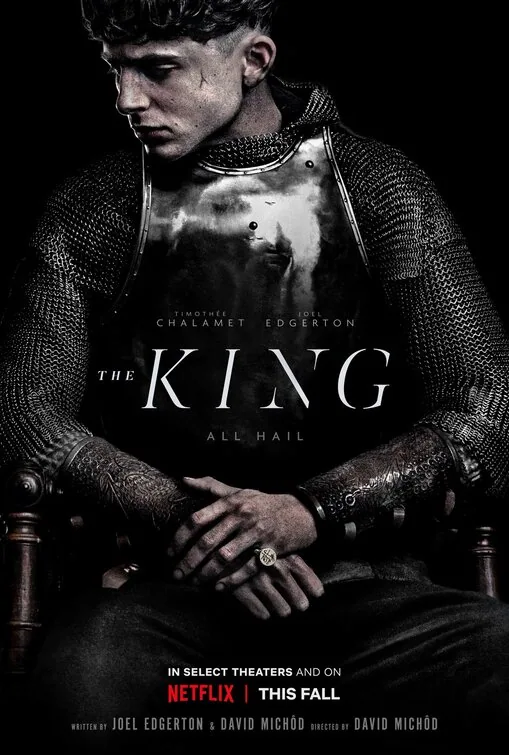
What changes The King follows a young ruler facing manipulation and war amid a disputed succession, using Shakespearean English history rather than Kurosawa's Japanese adaptation.
Prince Hal prefers taverns and the company of Falstaff to the court, but his father’s death forces him onto the English throne. As Henry V, he faces rebellion at home and a campaign in France while confronting the burdens of authority and the consequences of choosing whom to trust. David Michôd gives the Shakespeare-inspired history a somber, muddy visual texture and a restrained account of a young ruler becoming a wartime king.
The ghost’s charge forces Hamlet to test whether revenge is justified, while his delay destabilizes the court and intensifies danger for those near him. Hamlet’s delay becomes dangerous to Ophelia and the court, not only evidence of his inner conflict.
Why this matches +
These offer a related experience with a meaningful difference in story, tone, or presentation.
An adjacent discovery: a related idea with a different viewing experience.
Genres: Drama / Tragedy
Shared film traits
Based on recorded story, mood and style. Your preferences can change the order.
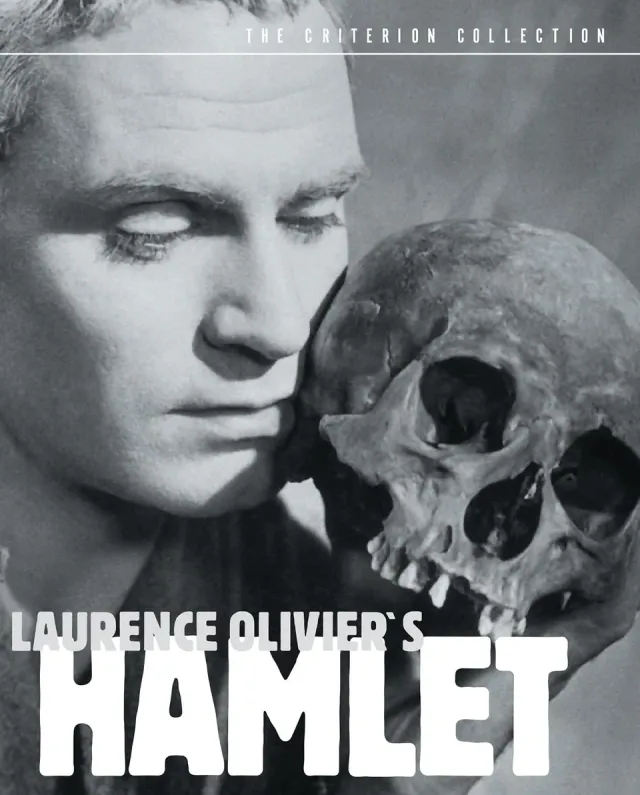
What changes Hamlet depicts a court destabilized by a father's death, a ghost and murderous succession, adapting a different Shakespeare tragedy and focusing on hesitation rather than a warrior's ambition.
Olivier’s black-and-white Hamlet centers the prince’s uncertainty after his father’s death and the ghost’s accusation destabilizes the Danish court. The adaptation makes inner hesitation and family betrayal its organizing concerns, trimming Shakespeare’s play and emphasizing shadowed spaces within Elsinore. That choice turns the castle into a psychological maze, but it also reduces some of the political and social machinery surrounding the succession. Ophelia, Gertrude and the court remain part of the tragedy’s consequences, even as the camera stays close to Hamlet’s perspective. This is Olivier’s particular screen reading, not a neutral substitute for the full play or other film versions.
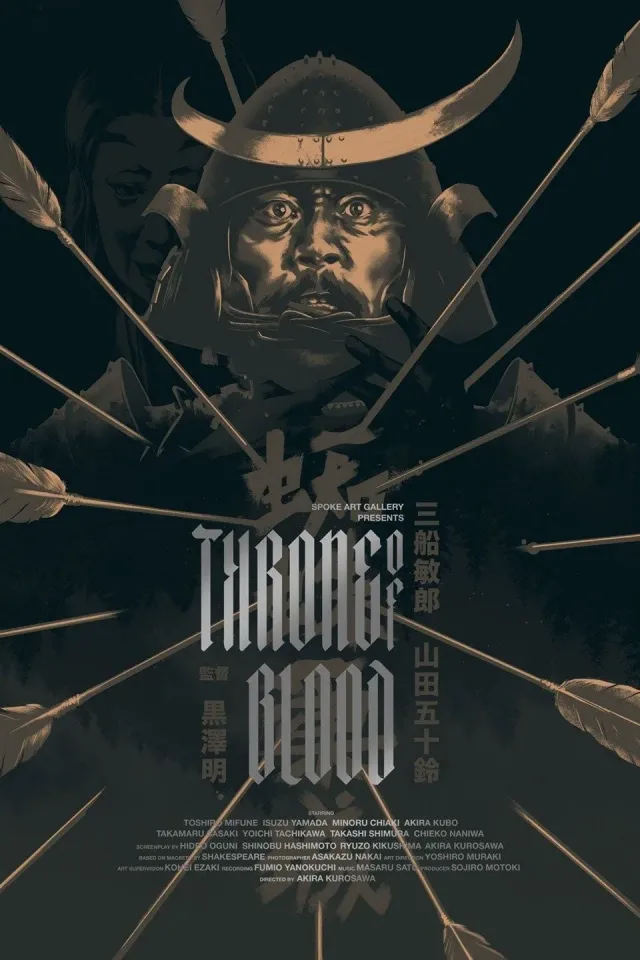
In feudal Japan, warriors Washizu and Miki lose their way in a forest and encounter a spirit that predicts their futures. Washizu is told he will become lord of Spider’s Web Castle, while Miki is promised a later succession through his son. When the first prophecy comes true, Washizu’s wife Asaji urges him to secure his position, and suspicion turns ambition into a chain of murder and betrayal. Kurosawa adapts Macbeth through the visual and theatrical language of Noh, shifting Shakespeare’s Scottish court into a mist-filled landscape of militarized authority. Washizu’s later decisions become harder to distinguish from the prophecy he fears, while Asaji avoids open displays of emotion.
What drives the story
A supernatural prediction gives a loyal warrior an apparent future, and each attempt to make it secure accelerates his downfall.
The people at its centre
Washizu’s fear and ambition feed one another, while Asaji’s stillness and strategic pressure sharpen choices he would prefer to treat as fate.
What it feels like
Fog, austere castle architecture, Noh-influenced performance and sudden arrows create a severe visual tragedy whose atmosphere carries much of its meaning.
Worth knowing
For viewers open to a Shakespearean tragedy reimagined as Japanese samurai cinema. It is more ritualized and image-driven than a modern psychological crime drama.