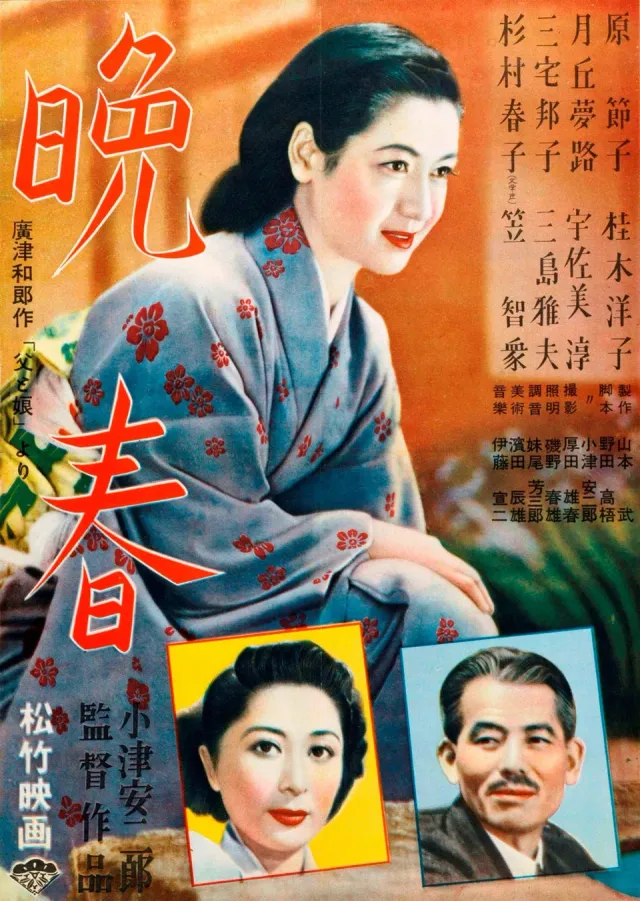
Pressure to arrange a marriage unsettles a daughter and father who have found companionship in their shared household.
Why this matches +
Selected for the central appeal: Quiet family dramas about aging parents, adult children and affection expressed through ordinary gestures.
Genres: Drama
Shared film traits
Based on recorded story, mood and style. Your preferences can change the order.
What changes Late Spring shares Ozu's restrained attention to family duty and an aging parent's relationship with an adult child.
Noriko lives with her widowed father, Professor Somiya, and is content with the closeness of their household. Relatives worry that she is delaying marriage and begin arranging a suitable match, while her father fears that his own comfort may limit her future. Their quiet negotiations over duty and affection reveal how a loving family can still struggle to let its members choose separate lives.
Shared characteristics
Genre: Drama
Poster: Film rights holders; original film promotional poster from the identified source · Image source
NJ’s attempt to revisit a decision from his youth unfolds alongside the demands of his present family.
Why this matches +
Selected for the central appeal: Quiet family dramas about aging parents, adult children and affection expressed through ordinary gestures.
Genres: Drama
Shared film traits
Based on recorded story, mood and style. Your preferences can change the order.
What changes Yi Yi observes several generations through everyday encounters, family responsibility and gradual change.
Over the course of a year in Taipei, the middle-class Jian family faces a wedding, a grandmother’s stroke, business troubles and the strains of ordinary family life. Father NJ reconnects with a former love while negotiating a new business deal; his wife Min-Min leaves for a Buddhist retreat; daughter Ting-Ting navigates adolescent relationships; and young Yang-Yang observes the adults with unusual curiosity. Each family member sees only part of the whole, and the film follows how private choices ripple through the household and its wider community.
Three adult sisters share their father's apartment while caring for him near the end of his life.
Why this matches +
These offer a related experience with a meaningful difference in story, tone, or presentation.
An adjacent discovery: a related idea with a different viewing experience.
Genres: Drama
Shared film traits
Based on recorded story, mood and style. Your preferences can change the order.
What changes His Three Daughters brings adult children together around an aging parent's illness and unresolved relationships.
Katie, Christina and Rachel gather in their father's New York apartment as he approaches the end of his life. They have lived with different degrees of distance from him and from one another, and the practical work of caring for him brings old resentments into the open. As the sisters wait and negotiate decisions, their compressed time together reveals competing versions of family history, responsibility and love without reducing their differences to a simple reconciliation.
Daily needs and modest hopes shape a family's life while children discover possibilities beyond its immediate limits.
Why this matches +
These offer a related experience with a meaningful difference in story, tone, or presentation.
An adjacent discovery: a related idea with a different viewing experience.
Genres: Drama
Shared film traits
Based on recorded story, mood and style. Your preferences can change the order.
What changes Pather Panchali examines family care, hardship and loss through patient observation of daily life.
A boy grows up in a poor rural Bengali household with an older sister whose curiosity guides his encounters with the wider world. Their mother's daily effort to keep the family together contrasts with their father's hopes for work and advancement. Small discoveries, family tensions and material insecurity unfold through changing seasons, allowing wonder and loss to emerge from the same ordinary surroundings.
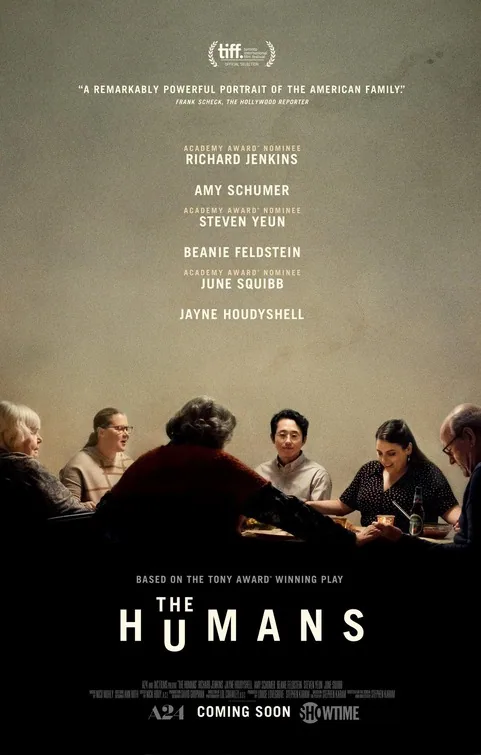
One evening of family conversation gradually exposes health, money and relationship concerns that each person has been managing privately.
Why this matches +
These offer a related experience with a meaningful difference in story, tone, or presentation.
An adjacent discovery: a related idea with a different viewing experience.
Genres: Drama
Shared film traits
Based on recorded story, mood and style. Your preferences can change the order.
What changes The Humans follows a family gathering where ordinary conversation reveals financial and emotional pressures.
On Thanksgiving, the Blake family gathers in the run-down Chinatown apartment where younger daughter Brigid lives with her partner Richard. Parents Erik and Deirdre, sister Aimee and grandmother Momo arrive carrying financial, health and relationship strains. As dinner unfolds, family jokes and old grievances coexist with unsettling sounds and darkness in the building around them.
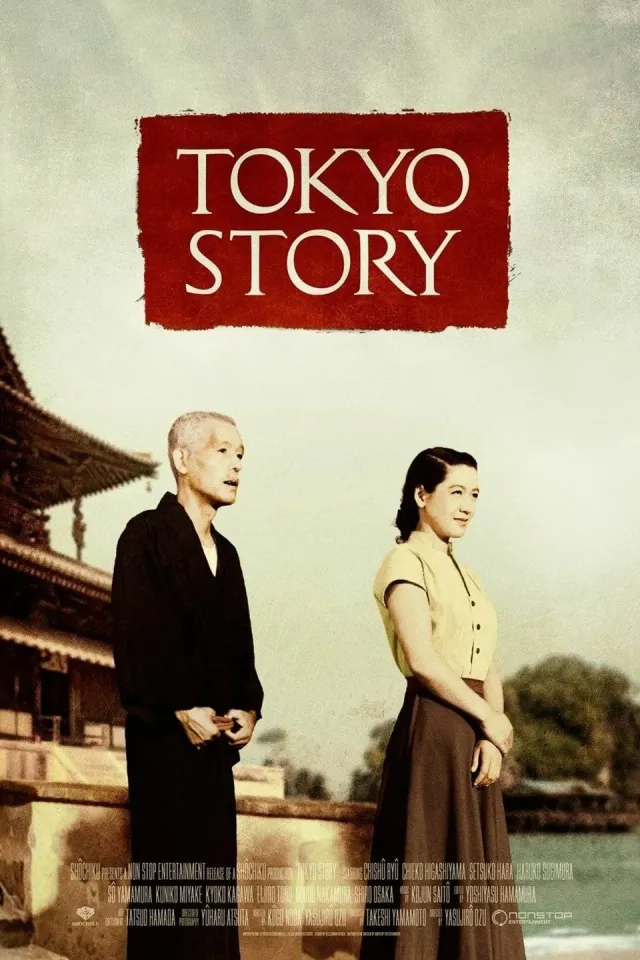
An aging couple, Shukichi and Tomi Hirayama, travel from their coastal town to Tokyo to visit their adult children and grandchildren. Their son and daughter are busy with work and family, and arrange a brief trip to a seaside resort rather than spending much time with them. Noriko, the widow of their deceased son, treats the couple with particular kindness despite her own modest life. When Tomi becomes ill, the family’s attentions reveal different forms of affection, duty and regret. Ozu follows these changes through small domestic gestures rather than dramatic confrontations. The visit’s short duration turns small family accommodations into signs of affection, impatience and regret.
What drives the story
A visit by elderly parents exposes the distance between generations as their adult children balance affection with urban routines and obligations.
The people at its centre
Shige’s impatience and Koichi’s distraction coexist with real family concern; Noriko’s kindness is sincere but not presented as an effortless substitute for her own grief.
What it feels like
Low camera placement, still domestic frames and restrained transitions let travel, meals and pauses carry the emotional movement.
Worth knowing
For viewers receptive to a quiet family drama about aging, obligation and the limits of time together. It is deliberately undramatic compared with a family-conflict melodrama.