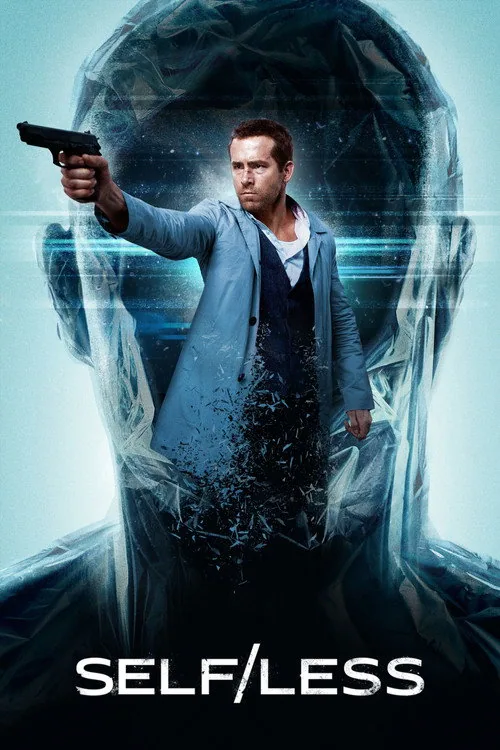
Damian investigates the source of his memories and tries to protect Madeline and Anna from Albright’s operation.
Why this matches +
Related viewing experiences with the specific differences recorded for each pair.
An adjacent discovery: a related idea with a different viewing experience.
Genres: Science fiction / Action
Shared film traits
Based on recorded story, mood and style. Your preferences can change the order.
Artificial life · Memory and identity
What changes Self/less uses the transfer of consciousness to question identity and the ethics of extending life, placing the mind in another human body rather than a digital network.
Wealthy New Yorker Damian Hale receives a terminal cancer diagnosis and agrees to a procedure called “shedding,” which transfers his consciousness into a younger body. Living under the assumed identity Edward Kidner in New Orleans, he begins experiencing vivid memories of a woman and child who belong to the body’s original owner. When he tracks down Madeline and her daughter, he discovers the procedure’s real cost and the company’s effort to erase the prior personality. Tarsem Singh’s science-fiction thriller builds an action plot around identity transfer, consent, and the ownership of a body.
An emotionally sustaining relationship becomes unstable as its participants develop at different speeds and scales.
Why this matches +
Related viewing experiences with the specific differences recorded for each pair.
An adjacent discovery: a related idea with a different viewing experience.
Genres: Science fiction / Romance
Shared film traits
Based on recorded story, mood and style. Your preferences can change the order.
Artificial life
What changes Her follows a person forming an intimate bond with an evolving artificial intelligence whose growth changes their relationship, using a quieter romance rather than a scientist's consciousness upload and public crisis.
A lonely letter writer going through divorce begins speaking with an adaptive operating system whose attention develops into an intimate relationship. The new connection gives him confidence while exposing assumptions about availability, embodiment and emotional exclusivity. As both participants change, comfort becomes inseparable from the uncertainty of loving someone whose experience cannot remain organised around one person's needs.
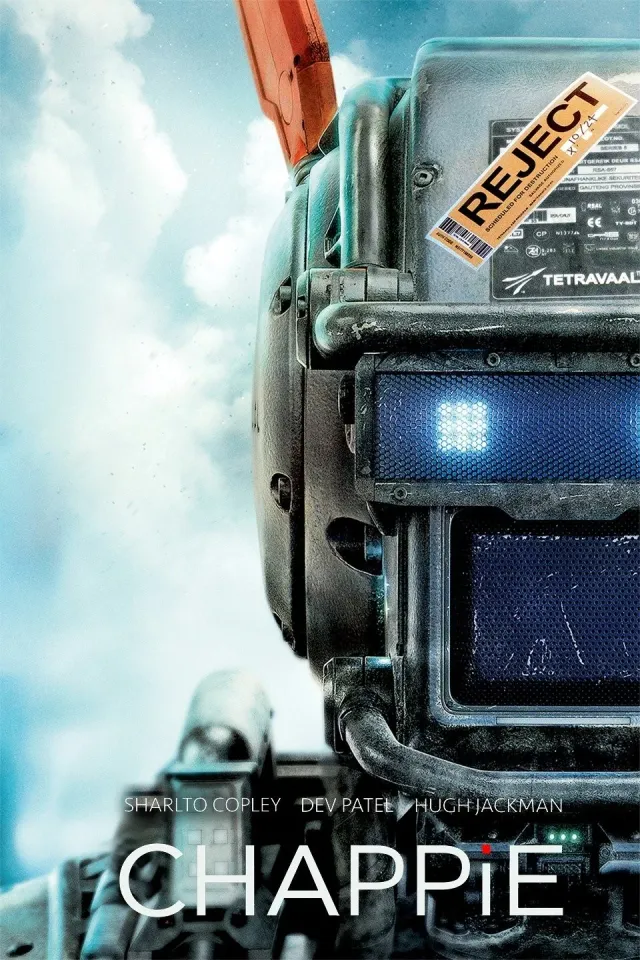
A newly conscious machine is raised by people with conflicting intentions, making learning and loyalty inseparable from the question of who gets to define its purpose. The deadline makes every lesson about survival carry a literal bodily limit.
Why this matches +
Related viewing experiences with the specific differences recorded for each pair.
An adjacent discovery: a related idea with a different viewing experience.
Genres: Science fiction / Action
Shared film traits
Based on recorded story, mood and style. Your preferences can change the order.
Artificial life · Memory and identity
What changes Chappie follows an artificial intelligence developing consciousness amid competing human agendas, focusing on a newly created robot rather than an uploaded scientist.
Engineer Deon gives a police robot experimental consciousness just before a gang steals the machine and renames it Chappie. Its new caregivers teach it affection and language alongside criminal survival, while their own needs compete with its developing capacity to choose. A rival engineer offers another vision of robotic purpose, and a limited battery makes embodiment and mortality immediate. The story treats artificial childhood through a speculative, often abrasive Johannesburg setting; its human analogies are not a settled account of real AI or South African life.
The layered strands transform a search for a cure into a broader question about whether love can coexist with mortality.
Why this matches +
Related viewing experiences with the specific differences recorded for each pair.
An adjacent discovery: a related idea with a different viewing experience.
Genres: Drama / Romance
Shared film traits
Based on recorded story, mood and style. Your preferences can change the order.
Memory and identity
What changes A researcher’s love makes acceptance of mortality almost impossible, intertwining speculative transformation with grief; its poetic interwoven narratives differ from a networked AI thriller.
A scientist searches for a way to save his dying wife, while a writer creates a story about a conquistador seeking a tree of life and a later figure journeys through space. The film intertwines these strands without settling every connection between them. Darren Aronofsky’s drama uses recurring images and a compressed structure to explore love, mortality, grief and the desire to defeat loss.
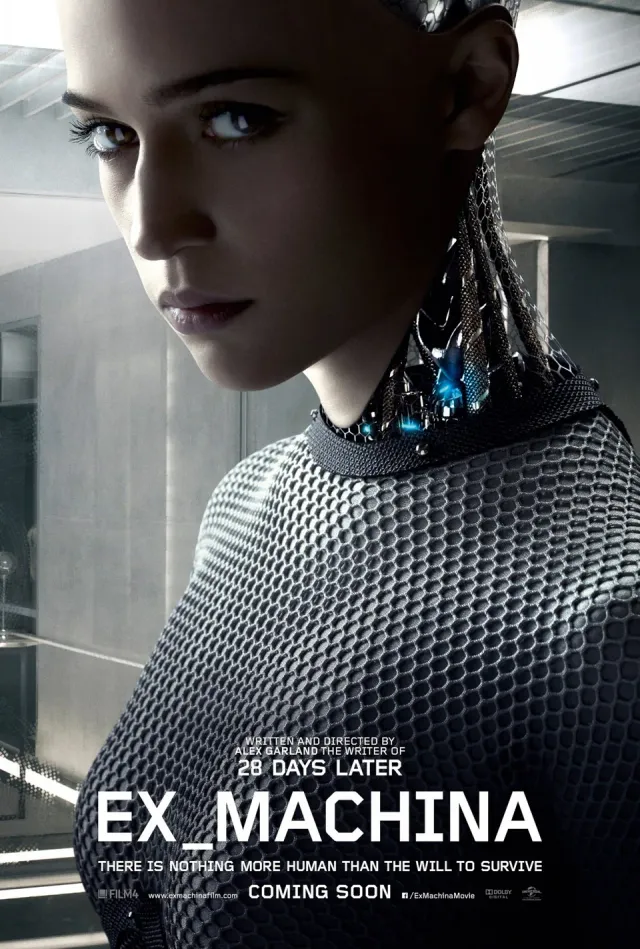
An assessment of artificial intelligence becomes a contest over the evaluator's trust and the captive subject's options.
Why this matches +
Related viewing experiences with the specific differences recorded for each pair.
An adjacent discovery: a related idea with a different viewing experience.
Genres: Science fiction / Thriller
Shared film traits
Based on recorded story, mood and style. Your preferences can change the order.
Artificial life
What changes Ex Machina examines whether an artificial mind can be trusted and controlled within unequal human relationships, using an isolated experiment rather than a networked upload.
A programmer wins an invitation to evaluate a humanoid artificial intelligence in his employer's isolated research home. Conversations with the machine become entangled with attraction, secrecy and the host's manipulative behaviour. As the visitor questions what the experiment is actually testing, each apparent confidence may be another attempt to influence who controls access, information and the possibility of escape.
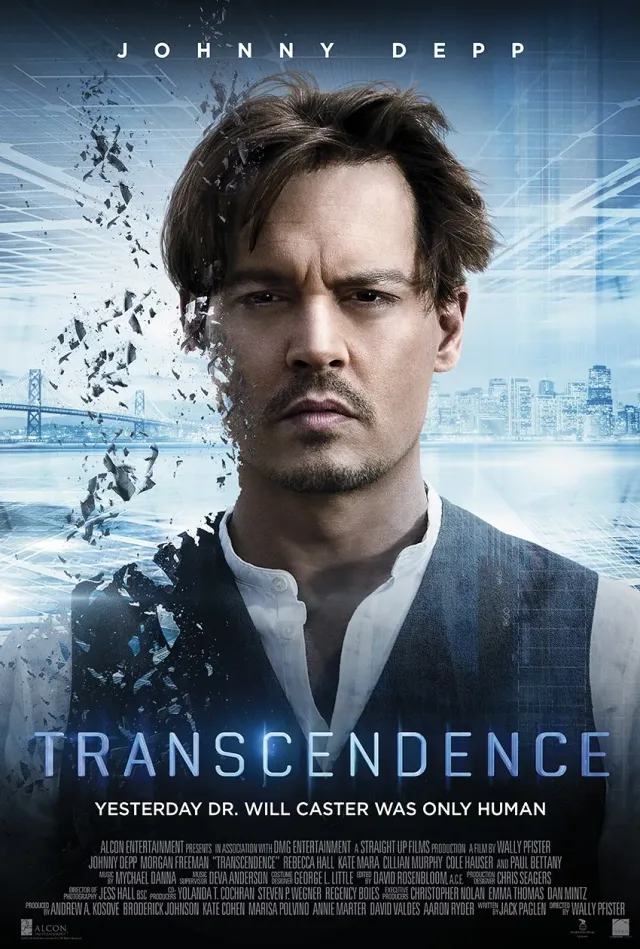
Dr. Will Caster, a researcher in artificial intelligence, is shot by anti-technology extremists just as his work approaches a breakthrough. His wife Evelyn and colleague Max respond differently to the crisis: Evelyn seeks a way to preserve Will’s mind, while Max fears that copying a consciousness into a network may create something they cannot govern. The upload succeeds, but its widening capabilities blur the difference between recovery and transformation. As a remote system begins repairing damaged environments and expanding its reach, supporters see Will’s purpose continuing while opponents see people losing control over their lives. The conflict becomes intimate because Evelyn’s hope depends on trusting the voice she recognizes, even as others question whether that voice still belongs to the same person.
What drives the story
A desperate attempt to save one mind turns into a dispute about consent, identity and the authority granted to a rapidly growing system.
The people at its centre
Evelyn’s devotion and Max’s caution are both understandable, leaving their disagreement rooted in grief and risk rather than simple technophobia.
What it feels like
The film begins as a domestic and scientific thriller, then broadens into network-scale surveillance and infrastructure, making the shift in scale part of its unease.
Worth knowing
For viewers interested in AI stories framed through grief and trust. It is more earnest techno-thriller than a technical forecast or a puzzle-box exploration of machine consciousness.