Patriotic recruitment gives way to attrition, while the gap between civilian rhetoric and frontline experience makes return feel like another form of isolation.
Why this matches +
Selected for the central appeal: World War I dramas about separation, survival and human connections across opposing sides.
Genres: War / Drama
Shared film traits
Based on recorded story, mood and style. Your preferences can change the order.
War and civilian life
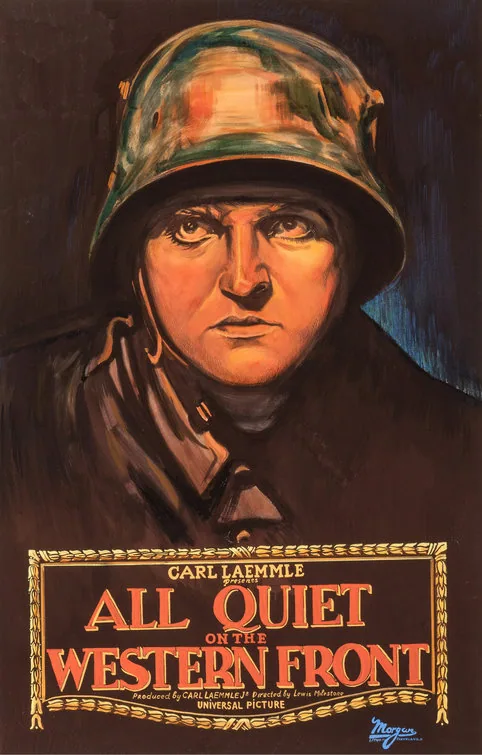
What changes All Quiet on the Western Front follows young soldiers through the devastating conditions of World War I.
German schoolboys enter the First World War encouraged by patriotic teaching and the promise of meaningful comradeship. Training and the front replace that expectation with fear, hunger, bodily injury, and the repetitive loss of friends. Returning briefly to civilian life reveals how little those urging sacrifice understand, making the young soldier's experience a widening estrangement from the language that first sent him to war.
Archy and Frank begin as rivals on the track, then build a partnership while traveling toward an imagined version of military adventure.
Why this matches +
Selected for the central appeal: World War I dramas about separation, survival and human connections across opposing sides.
Genres: Historical / War
Shared film traits
Based on recorded story, mood and style. Your preferences can change the order.
War and civilian life
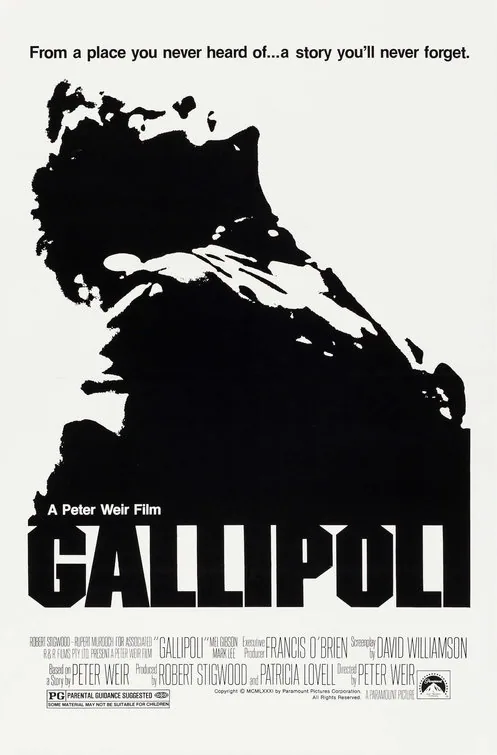
What changes Gallipoli follows young men's bond and wartime separation through a major World War I campaign.
In Western Australia during the First World War, young stockman Archy Hamilton dreams of enlisting and tests himself as a runner. At an athletics carnival he meets Frank Dunne, an older working-class sprinter whose wit and caution contrast with Archy’s idealism. The two travel together and eventually join the Australian Imperial Force, expecting adventure and purpose. Their friendship deepens through training and transport to Egypt, but the realities of the Gallipoli campaign steadily replace youthful excitement. By the time their unit faces a disastrous order, personal courage cannot protect them from the machinery of war.
The invasion of Russia intersects with years of changing fortunes among several families, linking intimate decisions to national catastrophe.
Why this matches +
These offer a related experience with a meaningful difference in story, tone, or presentation.
An adjacent discovery: a related idea with a different viewing experience.
Genres: Drama / Romance
Shared film traits
Based on recorded story, mood and style. Your preferences can change the order.
War and civilian life
What changes War and Peace connects sprawling battles and political upheaval to intimate bonds across multiple lives.
Across the Napoleonic era, Pierre Bezukhov, Prince Andrei Bolkonsky and Natasha Rostova search for purpose while Russia’s aristocratic society is repeatedly interrupted by war. Private life unfolds through balls, marriages, family conflict and shifting loyalties, but Napoleon’s invasion steadily alters what safety and honor mean. Bondarchuk’s adaptation follows several families across a long historical span, allowing characters who once imagined history from a distance to encounter its consequences directly. The film is often distributed in four parts and is unusually long, so its large battle scenes sit alongside intimate questions of love, ambition, grief and social expectation. It adapts Tolstoy’s novel rather than reducing it to a single hero’s campaign.
Joshua’s search for his sons’ graves becomes a search for reliable testimony amid the unsettled aftermath of Gallipoli.
Why this matches +
These offer a related experience with a meaningful difference in story, tone, or presentation.
An adjacent discovery: a related idea with a different viewing experience.
Genres: Drama / History
Shared film traits
Based on recorded story, mood and style. Your preferences can change the order.
War and civilian life
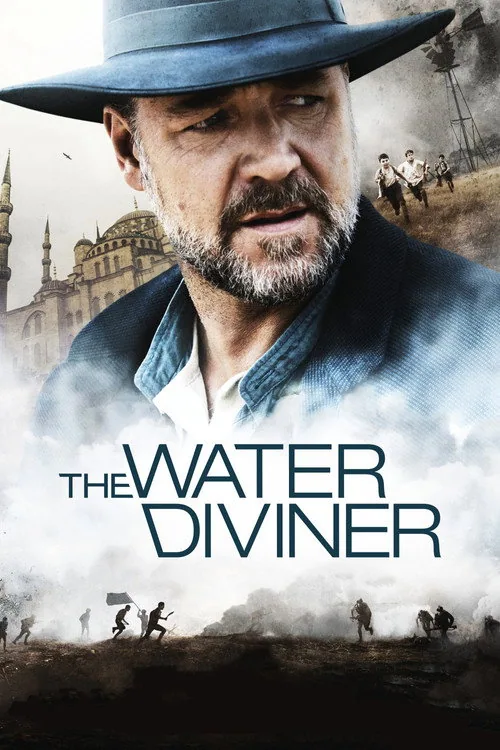
What changes The Water Diviner follows a father's search for his sons after the First World War.
In 1919, Australian farmer Joshua Connor travels to Turkey after the deaths of his three sons at Gallipoli and his wife’s grief-driven suicide. He hopes to recover their remains and bring them home, but the search draws him into the aftermath of war, where a Turkish widow and a Turkish officer help him understand what happened. Russell Crowe’s directorial debut is a period drama about mourning, cross-cultural contact, and the long human consequences of battle.
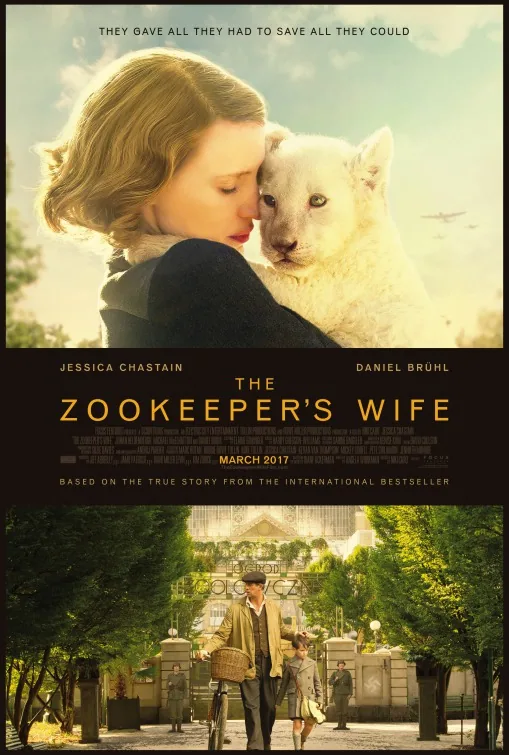
Antonina and Jan use the zoo and their home to hide people escaping Nazi persecution while trying not to expose the rescue network.
Why this matches +
These offer a related experience with a meaningful difference in story, tone, or presentation.
An adjacent discovery: a related idea with a different viewing experience.
Genres: Biography / Drama
Shared film traits
Based on recorded story, mood and style. Your preferences can change the order.
War and civilian life
What changes The Zookeeper's Wife uses care for animals to frame human endurance during wartime occupation.
When Nazi Germany invades Poland in 1939, Warsaw zookeeper Jan Żabiński and his wife Antonina find their zoo destroyed and their Jewish friends in danger. Antonina uses the couple’s home and the abandoned animal enclosures to hide people who are being smuggled out of the Warsaw Ghetto. The rescue effort requires secrecy, cooperation and careful attention to the occupiers who control the grounds. The film follows the family’s work under occupation through Antonina’s perspective.
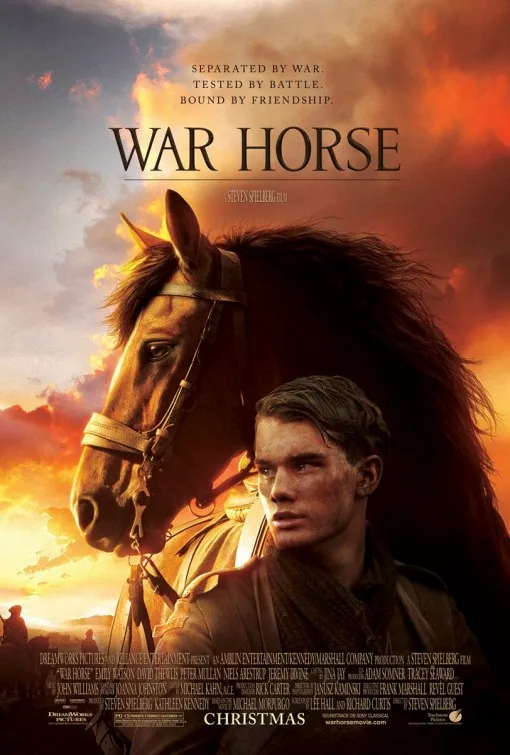
When young Albert’s family sells Joey, the horse he trained on their Devon farm, Joey passes through several owners and the battlefields of the First World War. Albert enlists and eventually searches for him amid trench fighting, while the horse’s journey links British and German soldiers, civilians and animals who are all caught in the same machinery of war. Adapted from Michael Morpurgo’s novel and staged through large-scale practical effects, the film makes one animal’s survival the thread connecting separate human encounters. Repeated separations make the promise to find Joey a measure of endurance. Albert's return to the front turns a childhood attachment into an adult choice.
What drives the story
The horse’s passage between owners turns a war epic into a chain of encounters, so the front is seen through changing bonds rather than one tactical campaign.
The people at its centre
Albert’s attachment gives Joey a homecoming goal, while the soldiers who care for him show moments of tenderness that cross enemy lines without erasing the conflict.
What it feels like
Spielberg pairs expressive horse performance and broad landscapes with brutal trench episodes; the emotional register is earnest and openly sentimental.
Worth knowing
A fit for humane wartime epics centered on loyalty, endurance and an animal’s bond with people. Its broad sentiment and scale differ from a tightly focused combat film or an unsentimental antiwar study.
war and civilian lifeloyaltyhuman-animal bond
Mood
earnest · sentimental · resolute
Pacing
episodic · wartime escalation
Visual style
Devon countryside · trench battlefields
Storytelling
animal journey · wartime encounters · family separation