Explore films connected to WarGames through automation, miscommunication, cold war anxiety. Choose the qualities you want to carry into your next watch.
What should feel similar?
Find your next favourite
9 films · Closest overall matches
Hide films you’ve seen or don’t want. Saved on this device.
No matches for this combination yet.
Try another option or reset your choices to see more films.
Based on recorded story, mood and style. Your preferences can change the order.
What changes WarGames: teen adventure to countdown. The Peacemaker: fast international chase, procedural discoveries and action set pieces.
After nuclear warheads disappear during a train transfer in postwar Russia, U.S. nuclear specialist Julia Kelly and Army officer Thomas Devoe are assigned to trace them. Their investigation spans borders and competing intelligence agencies as they pursue a former general who intends to use a stolen weapon for a political attack. Kelly relies on careful analysis while Devoe favors rapid action, making their partnership a source of friction and momentum. The film is a globe-trotting 1990s thriller built around the fear of loose nuclear arms and the practical race to prevent catastrophe.
Based on recorded story, mood and style. Your preferences can change the order.
What changes WarGames: teen adventure to countdown. Tetris: a game’s handheld rights become the prize in overlapping negotiations across moscow, london and and japan..
At a 1988 electronics trade show, game designer and entrepreneur Henk Rogers becomes determined to secure rights to the Soviet-created game Tetris for Nintendo’s upcoming Game Boy. His negotiations lead him to Moscow, where legal uncertainty, competing Western companies, Soviet officials, and surveillance all complicate a licensing deal. Jon S. Baird’s biographical thriller dramatizes Rogers’s efforts to secure the rights and build a relationship with programmer Alexey Pajitnov during the final years of the Soviet Union. It uses the game’s geometric style in energetic, fictionalized sequences.
Based on recorded story, mood and style. Your preferences can change the order.
What changes WarGames: teen adventure to countdown. A House of Dynamite: repeated perspectives revisit the same countdown as new information changes the stakes..
When an unidentified intercontinental ballistic missile is detected on a path toward Chicago, civilian and military officials have only minutes to assess the threat and decide how to respond. The political thriller revisits the emergency from several institutional perspectives, following people responsible for warning, verification, missile defense, and presidential decision-making as the available information remains incomplete. Kathryn Bigelow’s film compresses a global crisis into a procedural countdown and asks how systems and people behave when an irreversible choice arrives before certainty.
Based on recorded story, mood and style. Your preferences can change the order.
What changes WarGames: teen adventure to countdown. The Plague: slow-burn, pressure-building and observational.
At a boys’ summer water-polo camp, socially anxious twelve-year-old Ben is drawn into a cruel game that labels an outcast, Eli, as infected. What begins as teasing grows harder to dismiss as the boys’ anxieties spread and the boundary between performance and danger blurs. Charlie Polinger frames the story around peer hierarchy, shame, and the instability of childhood belonging.
Based on recorded story, mood and style. Your preferences can change the order.
What changes WarGames: teen adventure to countdown. Sneakers: puzzle-driven and alternates banter and suspense.
Martin Bishop leads a team of security specialists who test companies’ computer systems and physical defenses. Government agents blackmail the group into retrieving a mysterious black box, but the device proves far more powerful than they were told and draws several factions into a race to control it. Phil Alden Robinson’s caper blends technology, espionage, humor, and a team of distinctive experts, including a former CIA officer, a sound specialist, and a young computer prodigy. It turns computer security into the engine for an ensemble thriller about trust and surveillance.
Based on recorded story, mood and style. Your preferences can change the order.
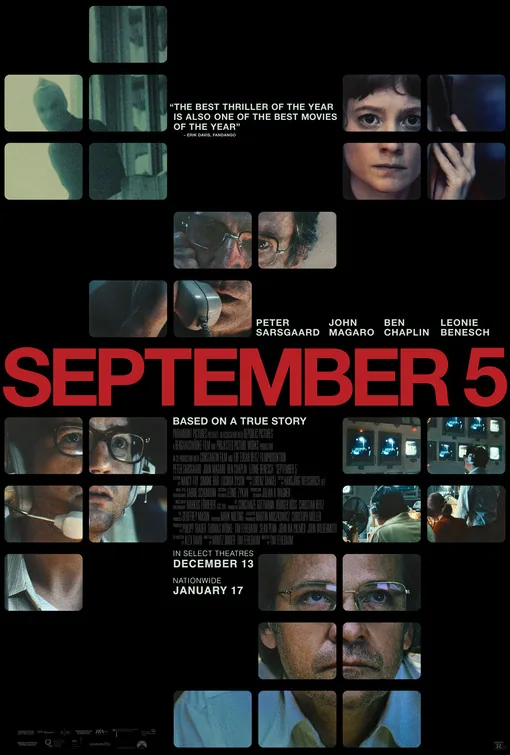
What changes WarGames: teen adventure to countdown. September 5: real-time, tightly escalating and procedural.
During the 1972 Munich Olympics, an American sports-broadcast team suddenly finds itself covering a hostage crisis involving Israeli athletes. Producer Geoff Mason, executive Roone Arledge and their colleagues must decide what to show as events unfold and information remains incomplete. The film confines much of its tension to the newsroom and control room, examining how live television changes the journalists' responsibilities when an international tragedy becomes breaking news for a global audience.
Based on recorded story, mood and style. Your preferences can change the order.
What changes WarGames: teen adventure to countdown. The Great Flood: flood submerges the apartment building, climb through floors becomes a rescue effort and mission broadens the disaster's meaning.
A catastrophic flood engulfs the planet and traps AI researcher An-na and her young son inside a high-rise apartment building. As water rises floor by floor, security officer Hee-jo tries to get An-na to safety because her work is tied to a crucial mission for humanity's future. The residents encounter panic, blocked routes, and urgent choices as they climb through the building. This Korean science-fiction disaster film begins as a survival struggle against rising water, then expands its premise toward questions about memory, human connection, and what might survive the end of the world.
Based on recorded story, mood and style. Your preferences can change the order.
Espionage and covert operations
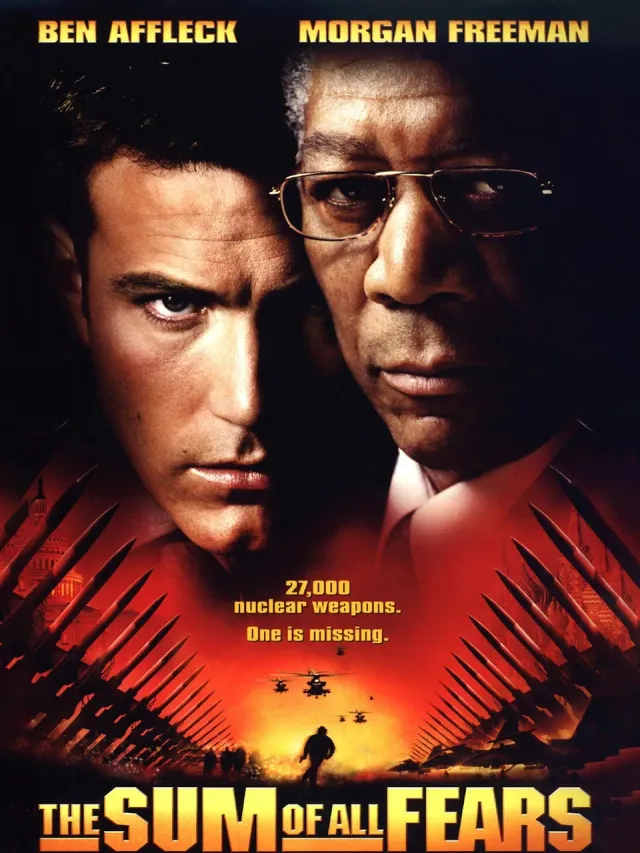
What changes WarGames: teen adventure to countdown. The Sum of All Fears: measured and escalating.
Young CIA analyst Jack Ryan becomes involved in a dangerous international crisis after a nuclear bomb is smuggled into the United States and detonated during a major football game. CIA director William Cabot relies on Ryan to assess the device and its likely origin, while leaders in Washington and Moscow interpret incomplete information under pressure. The bomb was intended to provoke the two powers into war, but the investigation moves faster than the channels of trust needed to prevent escalation. Ryan's access to intelligence gives him a way to challenge the assumptions driving the crisis, though he remains far from the usual image of a field operative. The thriller turns on whether evidence can arrive before retaliation becomes irreversible.
Based on recorded story, mood and style. Your preferences can change the order.
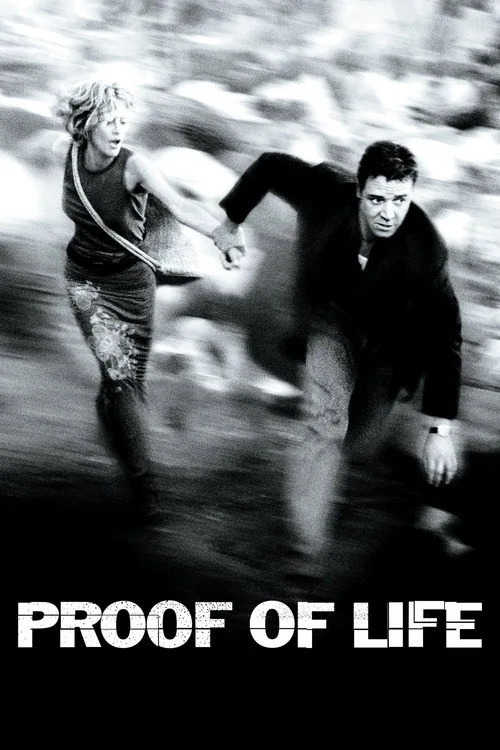
What changes WarGames: teen adventure to countdown. Proof of Life: slow negotiation pressure, jungle action sequences and rescue-focused climax.
Engineer Peter Bowman is abducted by guerrillas while working on an infrastructure project in a fictional South American country. Because his employer lacks kidnapping insurance, professional negotiator Terry Thorne is unable to secure the usual corporate support, leaving Peter's wife Alice to navigate a frightening wait and a changing political landscape. Terry uses his experience to pursue a rescue while ransom demands and rebel motives shift. The thriller combines hostage negotiation with the moral and practical limits of private crisis management.
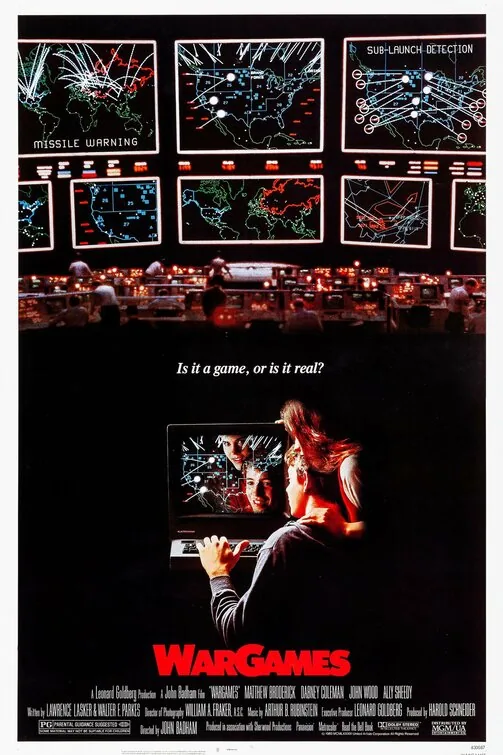
Seattle teenager David Lightman tries to access a video-game company and instead connects to WOPR, a military computer designed to simulate nuclear conflict. Thinking he has found a game, David invites it to play Global Thermonuclear War; the system’s military operators then struggle to determine whether a Soviet attack is real. Jennifer joins David as they search for the computer’s designer and try to stop a simulation from becoming a launch decision. The suspense comes from civilian curiosity entering a chain of command built for speed and certainty. The adults' decision-making is slowed by protocol while WOPR compresses the crisis into a simulated outcome. David and Jennifer must reach its designer before military logic wins.
What drives the story
A teenager’s harmless-seeming search for a game triggers a crisis because a military system cannot distinguish play from an actual hostile signal.
The people at its centre
David’s curiosity and Jennifer’s growing caution shift them from pranksters into reluctant participants, while the adults’ faith in automated warning exposes institutional blind spots.
What it feels like
The film escalates from modem-era computer play to command-center countdowns, retaining a youthful adventure tone inside a Cold War thriller.
Worth knowing
A fit for accessible techno-thrillers about systems, miscommunication and high-stakes decisions. It reflects 1983’s computer culture and should not be treated as a current technical account of military systems.