Based on recorded story, mood and style. Your preferences can change the order.
Coming of age
What changes Young Adult: character-led, socially awkward and gradual confrontation. Licorice Pizza: episodic and meandering.
In 1970s San Fernando Valley, teenage actor Gary and young Alana move through jobs, friendships and chance encounters while trying to decide what adulthood should look like. Their closeness keeps changing shape, and the surrounding adults drift in and out of their plans. The film favors wandering episodes and period atmosphere over a conventional romance plot, treating growing up as uneven and improvisational.
Both share themes of loneliness, plus a melancholic atmosphere.
Why this matches +
Genres: Comedy / Drama
Shared film traits
Based on recorded story, mood and style. Your preferences can change the order.
Memory and identity · Coming of age
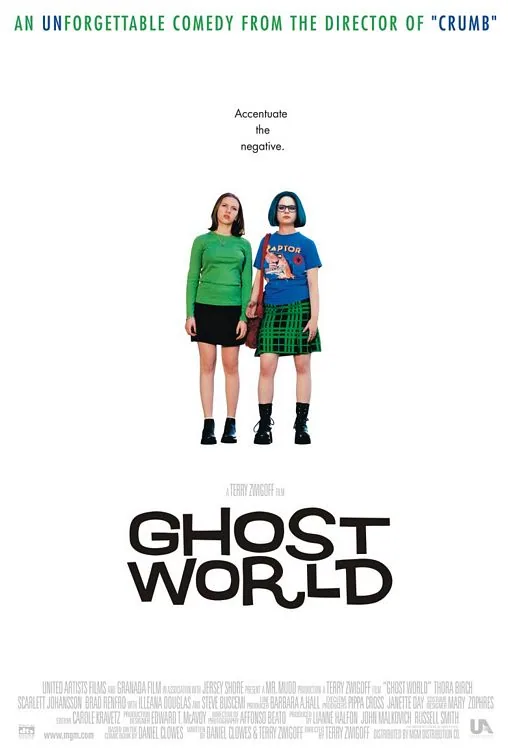
What changes Young Adult: character-led, socially awkward and gradual confrontation. Ghost World: loose and observational.
After high school, Enid and Rebecca confront an uncertain adulthood in a town where their ironic distance from ordinary life is both shield and habit. When Enid befriends Seymour, an older record collector who shares her outsider instincts, the friendship complicates the girls’ plans and exposes their different needs. The comedy observes drift, taste and loneliness without turning growing up into a neat lesson.
Based on recorded story, mood and style. Your preferences can change the order.
What changes Young Adult: character-led, socially awkward and gradual confrontation. Happiness: episodic ensemble, conversation-led and abrupt tonal shifts.
Todd Solondz’s black comedy follows three sisters and the people around them as they seek love, recognition, and relief from private dissatisfaction in suburban New Jersey. Their lives intersect through failed relationships, family gatherings, and increasingly uncomfortable revelations, including the hidden crimes of a respected psychiatrist. The film uses deadpan humor to examine loneliness and moral denial. It contains explicit subject matter involving pedophilia and child sexual abuse, and is intended for adult viewers.
Based on recorded story, mood and style. Your preferences can change the order.
Memory and identity
What changes Young Adult: character-led, socially awkward and gradual confrontation. Last Christmas: light and reflective.
Kate works in a year-round Christmas shop while recovering from a serious illness and drifting between temporary rooms and strained relationships. She meets Tom, a helpful stranger who encourages her to pay attention to the people around her, but his visits and their growing connection carry an unusual quality. Paul Feig's London romantic comedy pairs seasonal warmth with a story about recovery, generosity, and the way grief can distort a person's sense of being alive.
Based on recorded story, mood and style. Your preferences can change the order.
Memory and identity
What changes Young Adult: character-led, socially awkward and gradual confrontation. While We're Young: relationship-driven episodes, gradual discovery and quiet comic resolution.
Documentary filmmaker Josh and his wife Cornelia, a middle-aged couple without children, feel out of step with friends who have begun raising families. They befriend Jamie and Darby, a younger pair who seem spontaneous and adventurous, and begin adopting their habits. As Josh collaborates with Jamie on a documentary, questions about authenticity and credit surface. Noah Baumbach's comedy-drama follows the couples' shifting friendship while examining age, artistic ambition, and the ways people perform youth or maturity.
Based on recorded story, mood and style. Your preferences can change the order.
Memory and identity
What changes Young Adult: character-led, socially awkward and gradual confrontation. Ricki and the Flash: character-focused scenes build toward a shared performance.
A middle-aged musician who left her family to pursue rock-and-roll returns home when her adult daughter is struggling. The reunion exposes how the choices that sustain an artistic life can also leave wounds among people who were left behind. The drama uses live performance as both Ricki’s source of identity and a bridge toward a family she cannot simply rewind.
Based on recorded story, mood and style. Your preferences can change the order.
Memory and identity · Coming of age
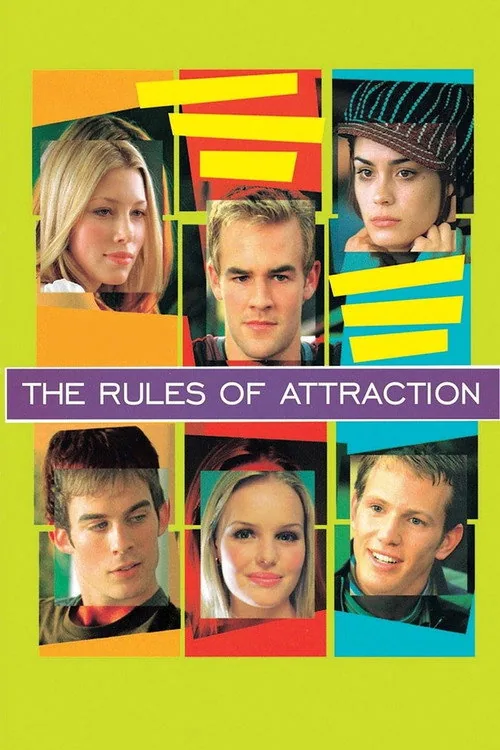
What changes Young Adult: character-led, socially awkward and gradual confrontation. The Rules of Attraction: interwoven character stories, nonlinear transitions and bleak convergence.
At Camden College, students Sean Bateman, Lauren Hynde, and Paul Denton move through parties, hookups, drugs, and private disappointments with little ability to communicate honestly. Lauren longs for her former boyfriend Victor, while Sean reads anonymous love letters as a sign of connection and Paul struggles with rejection. Their overlapping stories reveal a campus culture where desire is frequently unreturned and consequences are displaced onto others. The dark comedy adapts Bret Easton Ellis through fragmented chronology, shifting viewpoints, and a deliberately disaffected tone.
Based on recorded story, mood and style. Your preferences can change the order.
Memory and identity
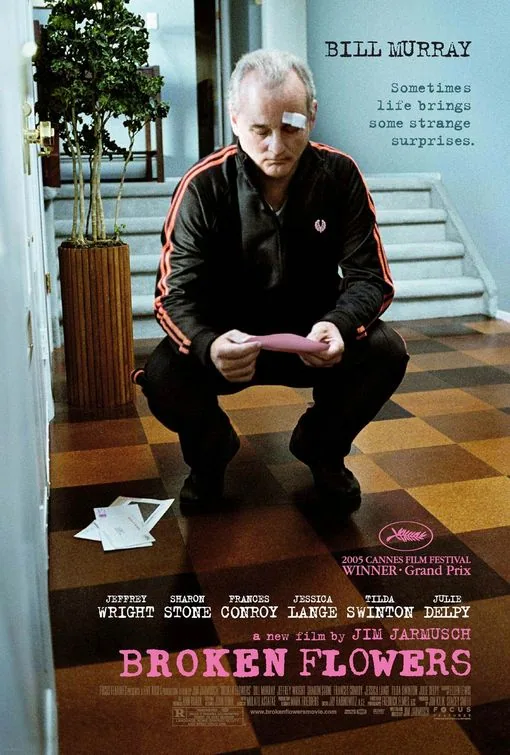
What changes Young Adult: character-led, socially awkward and gradual confrontation. Broken Flowers: measured and repetitive by design.
Don Johnston, a settled bachelor, receives an anonymous letter suggesting he may have an adult son. A neighbor persuades him to visit former partners in an attempt to discover which one sent it, turning a reluctant road journey into a series of encounters with the past. The understated comedy leaves its central mystery unresolved while observing how memory and regret change a person’s view of earlier choices.
Based on recorded story, mood and style. Your preferences can change the order.
What changes Young Adult: character-led, socially awkward and gradual confrontation. American Beauty: measured.
A suburban advertising worker responds to dissatisfaction with work and marriage by attempting a dramatic reinvention of his daily life. His fixation on his daughter's friend becomes one expression of a wish to recover a younger, less constrained self. Neighbouring households reveal other gaps between appearances and private experience, while narration from beyond the story's endpoint makes ordinary grievances unfold beneath an approaching death.
Mavis Gary, a divorced ghostwriter living in Minneapolis, returns to her Minnesota hometown after learning that her former boyfriend has a new baby. She believes they are destined to reunite and approaches him despite his marriage, while reconnecting with Matt, a former classmate she barely remembers. Her confidence masks loneliness, drinking, and an inability to accept how others have changed. Jason Reitman’s dark comedy examines arrested adulthood, nostalgia, and the damage caused by turning personal fantasy into entitlement.
What drives the story
Mavis returns home to reclaim a former relationship, confronting the gulf between her fantasy and her former classmates’ lives.
The people at its centre
Matt offers an uneasy counterpoint to Mavis’s entitlement, while Buddy’s family embodies a future she refuses to see.
What it feels like
Includes alcoholism, emotional cruelty, bullying, loneliness, and an attempted assault handled in a dark comedic register.
Worth knowing
The film studies an adult protagonist’s arrested development with sharp discomfort rather than a conventional redemption arc.