Personal crises among a worker and her employers reveal the unequal labour sustaining a shared household.
Why this matches +
These offer a related experience with a meaningful difference in story, tone, or presentation.
An adjacent discovery: a related idea with a different viewing experience.
Genres: Drama
Shared film traits
Based on recorded story, mood and style. Your preferences can change the order.
What changes Roma follows a domestic worker navigating a pregnancy amid class inequality and limited support, using an expansive family portrait rather than a single-day clandestine emergency.
A domestic worker cares for a middle-class family in Mexico City while her own relationship exposes her to abandonment and uncertainty. Changes in the employers' marriage unfold alongside her pregnancy and the political tensions surrounding the household. Work, affection and class hierarchy remain inseparable as she supports children whose dependence on her does not erase the unequal conditions of their bond.
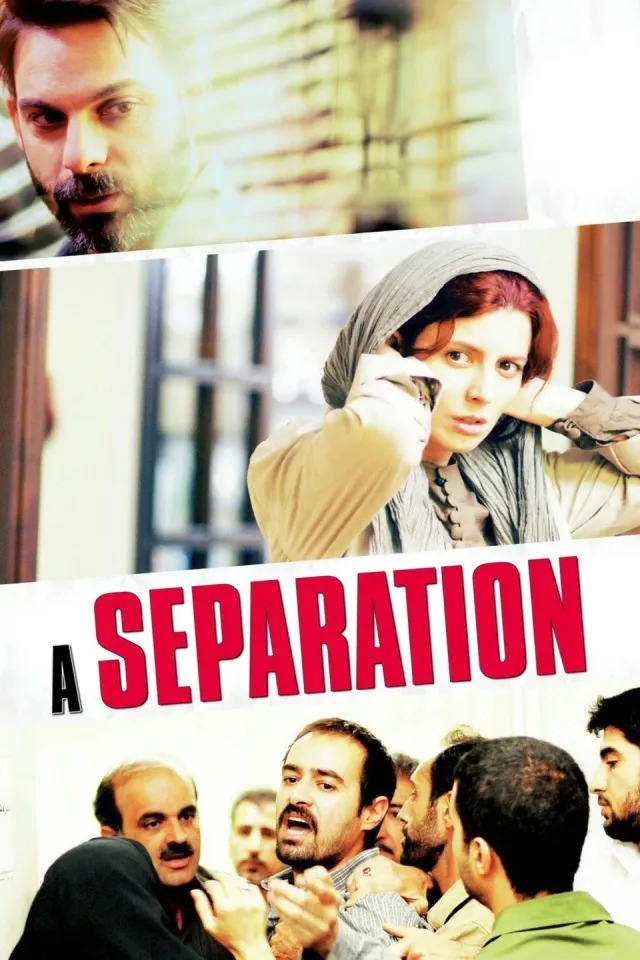
A domestic arrangement produces a disputed incident whose interpretation threatens two families' futures.
Why this matches +
These offer a related experience with a meaningful difference in story, tone, or presentation.
An adjacent discovery: a related idea with a different viewing experience.
Genres: Drama
Shared film traits
Based on recorded story, mood and style. Your preferences can change the order.
What changes A Separation shows a private family crisis entangled with legal and social pressures, using competing family perspectives rather than a friend's urgent care work.
A couple's disagreement about leaving Iran leads to a household separation and the hiring of a caregiver for an elderly father. An incident between the caregiver and the husband produces accusations whose consequences reach both families. Class, religious obligation and partial knowledge complicate every account, while a daughter is pressed to navigate loyalties that the adults cannot reconcile.
The women’s forced admission reflects the power families and church authorities hold over young women’s lives.
Why this matches +
These offer a related experience with a meaningful difference in story, tone, or presentation.
An adjacent discovery: a related idea with a different viewing experience.
Genres: Drama / Historical
Shared film traits
Based on recorded story, mood and style. Your preferences can change the order.
What changes The Magdalene Sisters follows women subjected to institutional control and exploitation, focusing on confinement in Irish laundries rather than an illegal abortion in Romania.
In 1960s Ireland, Margaret, Bernadette, Rose and Crispina are sent by family or caretakers to a Magdalene laundry, where religious authorities claim to reform women considered sinful. Their work is exhausting, their freedom is restricted and the women face humiliation and abuse from the institution’s leadership. The film follows their attempts to endure the daily regime and preserve relationships with one another, while the asylum’s religious language masks a system that benefits from their labor and keeps them isolated from the outside world.
The film follows Jeanne's precise daily routine until tiny practical disruptions make its rigid pattern increasingly difficult to sustain.
Why this matches +
These offer a related experience with a meaningful difference in story, tone, or presentation.
An adjacent discovery: a related idea with a different viewing experience.
Genres: Drama / Experimental
Shared film traits
Based on recorded story, mood and style. Your preferences can change the order.
What changes Jeanne Dielman attends closely to the labor and constrained daily life of a woman, with a formal domestic study rather than an urgent attempt to arrange an abortion.
For several days in Brussels, widowed Jeanne Dielman moves through a carefully repeated schedule of cooking, cleaning, shopping and caring for her teenage son. She also receives a client at home each afternoon, fitting that work into the same disciplined routine. Small disruptions accumulate—a meal overcooks, an errand goes wrong, a task slips—until the rituals that structure her life no longer hold. The drama stays close to ordinary time and domestic labor.
In late communist Romania, Otilia helps her roommate arrange an illegal abortion while carrying most of the work of finding money, a room and a provider. Inaccurate information narrows their options, allowing the man they depend on to impose increasingly coercive terms. Moving between the hotel, public transport and an ordinary family dinner, Otilia must absorb a private emergency that the surrounding social world either exploits or barely notices, straining solidarity without making abandonment an easy choice.
What drives the story
Criminalization and the pregnancy's concealed stage give the provider leverage to demand sex rather than accept payment, turning practical help into an ordeal that the helping friend must manage herself.
The people at its centre
Otilia resents Găbița's withheld information yet continues to protect her; a boyfriend's ordinary expectations expose how unevenly risk and emotional labor fall on the woman handling the crisis.
What it feels like
Long takes sustain negotiations, a dinner conversation and anxious movements through public space, denying relief while showing how routine social behavior can continue beside unacknowledged coercion and exhaustion.
Worth knowing
Compare solidarity strained by reproductive criminalization, sexual coercion and unequal practical burdens; general trauma or institutional danger alone does not reproduce the film's patient social observation.
Bodily autonomyCoercionFriendship
Mood
Tense · Bleak · Intimate
Pacing
Slow burn
Visual style
Naturalistic · Long takes
Storytelling
Time pressure · Clandestine procedure · Unequal power