Czechoslovak agents parachute into occupied territory to assassinate Reinhard Heydrich, relying on a resistance network that faces devastating reprisals and a desperate siege.
What should feel similar?
Find your next favourite
5 films · Closest overall matches
Hide films you’ve seen or don’t want. Saved on this device.
No matches for this combination yet.
Try another option or reset your choices to see more films.
An existing emergency plan becomes a coup strategy whose success depends on synchronizing an assassination and the takeover of communications.
Why this matches +
Czechoslovak agents parachute into occupied territory to assassinate Reinhard Heydrich, relying on a resistance network that faces devastating reprisals and a desperate siege.
Genres: Drama / Thriller
Shared film traits
Based on recorded story, mood and style. Your preferences can change the order.
War and civilian life · Political resistance
What changes German officers attempt a coup against Hitler from inside his regime, rather than exiled Czechoslovak agents targeting an occupation leader.
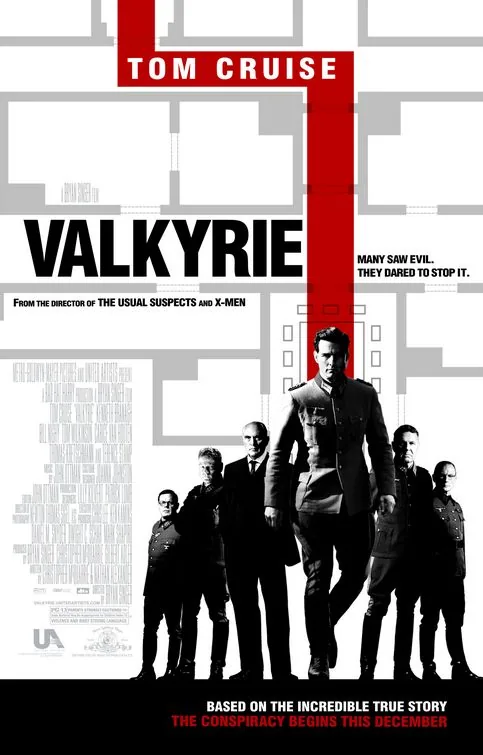
Colonel Claus von Stauffenberg returns from North Africa injured and increasingly convinced that Hitler’s regime must be stopped. He joins a network of German officers who adapt Operation Valkyrie, an existing reserve plan, into a coup that could seize control of Berlin after an assassination attempt. The conspiracy depends on secrecy, timing and a chain of people willing to act before the outcome is known. Their planning must account for military procedure as well as the possibility that the assassination will fail, leaving the plotters exposed and divided. Bryan Singer’s film dramatizes the historical July 20, 1944 attempt, narrowing a complex political network around Stauffenberg’s role and the operation’s mechanics.
Rachel's access depends on performing an identity inside the occupier's world, but failed operations and postwar suspicion make the same concealment dangerous on both sides of liberation.
Why this matches +
Czechoslovak agents parachute into occupied territory to assassinate Reinhard Heydrich, relying on a resistance network that faces devastating reprisals and a desperate siege.
Genres: War / Thriller
Shared film traits
Based on recorded story, mood and style. Your preferences can change the order.
War and civilian life
What changes A Jewish singer’s undercover relationship and shifting loyalties drive a broader Dutch melodrama rather than one assassination mission.
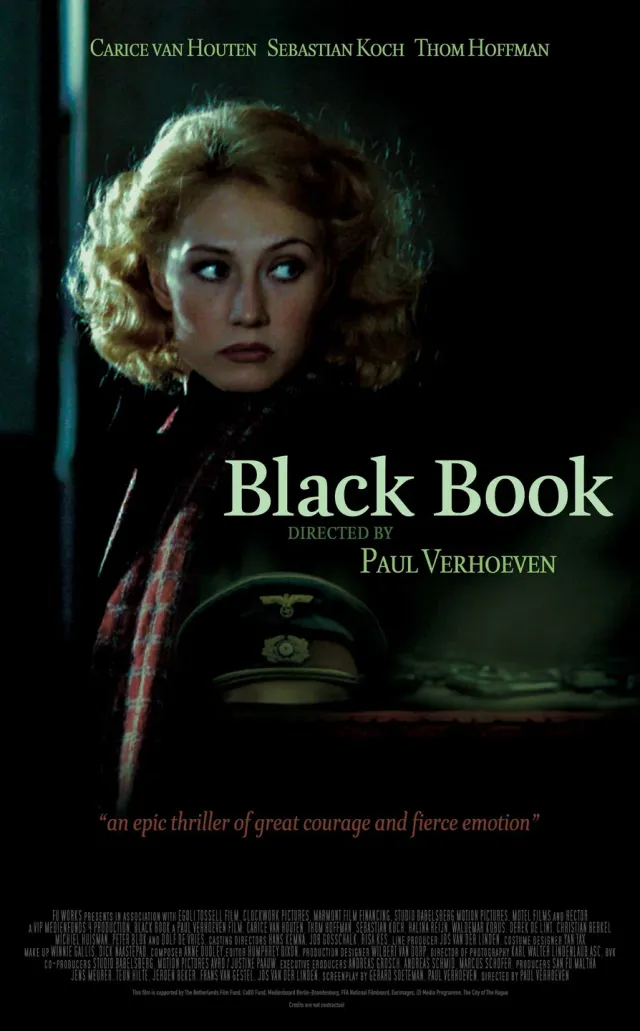
Rachel Stein, a Jewish singer hiding in occupied Netherlands, survives a betrayal and joins the Dutch resistance under a concealed identity. Her infiltration of a German officer's circle gives the resistance access, but intimacy complicates the role and does not suspend occupation's violence. When operations fail and the Netherlands is liberated, Rachel encounters new accusations and institutional loyalties that make safety no more automatic than it was under German rule. Paul Verhoeven's fast-moving thriller challenges simple moral categories without making persecutor and victim equivalent or treating betrayal as evidence that resistance itself was meaningless.
Independent assassination and revenge plans converge around a cinema, with concealed identities repeatedly threatened by linguistic and behavioural scrutiny.
Why this matches +
Pair notes distinguish story, tone and intensity.
An adjacent discovery: a related idea with a different viewing experience.
Genres: Drama / Thriller
Shared film traits
Based on recorded story, mood and style. Your preferences can change the order.
War and civilian life
What changes Tarantino’s fictional, stylized revenge fantasy rewrites history with more comic exaggeration and multiple converging plots.
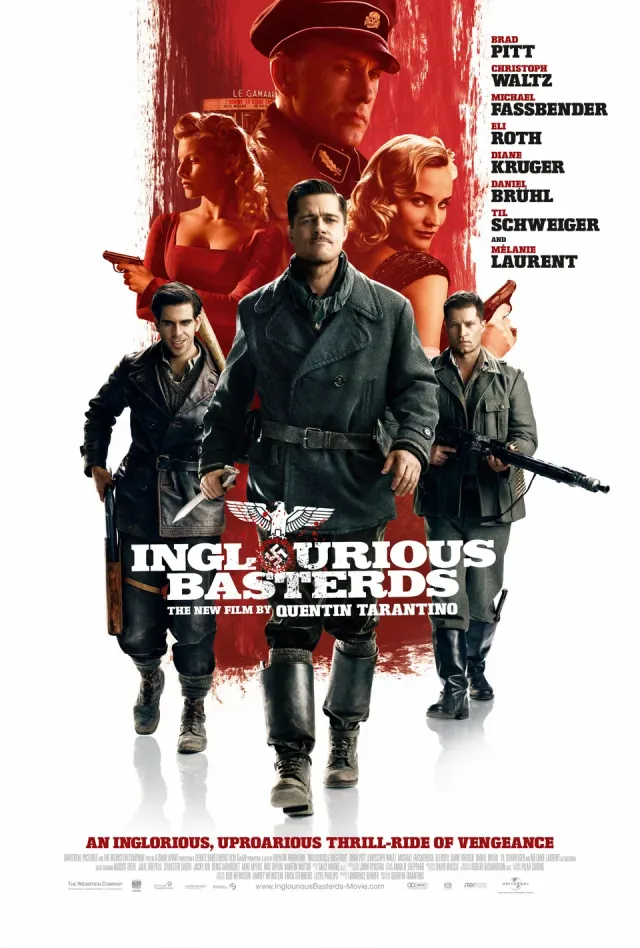
In occupied France, a Jewish cinema owner prepares a private act of revenge while an American unit and Allied operatives pursue separate plans against Nazi leadership. Their schemes depend on performances of identity, language and social confidence that can fail in a moment. The intersecting plots transform ordinary conversations, screenings and drinking games into contests over who recognises the deception first.
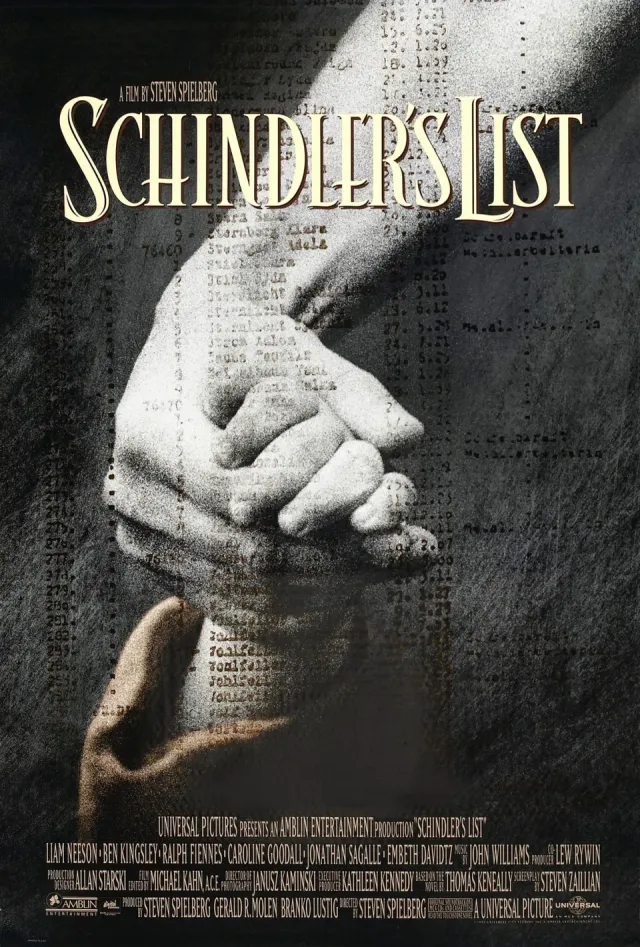
An opportunist's factory operation becomes a rescue effort as escalating persecution turns employment, paperwork and money into fragile instruments of survival.
Why this matches +
Pair notes distinguish story, tone and intensity.
An adjacent discovery: a related idea with a different viewing experience.
Genres: Drama / Biography
Shared film traits
Based on recorded story, mood and style. Your preferences can change the order.
War and civilian life
What changes A businessman’s effort to protect Jewish workers during the Holocaust is a longer rescue drama rather than an assassination thriller.
A businessman joins the Nazi occupation economy in Kraków intending to profit from factories staffed by exploited Jewish workers. His dependence on a Jewish accountant brings practical contact with lives that the regime treats as disposable. As ghetto clearance and camp violence expose the machinery of extermination, his priorities change, and commercial access becomes a precarious means of protecting workers from deportation and death.
A boy seeking to join the resistance is pulled into civilian extermination and the devastation of occupied Belarus, where each encounter removes another layer of childhood expectation. Flyora's changing face registers damage more than a conventional victory arc.
Why this matches +
Pair notes distinguish story, tone and intensity.
An adjacent discovery: a related idea with a different viewing experience.
Genres: War / Drama
Shared film traits
Based on recorded story, mood and style. Your preferences can change the order.
War and civilian life
What changes A Belarusian teenager’s traumatic, experiential odyssey is far more harrowing and less focused on planning a single operation.
Teenager Flyora joins partisans in Nazi-occupied Belarus, expecting resistance to be a path into action. Instead, the film follows a child through the destruction of villages and the murder of civilians, making atrocity a lived sensory experience rather than an abstract lesson about war. His face, sound and shifting perception carry the cost of witnessing; the historical specificity of occupation and extermination should not be flattened into a claim that every conflict is equivalent. This is an exceptionally intense film, not a conventional battlefield adventure. The film's closing newsreel montage runs backward, refusing a comforting return to innocence.
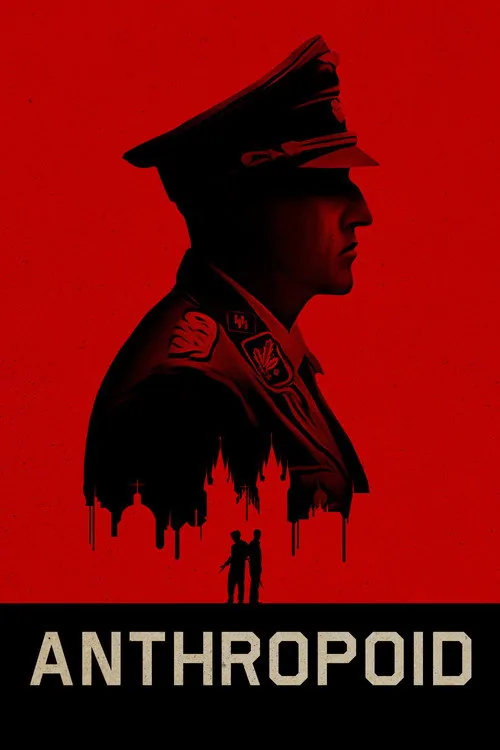
In 1941, Czechoslovak soldiers Jozef Gabčík and Jan Kubiš parachute into occupied Bohemia to join the resistance and prepare the assassination of Nazi official Reinhard Heydrich. They find shelter and support among civilians in Prague, but carrying out the mission could bring brutal retaliation against the people protecting them. Sean Ellis's war drama follows the operatives through planning, uncertainty, and the aftermath of the attack, focusing on the human cost of resistance under occupation.
What drives the story
Two Czechoslovak agents organize an assassination mission against Heydrich while hiding among a threatened resistance network.
The people at its centre
Gabčík and Kubiš depend on local helpers whose loyalty and fear shape how far the operation can proceed.
What it feels like
A restrained war film moves from clandestine planning to a prolonged and costly final stand.
Worth knowing
It focuses on Operation Anthropoid and its immediate resistance network, rather than depicting the whole European war.
resistance and sacrificeoccupation and complicityduty under fear