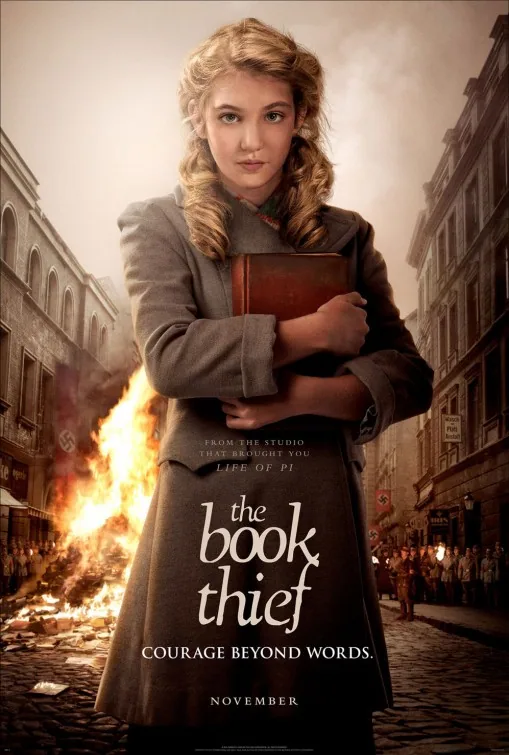
Reading becomes Liesel's way to make sense of a political world that intrudes into her home; hiding Max makes language and silence matters of safety.
Why this matches +
Selected for the central appeal: Two boys form a friendship at an occupied French boarding school where one is secretly sheltered from Nazi persecution.
Genres: Drama / War
Shared film traits
Based on recorded story, mood and style. Your preferences can change the order.
Coming of age · War and civilian life
What changes A young person's wartime home shelters a Jewish person while friendship develops under Nazi rule; a German family rather than a French boarding school.
In Nazi Germany, young Liesel Meminger is sent to live with foster parents Hans and Rosa Hubermann. Hans teaches her to read after she takes a book at her brother's funeral, and she shares her new love of words with her friend Rudy. The Hubermanns later hide Max, a Jewish man whose family once helped Hans. As Liesel and Max build a friendship through stories, the danger of discovery shapes daily life in their home. The film is narrated by Death and follows the family through wartime loss toward a reunion after the war.
Marion conceals her husband while keeping a theater functioning under German occupation.
Why this matches +
These offer a related experience with a meaningful difference in story, tone, or presentation.
An adjacent discovery: a related idea with a different viewing experience.
Genres: Drama / War
Shared film traits
Based on recorded story, mood and style. Your preferences can change the order.
War and civilian life
What changes People shelter a Jewish loved one while maintaining a public institution in occupied France; an adult theater company.
In occupied Paris, actress and theater director Marion Steiner keeps her theater running while secretly sheltering her Jewish husband Lucas in the building's cellar. She presents herself publicly as the company's sole leader, even as a new actor and the German occupation reshape the troupe's daily life. Rehearsals and performances become a fragile cover for survival, forcing Marion to navigate censorship, collaboration, and the emotional strain of living under constant threat.
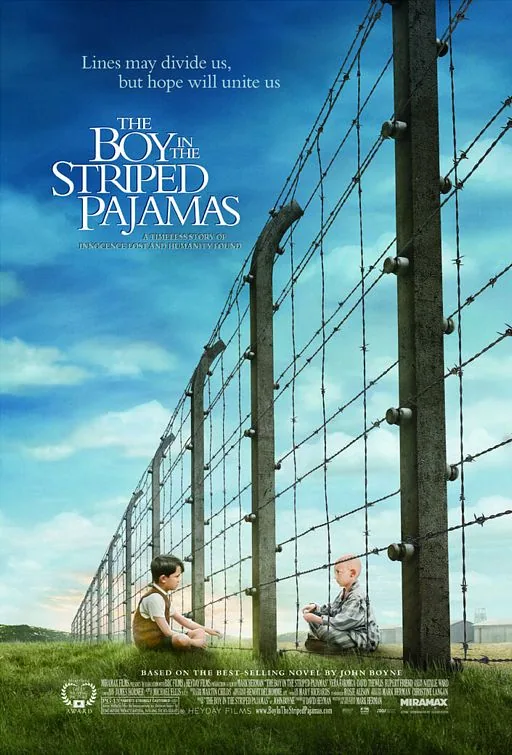
The boys' friendship is framed through Bruno's incomplete understanding, but the film's final search turns that limited point of view into an allegory of mass murder.
Why this matches +
These offer a related experience with a meaningful difference in story, tone, or presentation.
An adjacent discovery: a related idea with a different viewing experience.
Genres: Drama
Shared film traits
Based on recorded story, mood and style. Your preferences can change the order.
War and civilian life
What changes A child's friendship crosses a terrifying wartime divide and reveals Nazi persecution; a concentration-camp fable with a more melodramatic approach.
Eight-year-old Bruno moves with his family to the countryside when his father, an SS officer, takes command of a nearby concentration camp. Believing the prisoners’ uniforms mark a farm, Bruno explores the area and befriends Shmuel, a Jewish boy on the other side of the fence. Their conversations continue as Bruno’s sister absorbs Nazi ideology and his mother begins to understand what the camp is. When Shmuel’s father disappears, Bruno enters the camp in disguise to help search for him, with devastating consequences. The film presents this as a fable through a child’s limited understanding, but Holocaust educators have warned that its implausible premise can leave viewers with misleading ideas about camp life and the knowledge of ordinary Germans. It should not be used as a representative historical account.
A romantic comic courtship gives way to a father's sustained attempt to translate coercive, lethal conditions into rules his child can emotionally survive.
Why this matches +
These offer a related experience with a meaningful difference in story, tone, or presentation.
An adjacent discovery: a related idea with a different viewing experience.
Genres: Drama / Comedy
Shared film traits
Based on recorded story, mood and style. Your preferences can change the order.
War and civilian life · Survival
What changes A parent protects a child's sense of safety amid Nazi persecution; an Italian tragicomedy rather than a restrained school story.
A playful Italian waiter courts a schoolteacher by treating everyday obstacles as occasions for invention. Years later, persecution and deportation transform the meaning of his improvisations when he tries to shelter their young son from understanding the concentration camp around them. His invented game becomes an act of parental care under conditions it cannot control, holding a child's limited perspective beside the audience's knowledge of the danger.
Each attempt Antoine makes to escape school or home brings a stronger institutional response, until running toward the sea becomes the only freedom he can claim.
Why this matches +
These offer a related experience with a meaningful difference in story, tone, or presentation.
An adjacent discovery: a related idea with a different viewing experience.
Genres: Drama / Coming-of-age
Shared film traits
Based on recorded story, mood and style. Your preferences can change the order.
Coming of age
What changes A French boy's school life reveals adult failures through an intimate child's perspective; peacetime coming-of-age rather than occupation.
Antoine Doinel grows up in Paris feeling unwanted at home and misunderstood at school. Small acts of defiance, including truancy and a failed attempt to sell a stolen typewriter, draw him deeper into conflict with the adults who supervise him. His parents send him to a youth observation center, where a rare interview lets him speak about his life without interruption. Antoine escapes and runs toward the sea he has never seen, ending the film alone at the shoreline. The story follows a child's search for space and recognition rather than a neat reform narrative.
At a Catholic boarding school in occupied France, Julien notices that his new classmate Jean Bonnet is guarded and treated differently by some of the adults. The boys gradually become friends through lessons, meals, and ordinary school rivalries, while Julien discovers that Jean is Jewish and being hidden by the headmaster. A routine school visit by German authorities abruptly puts the fragile arrangement at risk and forces Julien to reckon with what he has witnessed.
What drives the story
Julien befriends Jean without understanding why the school is hiding him until the occupation intrudes directly.
The people at its centre
The boys' ordinary curiosity and rivalry slowly become a bond, while adults' protective choices carry enormous danger.
What it feels like
The film observes daily school life closely, allowing the final rupture to emerge from small details.
Worth knowing
Its wartime story is told through a child's limited understanding, not through a broad military campaign.