Reading becomes Liesel's way to make sense of a political world that intrudes into her home; hiding Max makes language and silence matters of safety.
Why this matches +
Selected for the central appeal: Wartime dramas seen through children confronting persecution, friendship and limited understanding.
Genres: Drama / War
Shared film traits
Based on recorded story, mood and style. Your preferences can change the order.
War and civilian life
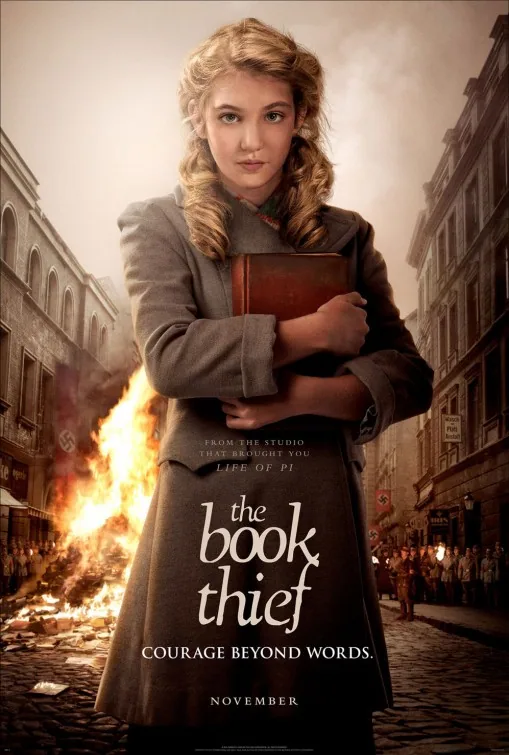
What changes The Book Thief follows a child in Nazi Germany whose relationships expose her to persecution and loss.
In Nazi Germany, young Liesel Meminger is sent to live with foster parents Hans and Rosa Hubermann. Hans teaches her to read after she takes a book at her brother's funeral, and she shares her new love of words with her friend Rudy. The Hubermanns later hide Max, a Jewish man whose family once helped Hans. As Liesel and Max build a friendship through stories, the danger of discovery shapes daily life in their home. The film is narrated by Death and follows the family through wartime loss toward a reunion after the war.
An indoctrinated child's secret encounter with a persecuted teenager gradually undermines the ideology through which he interprets his world.
Why this matches +
Selected for the central appeal: Wartime dramas seen through children confronting persecution, friendship and limited understanding.
Genres: Drama / Comedy
Shared film traits
Based on recorded story, mood and style. Your preferences can change the order.
War and civilian life
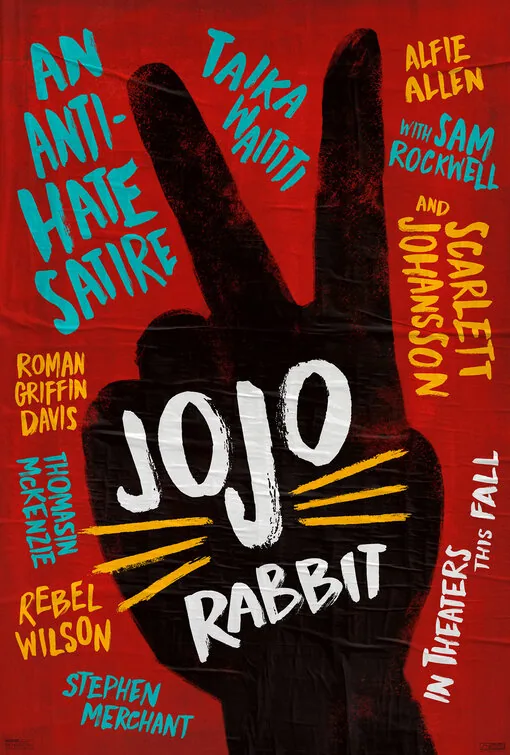
What changes Jojo Rabbit follows a child in Nazi Germany whose encounter with a persecuted girl challenges his beliefs.
A boy in wartime Germany measures himself against the Nazi ideals supplied by his youth group and an imaginary version of Hitler. Discovering that his mother is hiding a Jewish teenager makes those beliefs difficult to reconcile with an actual person living nearby. Their uneasy conversations unfold as the war approaches home, turning a childish search for acceptance into a painful confrontation with propaganda, courage and loss.
A traumatized child insists on continuing reconnaissance while adult attempts to protect him collide with his determination to remain inside the conflict that destroyed his family.
Why this matches +
These offer a related experience with a meaningful difference in story, tone, or presentation.
An adjacent discovery: a related idea with a different viewing experience.
Genres: War / Drama
Shared film traits
Based on recorded story, mood and style. Your preferences can change the order.
War and civilian life
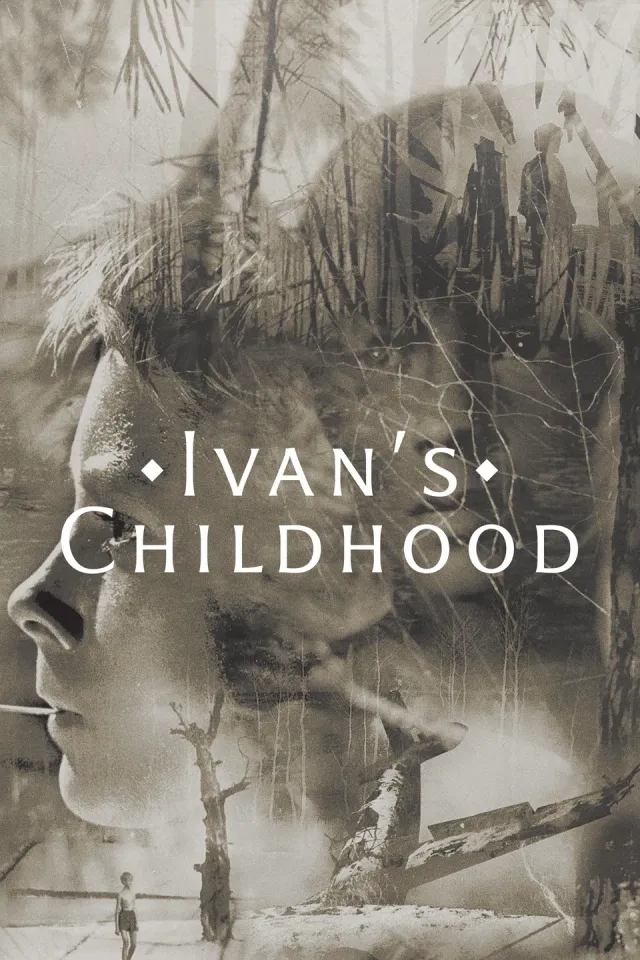
What changes Ivan's Childhood follows a child whose life and perceptions have been transformed by wartime violence.
A boy whose family has been destroyed by war crosses dangerous territory to report intelligence to Soviet soldiers. Officers attempt to redirect him toward safety, but revenge and the disappearance of ordinary childhood make another life difficult for him to imagine. Dreams interrupt the military present with tactile images of affection and freedom. The film places a child's usefulness to war beside what that usefulness cannot restore, refusing to let competence in danger stand as proof that his damaged world has become acceptable.
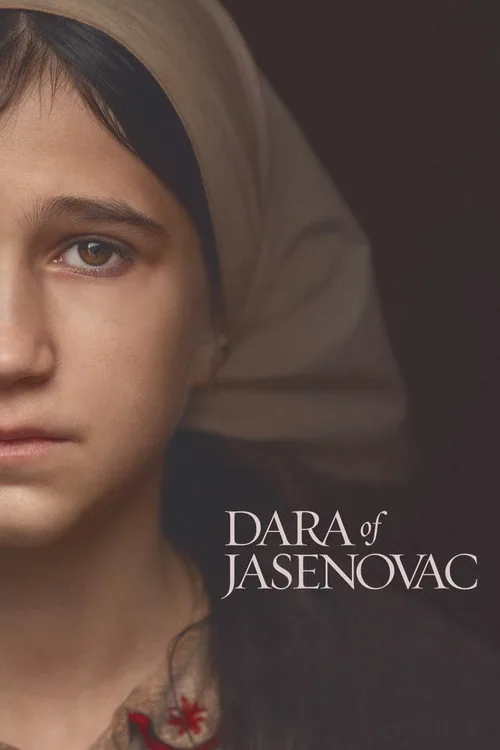
Dara’s efforts to stay with and protect her younger brother unfold under the camp system’s routine threat of separation and violence.
Why this matches +
These offer a related experience with a meaningful difference in story, tone, or presentation.
An adjacent discovery: a related idea with a different viewing experience.
Genres: Drama / History
Shared film traits
Based on recorded story, mood and style. Your preferences can change the order.
War and civilian life
What changes Dara of Jasenovac follows a child facing persecution and survival in a wartime concentration camp.
During the Second World War, a young girl named Dara and her family are sent to the Jasenovac concentration camp, where the Ustaše regime imprisoned and murdered Serbs, Jews, Roma, and political opponents. The story follows Dara’s attempts to protect her younger brother and preserve family bonds amid forced separation and extreme violence. Based on survivor testimonies, the Serbian historical drama places a child’s point of view within the reality of mass atrocity. It contains explicit material about genocide, camp violence, and children in danger.
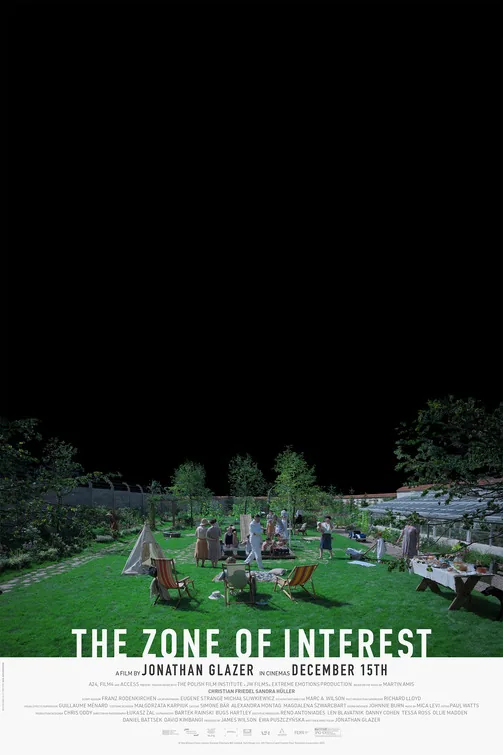
A family’s effort to make an ordinary home beside Auschwitz depends on refusing the human reality that their daily comfort encloses.
Why this matches +
These offer a related experience with a meaningful difference in story, tone, or presentation.
An adjacent discovery: a related idea with a different viewing experience.
Genres: Drama / Historical
Shared film traits
Based on recorded story, mood and style. Your preferences can change the order.
War and civilian life
What changes The Zone of Interest observes a commandant's family living beside a concentration camp, with a very different and more detached perspective.
Rudolf Höss, commandant of Auschwitz, and his wife Hedwig try to build a comfortable family life in a home and garden directly beside the camp. Their children play, visitors arrive and domestic routines continue, while the noises and smoke from the camp remain present beyond the wall. Rudolf’s work and Hedwig’s attachment to the household shape the family’s decisions, including arguments over status and relocation. The film does not follow prisoners through the camp as a conventional war story; it makes the surrounding domestic normality the frame through which the machinery of genocide is apprehended. Its starkest contrast is between the household’s attention to garden and status and the camp’s audible presence beyond their wall.
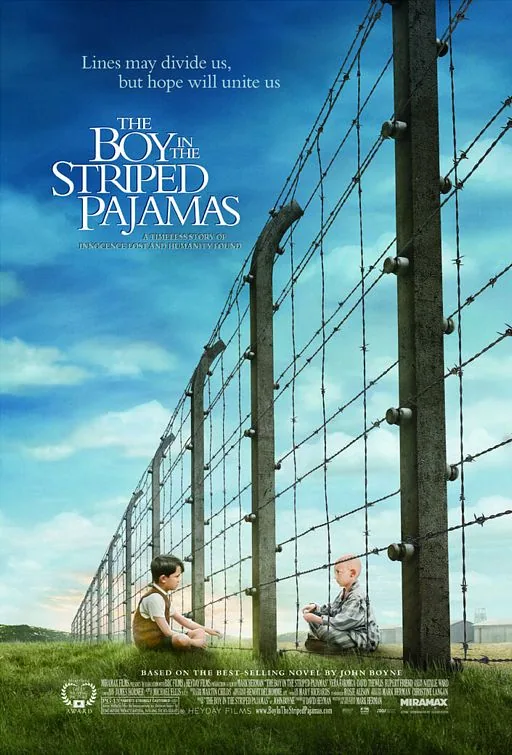
Eight-year-old Bruno moves with his family to the countryside when his father, an SS officer, takes command of a nearby concentration camp. Believing the prisoners’ uniforms mark a farm, Bruno explores the area and befriends Shmuel, a Jewish boy on the other side of the fence. Their conversations continue as Bruno’s sister absorbs Nazi ideology and his mother begins to understand what the camp is. When Shmuel’s father disappears, Bruno enters the camp in disguise to help search for him, with devastating consequences. The film presents this as a fable through a child’s limited understanding, but Holocaust educators have warned that its implausible premise can leave viewers with misleading ideas about camp life and the knowledge of ordinary Germans. It should not be used as a representative historical account.
What drives the story
The boys' friendship is framed through Bruno's incomplete understanding, but the film's final search turns that limited point of view into an allegory of mass murder.
The people at its centre
Bruno's curiosity is set against Shmuel's constrained life; their friendship offers intimacy while the unequal power and danger around the fence remain immense.
What it feels like
A fable-like child perspective and restrained domestic scenes lead toward tragedy, but the film’s historical setting is not a reliable guide to camp conditions. Holocaust-education research has found that young viewers may regard its invented story as realistic and draw misleading conclusions even when they know it is fiction.
Worth knowing
Treat it as a fictional Holocaust allegory, not a historically representative account of Auschwitz, camp life or German public knowledge. Its deliberately simplified setup and tragic ending need careful contextual framing beside survivor testimony and historical sources.
InnocenceMoral blindnessFriendship
Mood
Somber · Uneasy · Tragic
Pacing
Fable-like progression · Inevitable tragedy
Visual style
Restrained period drama · Child-height perspective