A filmmaker’s reunion with an apparent childhood friend opens a layered mystery of Catholic-school abuse, desire, impersonation and murder, told through memories, a written story and film-within-film.
What should feel similar?
Find your next favourite
4 films · Closest overall matches
Hide films you’ve seen or don’t want. Saved on this device.
No matches for this combination yet.
Try another option or reset your choices to see more films.
A son's death sends Manuela back to Barcelona, where her search for his other parent becomes a new set of caregiving commitments. The plot transforms a private bereavement into a wider, improvised family.
Why this matches +
Pair notes distinguish story, setting and tone.
An adjacent discovery: a related idea with a different viewing experience.
Genres: Drama
Shared film traits
Based on recorded story, mood and style. Your preferences can change the order.
Both directed by Pedro Almodóvar.
What changes A mother seeks her son’s father after his death rather than a filmmaker unraveling past abuse and impersonation.
After her teenage son Esteban is killed while trying to get an actress's autograph, nurse Manuela returns to Barcelona to find his other parent and face a past she had left behind. She becomes involved with actresses, friends and people facing illness or abandonment, and care begins to move beyond the conventional family she thought she had lost. Almodóvar folds theatrical performance into intimate grief, linking maternal love to chosen kinship without presenting those connections as uncomplicated. The film's emotional center is not the search alone, but the network Manuela helps sustain.
Creative blockage and bodily pain bring Salvador back to earlier relationships, while heroin opens memories rather than serving as a simple cure; memory and authorship remain unstable throughout.
Why this matches +
Pair notes distinguish story, setting and tone.
An adjacent discovery: a related idea with a different viewing experience.
Genres: Drama / Comedy
Shared film traits
Based on recorded story, mood and style. Your preferences can change the order.
Both directed by Pedro Almodóvar.
What changes A reflective semi-autobiographical drama about illness and reconciliation is gentler and lacks the noir blackmail and abuse mystery.
Aging film director Salvador Mallo lives with chronic pain and creative paralysis, then attends a screening of one of his old films and reconnects with actor Alberto. Their reunion brings back memories of childhood in Paterna, his mother’s sacrifices and a past relationship with Federico. When Salvador tries heroin, the drug opens a path into memories he has avoided; meanwhile, Alberto stages a monologue from one of Salvador’s texts. The film moves between present-day illness, remembered youth and fiction, eventually revealing that some apparent memories belong to a film Salvador is making.
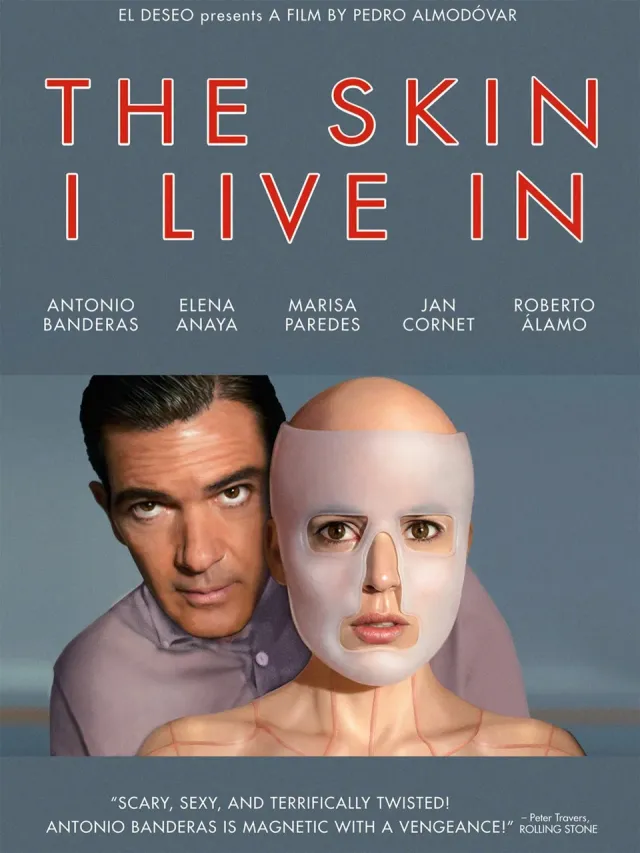
A surgeon's medical experiment is revealed as an instrument of private vengeance, with reordered memories changing the meaning of the captive patient's identity.
Why this matches +
Pair notes distinguish story, setting and tone.
An adjacent discovery: a related idea with a different viewing experience.
Genres: Drama / Thriller
Shared film traits
Based on recorded story, mood and style. Your preferences can change the order.
Investigation
What changes A surgeon’s captivity and body-altering revenge form a more gothic horror thriller than the school memories and film-within-film.
Plastic surgeon Robert Ledgard presents a burn-resistant synthetic skin while keeping Vera under constant surveillance in his secluded home. His account of Vera as a willing test subject is gradually undermined by flashbacks that reveal a history of revenge, grief and coerced bodily transformation. Marilia, who has served Robert for years, knows more about the household's violence than she admits, while a visitor from outside destabilizes the doctor's control. As the chronology shifts, the film asks viewers to revise who Vera was before confinement and what Robert's experiment has actually done. The medical premise becomes inseparable from captivity, identity and the power to impose a body on another person.
Two childhood teammates follow different adult paths until a reunion reveals the shared origin of their memories.
Why this matches +
Pair notes distinguish story, setting and tone.
An adjacent discovery: a related idea with a different viewing experience.
Genres: Drama / Coming-of-age
Shared film traits
Based on recorded story, mood and style. Your preferences can change the order.
What changes Its American drama follows two survivors in a more naturalistic, less self-reflexive structure without the same film-production mystery.
Neil McCormick and Brian Lackey were Little League teammates who experienced abuse by their coach as children, but they remember and respond to the events differently. As young adults, Neil pursues older men while Brian interprets gaps in memory through fantasies of alien abduction. Their separate lives eventually bring them back together, where shared recollection changes Brian’s understanding of his past. Gregg Araki’s adaptation of Scott Heim’s novel is a difficult coming-of-age drama about trauma, memory, and the distinct ways survivors seek explanation.
Filmmaker Enrique receives a visit from someone claiming to be his former schoolmate Ignacio, who offers a story drawn from their time under a predatory priest. Enrique considers turning the account into a film, and the process opens competing layers of childhood memory, adult identity and performance. The visitor's claims change what Enrique thinks he knows, but a revealed deception does not make the abuse described by the story irrelevant. Almodóvar's saturated melodrama becomes a noir-like inquiry into authorship and desire, asking how a filmmaker can use another person's past without owning its truth.
What drives the story
A film proposal becomes an investigation into the visitor's identity and the authorship of the offered story. The nested adaptation means that remembered abuse, present deception and fictionalized scenes must be kept distinct.
The people at its centre
Enrique's attraction and professional curiosity make him vulnerable to a performer's self-invention, while the school abuse remains a source of lasting power and harm. Exposure of a lie does not restore a neutral account.
What it feels like
Saturated color and film-within-film scenes turn testimony into staged material, shifting the movie toward noir without settling the border between emotional truth and factual memory.
Worth knowing
Compare stories where abuse is reworked through impersonation and filmmaking. Do not treat every embedded scene as autobiography or assume that exposing the messenger's deception cancels the original institutional violence.