A family’s silence becomes a child’s confusing everyday reality, making political punishment legible through absences and careful adult behavior.
Why this matches +
Selected for the central appeal: Historical family dramas in which political repression intrudes on an apparently secure household.
Genres: Drama / Comedy
Shared film traits
Based on recorded story, mood and style. Your preferences can change the order.
What changes When Father Was Away on Business follows a family whose domestic life is disrupted by political imprisonment.
In postwar Yugoslavia, young Malik experiences family life through the shifting explanations adults provide when his father Meša is sent away to a labor camp. The official account of the absence is not the same as the truth, and the family must adapt to a political system that reaches into private relationships. Malik’s childhood games and first attachments continue alongside a growing awareness that adult loyalties can be dangerous. Emir Kusturica’s film frames political pressure through an observant child’s partial understanding rather than through a conventional account of state institutions. The camera stays close to Malik, so political danger arrives as rumors, separations and changed routines. Adults guard their language because a child's innocence cannot shield the family.
Bereavement transfers the children into an authoritarian household, where legal and familial vulnerability makes rescue a collective act rather than a simple triumph of imagination. The father’s death changes household authority, making legal dependency part of the children’s danger.
Why this matches +
These offer a related experience with a meaningful difference in story, tone, or presentation.
An adjacent discovery: a related idea with a different viewing experience.
Genres: Drama
Shared film traits
Based on recorded story, mood and style. Your preferences can change the order.
What changes Fanny and Alexander follows a family gathering whose warmth gives way to coercive authority and painful secrets.
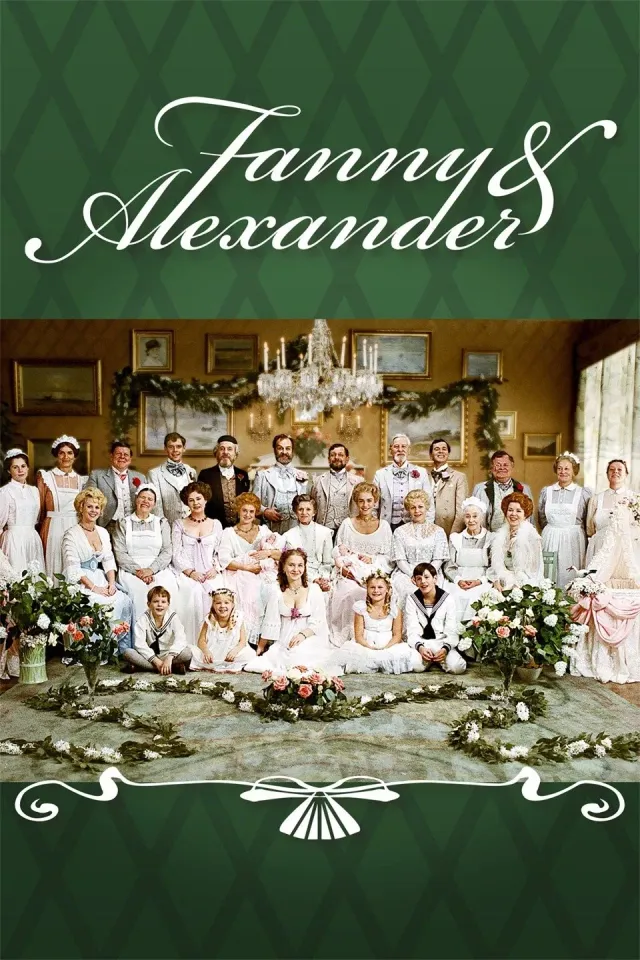
After their father dies, Fanny and Alexander move from the Ekdahl family’s theatrical, affectionate and imperfect home into the bishop’s rigid household. Alexander’s vivid imagination contests an authority that treats obedience as proof of virtue, while their mother’s marriage and the children’s vulnerability limit the protection she can provide. Their escape depends on an extended family whose earlier warmth should not be mistaken for innocence. Because Bergman released both a shorter theatrical version and a much longer television version, the balance between family life, punishment and uncanny perception changes with the cut being watched.
The legal seizure is the first visible mechanism of dispossession, but each appeal moves through institutions linked to the same local authority. The film asks what a right means when the process itself offers no neutral forum.
Why this matches +
These offer a related experience with a meaningful difference in story, tone, or presentation.
An adjacent discovery: a related idea with a different viewing experience.
Genres: Drama / Crime
Shared film traits
Based on recorded story, mood and style. Your preferences can change the order.
What changes Leviathan examines a family's vulnerability to a corrupt state despite apparent legal protections.
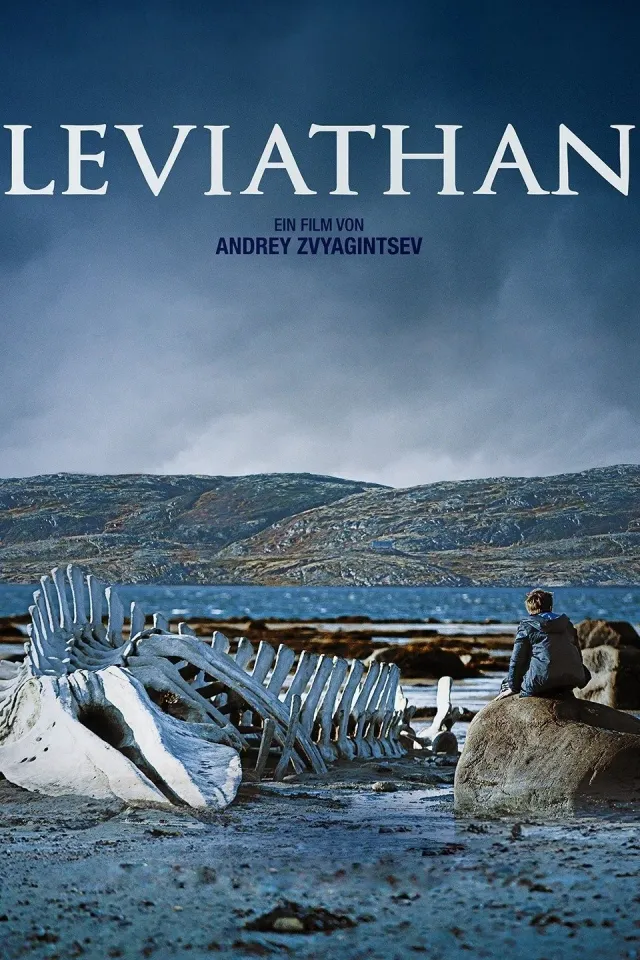
In a northern Russian town, mechanic Kolya faces the loss of his home after the mayor uses public power to seize his property. A lawyer friend arrives to challenge the case, but private betrayal, police pressure and the cost of resisting make the legal dispute increasingly personal. The film draws on the biblical story of Job and places ordinary family life beside a landscape and political system that seem indifferent to individual claims. Yet its bleakness does not provide a simple explanation of who is guilty or whether resistance was possible. The property case, marriage breakdown and final public narrative remain related without becoming one moral equation. Zvyagintsev’s drama is deliberately opaque about culpability while sharply showing how institutions can decide which account becomes official.
The invasion of Russia intersects with years of changing fortunes among several families, linking intimate decisions to national catastrophe.
Why this matches +
These offer a related experience with a meaningful difference in story, tone, or presentation.
An adjacent discovery: a related idea with a different viewing experience.
Genres: Drama / Romance
Shared film traits
Based on recorded story, mood and style. Your preferences can change the order.
What changes War and Peace connects intimate family life and personal loyalties to sweeping political upheaval.
Across the Napoleonic era, Pierre Bezukhov, Prince Andrei Bolkonsky and Natasha Rostova search for purpose while Russia’s aristocratic society is repeatedly interrupted by war. Private life unfolds through balls, marriages, family conflict and shifting loyalties, but Napoleon’s invasion steadily alters what safety and honor mean. Bondarchuk’s adaptation follows several families across a long historical span, allowing characters who once imagined history from a distance to encounter its consequences directly. The film is often distributed in four parts and is unusually long, so its large battle scenes sit alongside intimate questions of love, ambition, grief and social expectation. It adapts Tolstoy’s novel rather than reducing it to a single hero’s campaign.
Stalin’s death leaves control of the police, party and public mourning contested. The film compresses months of political maneuvering into a farcical sprint, so its reversals serve comic timing rather than a reliable event-by-event chronology.
Why this matches +
These offer a related experience with a meaningful difference in story, tone, or presentation.
An adjacent discovery: a related idea with a different viewing experience.
Genres: Drama / Comedy
Shared film traits
Based on recorded story, mood and style. Your preferences can change the order.
What changes The Death of Stalin portrays political figures discovering how quickly status becomes dangerous under a repressive system.
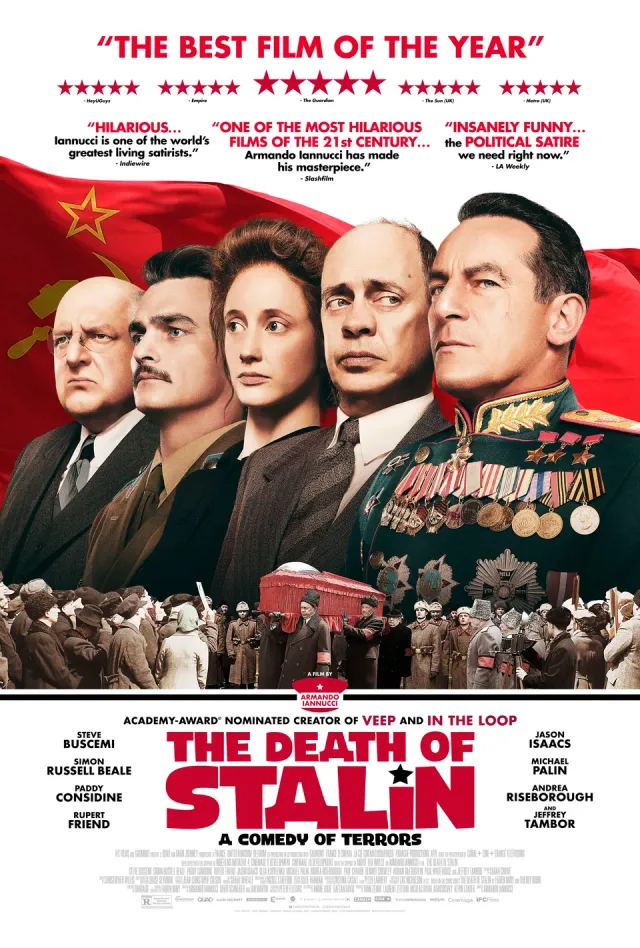
Joseph Stalin’s death in 1953 opens a struggle among the Soviet leaders who had served his regime. Lavrentiy Beria uses the security apparatus, Nikita Khrushchev builds support among colleagues, and Georgy Malenkov is named head of government as officials compete to control the party and state. Public mourning, arrests and displays of loyalty reveal a system built on fear. The film compresses events that unfolded over months into a brisk ensemble farce, inventing and rearranging scenes for comic effect. It uses historical figures to satirize the absurdity and brutality of authoritarian power, but its rapid succession plot is not a literal chronology of the succession crisis.
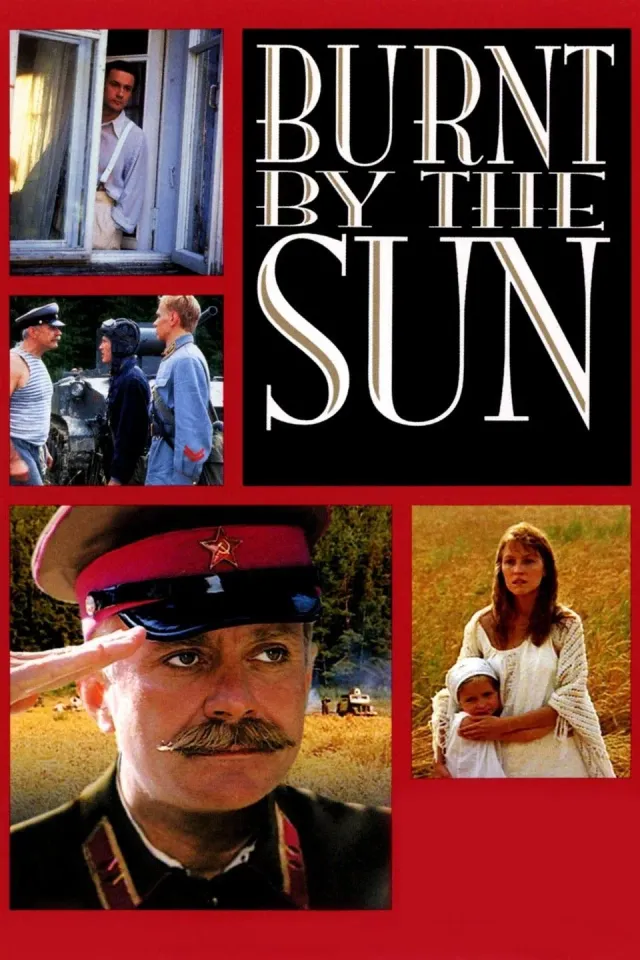
Decorated Soviet commander Kotov spends a summer with his wife, young daughter and her eccentric family, enjoying a domestic world that seems secure in his revolutionary prestige. Then Mitya, a man from Maroussia's past, arrives with a private history that conceals an official purpose. Affectionate games and political familiarity gradually reveal how little protection Kotov's status provides against Stalin's state. The film's symbolism and invented domestic encounters shape its drama; they should not be mistaken for a comprehensive documentary account of the purges. The family's lighthearted day becomes more ominous as Mitya's purpose emerges.
What drives the story
Mitya's return masks the state's coercive reach, turning one apparently protected household into the site of an increasingly irreversible political intrusion. A familiar visit lets the danger feel personal before it becomes explicit.
The people at its centre
Kotov's public confidence, Mitya's unresolved history and Maroussia's divided past place affectionate domestic life beside radically unequal knowledge and power. Their shared history does not give Maroussia control over Mitya's mission.
What it feels like
Sunlit leisure, eccentric comedy and symbolic interruptions let political danger approach through domestic intimacy rather than a conventional spy plot. Warmth sharpens the contrast with approaching state violence.
Worth knowing
Match on state violence invading an apparently secure home and on compromised political memory. The film's symbolic fiction cannot stand for every victim or mechanism of the Great Purge.
PowerComplicityFamily
Mood
Warm · Foreboding · Tragic
Pacing
Slow burn
Visual style
Sunlit pastoral imagery · Symbolic interruption
Storytelling
Single-day domestic intrusion · Concealed official purpose · Collapsed political protection