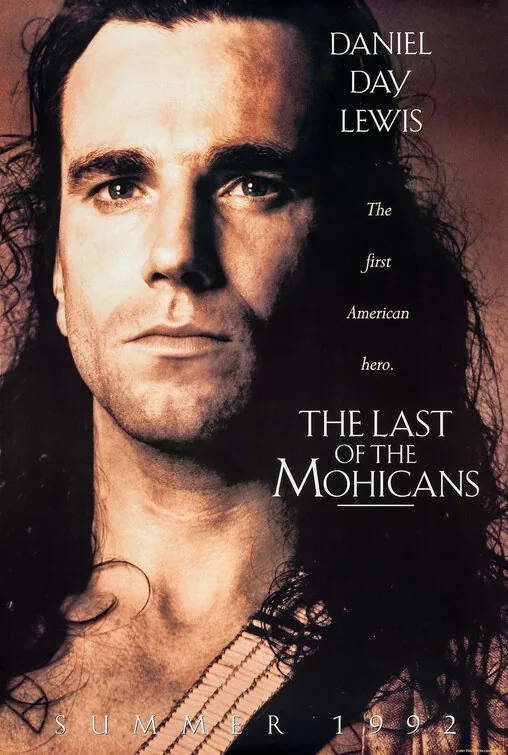
The escort mission becomes a rescue when the guide’s betrayal exposes the women to danger; the military campaign gives the pursuit its wider stakes.
Why this matches +
Selected for the central appeal: Wartime romances about separation, difficult journeys and survival on the home front.
Genres: Drama / Romance
Shared film traits
Based on recorded story, mood and style. Your preferences can change the order.
War and civilian life · Escape and pursuit
What changes The Last of the Mohicans combines a dangerous wartime journey with lovers struggling to reunite.
During the French and Indian War, Hawkeye, his adopted Mohican father Chingachgook and Chingachgook’s son Uncas help escort Cora and Alice Munro through contested territory toward Fort William Henry. Their guide Magua betrays the party, drawing the travelers into a struggle shaped by shifting alliances among British, French and Indigenous forces. Hawkeye and Cora grow close as the group attempts to survive attacks and reach the fort. After its surrender, the daughters face a new threat and the Mohican family pursues them. The film builds toward a final confrontation about kinship, loss and who can claim a future in the land.
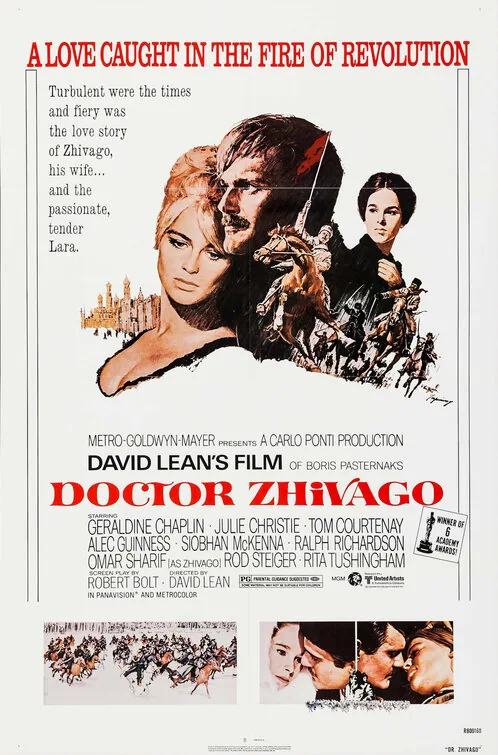
Successive political upheavals interrupt a doctor's competing intimate commitments, leaving memory and artistic recognition to preserve connections that geography and state power have broken.
Why this matches +
Selected for the central appeal: Wartime romances about separation, difficult journeys and survival on the home front.
Genres: Drama / Romance
Shared film traits
Based on recorded story, mood and style. Your preferences can change the order.
War and civilian life
What changes Doctor Zhivago follows lovers separated by war and political upheaval across a vast landscape.
A doctor and poet's life becomes entangled with a woman he first encounters amid personal scandal and later meets through wartime medical work. Revolution and civil war repeatedly separate households, redirect travel and make private attachments subject to political suspicion. Their longing continues through choices that expose spouses, children and companions to different costs, while a later search for a lost daughter frames the uncertainty of what can be recovered from the lives history has dispersed. Its frame story turns Yuri and Lara’s private memory into the route through which a vast revolution is recalled.
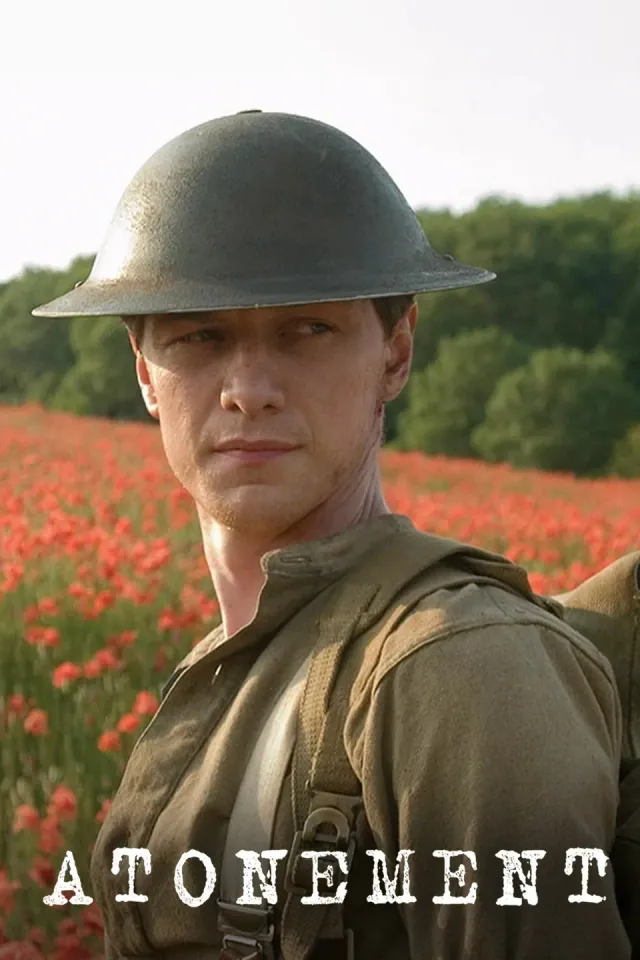
A false accusation produced by limited observation and class assumptions creates a separation that later writing can revisit but cannot simply undo.
Why this matches +
Selected for the central appeal: Wartime romances about separation, difficult journeys and survival on the home front.
Genres: Drama / Romance
Shared film traits
Based on recorded story, mood and style. Your preferences can change the order.
War and civilian life
What changes Atonement follows a couple whose chance of reunion is shaped by war and a damaging past accusation.
A young girl in an affluent English household misreads encounters between her older sister and the housekeeper's son, then gives testimony that converts private imagination into devastating institutional consequences. The separated couple's attempt to retain a future unfolds against prison, military service and wartime nursing. Later acts of narration revisit what can be known and repaired, exposing a gap between the consolations a story offers and the irreversible lives on which it depends.
A changing social order exposes a protagonist's capacity for survival while intensifying her habit of treating intimacy and security as resources to be secured.
Why this matches +
These offer a related experience with a meaningful difference in story, tone, or presentation.
An adjacent discovery: a related idea with a different viewing experience.
Genres: Drama / Romance
Shared film traits
Based on recorded story, mood and style. Your preferences can change the order.
War and civilian life
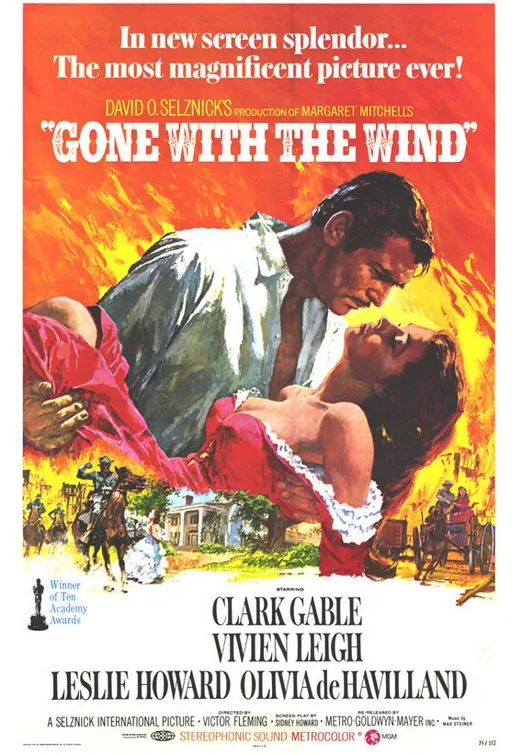
What changes Gone with the Wind follows a woman struggling to survive and rebuild at home during the American Civil War.
A privileged young woman on a Georgia plantation pursues an attachment to a man whose commitments lie elsewhere as the American Civil War destroys the material security of her household. Surviving loss makes property and economic control increasingly urgent, while a second man's attraction offers possibilities she struggles to value beyond immediate need. Her effort to recover a familiar world is presented through a romanticised white Southern viewpoint that leaves the people sustaining that world without equal narrative authority.
A timed demolition makes Jordan’s military objective depend on guerrillas with competing judgments about risk, leaving sacrifice inseparable from the operation’s uncertain value. The bridge deadline compresses strategic uncertainty into a mission whose cost the guerrillas will share.
Why this matches +
These offer a related experience with a meaningful difference in story, tone, or presentation.
An adjacent discovery: a related idea with a different viewing experience.
Genres: War / Drama
Shared film traits
Based on recorded story, mood and style. Your preferences can change the order.
War and civilian life
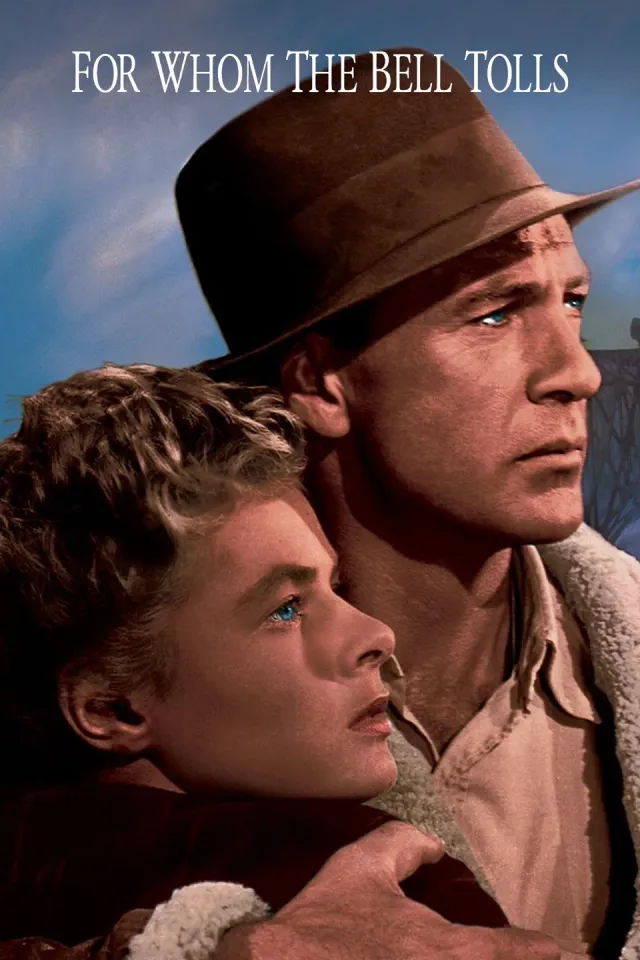
What changes For Whom the Bell Tolls combines wartime danger and a brief romance shadowed by conflict.
American dynamiter Robert Jordan joins Republican guerrillas in the Spanish Civil War and is assigned to destroy a bridge as a military offensive approaches. The mission depends on a divided band whose members carry different loyalties, fears and judgments about when violence is useful. Jordan’s relationship with María offers intimacy after her severe trauma, but romance does not erase the coercive history she carries or the group’s strategic danger. The 1943 film compresses Hemingway’s novel and circulated in multiple lengths, so its balance of political context, ensemble conflict and love story varies across cuts; the catalogue slug’s year is not a reason to misstate the film’s release.
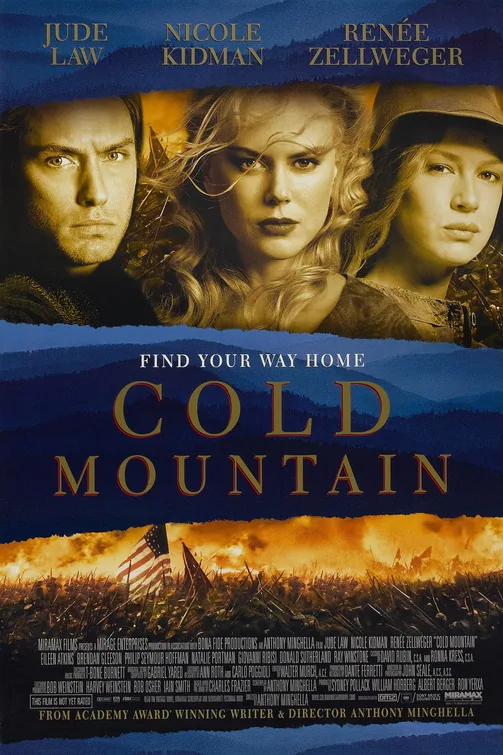
As the American Civil War nears its end, wounded Confederate soldier Inman deserts and tries to walk home to Ada, who has learned to keep her farm alive with Ruby's help. Their parallel journeys bring survival, care and violence into focus, but the film's intimate antiwar romance does not supply an even-handed account of the conflict or fully reckon with slavery's political foundation. Ada's labor is as important to the story as Inman's return. Historical context should remain visible beneath the promise of reunion.
What drives the story
Two separated people struggle toward survival and possible reunion, one through a dangerous homeward journey and the other through practical work on a failing farm.
The people at its centre
Ada's dependence on Ruby develops into shared competence, while Inman's desertion exposes a personal refusal of war without erasing the Confederate cause he served. Ada's dependence changes into collaboration as Ruby's knowledge becomes indispensable.
What it feels like
Lyrical landscapes and episodes of sudden brutality frame a long romantic survival story whose beauty can sit uneasily beside its historical blind spots. Quiet labor and sudden violence alternate across the separated storylines.
Worth knowing
Match on parallel wartime survival and women's practical work, not a complete antiwar history; keep slavery and the Confederacy's political stakes explicit. The love story's beauty must not eclipse who fought to preserve slavery.