A bridge-demolition deadline draws an outsider into a guerrilla group's divided loyalties, with romance and sacrifice shadowing uncertain strategic value.
What should feel similar?
Find your next favourite
9 of 16 films · Closest overall matches
Hide films you’ve seen or don’t want. Saved on this device.
No matches for this combination yet.
Try another option or reset your choices to see more films.
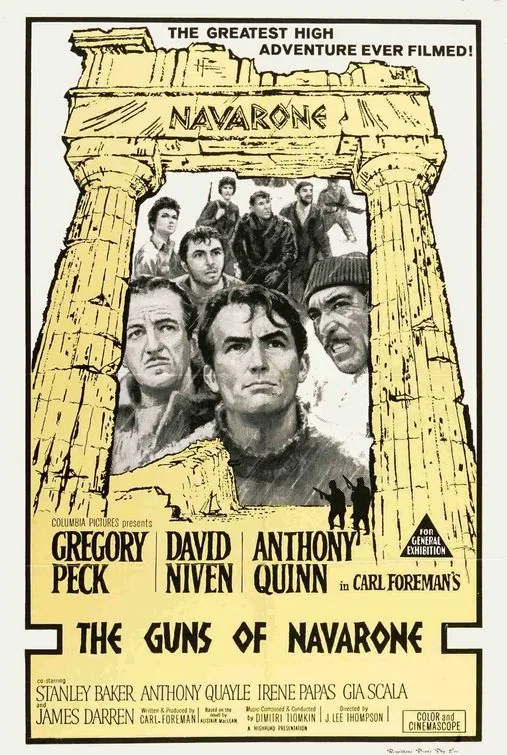
The guns turn a rescue into a timed sabotage mission: the commandos must penetrate the island and destroy the weapons before the fleet approaches.
Why this matches +
These films share important themes, atmosphere or storytelling interests with this selection.
Genres: Drama / Action
Shared film traits
Based on recorded story, mood and style. Your preferences can change the order.
War and civilian life
What changes Its own story: The guns turn a rescue into a timed sabotage mission: the commandos must penetrate the island and destroy the weapons before the fleet approaches.
A British commando team is sent to infiltrate a German-held Greek island whose enormous guns prevent the Royal Navy from rescuing troops trapped on nearby Keros. Captain Keith Mallory, explosives expert John Miller and their companions must cross hostile terrain, survive mistrust within the group and reach the fortress before the rescue window closes. The mission’s practical problem—how to disable a position that air raids cannot reach—organizes the film’s mixture of covert movement, sabotage and wartime suspense. Its characters are fictional, and the island operation is a dramatic wartime adventure rather than a documentary account.
A scarce means of escape gives an emotionally withdrawn man the power to decide between a reopened romance and support for a wider resistance.
Why this matches +
These films share important themes, atmosphere or storytelling interests with this selection.
Genres: Drama / Romance
Shared film traits
Based on recorded story, mood and style. Your preferences can change the order.
War and civilian life
What changes Its own story: A scarce means of escape gives an emotionally withdrawn man the power to decide between a reopened romance and support for a wider resistance.
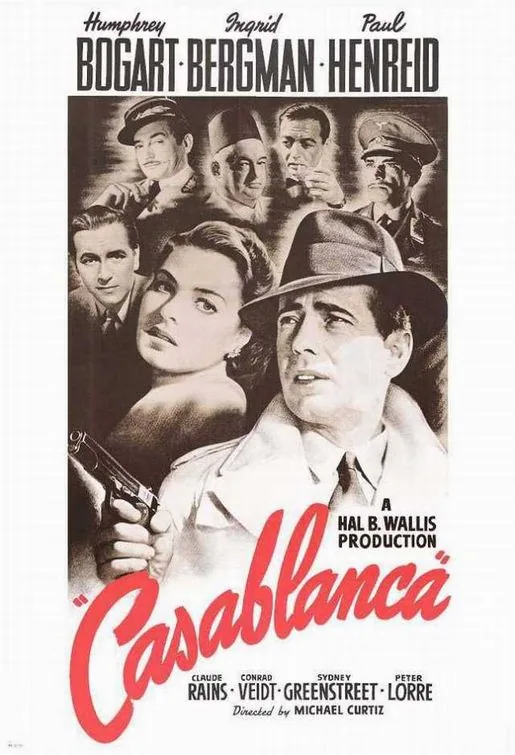
An American expatriate runs a nightclub in a wartime transit city, maintaining public detachment while desperate travellers seek documents and influence to escape occupied Europe. The arrival of a former lover with a resistance leader unsettles that carefully managed neutrality. Control of a possible departure route makes their unresolved past a political choice, requiring him to consider whether the recovery of private happiness can be separated from responsibility beyond himself.
A prisoner's defence of military standards becomes identification with an enemy project that an allied sabotage team is trying to destroy.
Why this matches +
These films share important themes, atmosphere or storytelling interests with this selection.
Genres: Drama / War
Shared film traits
Based on recorded story, mood and style. Your preferences can change the order.
War and civilian life
What changes Its own story: A prisoner's defence of military standards becomes identification with an enemy project that an allied sabotage team is trying to destroy.
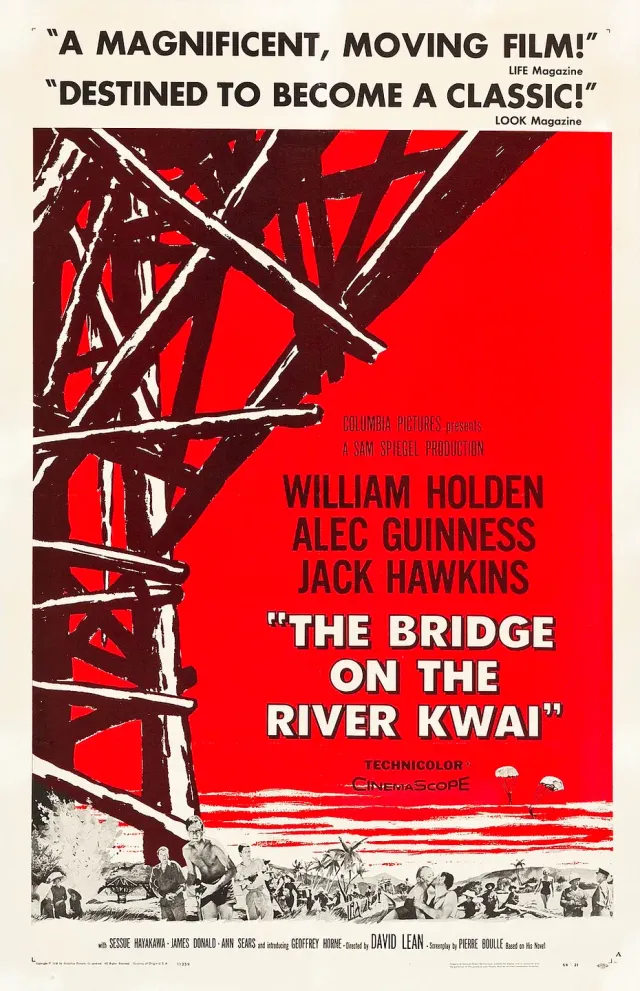
British prisoners in a Japanese camp are ordered to construct a railway bridge serving the enemy's war effort. Their commanding officer first resists the commandant on matters of principle, then begins treating an efficiently built bridge as proof of his men's discipline and dignity. Meanwhile, a separate mission seeks to destroy the same structure, turning professional pride and military duty into forces capable of working against their supposed purpose.
The amnesty bargain is both recruitment and coercion: Reisman needs the prisoners to become a unit before using them in a mission designed around high expected losses.
Why this matches +
These films share important themes, atmosphere or storytelling interests with this selection.
Genres: Drama / Action
Shared film traits
Based on recorded story, mood and style. Your preferences can change the order.
War and civilian life
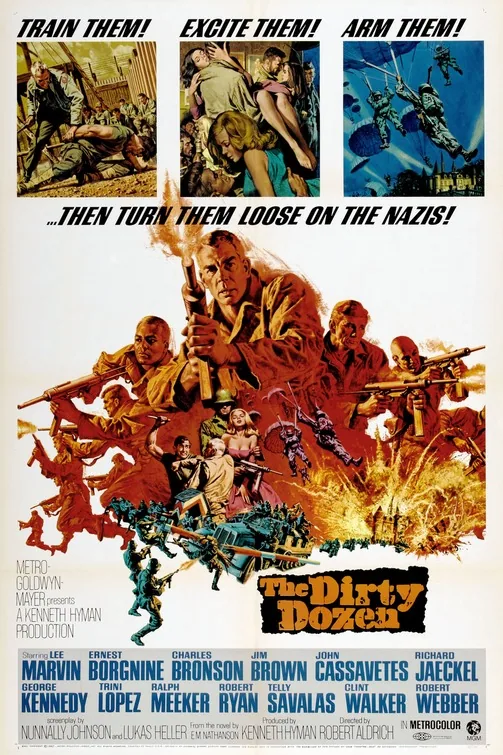
What changes Its own story: The amnesty bargain is both recruitment and coercion: Reisman needs the prisoners to become a unit before using them in a mission designed around high expected losses.
Army major John Reisman is ordered to train twelve military prisoners for a dangerous mission behind German lines before D-Day. The men have been convicted of serious crimes, and the deal is that survivors may receive amnesty. Reisman first has to make a hostile group follow orders, then prepare them to attack a château where German officers are gathered. Their training exposes rivalries and the limits of discipline; during the operation, a change in the target’s circumstances makes the plan more morally fraught than its briefing suggested. The mission depends on teamwork among men who distrust one another, while Reisman weighs the strategic objective against the cost of treating them as expendable weapons.
The three-tunnel plan divides the escape into interdependent jobs requiring secrecy, specialized skill and timing. Hilts’s individual escape attempts contrast with Bartlett’s collective operation, but the film’s American characters are inventions rather than participants in the actual breakout.
Why this matches +
These films share important themes, atmosphere or storytelling interests with this selection.
Genres: Drama / Thriller
Shared film traits
Based on recorded story, mood and style. Your preferences can change the order.
War and civilian life
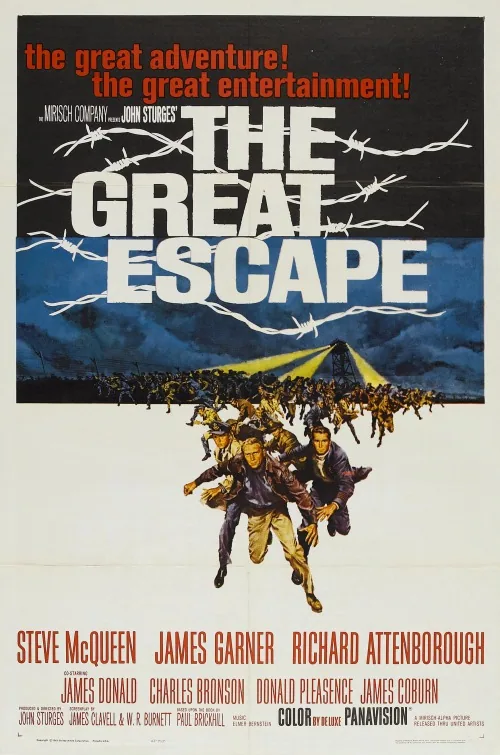
What changes Its own story: The three-tunnel plan divides the escape into interdependent jobs requiring secrecy, specialized skill and timing. Hilts’s individual escape attempts contrast with Bartlett’s collective operation, but the film’s American characters are inventions rather than participants in the actual breakout.
At Stalag Luft III, Allied airmen organize a mass escape through three tunnels, relying on specialist teams to make forged papers, civilian clothes and a hidden route. Hilts repeatedly tries to escape alone while Bartlett coordinates the larger plan. In the real 1944 breakout, 76 prisoners got out, 73 were recaptured and 50 were murdered by the Gestapo. The film preserves the scale and tragic outcome but invents characters such as Steve McQueen’s American Hilts and gives Americans a prominent role; no Americans were in the North Compound when the breakout happened. Its ensemble adventure is highly fictionalized and should not be read as a precise account of who planned or escaped.
The escort mission becomes a rescue when the guide’s betrayal exposes the women to danger; the military campaign gives the pursuit its wider stakes.
Why this matches +
These films share important themes, atmosphere or storytelling interests with this selection.
Genres: Drama / Romance
Shared film traits
Based on recorded story, mood and style. Your preferences can change the order.
War and civilian life
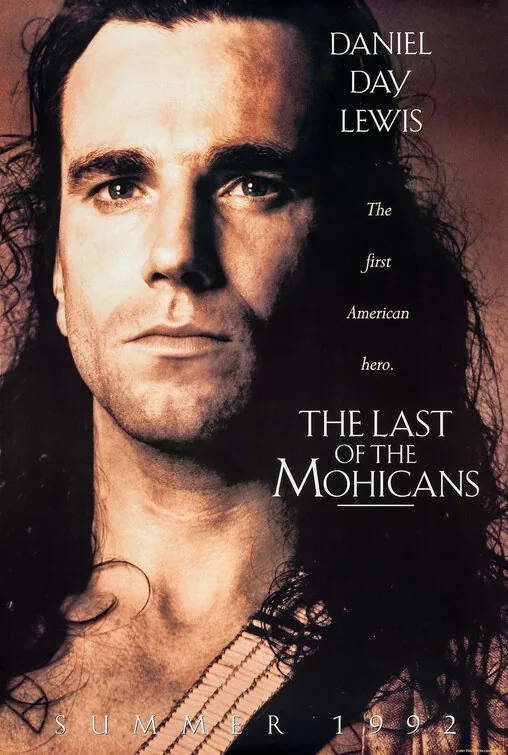
What changes Its own story: The escort mission becomes a rescue when the guide’s betrayal exposes the women to danger; the military campaign gives the pursuit its wider stakes.
During the French and Indian War, Hawkeye, his adopted Mohican father Chingachgook and Chingachgook’s son Uncas help escort Cora and Alice Munro through contested territory toward Fort William Henry. Their guide Magua betrays the party, drawing the travelers into a struggle shaped by shifting alliances among British, French and Indigenous forces. Hawkeye and Cora grow close as the group attempts to survive attacks and reach the fort. After its surrender, the daughters face a new threat and the Mohican family pursues them. The film builds toward a final confrontation about kinship, loss and who can claim a future in the land.
Damien joins his brother's IRA unit and remains in the conflict when a treaty shifts the movement toward civil war.
Why this matches +
These films share important themes, atmosphere or storytelling interests with this selection.
Genres: Drama / War
Shared film traits
Based on recorded story, mood and style. Your preferences can change the order.
War and civilian life · Political resistance
What changes Its own story: Damien joins his brother's IRA unit and remains in the conflict when a treaty shifts the movement toward civil war.
In 1920s County Cork, medical student Damien plans to leave Ireland for London, while his brother Teddy leads a local Irish Republican Army unit. After a friend is killed by British forces, Damien abandons his departure and joins the struggle. When the Anglo-Irish Treaty divides the movement, the brothers find themselves on opposite sides of a civil conflict that turns their shared ideals into personal enemies. Ken Loach's historical drama follows how political liberation can fracture a family and a community.
The story moves from cell-level resistance to counterinsurgency, showing how tactical victories fail to settle the political question of Algerian independence.
Why this matches +
These films share important themes, atmosphere or storytelling interests with this selection.
Genres: Drama / Historical
Shared film traits
Based on recorded story, mood and style. Your preferences can change the order.
War and civilian life · Political resistance
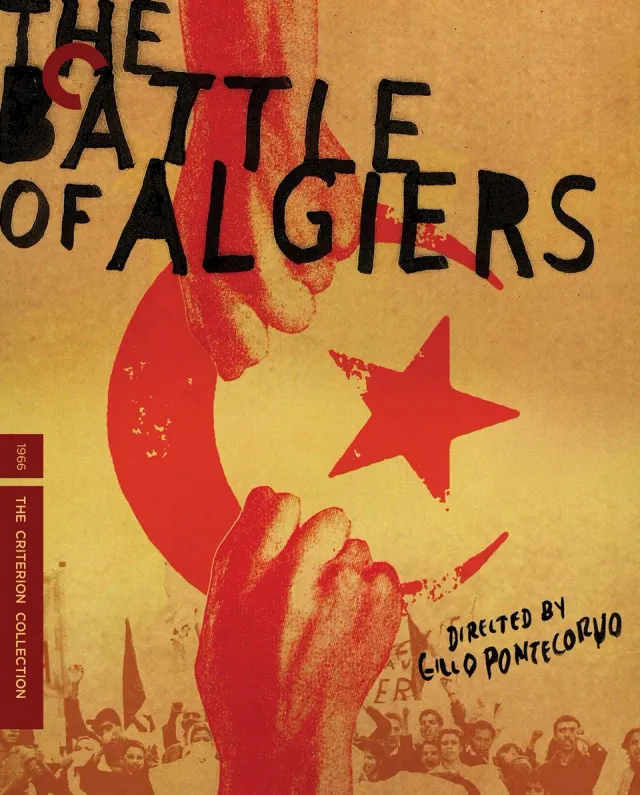
What changes Its own story: The story moves from cell-level resistance to counterinsurgency, showing how tactical victories fail to settle the political question of Algerian independence.
Beginning with French forces closing in on Ali la Pointe, the film flashes back to the growth of the National Liberation Front in the Casbah between 1954 and 1957. It follows urban resistance cells and the French paratroopers sent to dismantle them, showing both insurgent attacks and the military campaign of arrests and torture. The struggle escalates through bombings, reprisals and the destruction of FLN leadership, but nationalist demonstrations continue after the immediate battle is lost. The film frames the city as a contested political space and connects tactical victories to a wider movement for independence.
Two separated people struggle toward survival and possible reunion, one through a dangerous homeward journey and the other through practical work on a failing farm.
Why this matches +
These films explore a related idea in a different setting, genre or style.
An adjacent discovery: a related idea with a different viewing experience.
Genres: War / Drama
Shared film traits
Based on recorded story, mood and style. Your preferences can change the order.
War and civilian life
What changes Its own story: Two separated people struggle toward survival and possible reunion, one through a dangerous homeward journey and the other through practical work on a failing farm.
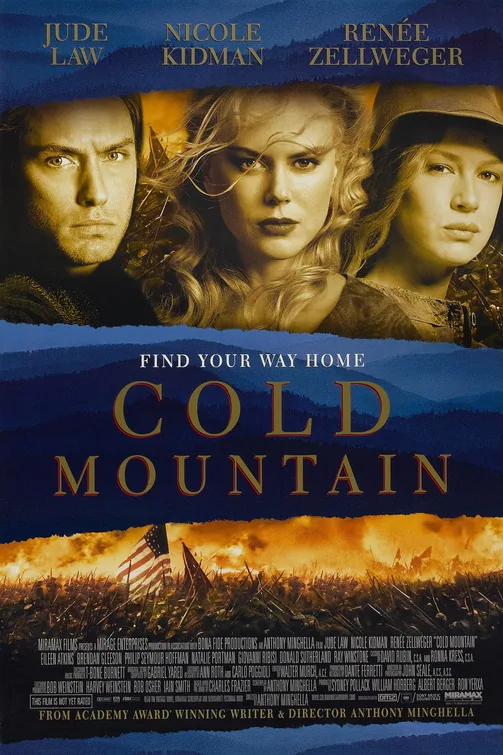
As the American Civil War nears its end, wounded Confederate soldier Inman deserts and tries to walk home to Ada, who has learned to keep her farm alive with Ruby's help. Their parallel journeys bring survival, care and violence into focus, but the film's intimate antiwar romance does not supply an even-handed account of the conflict or fully reckon with slavery's political foundation. Ada's labor is as important to the story as Inman's return. Historical context should remain visible beneath the promise of reunion.
A false accusation produced by limited observation and class assumptions creates a separation that later writing can revisit but cannot simply undo.
Why this matches +
These films explore a related idea in a different setting, genre or style.
An adjacent discovery: a related idea with a different viewing experience.
Genres: Drama / Romance
Shared film traits
Based on recorded story, mood and style. Your preferences can change the order.
War and civilian life
What changes Its own story: A false accusation produced by limited observation and class assumptions creates a separation that later writing can revisit but cannot simply undo.
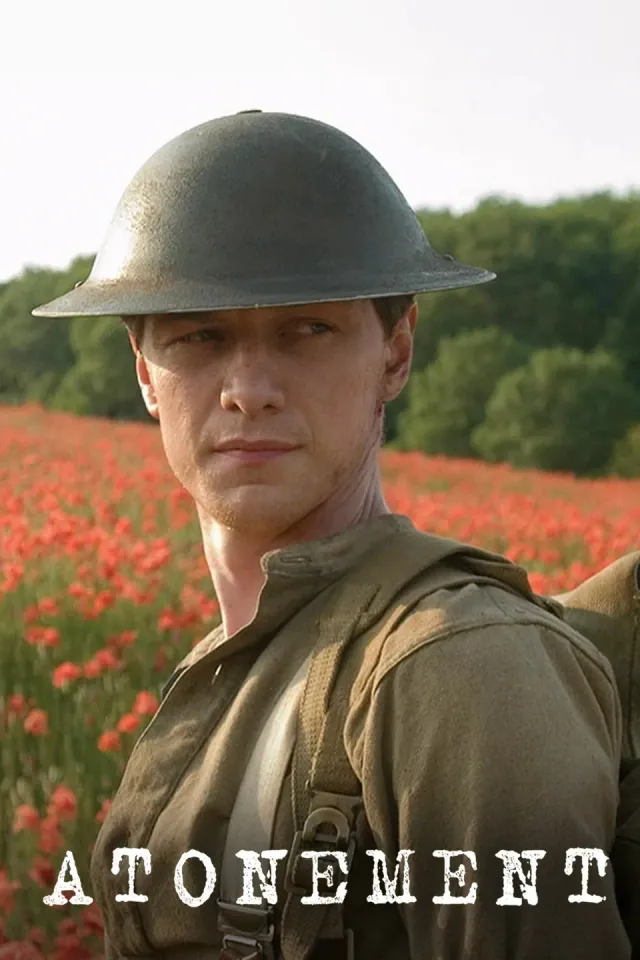
A young girl in an affluent English household misreads encounters between her older sister and the housekeeper's son, then gives testimony that converts private imagination into devastating institutional consequences. The separated couple's attempt to retain a future unfolds against prison, military service and wartime nursing. Later acts of narration revisit what can be known and repaired, exposing a gap between the consolations a story offers and the irreversible lives on which it depends.
A patient's uncertain identity and recollections gradually connect an intimate love affair with betrayals and irreversible losses across a wartime landscape.
Why this matches +
These films explore a related idea in a different setting, genre or style.
An adjacent discovery: a related idea with a different viewing experience.
Genres: Drama / Romance
Shared film traits
Based on recorded story, mood and style. Your preferences can change the order.
War and civilian life
What changes Its own story: A patient's uncertain identity and recollections gradually connect an intimate love affair with betrayals and irreversible losses across a wartime landscape.
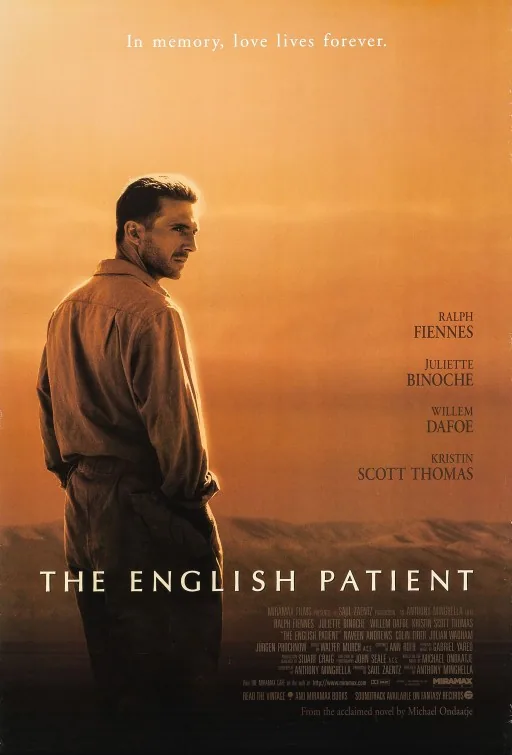
Near the end of the Second World War, a nurse tends a severely burned man in an abandoned Italian monastery while fragments of his earlier life emerge. His memories return to a desert mapping expedition, an affair with a married woman and decisions whose consequences cross wartime allegiances. Other displaced people briefly form a household around the patient's care, placing his consuming lost romance beside more tentative attempts to remain open to life.
Rachel's access depends on performing an identity inside the occupier's world, but failed operations and postwar suspicion make the same concealment dangerous on both sides of liberation.
Why this matches +
These films explore a related idea in a different setting, genre or style.
An adjacent discovery: a related idea with a different viewing experience.
Genres: War / Thriller
Shared film traits
Based on recorded story, mood and style. Your preferences can change the order.
War and civilian life
What changes Its own story: Rachel's access depends on performing an identity inside the occupier's world, but failed operations and postwar suspicion make the same concealment dangerous on both sides of liberation.
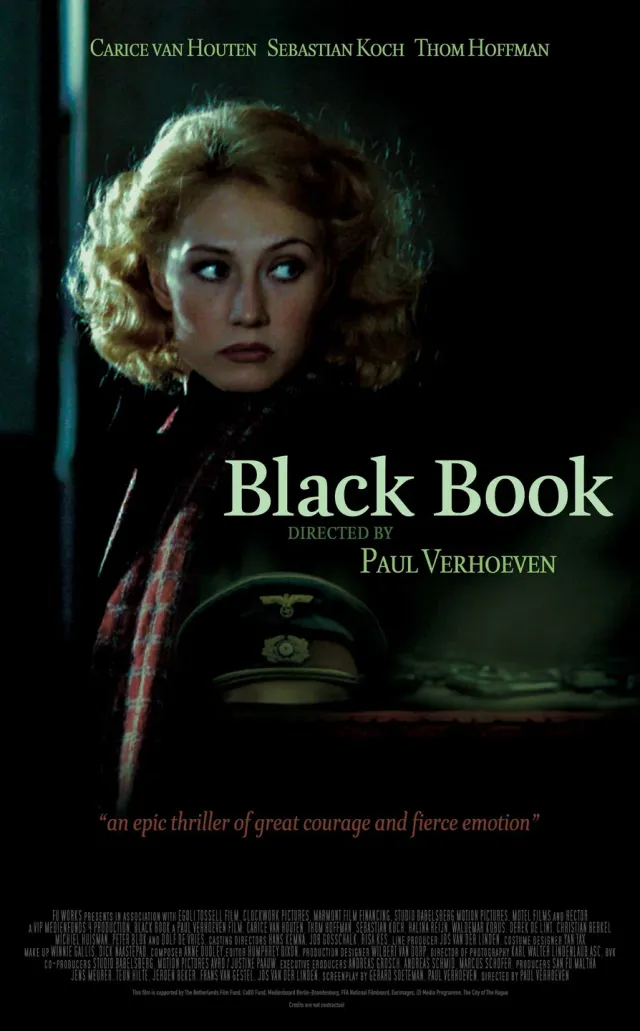
Rachel Stein, a Jewish singer hiding in occupied Netherlands, survives a betrayal and joins the Dutch resistance under a concealed identity. Her infiltration of a German officer's circle gives the resistance access, but intimacy complicates the role and does not suspend occupation's violence. When operations fail and the Netherlands is liberated, Rachel encounters new accusations and institutional loyalties that make safety no more automatic than it was under German rule. Paul Verhoeven's fast-moving thriller challenges simple moral categories without making persecutor and victim equivalent or treating betrayal as evidence that resistance itself was meaningless.
The group’s growth protects more refugees but makes food, mobility, and defense increasingly difficult.
Why this matches +
These films explore a related idea in a different setting, genre or style.
An adjacent discovery: a related idea with a different viewing experience.
Genres: War / Drama
Shared film traits
Based on recorded story, mood and style. Your preferences can change the order.
War and civilian life
What changes Its own story: The group’s growth protects more refugees but makes food, mobility, and defense increasingly difficult.
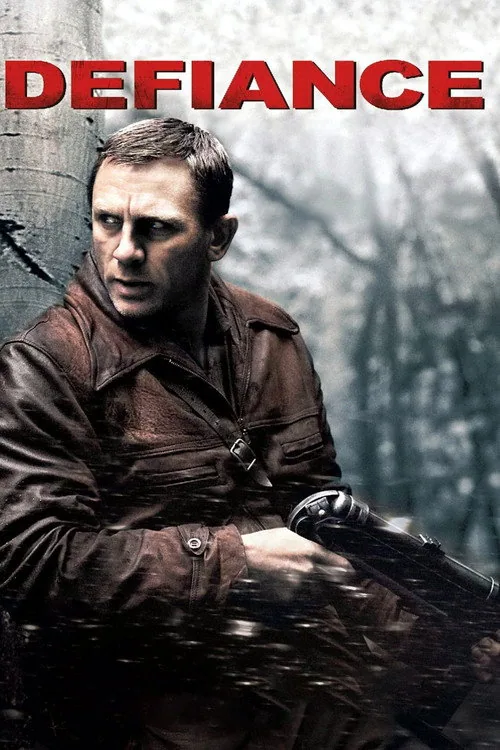
After Nazi forces and local collaborators kill their parents, the Bielski brothers flee into the forests of occupied Belarus and gather Jewish survivors around them. Tuvia prioritizes shelter and preservation of life, while Zus favors more aggressive resistance; the camp’s survival tests their leadership as winter, scarce food, internal conflict, and a German offensive close in. The war drama follows a refuge becoming a community, with armed resistance always tied to the vulnerable people it is meant to protect.
Two Czechoslovak agents organize an assassination mission against Heydrich while hiding among a threatened resistance network.
Why this matches +
These films explore a related idea in a different setting, genre or style.
An adjacent discovery: a related idea with a different viewing experience.
Genres: War / Drama
Shared film traits
Based on recorded story, mood and style. Your preferences can change the order.
War and civilian life · Political resistance
What changes Its own story: Two Czechoslovak agents organize an assassination mission against Heydrich while hiding among a threatened resistance network.
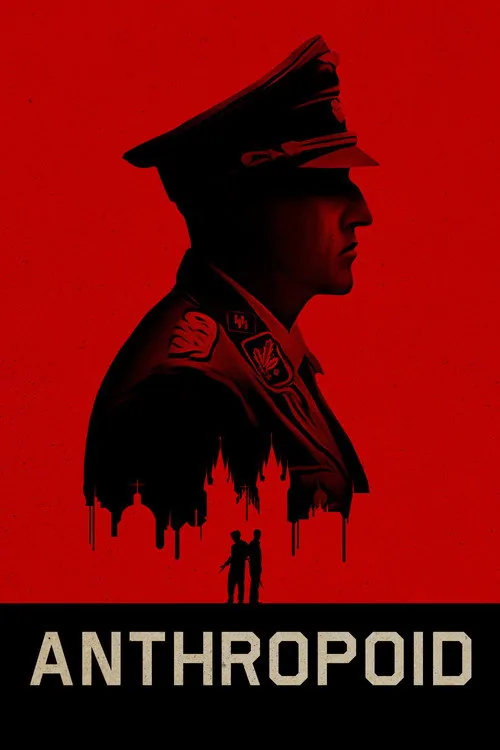
In 1941, Czechoslovak soldiers Jozef Gabčík and Jan Kubiš parachute into occupied Bohemia to join the resistance and prepare the assassination of Nazi official Reinhard Heydrich. They find shelter and support among civilians in Prague, but carrying out the mission could bring brutal retaliation against the people protecting them. Sean Ellis's war drama follows the operatives through planning, uncertainty, and the aftermath of the attack, focusing on the human cost of resistance under occupation.
A search for food turns into a test of conscience when two partisans are captured and forced to choose under pressure.
Why this matches +
These films explore a related idea in a different setting, genre or style.
An adjacent discovery: a related idea with a different viewing experience.
Genres: Drama / War
Shared film traits
Based on recorded story, mood and style. Your preferences can change the order.
War and civilian life · Political resistance
What changes Its own story: A search for food turns into a test of conscience when two partisans are captured and forced to choose under pressure.
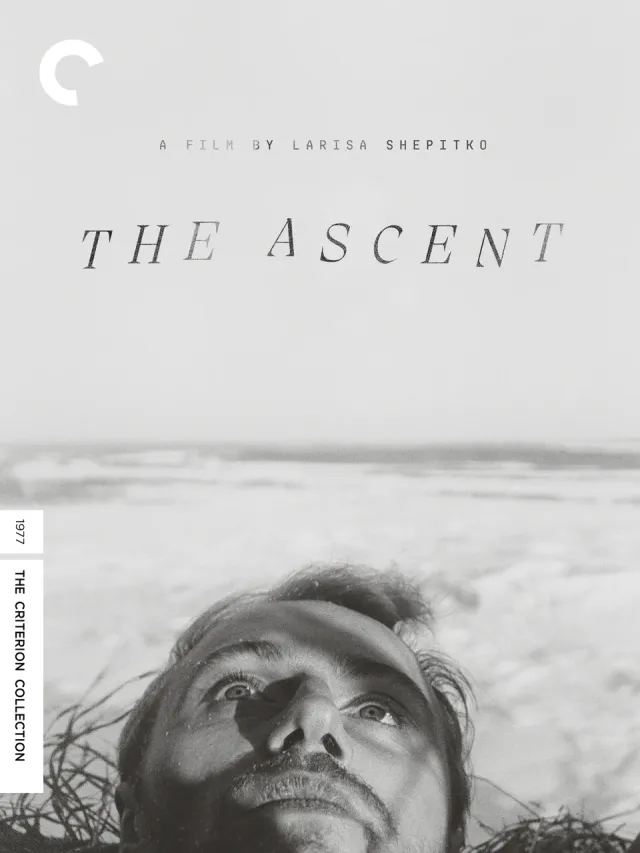
During the Second World War, Soviet partisans Sotnikov and Rybak leave their unit to find food for their comrades. A German patrol wounds Sotnikov, and the men seek shelter in a village home before they are discovered and captured with its owner, Demchikha. Under interrogation by a local collaborator, Sotnikov refuses to betray others and endures torture. Rybak faces a different test as fear and the promise of survival press him toward a decision that will define his moral relationship to his companion.
An impossible military order produces a prosecution designed to displace responsibility down the chain of command.
Why this matches +
These films explore a related idea in a different setting, genre or style.
An adjacent discovery: a related idea with a different viewing experience.
Genres: Drama / War
Shared film traits
Based on recorded story, mood and style. Your preferences can change the order.
War and civilian life
What changes Its own story: An impossible military order produces a prosecution designed to displace responsibility down the chain of command.
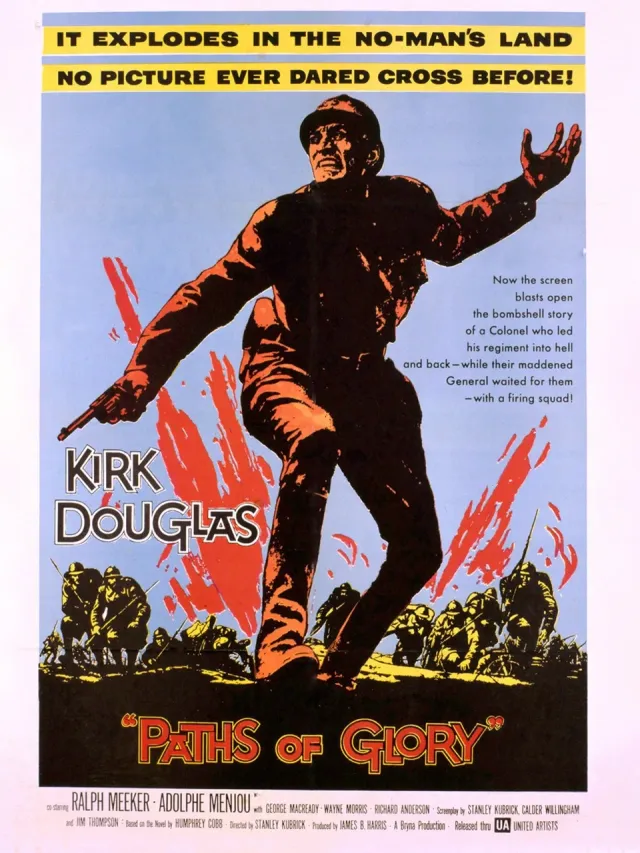
A French regiment is ordered into an attack that senior officers have little reason to expect it can survive. After failure, selected soldiers face trial for cowardice while their commander attempts to defend them. The proceedings expose a hierarchy more concerned with reputation and discipline than with the circumstances of the men whose lives it controls.
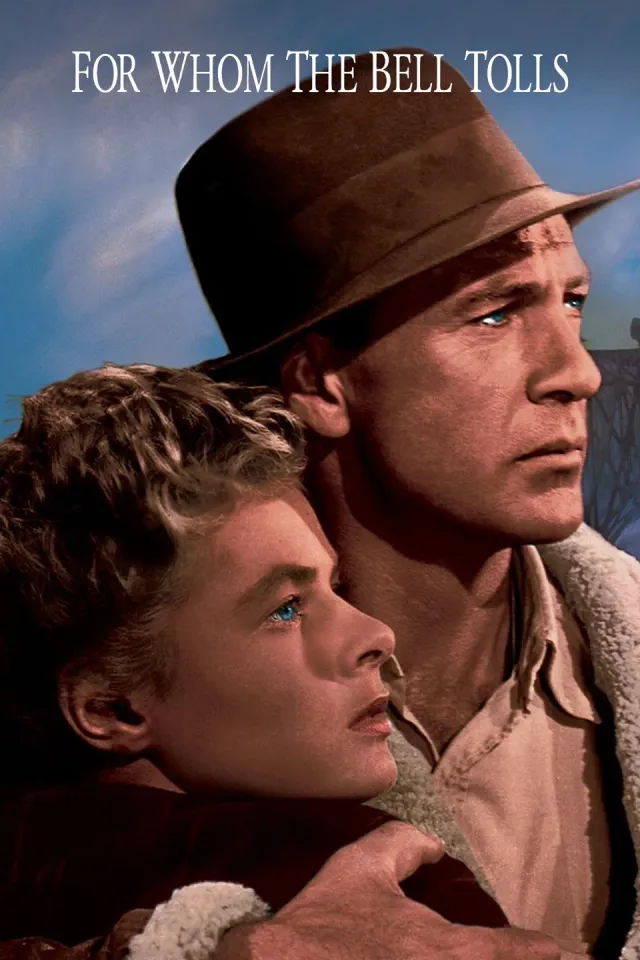
American dynamiter Robert Jordan joins Republican guerrillas in the Spanish Civil War and is assigned to destroy a bridge as a military offensive approaches. The mission depends on a divided band whose members carry different loyalties, fears and judgments about when violence is useful. Jordan’s relationship with María offers intimacy after her severe trauma, but romance does not erase the coercive history she carries or the group’s strategic danger. The 1943 film compresses Hemingway’s novel and circulated in multiple lengths, so its balance of political context, ensemble conflict and love story varies across cuts; the catalogue slug’s year is not a reason to misstate the film’s release.
What drives the story
A timed demolition makes Jordan’s military objective depend on guerrillas with competing judgments about risk, leaving sacrifice inseparable from the operation’s uncertain value. The bridge deadline compresses strategic uncertainty into a mission whose cost the guerrillas will share.
The people at its centre
Jordan’s growing bond with María meets her trauma and his duty, while the guerrilla group’s fractured leadership resists a smooth story of shared purpose. María’s romance with Jordan does not remove the lasting impact of her assault.
What it feels like
War melodrama balances mountain settings, a looming mission and romance, with adaptation compression limiting the novel’s political and psychological breadth. The mountain setting gives the operation intimacy while the wider war remains compressed.
Worth knowing
Compare with wartime ensemble stories where private attachment meets collective danger; identify the cut and distinguish the film’s simplified politics from Hemingway’s fuller novel and the historical war. Multiple release lengths alter duration and emphasis, and the 1943 release should not be confused with the slug year.