Two separated people struggle toward survival and possible reunion, one through a dangerous homeward journey and the other through practical work on a failing farm.
Why this matches +
Selected for the central appeal: Historical adventures about love, family and survival amid shifting wartime alliances.
Genres: War / Drama
Shared film traits
Based on recorded story, mood and style. Your preferences can change the order.
War and civilian life · Escape and pursuit
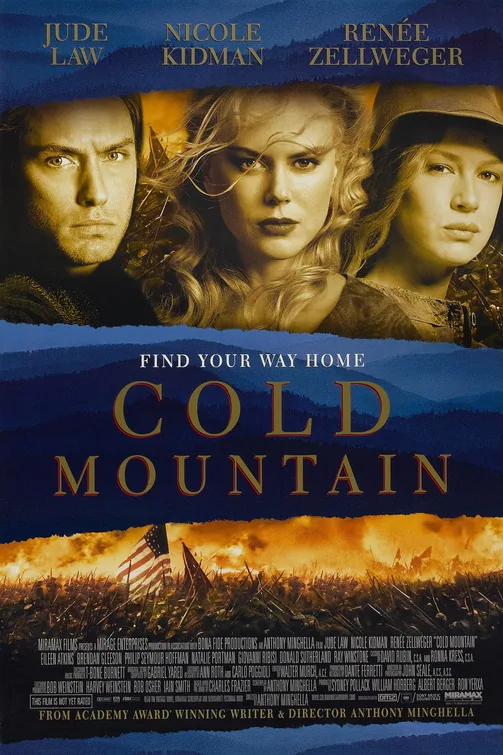
What changes Cold Mountain follows lovers separated by war and a dangerous journey toward reunion.
As the American Civil War nears its end, wounded Confederate soldier Inman deserts and tries to walk home to Ada, who has learned to keep her farm alive with Ruby's help. Their parallel journeys bring survival, care and violence into focus, but the film's intimate antiwar romance does not supply an even-handed account of the conflict or fully reckon with slavery's political foundation. Ada's labor is as important to the story as Inman's return. Historical context should remain visible beneath the promise of reunion.
A threatened cattle property sends Sarah and the drover across the outback, then broadens into a fight to protect Nullah from wartime and racial institutions. The epic's romantic arc shares space with state coercion.
Why this matches +
These offer a related experience with a meaningful difference in story, tone, or presentation.
An adjacent discovery: a related idea with a different viewing experience.
Genres: Adventure / Drama
Shared film traits
Based on recorded story, mood and style. Your preferences can change the order.
War and civilian life · Escape and pursuit
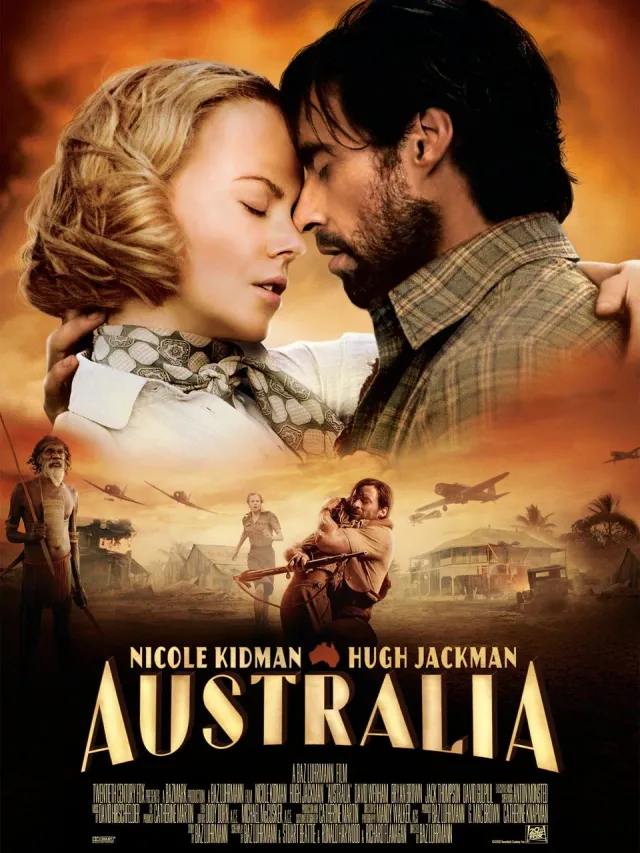
What changes Australia combines romance, family protection and large-scale conflict across a contested landscape.
In 1939, English aristocrat Sarah Ashley reaches a remote cattle station to find her husband dead and the property threatened by a rival. She joins a drover and a mixed-descent Aboriginal child, Nullah, on an arduous cattle drive that brings romance and chosen family into a society organized by colonial power. As war reaches northern Australia, the child's safety is shaped by policies that remove Indigenous children from their families. Baz Luhrmann's sweeping melodrama acknowledges that violence but filters it through a white outsider's adventure, so its reconciliation is not a complete Indigenous history.
A wartime loss fractures a family's loyalties and redirects a shared romantic attachment, with successive returns reopening conflicts that distance has not resolved.
Why this matches +
These offer a related experience with a meaningful difference in story, tone, or presentation.
An adjacent discovery: a related idea with a different viewing experience.
Genres: Drama / Romance
Shared film traits
Based on recorded story, mood and style. Your preferences can change the order.
War and civilian life
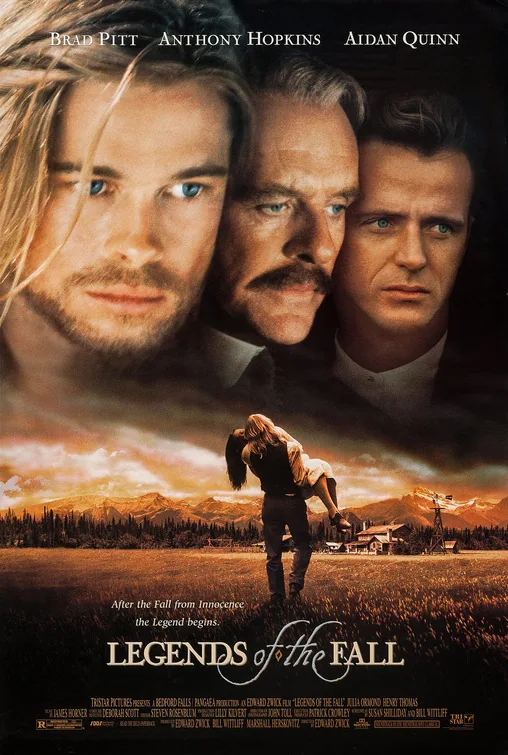
What changes Legends of the Fall follows family loyalty, romance and loss against an expansive historical landscape.
Three brothers raised on a Montana ranch enter the First World War with different expectations of duty and belonging. One death reorganizes their relationships with their father and the woman whose engagement linked her to the family. The returning brother's grief turns into absence, renewed attachments and violence that cannot remain a private condition. The multigenerational melodrama makes landscape and family myth large enough to contain longing without making them reliable shelter from rivalry, political compromise or the consequences of idealizing an untamable man.
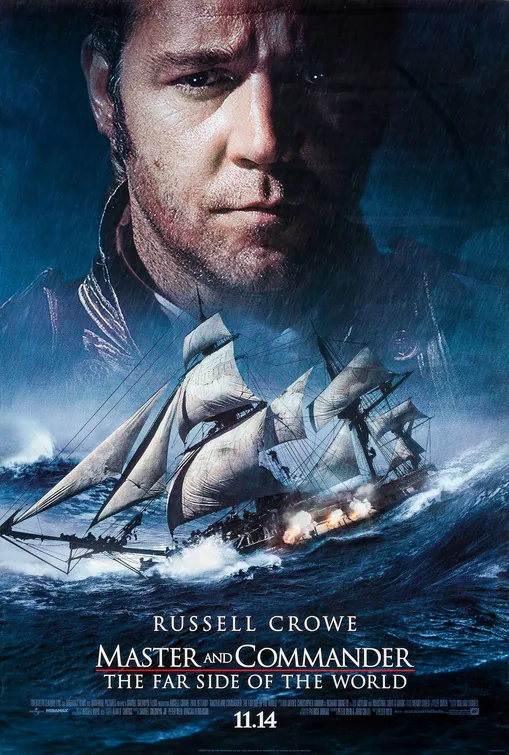
A long naval pursuit forces a captain to balance mission, ship and crew against the scientific detour promised to his closest friend.
Why this matches +
These offer a related experience with a meaningful difference in story, tone, or presentation.
An adjacent discovery: a related idea with a different viewing experience.
Genres: Adventure / Drama
Shared film traits
Based on recorded story, mood and style. Your preferences can change the order.
War and civilian life
What changes Master and Commander depicts dangerous historical warfare, leadership and loyalty in a richly detailed period setting.
In 1805, French privateer Acheron ambushes the British frigate HMS Surprise, and Captain Jack Aubrey chooses to pursue it rather than return to port. The chase toward the Galápagos puts his duty to protect British whalers against his promise to let ship's surgeon Stephen Maturin study the islands. Aubrey's decisions affect a crew that depends on his command, while Maturin's scientific ambitions and friendship with the captain give the voyage another purpose. Repairs, discipline, illness and naval battles make the ship itself a close community under sustained danger.
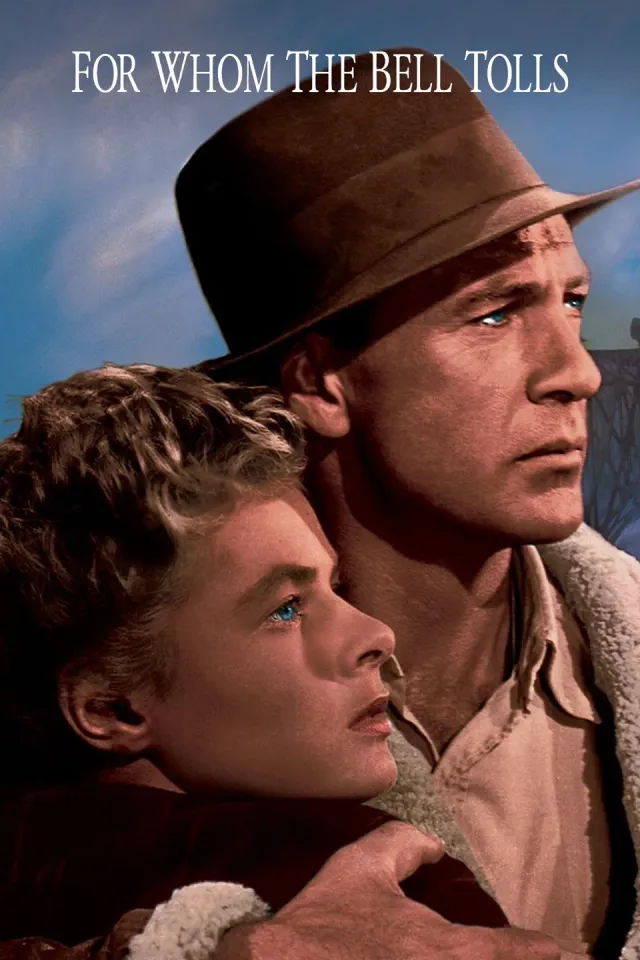
A timed demolition makes Jordan’s military objective depend on guerrillas with competing judgments about risk, leaving sacrifice inseparable from the operation’s uncertain value. The bridge deadline compresses strategic uncertainty into a mission whose cost the guerrillas will share.
Why this matches +
These offer a related experience with a meaningful difference in story, tone, or presentation.
An adjacent discovery: a related idea with a different viewing experience.
Genres: War / Drama
Shared film traits
Based on recorded story, mood and style. Your preferences can change the order.
War and civilian life
What changes For Whom the Bell Tolls combines wartime resistance, a risky mission and a romance shadowed by conflict.
American dynamiter Robert Jordan joins Republican guerrillas in the Spanish Civil War and is assigned to destroy a bridge as a military offensive approaches. The mission depends on a divided band whose members carry different loyalties, fears and judgments about when violence is useful. Jordan’s relationship with María offers intimacy after her severe trauma, but romance does not erase the coercive history she carries or the group’s strategic danger. The 1943 film compresses Hemingway’s novel and circulated in multiple lengths, so its balance of political context, ensemble conflict and love story varies across cuts; the catalogue slug’s year is not a reason to misstate the film’s release.
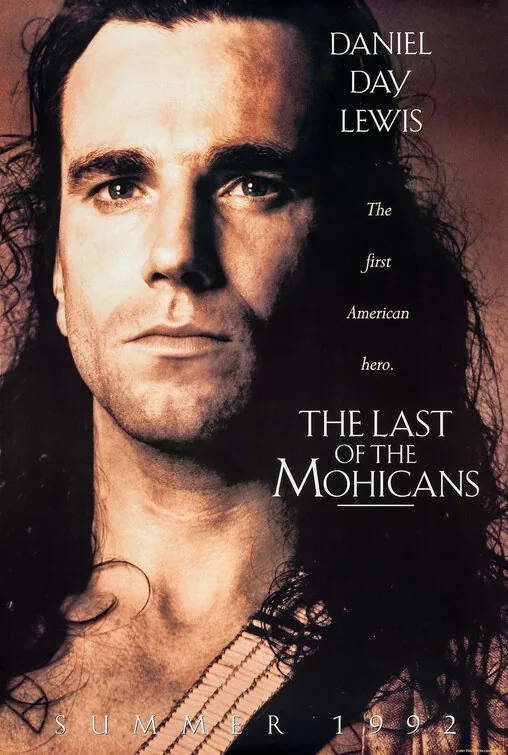
During the French and Indian War, Hawkeye, his adopted Mohican father Chingachgook and Chingachgook’s son Uncas help escort Cora and Alice Munro through contested territory toward Fort William Henry. Their guide Magua betrays the party, drawing the travelers into a struggle shaped by shifting alliances among British, French and Indigenous forces. Hawkeye and Cora grow close as the group attempts to survive attacks and reach the fort. After its surrender, the daughters face a new threat and the Mohican family pursues them. The film builds toward a final confrontation about kinship, loss and who can claim a future in the land.
What drives the story
The escort mission becomes a rescue when the guide’s betrayal exposes the women to danger; the military campaign gives the pursuit its wider stakes.
The people at its centre
The white outsider Hawkeye and his romance with Cora organize much of the adventure, while Chingachgook and Uncas are made to carry the title’s threatened lineage. Their presence adds Indigenous characters to the action, but does not make this a sustained Mohican point of view.
What it feels like
A romantic historical adventure moves from wilderness travel to siege and pursuit, shaped by urgent action and a sweeping orchestral score.
Worth knowing
A fit for sweeping frontier adventure and a star-crossed romance. The 1992 film alters Cooper’s novel and compresses the 1757 conflict; its white-centered romance and narrow Indigenous characterization should not be mistaken for Mohican history or community perspective.
KinshipSurvivalColonial conflict
Mood
Romantic · Urgent · Epic
Pacing
Journey · Siege · Pursuit
Visual style
Wilderness vistas · Large-scale battle staging
Storytelling
Escort of Munro sisters · Betrayal · Fort evacuation