An evacuation is assembled through intersecting efforts whose different clocks and incomplete information create repeated risks of misinterpretation and delay.
Why this matches +
Selected for the central appeal: Historical wartime dramas about high-stakes decisions, leadership and the evacuation of troops.
Genres: Drama / Historical
Shared film traits
Based on recorded story, mood and style. Your preferences can change the order.
War and civilian life
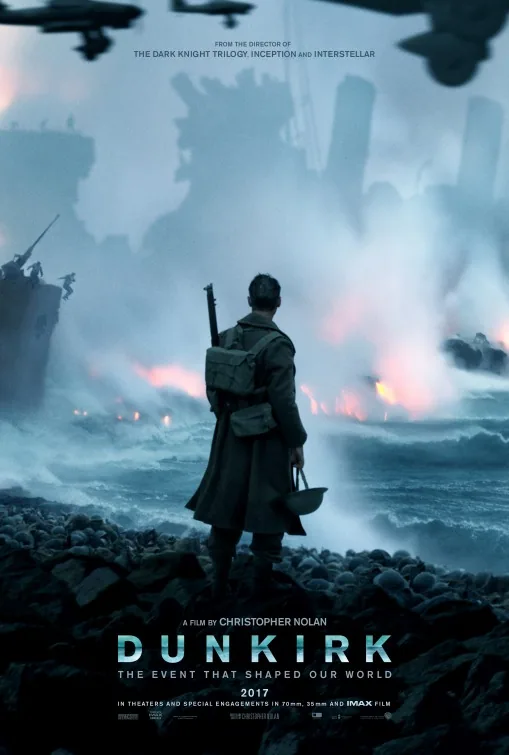
What changes Dunkirk depicts the evacuation that places urgent pressure on Britain's leaders during the same wartime crisis.
Soldiers trapped on a French beach seek a way home while small civilian boats cross the Channel and pilots attempt to protect the withdrawal. The three strands unfold over different spans of time, repeatedly exposing how one group's temporary safety can depend on work occurring elsewhere. Limited knowledge and overwhelming material danger leave little room for a conventional account of personal heroism, making survival a collective achievement that no participant can see in full.
Weather data becomes a source of human responsibility rather than background detail.
Why this matches +
Selected for the central appeal: Historical wartime dramas about high-stakes decisions, leadership and the evacuation of troops.
Genres: Drama / History
Shared film traits
Based on recorded story, mood and style. Your preferences can change the order.
War and civilian life
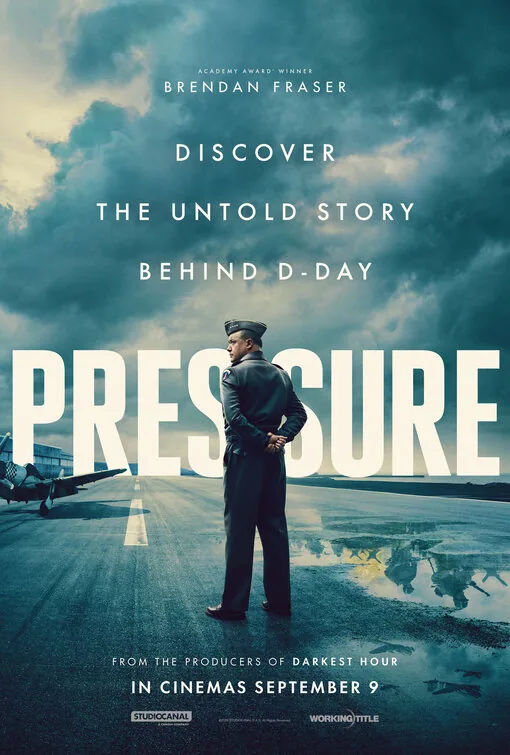
What changes Pressure follows British wartime leaders and forecasters making consequential decisions under intense uncertainty.
In the days before the Allied invasion of Normandy, meteorologist James Stagg must advise General Eisenhower whether the weather will permit the operation to begin. The decision involves uncertain forecasts, military urgency, and the lives of troops and civilians on both sides of the Channel. This historical drama turns planning and disagreement into suspense, showing how a small group weighs incomplete evidence before an irreversible military commitment.
The film’s campaign episodes turn Patton’s appetite for decisive action into both an operational advantage and a recurring political liability.
Why this matches +
These offer a related experience with a meaningful difference in story, tone, or presentation.
An adjacent discovery: a related idea with a different viewing experience.
Genres: War / Biography
Shared film traits
Based on recorded story, mood and style. Your preferences can change the order.
War and civilian life
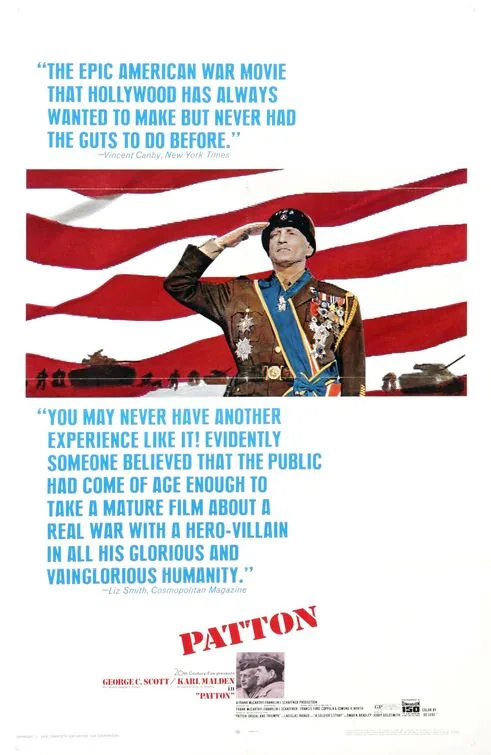
What changes Patton studies a commanding wartime leader whose judgment and personality shape major military decisions.
After the American defeat at Kasserine Pass, General George S. Patton takes command of the II Corps and imposes demanding discipline. His rivalry with British General Bernard Montgomery sharpens during the campaign in Sicily, where Patton pushes for a more ambitious advance. Two historical incidents in which he struck hospitalized soldiers there trigger a reprimand and temporarily sideline him; the film compresses that scandal into its own dramatic portrait. Later, his command of the Third Army brings rapid victories across France, but his public remarks and political conduct repeatedly threaten his position. The film follows his military drive alongside his pride, theatrical self-image and belief that battle is the route to lasting glory.
A collective codebreaking problem becomes a conflict between secrecy, strategic responsibility and an institution's treatment of the individual it has used.
Why this matches +
These offer a related experience with a meaningful difference in story, tone, or presentation.
An adjacent discovery: a related idea with a different viewing experience.
Genres: Drama / Biography
Shared film traits
Based on recorded story, mood and style. Your preferences can change the order.
War and civilian life
What changes The Imitation Game follows British wartime decision-making and secrecy around a consequential effort to resist Nazi Germany.
During the Second World War, mathematician Alan Turing joins a secret British effort to decipher German communications and pursues a machine-based approach that initially alienates colleagues. Collaboration gradually becomes essential to making the device useful, while success introduces questions about how decoded information can be used without revealing its source. A later investigation of his private life places this hidden contribution beside the state's persecution of his sexuality.
A scientific mobilisation and a later security inquiry unfold in interlocking timelines, making the consequences of a successful project part of the story of its creation.
Why this matches +
These offer a related experience with a meaningful difference in story, tone, or presentation.
An adjacent discovery: a related idea with a different viewing experience.
Genres: Drama / Thriller
Shared film traits
Based on recorded story, mood and style. Your preferences can change the order.
War and civilian life
What changes Oppenheimer centers political and military pressure on a historical figure making decisions with far-reaching wartime consequences.
A theoretical physicist is asked to organise a secret wartime programme whose success could transform both military power and the future of civilisation. The collective urgency of building the weapon sits beside later hearings that reconstruct his associations and challenge his place in the state he served. Moving between scientific ambition, political rivalry and personal compromise, the film asks what responsibility remains after technical achievement passes into other people's control.
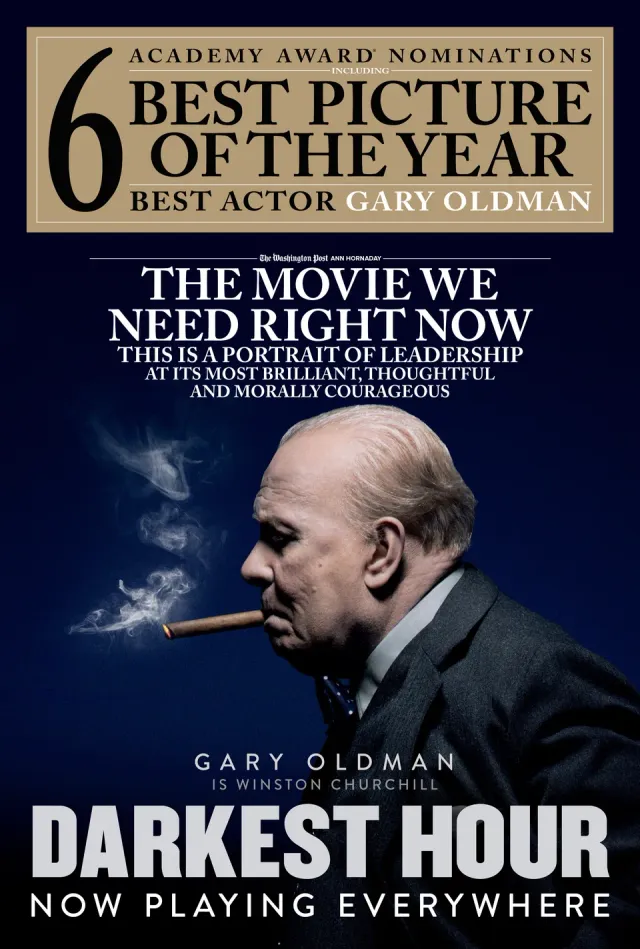
Newly appointed British prime minister as German forces advance in 1940, Winston Churchill must persuade colleagues who distrust his judgment to support continued resistance. Reports from France and the peril of trapped troops make each public statement a gamble over more than morale. The film concentrates political history into pressured conversations, private doubts and acts of persuasion, portraying leadership as an effort to secure room for a decision whose consequences others will bear.
What drives the story
A new leader's refusal to negotiate faces internal threats to his authority as military deterioration makes maintaining a governing coalition increasingly urgent.
The people at its centre
Churchill's confidence depends on support from his wife, staff and an initially wary king, while cabinet opponents can challenge both his strategy and his right to pursue it. Churchill needs support from Clementine and King George VI, while colleagues must live with decisions beyond one leader’s control.
What it feels like
Close interiors, rhetorical preparation and emphatic performance give a historical crisis the shape of a chamber drama punctuated by images of distant military danger. War rooms and cabinet interiors make rhetoric feel immediate, although the decisive military action remains mostly offscreen.
Worth knowing
Match on contested leadership and public persuasion under immediate pressure, while distinguishing invented encounters and compressed history from documented evidence of how consensus actually formed.
LeadershipDutyTrust
Mood
Tense · Solemn · Defiant
Pacing
Measured
Visual style
Contained · Period detail · High contrast
Storytelling
Coalition crisis · Contested refusal to negotiate · Rhetorical preparation