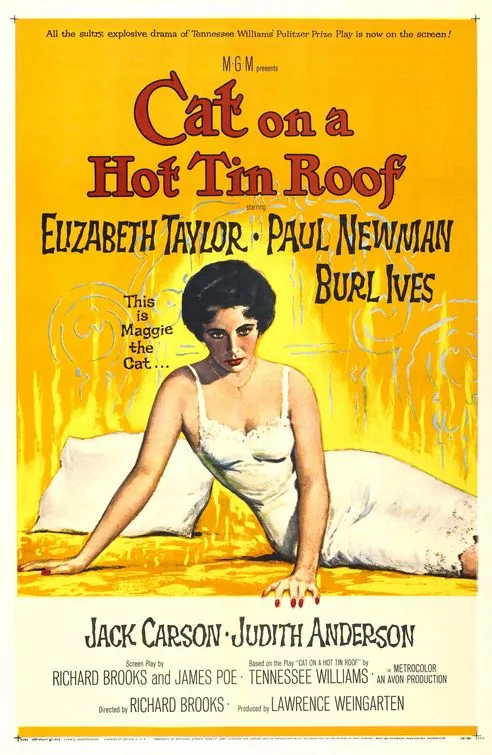
A family gathering forces marital, financial and emotional secrets into the open, yet Brick's refusal to explain his grief prevents one account from settling the conflict. The family's inheritance needs and his private loss remain entangled.
Why this matches +
Selected for the central appeal: Family dramas about sons seeking acceptance amid rivalry, secrets and parental expectations.
Genres: Drama
Shared film traits
Based on recorded story, mood and style. Your preferences can change the order.
What changes Cat on a Hot Tin Roof places sons and a demanding father in a family crisis shaped by withheld truths, with inheritance and a troubled marriage rather than Cal's rivalry for affection.
At Big Daddy's birthday gathering, Maggie presses her estranged husband Brick to face their marriage, the family inheritance and his grief over his friend Skipper. Brick's drinking and the family's evasions keep several explanations in play, while the film's Production Code-era adaptation softens aspects of Tennessee Williams's play, particularly its account of Brick and Skipper. The result is emotionally charged but not a transparent version of the stage work: viewers should distinguish what the film states, implies and leaves unsaid.
The film’s central action is Conrad’s attempt to live with grief, while the family’s outward order repeatedly blocks honest mourning.
Why this matches +
These offer a related experience with a meaningful difference in story, tone, or presentation.
An adjacent discovery: a related idea with a different viewing experience.
Genres: Drama
Shared film traits
Based on recorded story, mood and style. Your preferences can change the order.
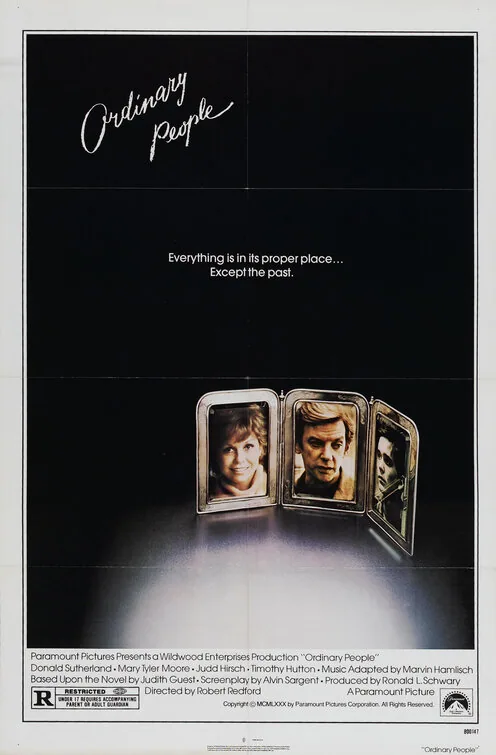
What changes Ordinary People examines a son's sense of rejection and family communication after tragedy, centering grief and therapy rather than a secret about his mother.
After the accidental drowning death of their eldest son Buck, the affluent Jarrett family tries to resume ordinary routines. Younger son Conrad returns home after a suicide attempt and psychiatric hospitalization, struggling with guilt and the belief that he should have died instead. Therapy with Dr. Berger helps him name grief and anger, while his father Calvin tries to reconnect with both sons’ absence. His mother Beth maintains control through social appearances and finds Conrad’s vulnerability intolerable. Their conflict forces Calvin to recognize that family recovery may not mean preserving the household intact.
The unfinished fence becomes a practical household project and a symbol of the limits Troy imposes around others.
Why this matches +
These offer a related experience with a meaningful difference in story, tone, or presentation.
An adjacent discovery: a related idea with a different viewing experience.
Genres: Drama
Shared film traits
Based on recorded story, mood and style. Your preferences can change the order.
What changes Fences follows a son struggling for recognition under a domineering father, changing the setting to a Black family in twentieth-century Pittsburgh.
A sanitation worker in 1950s Pittsburgh tries to hold authority within his household while carrying anger from opportunities and racial barriers he believes were denied to him. His marriage and relationships with his sons reveal the consequences of treating protection as control. The adaptation of August Wilson’s play keeps its attention on language, family intimacy and the burden of history rather than broad external action.
A tournament forces two independently desperate brothers towards a meeting neither can treat as purely athletic.
Why this matches +
These offer a related experience with a meaningful difference in story, tone, or presentation.
An adjacent discovery: a related idea with a different viewing experience.
Genres: Drama / Sport
Shared film traits
Based on recorded story, mood and style. Your preferences can change the order.
What changes Warrior brings estranged brothers and their troubled father together through competition, replacing literary family melodrama with mixed martial arts.
Two estranged brothers enter the same mixed martial arts tournament for different financial reasons. One returns from military service carrying anger and secrecy, while the other risks his teaching career to support his household. Their separate training brings an alcoholic father's attempted reconciliation into conflict with wounds neither brother has resolved, making the competition a confrontation with shared history.
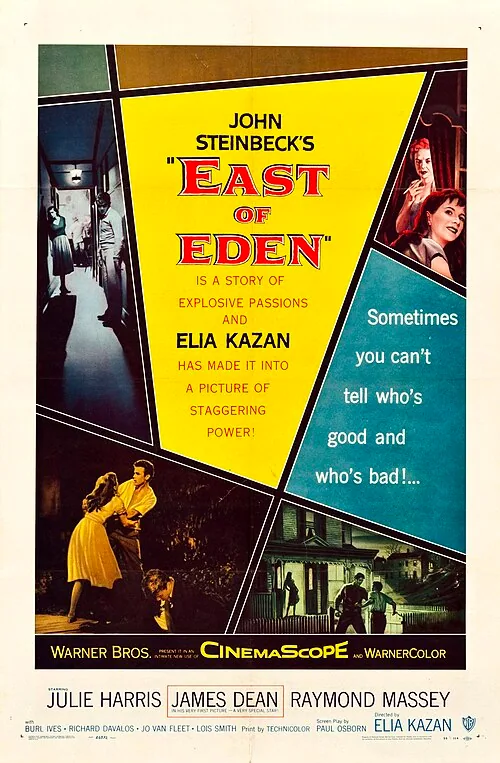
A young man convinced that his father considers him inferior to his twin discovers that their supposedly dead mother is alive and living outside the family's moral story. A business venture promises to repair his father's financial loss and earn the affection he believes can be proven through a gift. When the gesture fails, withheld family knowledge becomes another way to inflict pain, making the desire to be loved compete with the ability to recognize another person's vulnerability. Kazan adapts the novel’s final section, concentrating the Cain-and-Abel inheritance around Cal’s need for paternal acceptance.
What drives the story
An attempt to buy paternal recognition through morally compromised success exposes a family secret, turning rejected generosity into retaliatory disclosure. Cal’s failed attempt to replace money his father lost makes rejection feel like a verdict on his character.
The people at its centre
Cal's self-judgment is shaped by his father's idealization of Aron, while Abra's attention and his mother's account offer alternatives to the fixed roles the household assigns. Abra’s recognition helps Cal imagine another self, while Kate’s hidden life disrupts Adam’s moral division of the twins.
What it feels like
Intense performance, expressive framing and physical agitation turn a family melodrama into a struggle over who is allowed to change the meaning of inherited character. CinemaScope landscapes and Dean’s restless physical performance contrast with the household’s fixed moral expectations.
Worth knowing
Match on rejected filial recognition and a concealed maternal history, preserving this film's concentrated adaptation rather than attributing the entire multigenerational novel to its narrative. This is not the novel’s whole family history; the film ends at a different point and compresses its sources.
FamilyRecognitionGuilt
Mood
Intense · Emotional · Confrontational
Pacing
Measured
Visual style
Expressionistic · Period detail · Intimate
Storytelling
Rejected filial gift · Concealed maternal history · Unequal brothers