Explore films connected to Guillermo del Toro's Pinocchio through Mortality, Disobedience, Parental care. Choose the qualities you want to carry into your next watch.
What should feel similar?
Find your next favourite
9 films · Closest overall matches
Hide films you’ve seen or don’t want. Saved on this device.
No matches for this combination yet.
Try another option or reset your choices to see more films.
Based on recorded story, mood and style. Your preferences can change the order.
War and civilian life
Expect tender and dark, with episodic and journey-driven pacing.
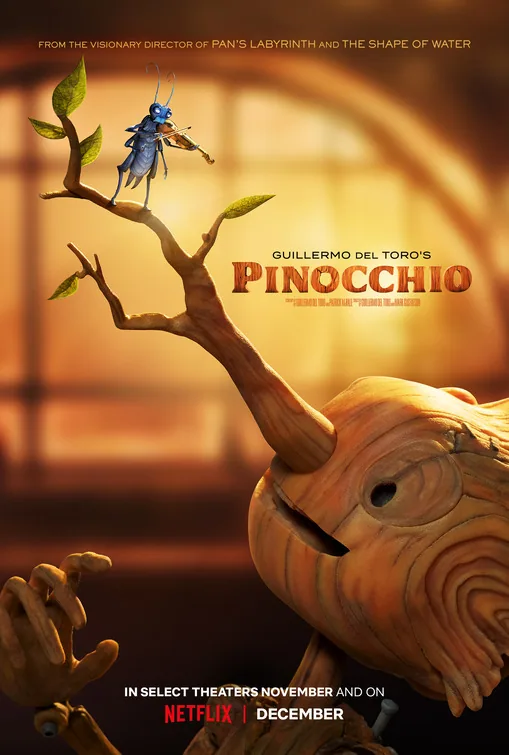
In a wartime Italian village, woodcarver Geppetto makes a puppet from a tree connected to his late son and finds that it comes to life. The wooden boy, Pinocchio, is eager for adventure but repeatedly tested by people who exploit his curiosity, while Geppetto searches for him. Guillermo del Toro and Mark Gustafson reshape the familiar tale as a handcrafted stop-motion fable about grief, obedience, mortality, and the value of choosing to care.
Based on recorded story, mood and style. Your preferences can change the order.
What changes Guillermo del Toro's Pinocchio: episodic. Waking Life: wandering and conversational and open-ended.
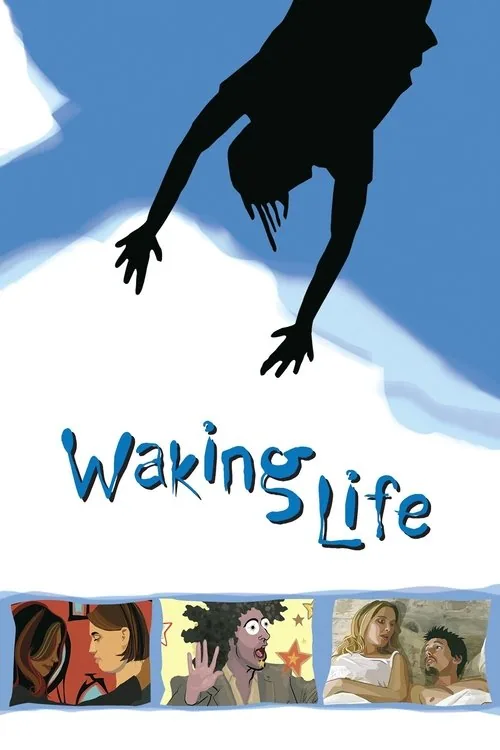
A young man drifts through a shifting dream world, meeting people who talk about consciousness, free will, identity, and the nature of existence. He moves from observing their conversations to taking part in them, while remaining unsure whether he is asleep, awake, or becoming lucid within a continuing dream. Richard Linklater’s animated film uses rotoscoping to transform live-action performances into fluid, constantly changing images. Its structure is less a conventional plot than a chain of philosophical encounters held together by one restless consciousness.
Based on recorded story, mood and style. Your preferences can change the order.
What changes Guillermo del Toro's Pinocchio: episodic. I Lost My Body: parallel storylines, episodic travel and reflective character arc.
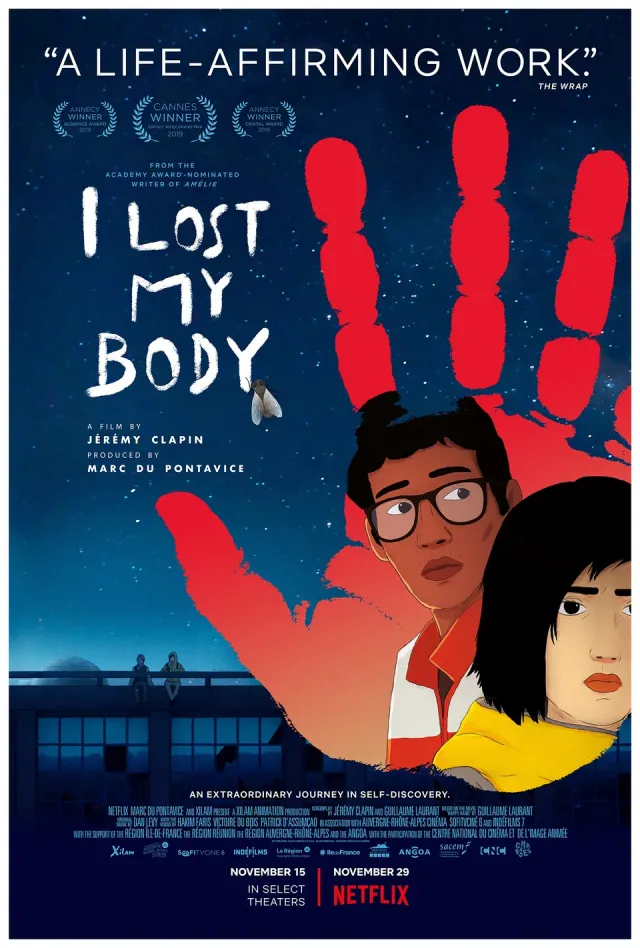
A severed hand escapes from a laboratory and travels across Paris, determined to find the young man it once belonged to. Flashbacks follow Naoufel from childhood in Morocco through family loss and a difficult start in France, where he works as a pizza courier and becomes intrigued by Gabrielle, a woman he speaks with from outside her apartment. The animated fantasy links the hand’s journey with Naoufel’s memories and search for connection.
Based on recorded story, mood and style. Your preferences can change the order.
What changes Guillermo del Toro's Pinocchio is tagged tender and somber; Sausage Party is tagged irreverent and absurd.
In a supermarket where groceries believe that human shoppers are gods who carry them to a promised afterlife, sausage Frank and bun Brenda are excited to be chosen together. A returned jar of honey mustard challenges that belief, and an accident separates them from their packages before they can reach the store’s exit. Frank pursues evidence about the Great Beyond while Brenda and their friends navigate the aisles and avoid the bent-nozzle douche who blames them for his injury. Their discovery changes a religious certainty into a violent crisis, which the film treats through deliberately crude food puns and apocalyptic cartoon excess.
Based on recorded story, mood and style. Your preferences can change the order.
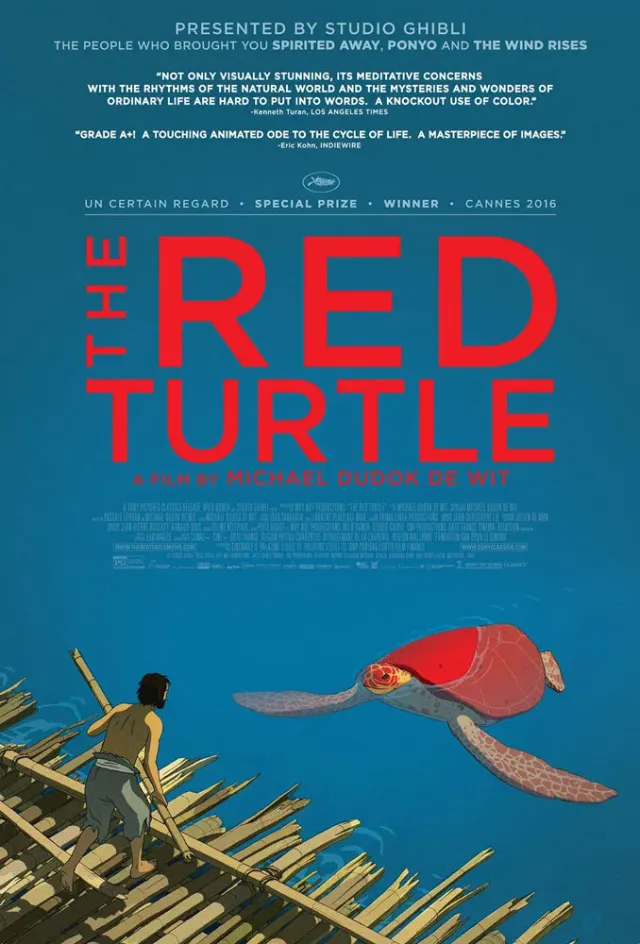
What changes Guillermo del Toro's Pinocchio: episodic. The Red Turtle: quiet, contemplative and long-spanning.
A man is stranded on an uninhabited island after a storm and repeatedly tries to escape on rafts he builds from bamboo. An unseen force destroys each attempt, until he encounters a red turtle that changes the direction of his life. The island gradually becomes a place where he forms a family and watches the rhythms of nature and aging. Michael Dudok de Wit’s animated fable tells its story without spoken dialogue, using movement, sound and landscape instead.
Based on recorded story, mood and style. Your preferences can change the order.
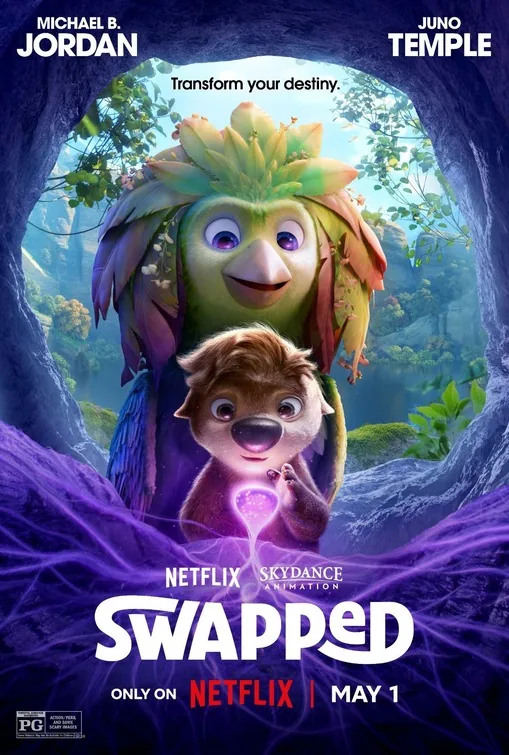
What changes Guillermo del Toro's Pinocchio: episodic. Swapped: comic escalation and adventure quest.
Two natural enemies swap bodies and must learn to work together to survive in a changing animal world. This animated comedy uses a body-swap premise to create visual jokes while giving its mismatched pair a shared survival goal. Their partnership grows through practical problem-solving and a new appreciation of the other's perspective, as each learns to navigate a dangerous world without relying on familiar instincts.
Both share themes of mortality, plus a somber atmosphere.
Why this matches +
Genres: Animation / Fantasy
Shared film traits
Based on recorded story, mood and style. Your preferences can change the order.
Coming of age
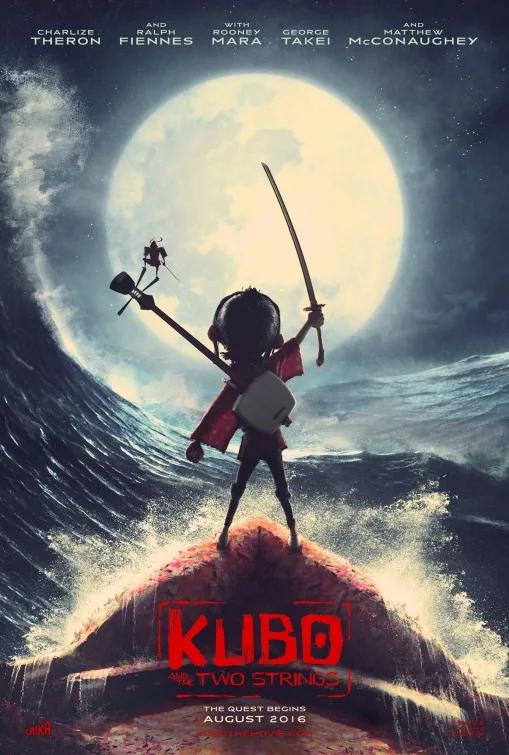
What changes Guillermo del Toro's Pinocchio: episodic. Kubo and the Two Strings: steady and escalating.
A boy supports his ill mother by performing stories that he cannot finish because their family history remains incomplete. Breaking a protective rule exposes him to relatives who want to remove the vulnerability they associate with human sight and grief. A search for legendary armor brings companions whose identities alter the story he thought he inherited. The stop-motion adventure makes memory a shared act rather than only recovered information, turning the apparent weapon quest toward the protection made possible by imperfect human attachment.
Based on recorded story, mood and style. Your preferences can change the order.
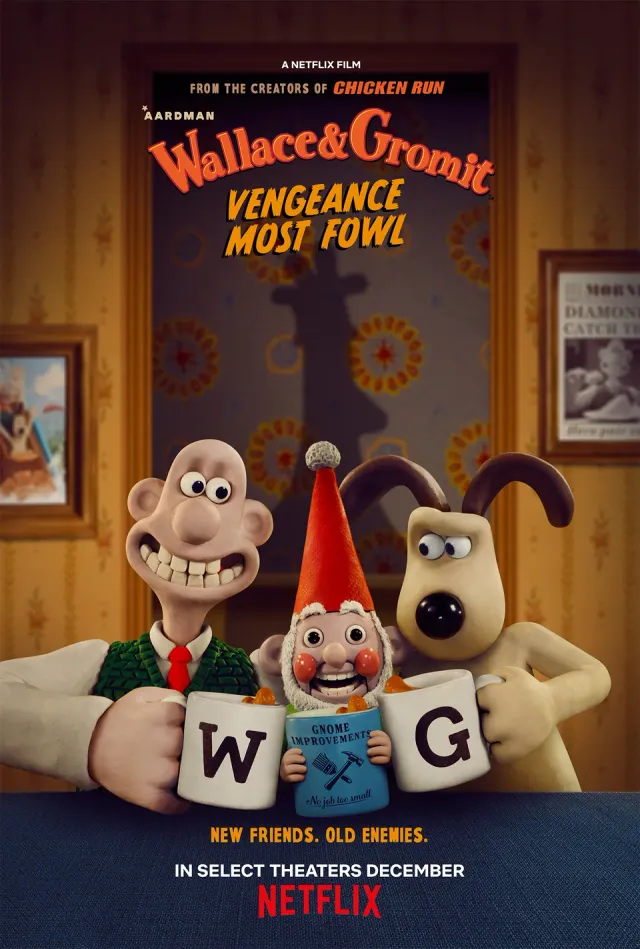
What changes Guillermo del Toro's Pinocchio: episodic. Wallace and Gromit: Vengeance Most Fowl: brisk, escalating and set-piece driven.
Wallace's smart garden gnome Norbot becomes popular, but Gromit worries its inventor is relying too heavily on technology. The unease grows when Feathers McGraw, the criminal penguin once thwarted by the pair, manipulates Norbot as part of a revenge scheme. Wallace and Gromit must discover what is happening and stop automated mischief, with Gromit's practical instincts proving essential to their friendship and safety.
Based on recorded story, mood and style. Your preferences can change the order.
Coming of age
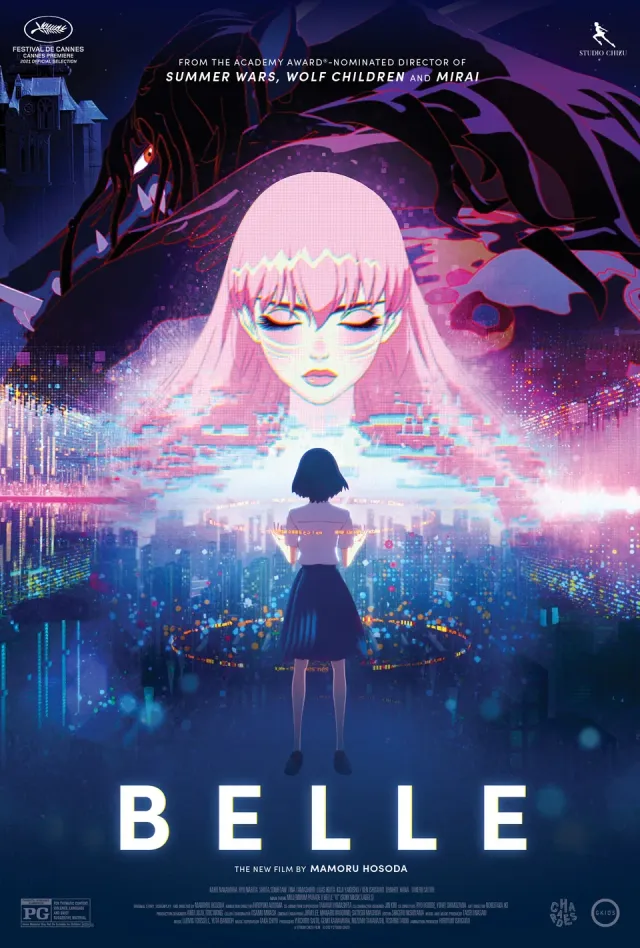
What changes Guillermo del Toro's Pinocchio: episodic. Belle: a character journey builds through songs, discovery and and a compassionate climax.
High-school student Suzu has lost her confidence in music since her mother died saving a child. In a vast virtual world she becomes the singer Belle, whose growing audience draws her toward a feared figure known as the Dragon. The animated musical contrasts online spectacle with ordinary grief and care, following Suzu as she learns that finding a voice can also mean listening to someone else’s pain.
In fascist-era Italy, Geppetto’s grief over his son leads him to carve Pinocchio, whose disobedience makes him difficult to control and attractive to political authorities seeking obedient bodies. The puppet’s repeated encounters with Death give their bond an unusual cost: he can return from danger, while Geppetto cannot. Their relationship changes as each learns that love cannot be secured through ownership or a child’s compliance. Stop-motion texture makes the world tactile and strange, and the film turns familiar fairy-tale adventure toward mortality, fascism and the value of a short life rather than a lesson that becoming good means becoming obedient.
What drives the story
Pinocchio’s capacity to return from death repeatedly collides with Geppetto’s mortality, while fascist institutions try to discipline the child’s unruly body. Repeated death separates Pinocchio’s experience of time from Geppetto’s mortal limits.
The people at its centre
Geppetto’s wish to recover a son becomes a relationship with a new child, and Pinocchio’s disobedience forces both to separate love from possession. The father-son bond develops when both abandon the demand that love mean replacement or obedience.
What it feels like
Hand-built stop-motion surfaces, macabre humor and changing death encounters create a tactile fairy tale whose danger is stranger and more melancholy than a conventional adventure. Stop-motion surfaces keep the fairy tale tactile even when its world turns macabre.
Worth knowing
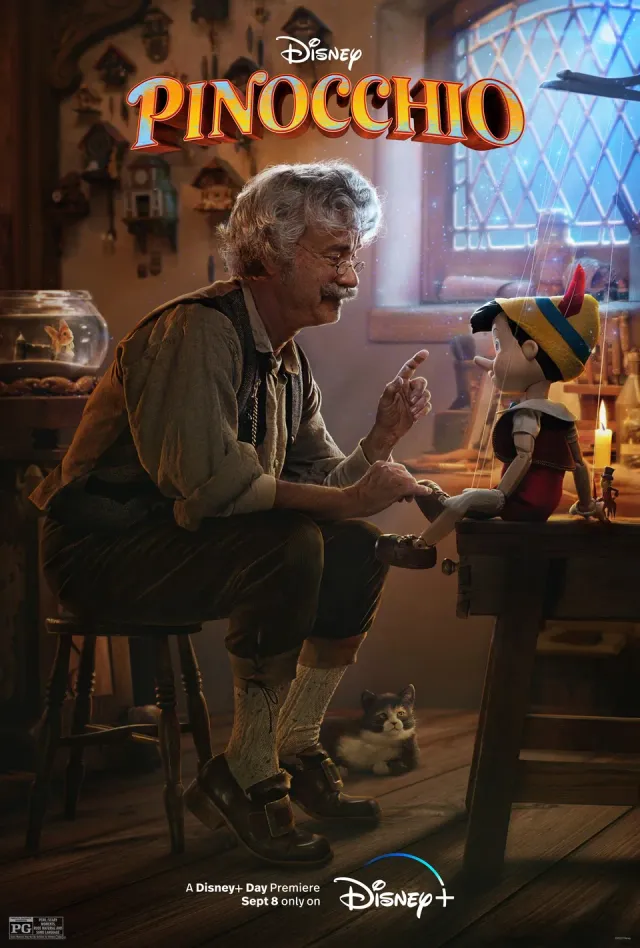
Compare with adaptations concerned with obedience, mortality and parental grief, but distinguish del Toro’s fascist-era reimagining and its death rules from Disney’s versions and Collodi’s novel. Fascist recruitment is specific to del Toro’s adaptation, not a default theme of every Pinocchio film.
MortalityDisobedienceParental care
Mood
Tender · Somber · Defiant
Pacing
Episodic
Visual style
Tactile stop-motion · Dark fairy-tale design
Storytelling
Created child · Replacement-son demand · Fascist recruitment