Based on recorded story, mood and style. Your preferences can change the order.
What changes Happy Together: reconciliations and work and a new friendship shape fai’s gradual movement toward a life beyond the relationship. Like Crazy: elliptical time jumps, intimate relationship scenes and reflective progression.
Anna, a British exchange student in Los Angeles, falls in love with American student Jacob and decides to stay with him after graduation. An expired visa prevents her from returning to the United States, leaving the couple to sustain a relationship across continents and long periods apart. Work, new partners, and changing ambitions complicate the promise that they will eventually reunite. Drake Doremus' intimate romantic drama follows the emotional texture of a relationship over time, using naturalistic performances and gaps in communication instead of a neatly plotted romance formula.
Based on recorded story, mood and style. Your preferences can change the order.
Romance and intimacy · Memory and identity
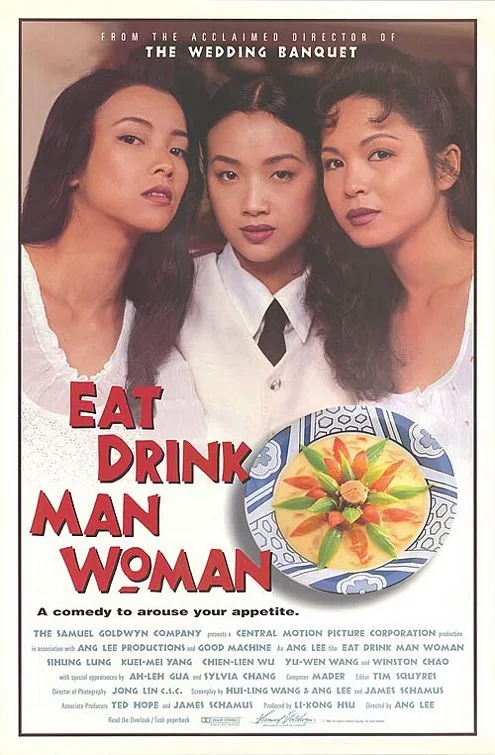
What changes Happy Together: reconciliations and work and a new friendship shape fai’s gradual movement toward a life beyond the relationship. Eat Drink Man Woman: repeated sunday meals frame separate storylines as each family member makes an unexpected change.
Semi-retired Taipei chef Chu prepares an elaborate Sunday dinner for his three adult daughters, whose lives are moving in different directions. Jia-Jen is a chemistry teacher and Christian; Jia-Chien is an airline executive with a suppressed love of cooking; and Jia-Ning is a college student working at a fast-food restaurant. The family meal gives each woman a place to announce changes, while Chu’s own decisions unsettle the household’s assumptions about him. Across repeated dinners, food becomes both an expression of care and a way to avoid difficult conversation. Ang Lee’s ensemble drama observes how changing relationships can renew a family’s connection.
Based on recorded story, mood and style. Your preferences can change the order.
Romance and intimacy · Memory and identity
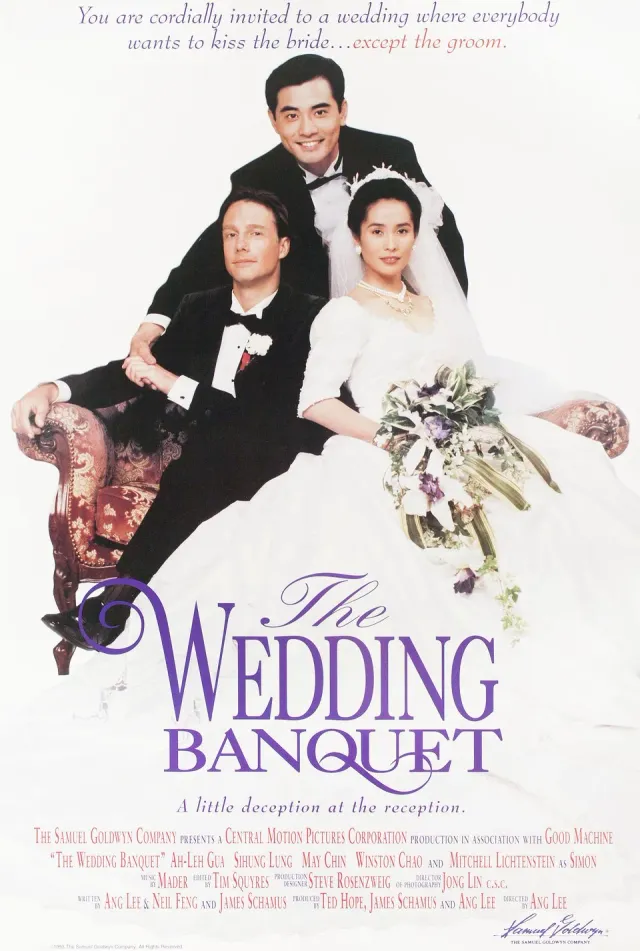
What changes Happy Together: reconciliations and work and a new friendship shape fai’s gradual movement toward a life beyond the relationship. The Wedding Banquet: a private arrangement expands into a banquet and a series of comic attempts to keep different truths apart.
Wai-Tung Gao, a Taiwanese immigrant in New York, lives happily with his partner Simon but has not told his traditional parents that he is gay. His parents want him to marry and continue the family line, so he and Simon invent impossible requirements for a bride. When Wei-Wei, a penniless artist renting from Wai-Tung, agrees to a marriage of convenience, the plan seems manageable until his parents travel from Taiwan for a lavish banquet. The visit turns a private arrangement into a comic web of performance and concealment. As the parents’ expectations collide with Simon’s place in Wai-Tung’s life, the family must decide what honesty and care can look like.
Based on recorded story, mood and style. Your preferences can change the order.
What changes Happy Together: reconciliations and work and a new friendship shape fai’s gradual movement toward a life beyond the relationship. Head-On: abrupt emotional turns, episodic relationship arc and music punctuates transitions.
Cahit, a Turkish-German widower spiraling through alcohol and drugs, survives an intentional car crash and meets Sibel in a psychiatric clinic. Desperate to escape her conservative family's control, she asks him to marry her despite having just met. Their arrangement begins as a practical route to independence but becomes a volatile relationship shaped by desire, violence, and self-destruction. Fatih Akin's German-Turkish drama follows the pair between Hamburg and Istanbul with blunt physicality and emotional unpredictability.
Based on recorded story, mood and style. Your preferences can change the order.
Romance and intimacy · Memory and identity
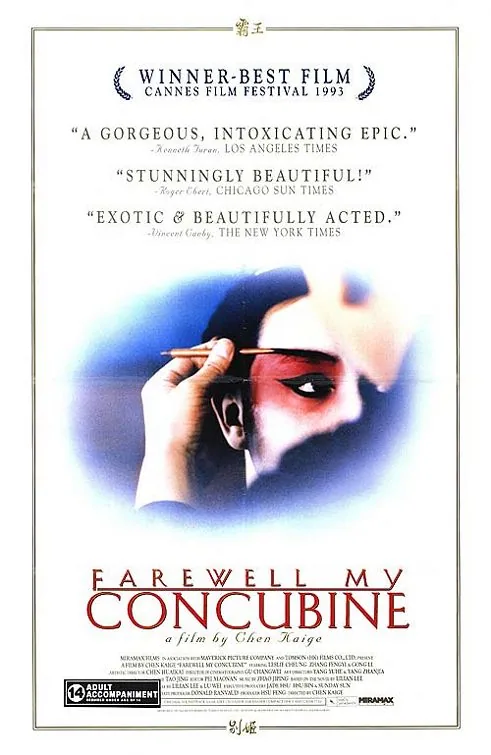
What changes Happy Together: reconciliations and work and a new friendship shape fai’s gradual movement toward a life beyond the relationship. Farewell My Concubine: decades of personal change and national history circle back to the performers’ signature opera.
Beginning in 1920s Peking, the film follows Douzi and Shitou, two boys trained in a Peking opera troupe who grow into performers Cheng Dieyi and Duan Xiaolou. Dieyi specializes in the female role in Farewell My Concubine, while Xiaolou plays the king. Their artistic partnership and personal attachment are tested when Xiaolou marries Juxian and when political upheavals repeatedly reshape public life. Across decades of war, revolution and ideological campaigns, the performers return to the opera that made them famous. Their changing loyalties and memories show how private relationships and an art form are pressured by forces beyond the stage.
Based on recorded story, mood and style. Your preferences can change the order.
Romance and intimacy · Memory and identity
What changes Happy Together: reconciliations and work and a new friendship shape fai’s gradual movement toward a life beyond the relationship. To All the Boys: Always and Forever: a family trip and college applications bring lara jean’s memories and relationship plans into focus as graduation draws near..
In her final year of high school, Lara Jean travels to Seoul with her family and reflects on the memories that connect her to her late mother. Back home, she and Peter begin planning their future together while college decisions complicate their assumptions. The film follows Lara Jean balancing romance, family rituals and her own direction as graduation approaches.
Based on recorded story, mood and style. Your preferences can change the order.
Romance and intimacy · Memory and identity
What changes Happy Together: reconciliations and work and a new friendship shape fai’s gradual movement toward a life beyond the relationship. The Green Ray: real-time conversations, episodic travel, observational pauses and open ending.
After a relationship ends and her planned holiday falls apart, Delphine spends the summer moving between possible destinations without finding a place where she feels comfortable. Friends invite her into group vacations, family members offer alternatives and strangers try to draw her into casual romance, but she resists each arrangement. Her loneliness is real, yet she cannot make herself perform the easy sociability expected of a single traveler. In Biarritz, a conversation about Jules Verne’s green ray gives her a reason to keep watching the sunset. A chance meeting near the end of her wandering offers a different kind of company, while the film stays close to hesitation, small gestures and uncertain hope.
Based on recorded story, mood and style. Your preferences can change the order.
Memory and identity
What changes Happy Together: reconciliations and work and a new friendship shape fai’s gradual movement toward a life beyond the relationship. Fallen Angels: episodic, fragmented voice-over and sudden bursts of crime action.
In nocturnal Hong Kong, a hitman's business partner arranges his jobs while imagining a more intimate relationship with him. Elsewhere, a mute ex-convict drifts through shops and apartments, performing services for strangers and briefly connecting with a woman searching for an old boyfriend. Wong Kar-wai links these loosely connected lives through neon streets, fragmented voice-over, and offbeat encounters, creating a crime-tinged portrait of city loneliness and people passing close without becoming known.
Based on recorded story, mood and style. Your preferences can change the order.
Romance and intimacy · Memory and identity
What changes Happy Together: reconciliations and work and a new friendship shape fai’s gradual movement toward a life beyond the relationship. The Taste of Things: unhurried, observational, ritualistic and intimate.
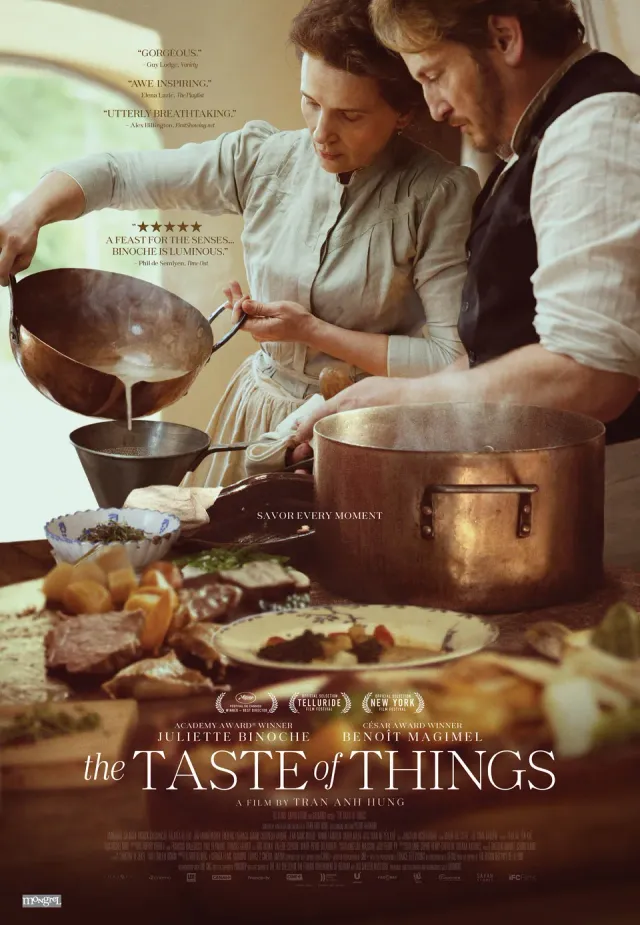
In 1889 France, cook Eugénie and gourmet Dodin have spent years preparing meals together on a country estate, sharing an intimacy that has not been formalized as marriage. Their work unfolds through elaborate menus, seasonal ingredients and the friends who gather at Dodin’s table. Trần Anh Hùng’s romantic drama treats cooking as a language of attention and care, observing a relationship through repeated acts of preparation, taste and conversation.
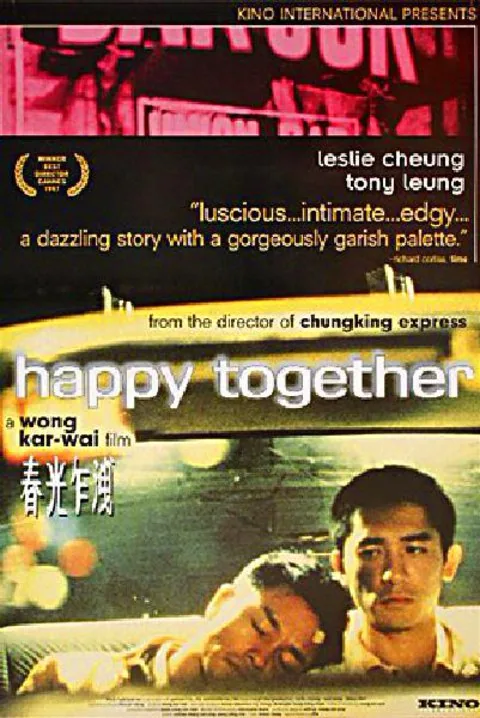
After a painful split in Hong Kong, lovers Lai Yiu-Fai and Ho Po-Wing travel to Argentina intending to see Iguazu Falls, but become stranded in Buenos Aires. They separate and reunite amid unstable affection; Fai works at a tango bar and a Chinese restaurant, while Po-Wing needs care after an assault. Fai's friendship with Chang offers another point of connection. When Fai finally heads home, he stops at the falls alone, while Po-Wing returns to discover that he has left.
What drives the story
The story follows how affection can persist even after a relationship has become difficult to sustain.
The people at its centre
Fai’s bond with Chang offers companionship without the history of jealousy that binds him to Po-Wing.
What it feels like
Its intimate city portrait blends queer romance with the disorientation of living far from home.
Worth knowing
A couple’s trip to the Iguazu Falls turns into a lonely stay in Buenos Aires and a test of whether they can begin again.
romancelongingjealousy
Mood
aching · intimate · restless · melancholic
Pacing
Reconciliations · work and a new friendship shape Fai’s gradual movement toward a life beyond the relationship
Visual style
Expressive color · handheld intimacy and tango rhythms make Buenos Aires feel both vivid and isolating
Storytelling
A turbulent Hong Kong couple become stranded in Buenos Aires · where separation tests the pull of home and each other