The unnamed man keeps trying to convert his account of a prior meeting into a present obligation. The film’s loops do not establish whether he remembers, invents or imposes the story.
Why this matches +
Selected for the central appeal: An intimate encounter opens incompatible private and collective memories; repetition and uncertain witnessing matter more than romantic fulfillment.
Genres: Drama / Mystery
Shared film traits
Based on recorded story, mood and style. Your preferences can change the order.
Memory and identity
What changes A couple’s repeated statements and fractured chronology make desire inseparable from the authority to define remembered experience; the resort puzzle withholds history where Hiroshima anchors private pain in specific wartime catastrophe.
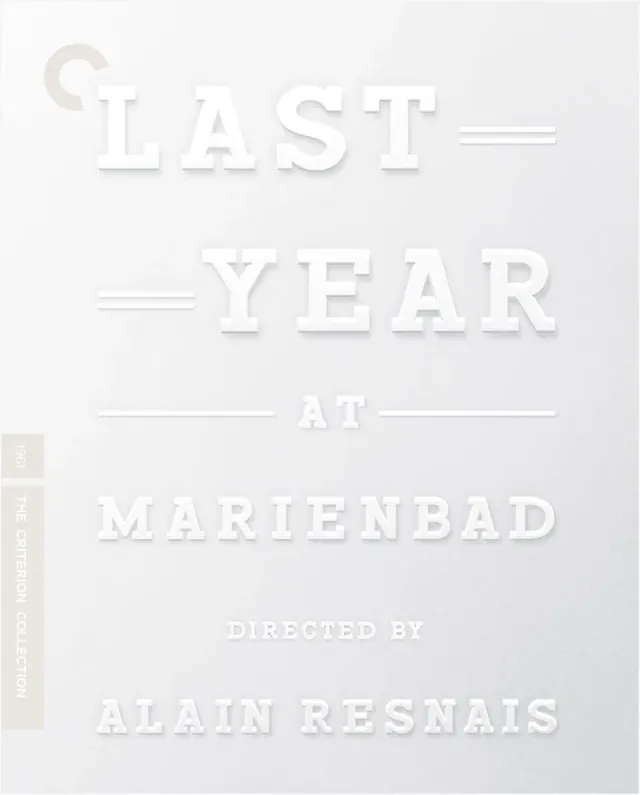
At an ornate European resort, a man insists that a woman met him the previous year and agreed to leave with him. She resists his version, while their conversations return to rooms, gardens and events that seem familiar but never settle into one chronology. A second man’s presence turns their exchange into a contest over memory and authority as much as a possible romance. Alain Resnais’s film withholds the evidence that would make the story a conventional mystery; its repeated spaces and contradictory statements keep the viewer inside a struggle over what may have happened. Ambiguity does not make the woman’s resistance incidental. The film’s formal puzzle and the pressure exerted by the man’s insistence need to be held together rather than resolved into a single secret answer.
A patient's uncertain identity and recollections gradually connect an intimate love affair with betrayals and irreversible losses across a wartime landscape.
Why this matches +
Related viewing experiences with the specific differences recorded for each pair.
An adjacent discovery: a related idea with a different viewing experience.
Genres: Drama / Romance
Shared film traits
Based on recorded story, mood and style. Your preferences can change the order.
Memory and identity · War and civilian life
What changes A present encounter opens an adulterous wartime love through fragmented recollection and bodily loss; its expansive romantic mystery offers narrative revelations rather than resisting the equivalence of private and public suffering.
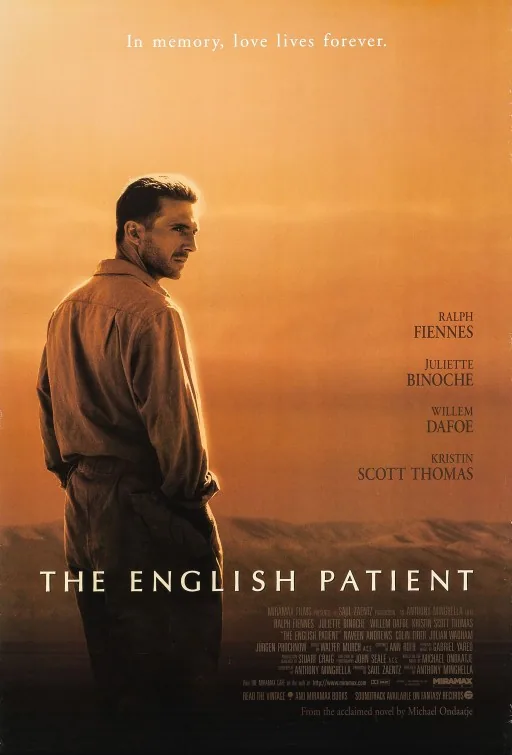
Near the end of the Second World War, a nurse tends a severely burned man in an abandoned Italian monastery while fragments of his earlier life emerge. His memories return to a desert mapping expedition, an affair with a married woman and decisions whose consequences cross wartime allegiances. Other displaced people briefly form a household around the patient's care, placing his consuming lost romance beside more tentative attempts to remain open to life.
The production process makes rehearsing another person’s words a form of emotional inquiry.
Why this matches +
Related viewing experiences with the specific differences recorded for each pair.
An adjacent discovery: a related idea with a different viewing experience.
Genres: Drama
Shared film traits
Based on recorded story, mood and style. Your preferences can change the order.
Memory and identity
What changes Conversations in Hiroshima let strangers approach grief indirectly through art and storytelling; patient rehearsal and a developing friendship replace the brief erotic encounter and abrupt memory montage.
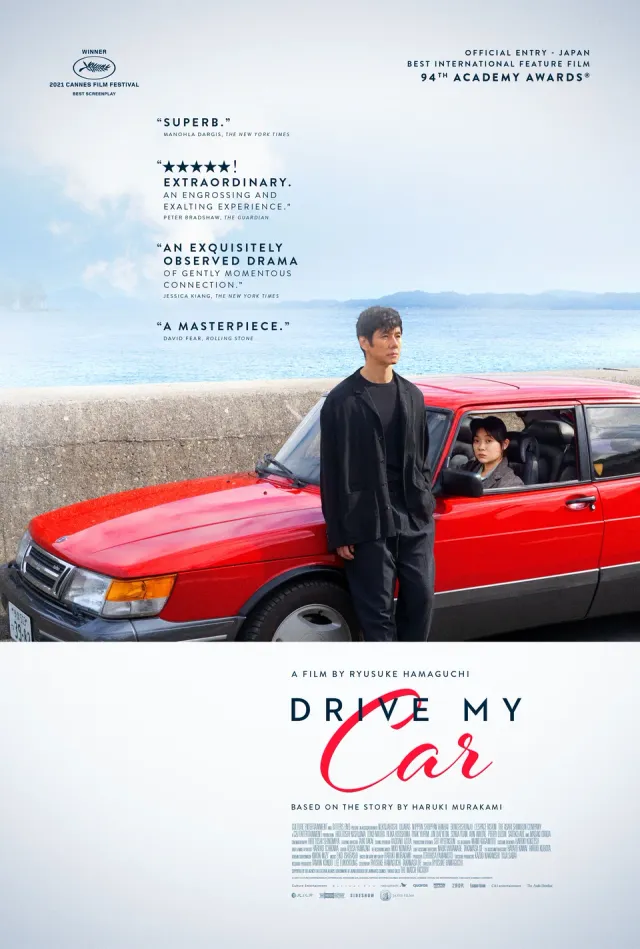
Theater director Yūsuke Kafuku travels to Hiroshima to stage Uncle Vanya and is assigned a quiet driver, Misaki. Rehearsals, long drives and the use of recorded lines gradually create room for both to confront grief and difficult memories. Ryusuke Hamaguchi gives the adaptation a patient, conversational structure, using Chekhov’s play and the red Saab as recurring spaces where private pain can be approached indirectly.
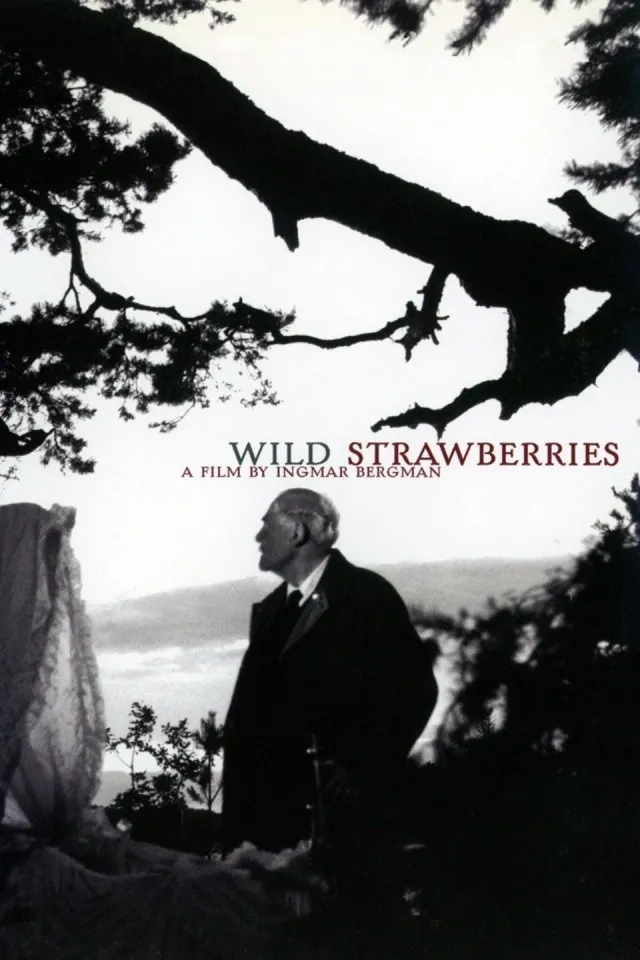
A ceremonial journey becomes a retrospective moral encounter as ordinary companions and remembered places unsettle the traveller's account of his own life.
Why this matches +
Related viewing experiences with the specific differences recorded for each pair.
An adjacent discovery: a related idea with a different viewing experience.
Genres: Drama / Flashback
Shared film traits
Based on recorded story, mood and style. Your preferences can change the order.
What changes An outward journey is repeatedly interrupted by emotionally charged memories and dreams that expose a guarded self; an elderly doctor’s family reconciliation is gentler and more resolved than erotic witnessing after historical atrocity.
An elderly physician travels by car to receive an academic honour, accompanied by a daughter-in-law whose strained marriage exposes the emotional habits he would prefer not to examine. Encounters with hitchhikers, family and places from his youth interrupt the outward journey with memories and unsettling dreams. Public recognition becomes less significant than the possibility of acknowledging how distance and self-protection have passed through generations of his household.
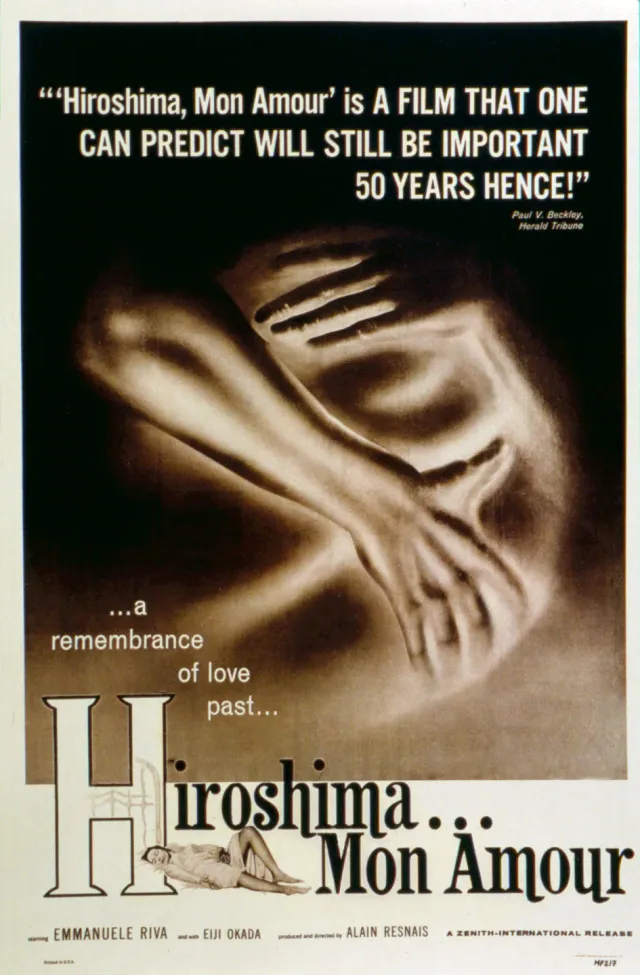
A French actress and a Japanese architect begin an affair in postwar Hiroshima, where her film work about peace does not grant her full access to the city’s history. Their conversations open onto her earlier love affair in occupied Nevers and the punishment that followed its loss. Repetition, fragmented images and documentary traces let one memory interrupt another without making the woman’s private suffering equivalent to the atomic bombing. The architect can ask her to remember, but cannot turn memory into shared ownership. The film’s formal argument lies in that unfinished encounter between personal recollection, public catastrophe and the limits of witnessing.
What drives the story
An intimate encounter prompts the actress to recount a suppressed wartime love, while her lover challenges the certainty with which she can claim to remember Hiroshima. The architect can challenge the actress’s certainty without becoming a spokesperson for everyone in Hiroshima.
The people at its centre
The lovers seek recognition through histories neither can fully inhabit; present desire provides access to telling without giving either person ownership of the other’s suffering. Her story from Nevers enters the present but does not equal mass atomic destruction.
What it feels like
Documentary imagery, repeated phrases and disrupted chronology make conversation associative and unstable rather than a path toward resolved revelation. Repetition and documentary traces make the film’s argument through form, not only dialogue.
Worth knowing
Compare with formally experimental memory films, but do not equate the Nevers romance with atomic catastrophe; their juxtaposition tests analogy and the limits of witnessing. A comparison should preserve the film’s resistance to one-to-one equivalence between memories.
MemoryWarLimits of witnessing
Mood
Intimate · Melancholy · Reflective
Pacing
Nonlinear · Measured
Visual style
Repetition · Documentary traces · Fragmented time
Storytelling
Brief affair · Suppressed wartime love · Associative recollection