The procedural engine follows a blocked investigation: each official denial forces the agents to find witnesses, protect them and pursue a federal route around local impunity.
Why this matches +
Selected for the central appeal: Historical crime dramas about institutional complicity, exploitation and violence against marginalized communities.
Genres: Crime / Drama
Shared film traits
Based on recorded story, mood and style. Your preferences can change the order.
Investigation
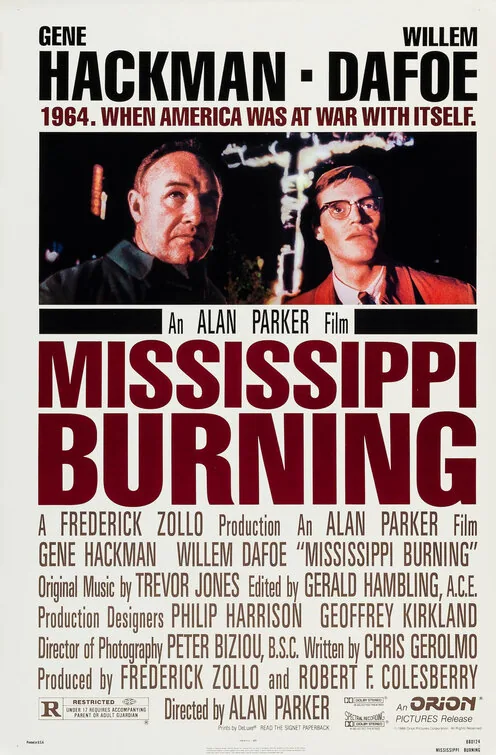
What changes Mississippi Burning examines racist violence and institutional complicity in a historical American investigation.
In 1964, FBI agents Alan Ward and Rupert Anderson investigate the disappearance of three civil-rights workers in fictional Jessup County, Mississippi. Local law enforcement obstructs the inquiry and is tied to the Ku Klux Klan. Ward's formal approach and Anderson's local knowledge clash as intimidation prevents residents from speaking. A witness's family is attacked, and Anderson builds a relationship with Deputy Pell's wife, whose testimony helps locate the victims' bodies. The agents pursue federal civil-rights charges when local courts will not deliver justice, using coercive tactics that raise questions about the investigation even as the film frames the case as a reckoning with racist violence.
Conditional hospitality becomes a labor bargain whose terms worsen whenever the fugitive's outside options narrow, making the town's claimed generosity a structure of coercion. After a search notice raises the town’s perceived risk, residents increase their demands while Grace’s alternatives shrink.
Why this matches +
These offer a related experience with a meaningful difference in story, tone, or presentation.
An adjacent discovery: a related idea with a different viewing experience.
Genres: Drama / Crime
Shared film traits
Based on recorded story, mood and style. Your preferences can change the order.
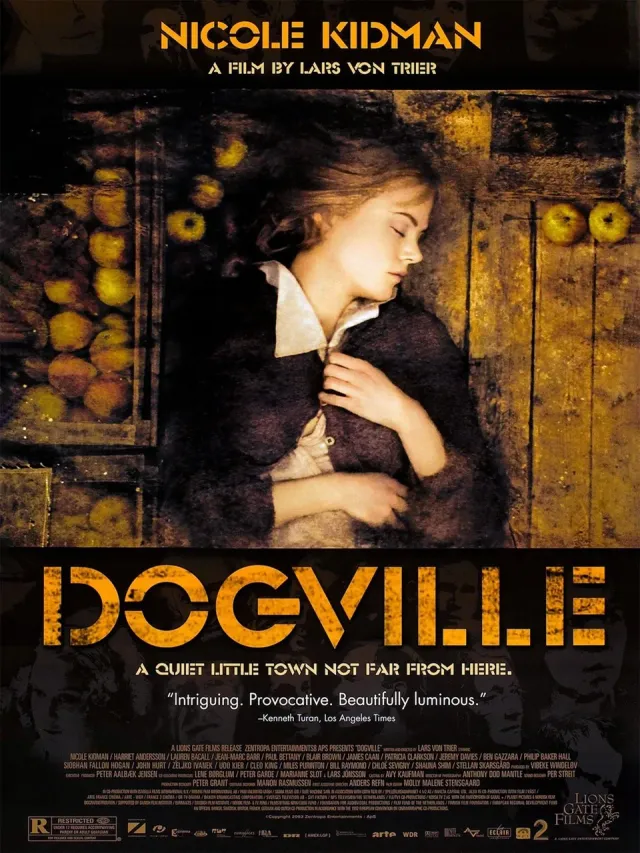
What changes Dogville portrays a community's systematic exploitation of a vulnerable outsider and its self-serving justifications.
A woman fleeing gangsters accepts shelter in an isolated town, where an aspiring moral leader proposes her presence as a test of communal generosity. Work initially offered as gratitude becomes the condition of being allowed to remain, and her increasing vulnerability gives neighbors leverage to demand more. When the protection they claim to provide becomes systematic exploitation, a later reversal of power questions both the community's self-description and the moral certainty of punishing it. Its exposed stage makes spectators watch private coercion as collective behavior, not as unseen domestic misfortune.
A deadline to prevent foreclosure drives targeted bank robberies whose success depends on controlling an accomplice increasingly willing to use violence.
Why this matches +
These offer a related experience with a meaningful difference in story, tone, or presentation.
An adjacent discovery: a related idea with a different viewing experience.
Genres: Crime / Drama
Shared film traits
Based on recorded story, mood and style. Your preferences can change the order.
Criminal underworld
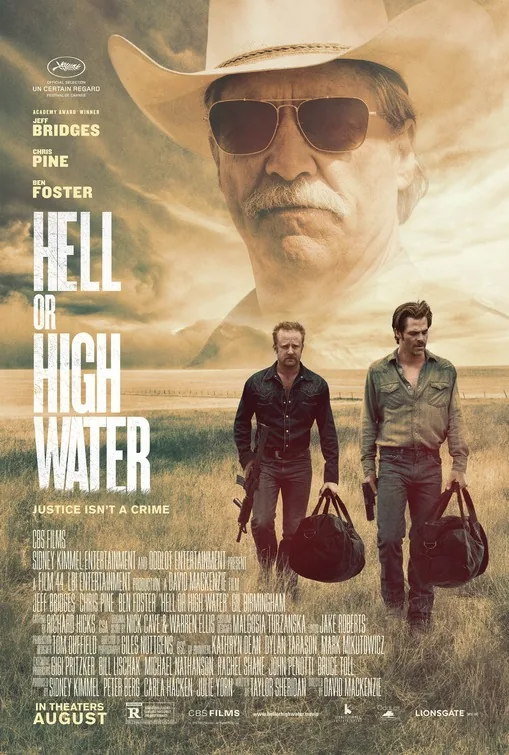
What changes Hell or High Water explores crime, dispossession and economic power in a contemporary Western landscape.
Two brothers rob branches of the bank threatening their inherited Texas property, using the stolen money to secure a future for children who have lived with little stability. One brother's planning depends on the other's appetite for risk, and an aging ranger recognizes a pattern before the scheme can be completed. The pursuit unfolds through communities marked by debt and declining opportunity. The modern Western makes family provision inseparable from choices that impose irreversible costs on strangers, refusing to make an economic grievance an uncomplicated moral permission.
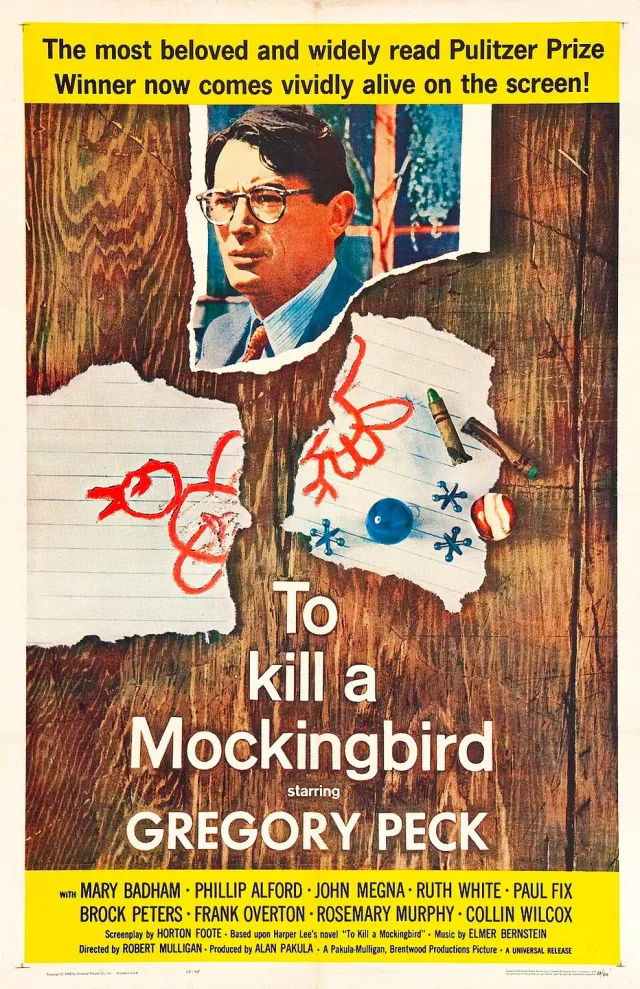
A child's imaginative account of local danger is transformed by a trial in which publicly available evidence cannot overcome entrenched racial authority.
Why this matches +
These offer a related experience with a meaningful difference in story, tone, or presentation.
An adjacent discovery: a related idea with a different viewing experience.
Genres: Crime / Drama
Shared film traits
Based on recorded story, mood and style. Your preferences can change the order.
What changes To Kill a Mockingbird exposes racial injustice and a legal system shaped by community prejudice.
Children growing up in a Depression-era Alabama town turn a reclusive neighbour into the subject of stories and dares. Their father's defence of a Black man accused of assault brings them into contact with the racial violence and social expectations those childhood games have not prepared them to understand. The trial's evidence and the community's response expose a painful gap between a principled adult's example and the power of the surrounding system.
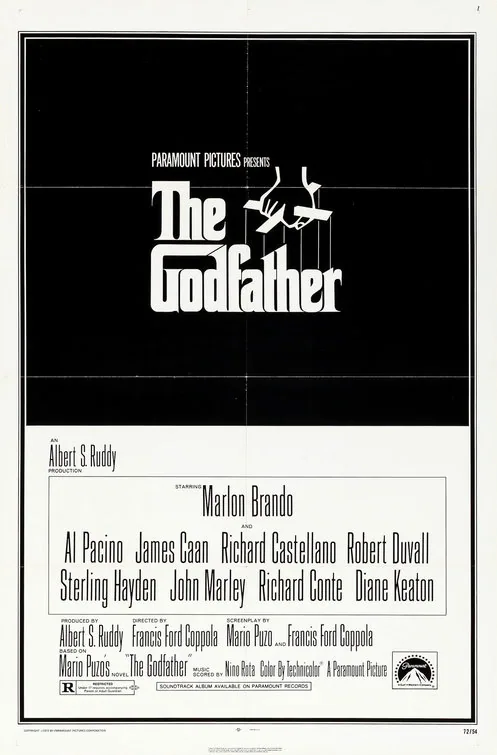
A succession crisis turns a reluctant son into a strategic participant whose defence of family becomes consolidation of criminal authority.
Why this matches +
These offer a related experience with a meaningful difference in story, tone, or presentation.
An adjacent discovery: a related idea with a different viewing experience.
Genres: Crime / Drama
Shared film traits
Based on recorded story, mood and style. Your preferences can change the order.
Criminal underworld
What changes The Godfather follows family loyalty and organized violence as private relationships become entangled with criminal power.
An organised-crime patriarch balances family celebration with requests for favours, presenting private authority as both protection and obligation. After an attack destabilises his position, the son who had planned a separate life becomes increasingly involved in defending the household. Each apparently necessary act draws that outsider further into a system where loyalty and power can make violence seem like care, while making genuine intimacy progressively harder to sustain.
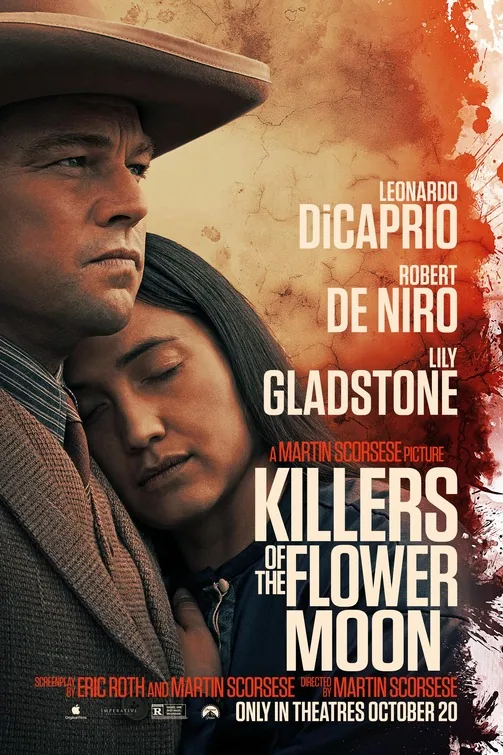
In 1920s Oklahoma, the Osage Nation’s oil wealth makes its members targets of a coordinated campaign of murder, fraud and dispossession. Ernest Burkhart returns from the war and marries Mollie Kyle, but his expressions of love exist alongside his uncle William Hale’s plan to acquire her family’s headrights. Mollie navigates illness, grief and a legal system that fails to protect her while Ernest’s self-image collides with what he enables. The final movement shifts from investigation toward the making of public stories about the crimes, leaving the Osage community present but not fully in control of its representation. The film consulted Osage people, yet its perpetrator-centered form should not make outside investigators the sole agents of Indigenous resistance.
What drives the story
The murder plot is sustained by the headright system and local institutions, not by one hidden villain acting outside society. The transition toward federal investigation arrives after Osage loss and community efforts have already shaped the stakes.
The people at its centre
Mollie’s belief in Ernest’s affection is not ignorance that can be solved by a late revelation; her choices unfold under illness, family murder and restricted protection. Ernest’s tenderness and complicity remain painfully entangled.
What it feels like
Long domestic scenes and patient landscapes make betrayal accumulate through routine rather than thriller twists. The closing shift to a radio-style account foregrounds how historical narratives can turn murdered people into a story consumed elsewhere.
Worth knowing
Osage consultation informed the production, but the film is still an adaptation with a white protagonist at its center. Preserve Osage sovereignty and agency in any historical framing; distinguish cinematic focus from the community’s full record and response.
ExploitationComplicityRepresentation
Mood
Somber · Devastating · Intimate
Pacing
Measured · Accumulating
Visual style
Domestic betrayal · Extended period ensemble · Self-conscious coda
Storytelling
Inheritance murder network · Marriage as access · Institutional complicity