The murder investigation becomes a fight over whether evidence can survive the pressure of a state that wants the crime reduced to a private or accidental act.
Why this matches +
Selected for the central appeal: A journalist sent to discredit a workers' strike confronts state propaganda and his own moral responsibility.
Genres: Drama / Thriller
Shared film traits
Based on recorded story, mood and style. Your preferences can change the order.
Investigation · Political resistance
What changes An investigation into political repression exposes official lies and institutional corruption; a Greek political assassination rather than a Polish strike.
After a prominent Greek left-wing politician is attacked and dies following a public rally, a magistrate investigates the case despite pressure from officials who want it contained. Journalists and witnesses help expose the gap between the public account and the network of people who planned and concealed the violence. Costa-Gavras shapes the story as a political investigation, using an unnamed country and documentary-like urgency to connect individual testimony with institutional complicity. The title’s protest slogan becomes both a demand to remember the victim and a challenge to an attempted cover-up. Its reportorial momentum makes the investigation itself the chief source of suspense.
A newsroom's evidence-based challenge to political intimidation tests how far a commercial broadcaster will support the independence it publicly endorses.
Why this matches +
These offer a related experience with a meaningful difference in story, tone, or presentation.
An adjacent discovery: a related idea with a different viewing experience.
Genres: Drama / History
Shared film traits
Based on recorded story, mood and style. Your preferences can change the order.
Investigation
What changes Journalists confront pressure to repeat an official political narrative; American television and McCarthyism.
A television news team challenges accusations and procedures associated with Senator McCarthy while working inside a network vulnerable to sponsors and political pressure. Decisions about evidence, wording and airtime make editorial independence a practical risk rather than an abstract professional virtue. Personal consequences unfold around the broadcasts, including scrutiny of colleagues whose lives do not fit institutional rules. The restrained historical drama presents journalism as coordinated work whose public authority depends on choices made under commercial and political constraint.
An intolerable everyday abuse produces a collective refusal that expands beyond the original workplace into public confrontation with authority.
Why this matches +
These offer a related experience with a meaningful difference in story, tone, or presentation.
An adjacent discovery: a related idea with a different viewing experience.
Genres: Drama / Historical drama
Shared film traits
Based on recorded story, mood and style. Your preferences can change the order.
Political resistance
What changes Workers' collective resistance confronts state authority in a politically charged film; silent revolutionary cinema.
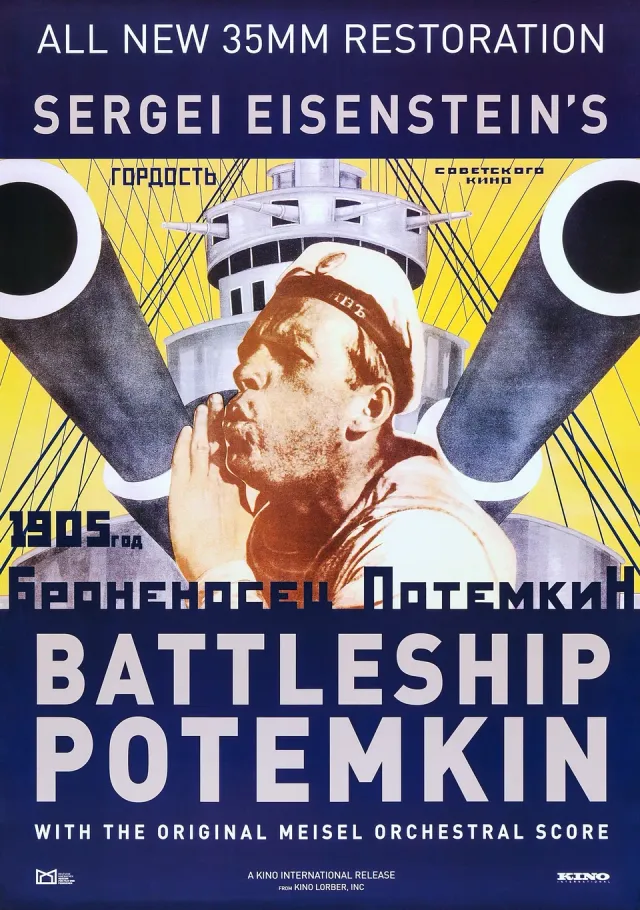
Sailors subjected to degrading conditions challenge the officers commanding their ship, and a confrontation over rotten food becomes a catalyst for mutiny. Public mourning and solidarity in a nearby port place the uprising inside a wider struggle over state violence. The film arranges bodies, crowds and abrupt collisions of images into a deliberately political account in which collective feeling becomes as important as the actions of any named individual.
Karen's safety concerns lead her from workplace organizing toward a public effort to expose hazardous practices.
Why this matches +
These offer a related experience with a meaningful difference in story, tone, or presentation.
An adjacent discovery: a related idea with a different viewing experience.
Genres: Drama / History
Shared film traits
Based on recorded story, mood and style. Your preferences can change the order.
Investigation · Political resistance
What changes A worker challenges powerful institutions over safety and accountability; an American nuclear plant rather than state-controlled journalism.
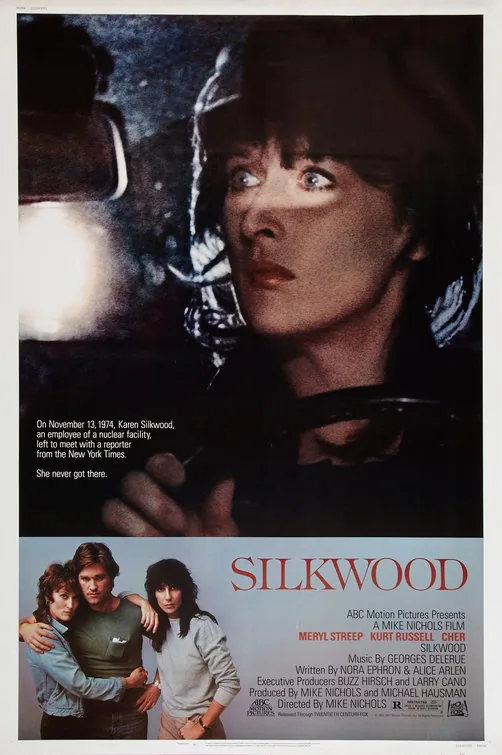
Working at a plutonium-processing plant in Oklahoma, Karen Silkwood becomes increasingly concerned about safety practices and the treatment of workers. Her union activity draws attention to possible contamination and management failures, placing her health, job, and relationships under mounting pressure as she gathers information for a public complaint; the film follows an ordinary employee trying to make institutional evidence matter against an organization with greater power.
An intelligence contractor decides to disclose secret surveillance programs to journalists.
Why this matches +
These offer a related experience with a meaningful difference in story, tone, or presentation.
An adjacent discovery: a related idea with a different viewing experience.
Genres: Drama / Thriller
Shared film traits
Based on recorded story, mood and style. Your preferences can change the order.
Political resistance
What changes An insider confronts the consequences of serving a secretive state institution; surveillance and a contemporary whistleblower.
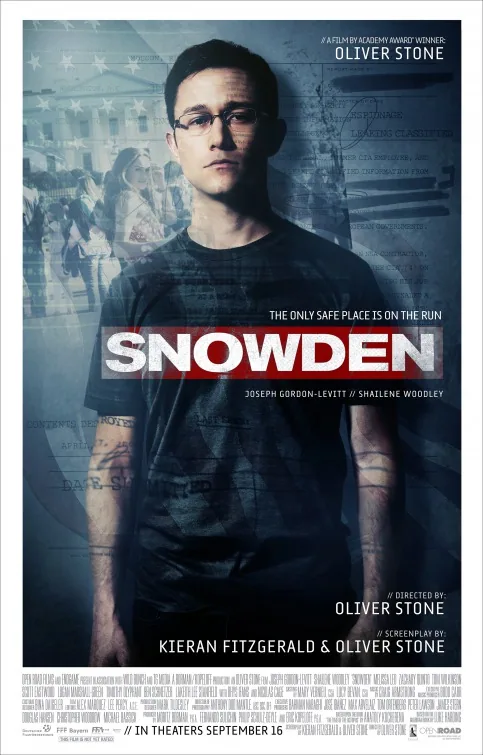
Edward Snowden's work as a U.S. intelligence contractor exposes him to the scale of government surveillance and the secrecy surrounding it. He eventually shares classified materials with journalists, leaving his career and life in the United States behind as the disclosures become public. Oliver Stone's political thriller traces the personal and institutional pressures that lead to the leak, mixing biographical scenes with an argument about privacy, national security, and the public's right to know.
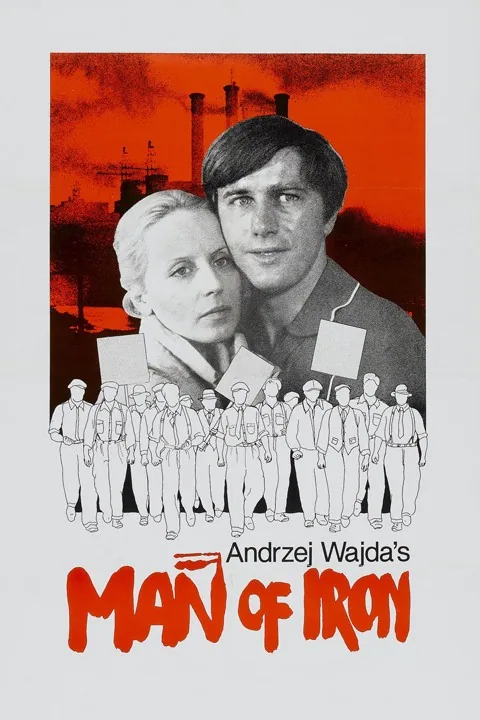
In communist Poland, journalist Winkel is sent to investigate and discredit a worker-led strike connected to the Solidarity movement. His assignment draws him into the story of Maciek Tomczyk, a shipyard activist, and into testimony from people affected by the state's repression. As Winkel gathers accounts, the distinction between reporting and propaganda becomes harder to maintain, forcing him to consider whether he can keep serving an institution whose narrative he has been asked to manufacture.
What drives the story
A state reporter investigates a striking worker and encounters evidence that undermines his assignment to discredit the movement.
The people at its centre
Winkel's careerist caution collides with the conviction of workers, witnesses, and Maciek's family.
What it feels like
The film mixes interviews, archival-style material, and fictional drama to create a layered political portrait.
Worth knowing
Its resistance story focuses on journalism and labor organizing rather than armed revolt or private revenge.
LaborTruthResistance
Mood
Political · Reflective · Urgent
Pacing
Layered · Documentary
Visual style
Newsreel collage · Industrial realism
Storytelling
Journalistic investigation · Worker organizing · State pressure