A man seeking social acceptance agrees to help a fascist regime pursue his former teacher in exile.
Why this matches +
Selected for the central appeal: An ambitious actor advances under Nazi rule while his artistic compromises expose the moral cost of success.
Genres: Drama / Thriller
Shared film traits
Based on recorded story, mood and style. Your preferences can change the order.
What changes A man seeks acceptance within a fascist regime and sacrifices conscience to fit its power structures; Italian political drama rather than theater.
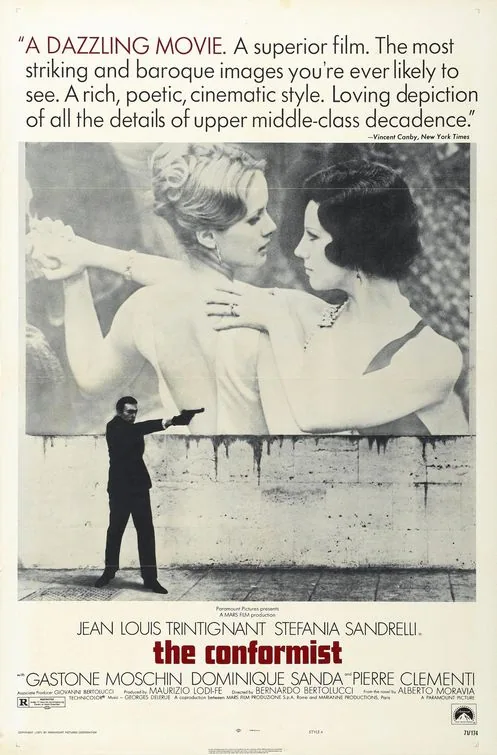
In Fascist Italy, Marcello Clerici seeks a respectable life and accepts an assignment from the secret police. His task takes him to Paris, where he and his new wife encounter his former professor, an outspoken opponent of the regime, and the professor’s wife. Political allegiance, desire and Marcello’s need to appear normal become entangled as he moves toward a betrayal.
The courier mission follows Hellman’s remembered relationship rather than a conventional resistance network plot. Its partial instructions keep the viewer close to her uncertainty while limiting what the story can establish about the organization behind the request.
Why this matches +
These offer a related experience with a meaningful difference in story, tone, or presentation.
An adjacent discovery: a related idea with a different viewing experience.
Genres: Drama / History
Shared film traits
Based on recorded story, mood and style. Your preferences can change the order.
Political resistance
What changes Writers and artists face the moral demands of resisting fascism; centered on friendship and active opposition.
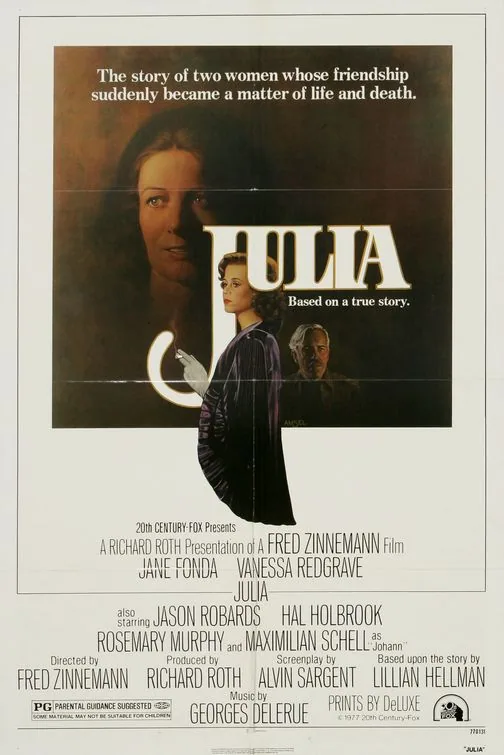
Playwright Lillian Hellman recalls her close friend Julia, whose anti-fascist work takes her into danger in Europe. In the film, Julia asks Hellman to carry money through Nazi Germany, a mission performed with limited information and little control over its outcome. Hellman’s earlier dependence on the older friend gives the journey emotional weight, but the brief reunion cannot restore their former intimacy or verify what became of Julia. The story is adapted from Hellman’s memoir Pentimento, whose account was challenged after publication; Muriel Gardiner said she recognized her own life in Julia, while Hellman denied that identification. The film’s elegant suspense therefore sits inside an unresolved question of memory and source identity, not a fully verified biography of a resistance courier.
The prosecution asks when legal professionals become responsible for the uses of law they administer. The case is about judges and judicial systems, not only a courtroom debate over whether individual officials were personally cruel.
Why this matches +
These offer a related experience with a meaningful difference in story, tone, or presentation.
An adjacent discovery: a related idea with a different viewing experience.
Genres: Drama / History
Shared film traits
Based on recorded story, mood and style. Your preferences can change the order.
What changes Professionals confront responsibility for choices made under Nazi rule; postwar courtroom examination rather than an actor's career.
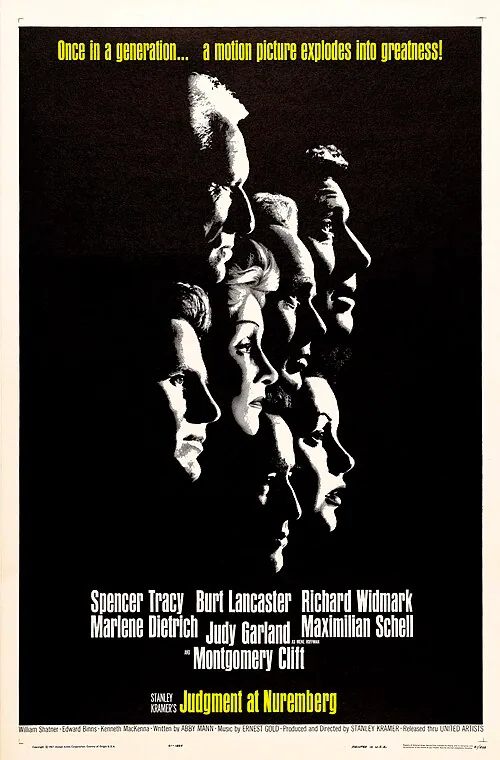
An American tribunal tries four German judges for helping make Nazi persecution appear lawful. The defendants describe their work through professional duty, political pressure and the conditions of wartime Germany; testimony from victims forces the court to confront what procedure concealed. Judge Haywood’s conversations beyond the courtroom show a country seeking to resume ordinary life even as Cold War priorities make a severe judgment less convenient. The film draws on the real Judges’ Trial but reshapes the tribunal and participants into dramatic composites. Its characters’ defenses are arguments to examine, not neutral statements of history, and the film’s willingness to consider national context does not erase the personal and institutional responsibility at issue.
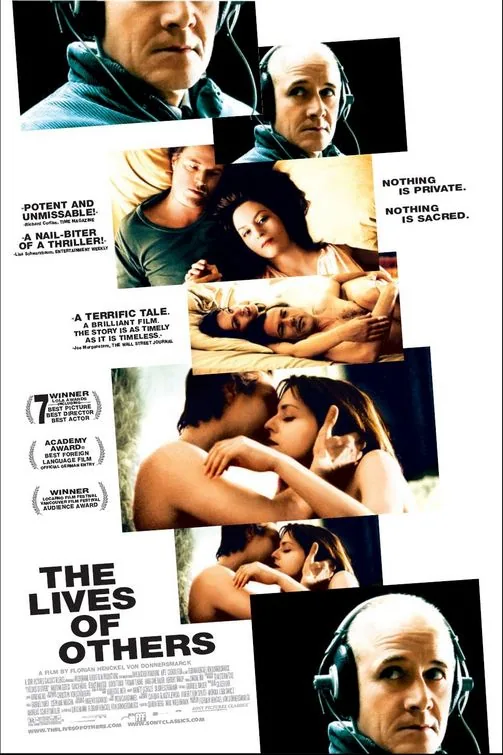
A politically motivated surveillance assignment turns a loyal operative's access to private evidence into a conflict between bureaucratic obedience and covert protection.
Why this matches +
These offer a related experience with a meaningful difference in story, tone, or presentation.
An adjacent discovery: a related idea with a different viewing experience.
Genres: Drama / Thriller
Shared film traits
Based on recorded story, mood and style. Your preferences can change the order.
Political resistance
What changes Artists and cultural institutions operate under authoritarian surveillance, forcing moral choices; East Germany and a surveillance officer.
An East German surveillance officer is assigned to monitor a celebrated playwright and his partner, ostensibly for national security. Listening to their private life reveals artistic friendships, fear and a senior official's exploitative motive behind the operation. The officer's identification with people he is meant to expose creates small opportunities to intervene, but every altered report risks his position within an institution that treats conscience as disloyalty.
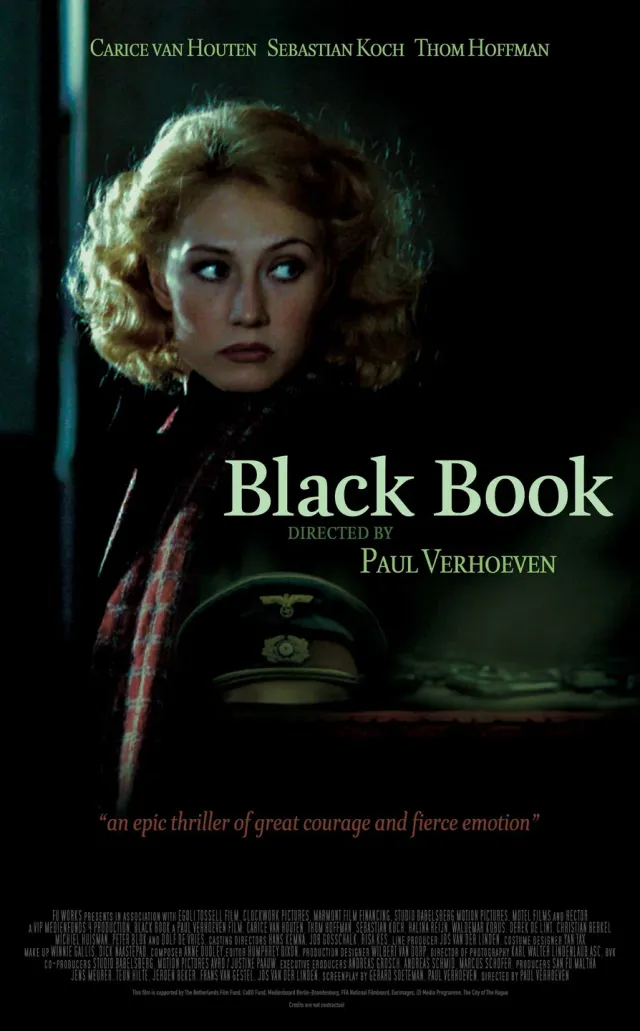
Rachel's access depends on performing an identity inside the occupier's world, but failed operations and postwar suspicion make the same concealment dangerous on both sides of liberation.
Why this matches +
These offer a related experience with a meaningful difference in story, tone, or presentation.
An adjacent discovery: a related idea with a different viewing experience.
Genres: War / Thriller
Shared film traits
Based on recorded story, mood and style. Your preferences can change the order.
What changes People navigate identity and moral compromise under Nazi occupation; an action-oriented resistance thriller.
Rachel Stein, a Jewish singer hiding in occupied Netherlands, survives a betrayal and joins the Dutch resistance under a concealed identity. Her infiltration of a German officer's circle gives the resistance access, but intimacy complicates the role and does not suspend occupation's violence. When operations fail and the Netherlands is liberated, Rachel encounters new accusations and institutional loyalties that make safety no more automatic than it was under German rule. Paul Verhoeven's fast-moving thriller challenges simple moral categories without making persecutor and victim equivalent or treating betrayal as evidence that resistance itself was meaningless.
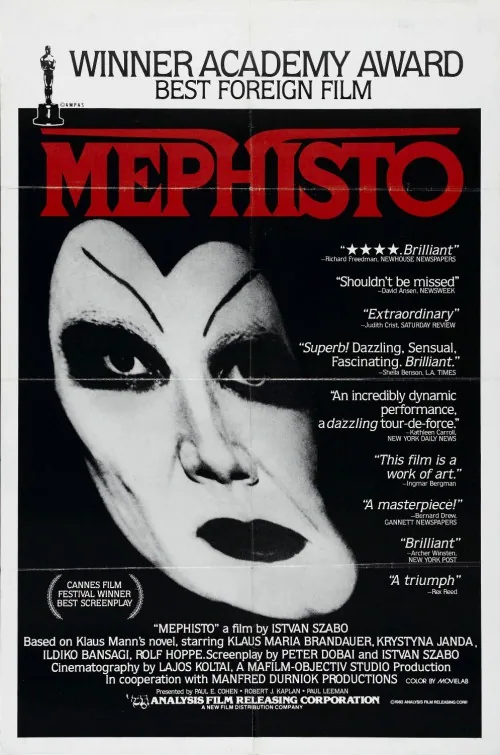
Hendrik Höfgen is an ambitious German stage actor whose performance as Mephistopheles makes him a celebrated figure. When the Nazis take power, he remains in Germany and accepts increasingly influential roles under the new regime, telling himself that art and survival can be separated from politics. His career rises as colleagues flee or are silenced, leaving him to confront how each compromise has changed both his public persona and private conscience.
What drives the story
An actor preserves his career by serving a regime whose power increasingly shapes his work and public identity.
The people at its centre
Höfgen wants to think of himself as an artist apart from politics, while friends and colleagues expose what that claim costs.
What it feels like
The drama contrasts theatrical performance with the public spectacle of authoritarian power.
Worth knowing
Its historical portrait follows compromise and complicity, not a conventional story of underground resistance.
ArtPowerCompromise
Mood
Somber · Reflective · Unsettling
Pacing
Steadily accumulating
Visual style
Theatrical staging · Period interiors
Storytelling
Artist under dictatorship · Political compromise · Identity performance